|
Getting your Trinity Audio player ready...
|
By Mercy Kachenge
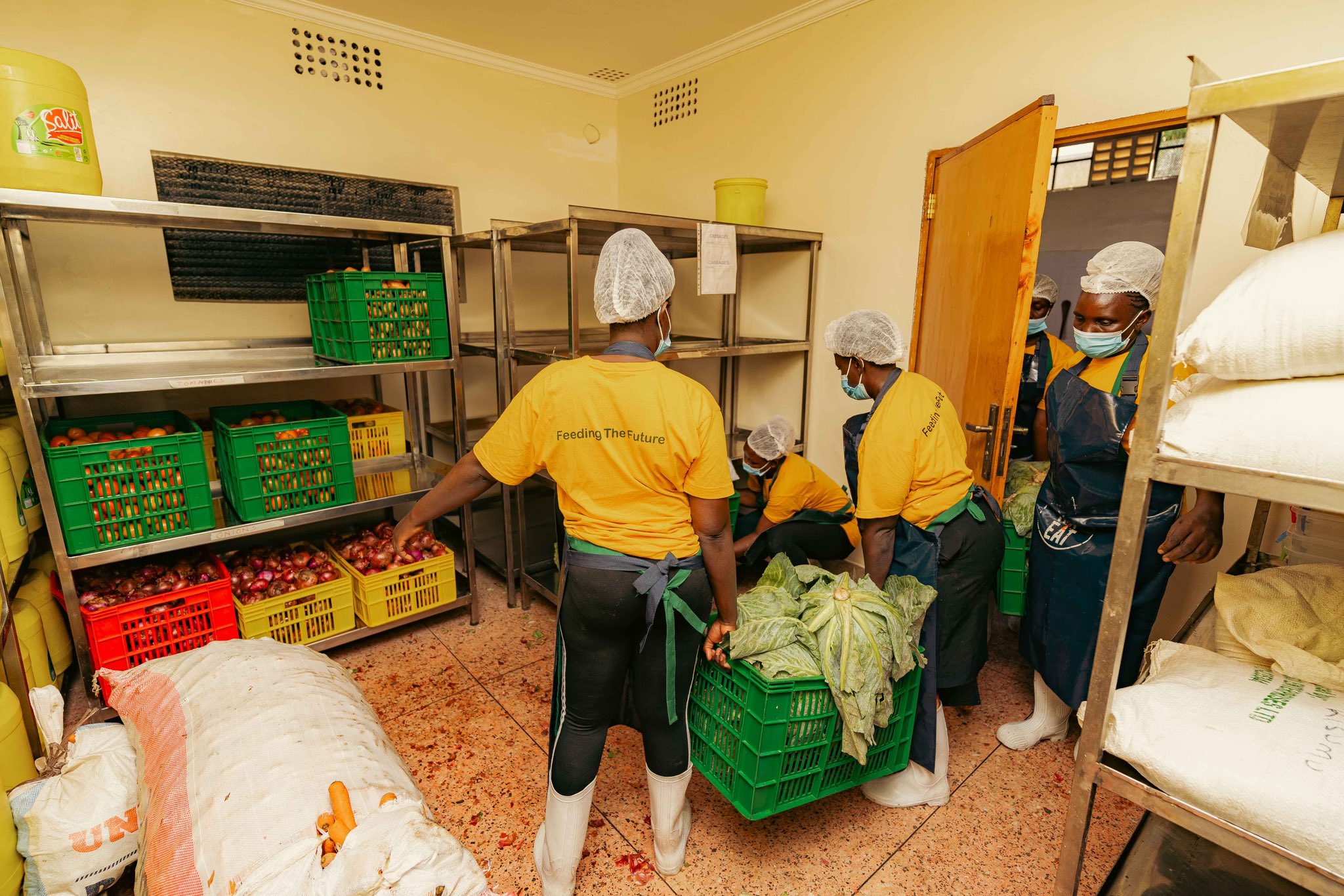
Ruiru, Kenya: It is exactly six am in the morning, the sound of clattering pots and steaming sufurias fills the air inside a large community kitchen in Ruiru, Kiambu County. The aroma of boiling rice mixes with laughter and light chatter as women in aprons move swiftly from one counter to another.
Among them is Lucy Wangoi, a mother of three, who has worked at Food for Education (F4E) for the past eight years. For her, this kitchen is not just a workplace, it is a source of dignity, empowerment, and purpose.
“When I come here in the morning, I wash my hands before entering the kitchen,” she says with a proud smile. “When I start cooking, I feel like I am doing something important, not just for myself but for hundreds of children who depend on these meals.”
Lucy’s day begins early. By 4:30 a.m., she’s up, preparing herself for the day ahead. She reports to work before dawn to help ensure that the food for school children is ready on time. Together with other women, she helps in preparing, packaging, and dispatching the meals to various schools in the area.
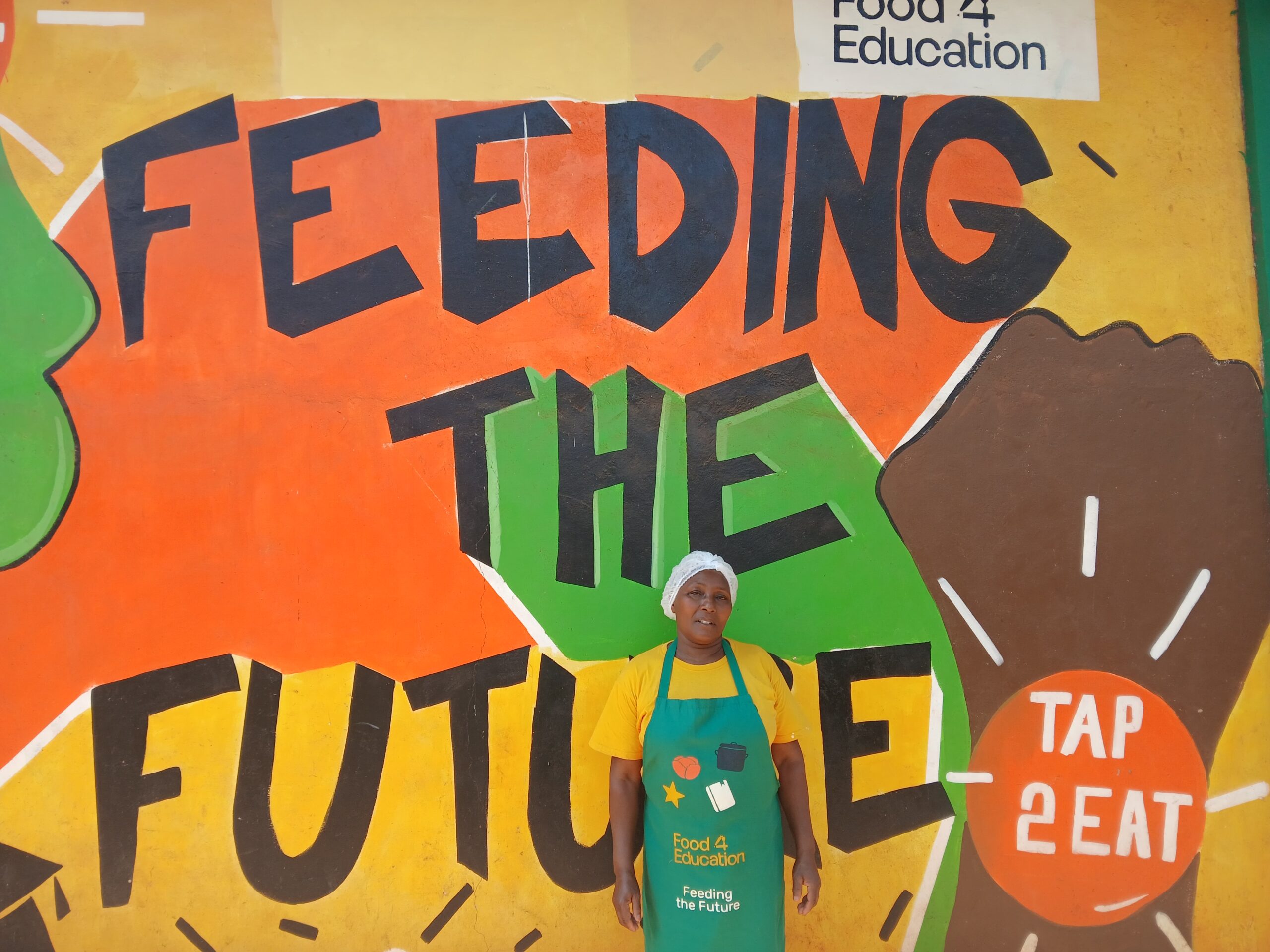
“We come here at six, we put it in the tins where the food goes to school. Once we finish, we wash the dishes and begin preparing for the next day.”
For eight years, Lucy has faithfully served as a cook under the Food for Education program, an initiative founded to provide affordable, nutritious school meals to children across Kenya.
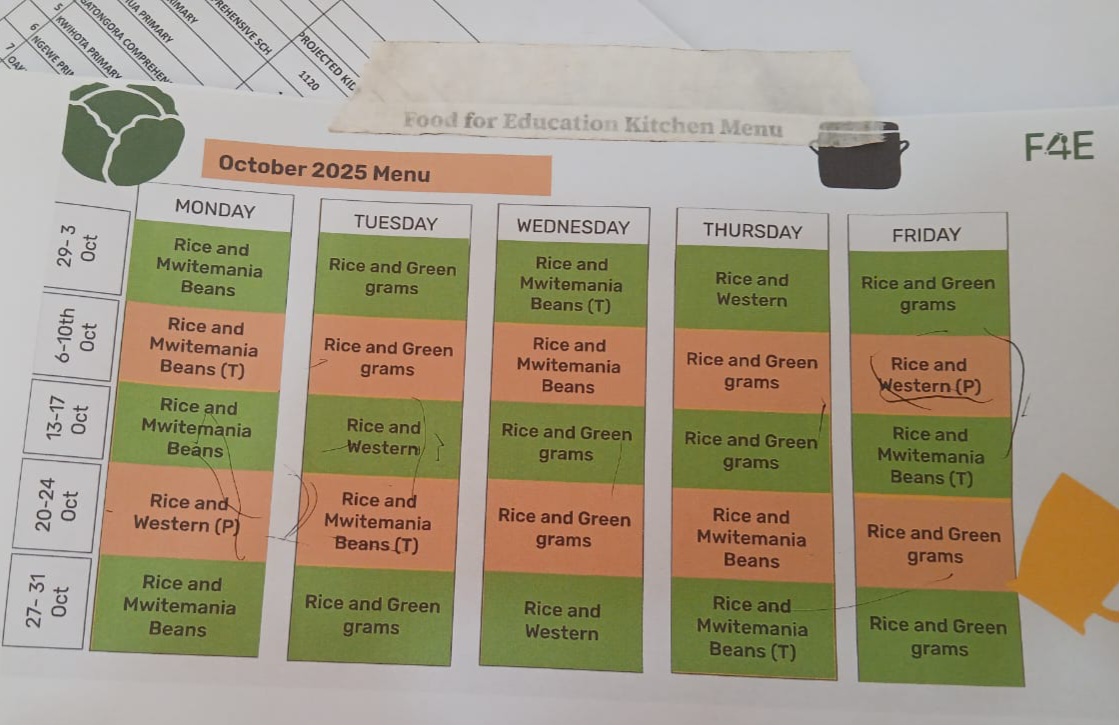
The program operates a large centralized Giga kitchen in the Industrial area and has 90 decentralized kitchens that prepare balanced meals distributed daily to schools, improving attendance, nutrition, and learning outcomes for thousands of learners.
But beyond the plates of rice and beans, the initiative has created something deeper: a lifeline for women like Lucy.
“Before I joined, life was hard,” she recalls. “I was struggling to feed my children and pay their school fees. But since I started working here, my life has changed. None of my children have ever stayed home because of school fees. During the COVID19 pandemic, when people were losing jobs, I was still working and getting paid.”
Her eyes light up as she speaks of her children, two now in university and one in secondary school.
“When I look at them, I feel proud,” she says. “They started eating school meals when they were young, in classes three, five, and six. Now they are healthy and doing well in school. This food has truly changed our lives.”
For Lucy, F4E is more than an employer; it is a movement that connects her daily labor to a global vision, the United Nations Sustainable Development Goals (SDGs), particularly SDG 2: Zero Hunger and SDG 5: Gender Equality.
“I feel proud to contribute to ending hunger,” she says softly. “When I look at our children, I see progress. When I was in school, we never had lunch, and that made it difficult to concentrate. But now, children have food and energy to learn. That’s a real change.”
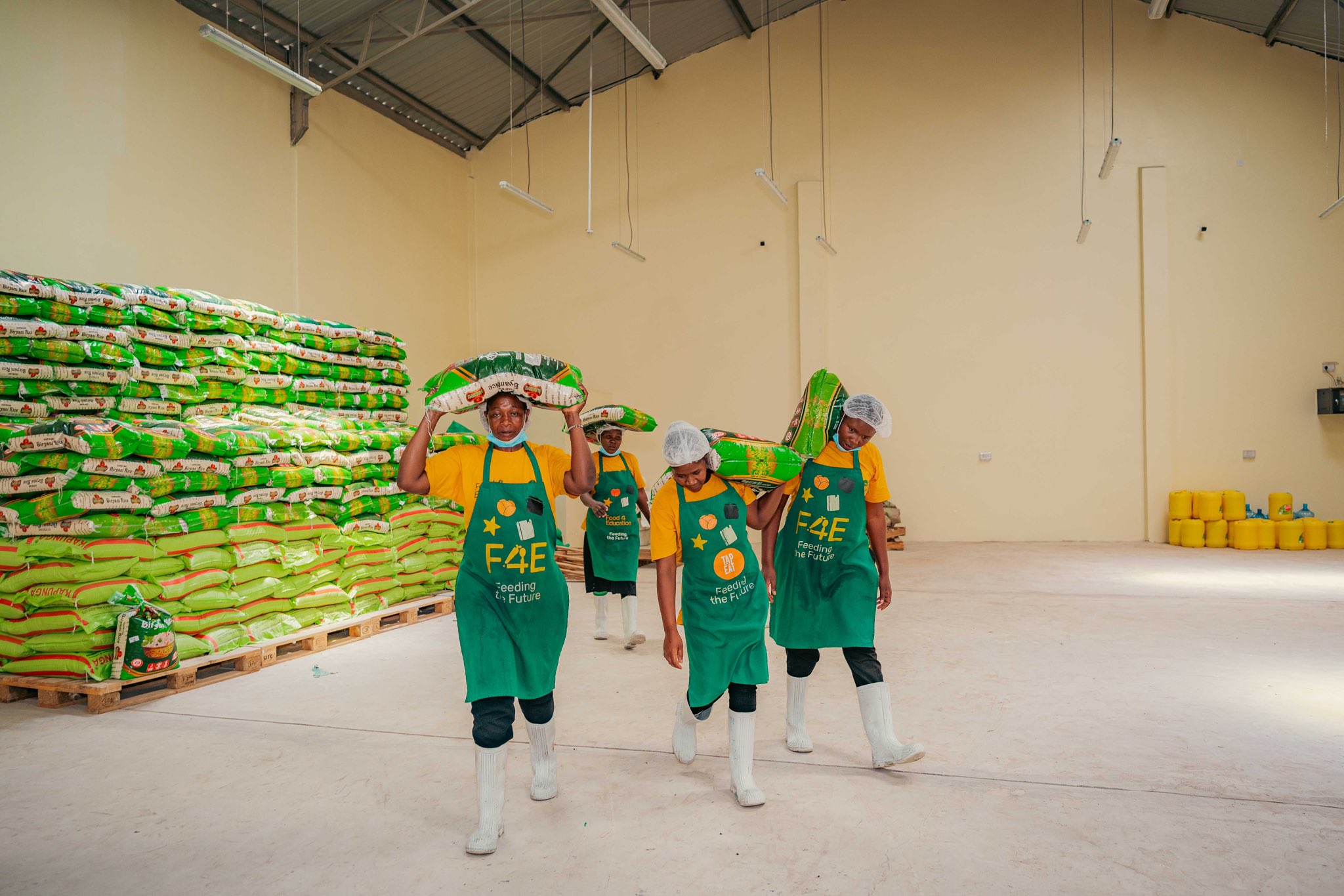 Like Lucy, another woman whose journey in the kitchen has redefined her identity is Agnes Wambui, moves with confidence and calm precision as she stirs a large pot of rice. She has been part of the program for ten years, long enough to witness its growth from humble beginnings to a modern, efficient system.
“I have been a cook for ten years, and I like my job,” Agnes says. “When we started, we were everything, the sorters, the cooks, the transporters, and the ones who served children during lunch hour. After serving, we would go back to start preparing food for the next day. It was hard work, but it taught me discipline.”
Back then, the team worked with minimal resources. “When we started, we had no proper means of cooking,” she recalls. “We used to cook with firewood, and sometimes it wasn’t dry. We had to prepare food on time even when the firewood was wet. It was tough. But today, things have improved. We use modern stoves and briquettes, and cooking is faster and cleaner.”
According to Food 4 Education, their goal is to feed one million kids daily by 2027 and by 2030 to feed at least 2 million more children in other African countries through sharing their blueprint with the various government technical advisory. This will ensure they build a sustainable school feeding economy rooted in dignity, nutrition and African Innovation.
The program didn’t just improve the kitchen; it transformed the cooks themselves. Through structured training sessions, the women learned valuable skills beyond cooking.
“We were trained on computer skills, teamwork, listening, and communication,” Agnes says. “Those lessons helped us grow personally and professionally. I’ve learned how to socialize with people, set goals, and work smart.”
Agnes’s voice carries pride as she reflects on how far she has come. “I have educated my children, built my own house, and become financially independent,” she says. “The way I started is not the way I am today. I have grown up. I am empowered.”
The stories of Lucy and Agnes are shared by hundreds of other women who work in Food for Education’s kitchens across Kenya. For many, this initiative has been their first formal job, one that not only puts food on their own tables but also builds confidence and social recognition in their communities.
“When I started working here, people in my village noticed,” Agnes explains. “They saw me growing, building my house, educating my children and they became curious about the program. I tell them to support their children’s school meals and encourage women to be patient and work hard. Everything is possible if you put in the effort.”
Lucy says that the program has changed how the community perceives women’s work. “In the past, people didn’t see kitchen work as important,” she says. “But now, they see the difference we make. We feed the nation’s children.”
Their story emphasizes on how the initiative bridges gender and economic gaps. While addressing child hunger, F4E simultaneously provides steady income and training to thousands of women. This dual impact of feeding children while empowering mothers has created a ripple of positive change that aligns with SDG 1 (No Poverty) and SDG 8 (Decent Work and Economic Growth).
“When I see my children and the children we feed, I feel proud,” Lucy says. “We are not just cooking, we are helping the next generation to succeed, that is Feeding the Future.’’
‘’Before joining the program, I faced the grim realities of unemployment, financial dependency, and food insecurity, ’she recounts.
 This mindset of resilience and initiative reflects the heart of the program’s empowerment model. The kitchen has become a place of transformation not just for children’s nutrition but also for women’s independence.
For women like Agnes, financial stability has translated into self-confidence and respect. “When you work hard, you feel proud,” she says. “You stop depending on others. You can provide for your children, make decisions, and even help others.”
According to Wawira Njiru, the CEO of Food for Education, the programme has created over 4000 jobs in which 80% of the staff are women and over 50% of the parents of children they feed.
She stated that they are operating in 13 counties serving over 600,000 meals and 150 million meals since their inception which has led to an increase in 20% improvement on national examination scores.
Their workdays may be long and physically demanding, but the pride they carry is visible in every gesture from stirring steaming pots to sealing food containers that will soon reach classrooms full of eager children.
In Kenya, where millions of children still struggle with hunger and malnutrition, school feeding programs like Food 4 Education offer a lifeline. The meals encourage school attendance, improve concentration, and give children a reason to look forward to learning.
“When I see the children smile as they receive their meals, I know we are doing something right,” Lucy says. “They are happier, healthier, and performing better in school. Even parents are grateful because they know their children are taken care of.”
Agnes has also witnessed the difference firsthand. “When we started, some children would come to school without breakfast. They were weak and tired. But now, with lunch at school, you can see the change. They are active, strong, and happy,” she explains.
For both women, the connection between their labor and national development goals is clear. “We are contributing to ending hunger and promoting education,” Agnes says. “It feels good to know that what we do in this kitchen helps Kenya move forward.”
The F4E model stands out because it integrates empowerment into service delivery. By employing local women, offering training, and ensuring fair wages, it not only reduces child hunger but also uplifts entire households. Women gain financial independence, self-confidence, and respect in their communities.
Lucy, who believes empowerment begins when women see value in themselves. “When I enter the kitchen, I feel like I am at work, in a place that matters,” she says. “Even when life was hard, I never gave up. This job has made me who I am today.”
From their kitchens, Lucy and Agnes are not just cooking; they are rewriting narratives, proving that empowerment can begin with a single act of service, a pot of food, and the courage to believe that even the smallest actions can change lives.