|
Getting your Trinity Audio player ready...
|
By Mary Mwendwa
Nairobi, Kenya: For people living with HIV in Malawi and Tanzania, a new, more patient-friendly version of a critical meningitis drug could soon offer hope, just as funding cuts threaten to roll back decades of progress in fighting the disease.
The not-for-profit Drugs for Neglected Diseases Initiative (DNDi) and its partners have advanced a sustained-release formulation of flucytosine—a key medicine for cryptococcal meningitis, a deadly fungal infection common in advanced HIV—into Phase II clinical trials. The new version is easier to administer, potentially improving treatment for vulnerable patients.
But the breakthrough comes at a precarious moment. Global HIV funding cuts are disrupting essential care, leaving thousands at risk of advanced HIV disease (AHD) due to treatment interruptions. Stockouts of lifesaving drugs, including flucytosine, loom as health systems strain under financial pressure.
“We’re seeing an unprecedented crisis in HIV care,” warns Dr. Luis Pizarro, Executive Director of DNDi. “When treatments are interrupted, lives are lost. We can’t afford to step back now—we need better options for patients and stronger global cooperation to deliver them.”
The trial represents a crucial step forward, but advocates stress that without urgent action, progress against HIV—and the lives it protects—could unravel.
Cryptococcal meningitis is caused by the fungus Cryptococcus neoformans, found in soil and bird droppings, and is a major health threat to people with weakened immune systems. Those with advanced HIV are particularly at risk. It often begins with severe headaches, fever, nausea, and vomiting, progressing to neck stiffness, confusion, and, in late stages, coma due to inflammation of the brain and spinal cord. In Africa, where access to timely treatment is limited, the disease kills up to 70% of those who get it.
“When people with HIV can’t access effective treatment, they risk developing advanced HIV disease—and that opens the door to deadly infections like cryptococcal meningitis,’ said Dr Justine Odionyi, Head of HIV Disease at DNDi. “In 2023 alone, AIDS-related illnesses killed 390,000 people in Africa. Cryptococcal meningitis claimed 130,000 of those lives, deaths driven by treatment gaps. Now, with funding cuts, even more people will be left without care. More lives will be lost. It’s a terrifying reality.”
Lack of access to timely diagnosis and treatment is a major reason why cryptococcal meningitis remains so deadly. Across many countries, point-of-care CD4 testing—important for identifying people with advanced HIV—is in short supply.
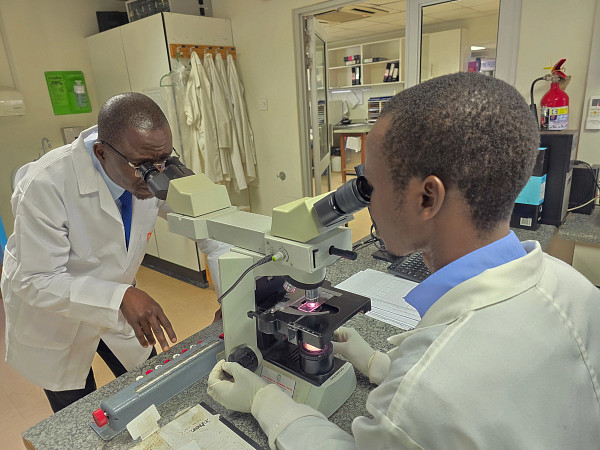
There are also growing shortages of cryptococcal antigen lateral flow assay (CrAg LFA) tests, which are recommended for routine screening in people living with HIV with low CD4 count. With fewer diagnostic tools available and a shrinking health workforce, linking patients to life-saving AHD care will become harder by the day. Unless urgent action is taken, continued disruptions to the AHD care package will result in hundreds of thousands of preventable deaths.
Flucytosine, an effective and key component of the World Health Organization’s first-line treatment regimen for cryptococcal meningitis, is difficult to administer in overburdened, resource-limited settings. It must be taken every six hours, which can lead to missed doses.
Additionally, many patients arrive at the hospital already in a coma, forcing healthcare staff to crush the tablets and administer them via nasogastric tube, a method not formally approved but often the only available option.
“We were already struggling with limited supplies of flucytosine across many countries. Now, with the HIV funding cuts, the situation is becoming worse. Widespread stockouts are just around the corner. Without this life-saving drug, preventable deaths are inevitable,” added Dr. Odionyi.
The open-label, randomized Phase II study for the new sustained-release flucytosine formulation will include 72 adult participants in Tanzania and Malawi. It simplifies dosing from four times to twice daily. It comes in pellet form, making it easier to take with water or through a nasogastric tube, and is suitable for outpatient self-administration. Participants will be divided into two groups: one will receive the current regimen of flucytosine every six hours for 14 days, while the other will receive the new sustained-release version, 6000 mg taken twice daily.

In 2023, around 12,000 people in Malawi died from AIDS-related illnesses. The need for faster diagnostic testing and simpler, more practical treatment options has never been more urgent,’ said Dr Cecilia Kanyama, Principal Investigator for the study at the University of North Carolina Project in Malawi. “The current flucytosine formulation is difficult to administer, which has impacted treatment outcomes for years. We’re hopeful this new formulation will be easier to use and lead to better outcomes for our patients.”
In Tanzania, around 1.4 million people depend on antiretroviral therapy to manage HIV. We’ve been telling people HIV is no longer a death sentence—if you can access and stay on treatment,’ said Prof. Sayoki Mfinanga, Global Coordinating Investigator at the National Institute for Medical Research (NIMR) in Tanzania. “But with supply chains under threat, that progress is at risk. We urgently need innovative, simpler treatments to protect those with advanced HIV and stop unnecessary loss of life.”
DNDi is developing the sustained-release flucytosine formulation in partnership with Mylan Laboratories Limited, India (a Viatris Company), the National Institute for Medical Research, Tanzania; the University of North Carolina Project, Lilongwe, Malawi; the Luxembourg Institute of Health; St George’s, University of London; and FARMOVS. This clinical trial is financially supported by the second European & Developing Countries Clinical Trials Partnership (EDCTP2) programme, supported by the European Union (grant RIA2018CO-2516), with additional funding from the UK National Institute for Health and Care Research (Department of Health and Social Care). The trial is also supported by the Swiss Agency for Development and Cooperation (SDC), Switzerland; Médecins Sans Frontières International, and other private foundations and individuals.