|
Getting your Trinity Audio player ready...
|
By OMBOKI MONAYO
Nairobi, Kenya: Kenya’s reproductive health sector stands at a crossroads, caught between shrinking donor support, a reduced national health budget, and a deepening crisis of adolescent vulnerability.
The recent withdrawal of USAID funding for reproductive health services has sent shockwaves through the sector, threatening access to contraception, post-abortion care, and essential commodities in some of the country’s most underserved regions.
At the same time, domestic budget allocations for health have stagnated, leaving county facilities and community programs scrambling to meet rising demand with fewer resources.
This funding vacuum comes amid a troubling surge in teenage pregnancies, early sexual debut, and limited access to reproductive health services—particularly in marginalized and resource-scarce areas.
According to the latest report by the African Population and Health Research Center (APHRC), nearly 800,000 induced abortions occurred in Kenya in 2023, with adolescents under 20 accounting for over 13% of those cases.
“Many of these young girls had no access to contraception, no safe spaces for care, and no legal protection. The report also found that 2.4 million of the 2.8 million pregnancies that year were unintended—an indictment of the country’s failure to meet the reproductive health needs of its population, especially its youth,” says Inviolata Wanyama who is the Marketing Evidence and Impact Director at Marie Stopes International (MSI) Reproductive Health Choices Kenya.
 The consequences of this funding and policy retreat are not abstract—they are felt in the silences of shuttered youth-friendly clinics, in the long queues at understocked dispensaries, and in the lives of girls forced into motherhood before their bodies or futures are ready.
In counties like Turkana, West Pokot, and parts of Nairobi’s informal settlements, the collapse of donor-supported programs has left entire communities without access to family planning, STI treatment, or adolescent counseling services.
For many, reproductive health is no longer a right—it’s a privilege reserved for those who can afford private care.
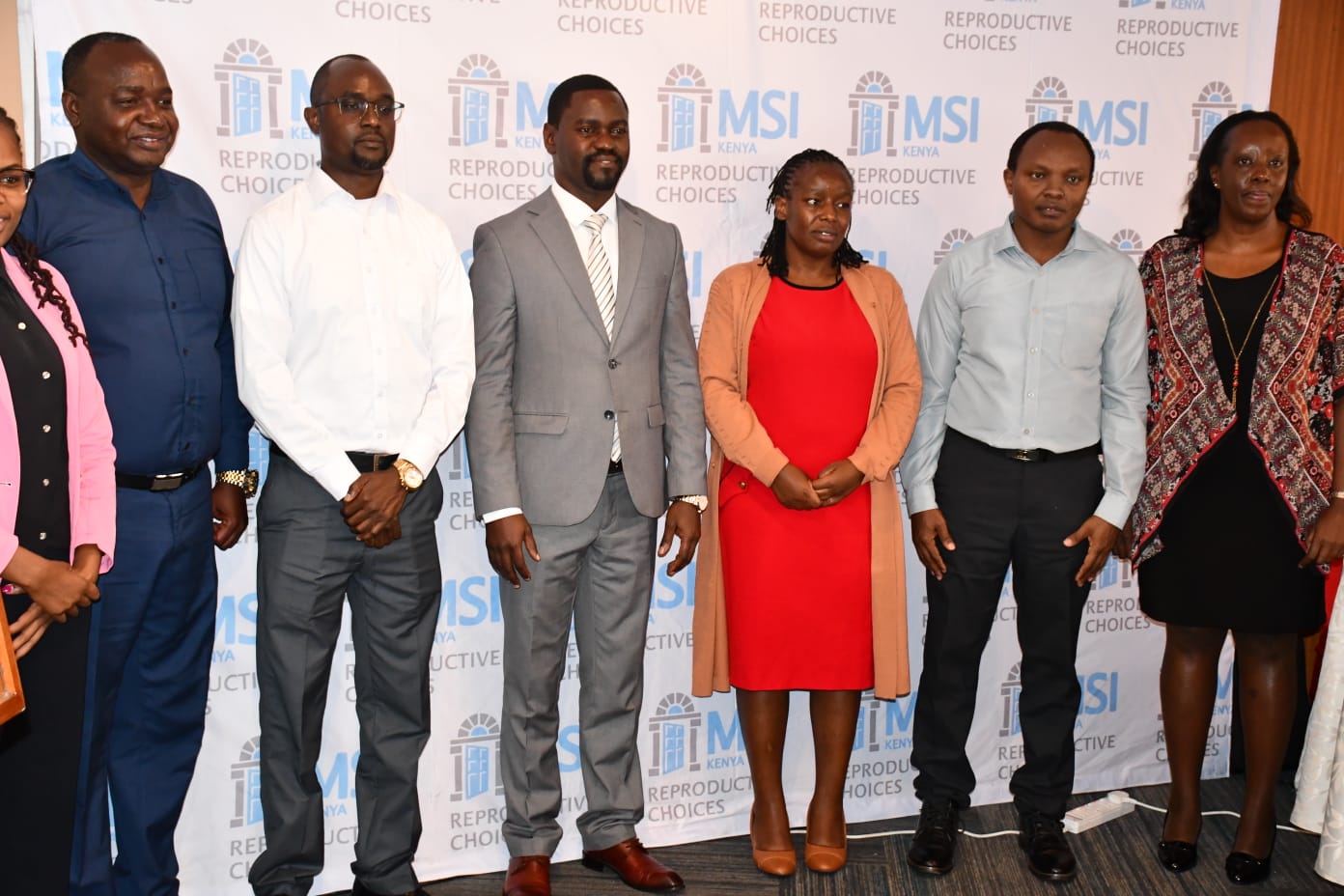
Amidst this shift in funding and resource mobilization trends, MSI Reproductive Choices Kenya, a national leader in sexual and reproductive health services, continues to provide sexual and reproductive health services to Kenyans in 41 counties, with plans to expand to the remaining 6 counties already underway.
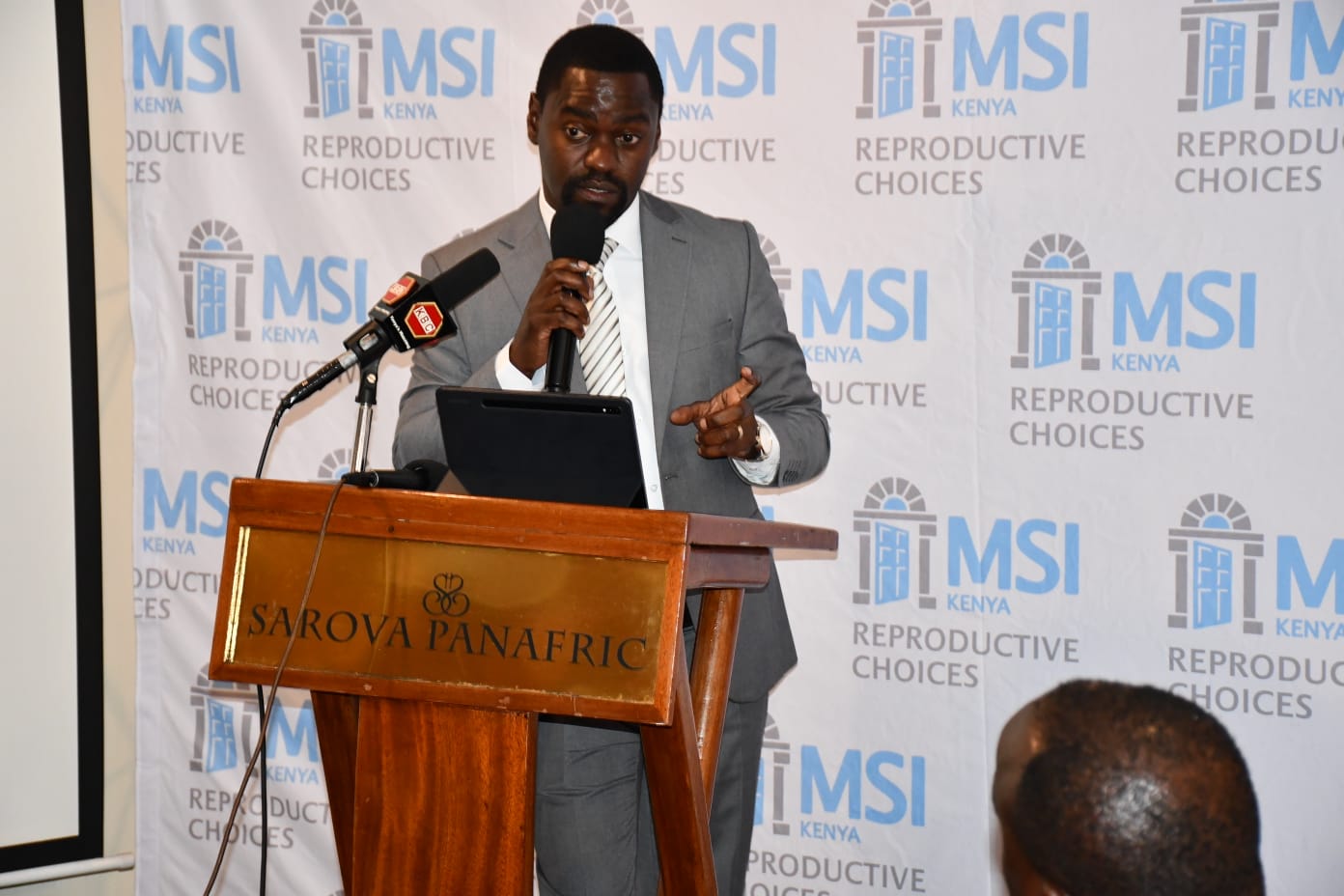
As the organization marked its 40th anniversary this year, Country Director Dr. Water Obita reflected on both its legacy and the mounting challenges ahead.
“This anniversary comes at a challenging time,” he noted, “following the withdrawal of USAID funding for reproductive health and other services. We are affected directly and indirectly. The consequences are dire, with reports of essential commodities planned for destruction overseas—some of them meant for distribution in countries like Kenya,” Dr. Obita says.
MSI Kenya’s work over the past four decades has left an indelible footprint on Kenya’s sexual and reproductive health landscape. From its humble beginnings in a single clinic in Pangani in 1985, it has grown into a nationwide network that includes 16 outpatient clinics, a full-service maternity hospital, and partnerships with over 60 private clinics.
According to Dr. Obita, MSI provided permanent contraceptive methods to 2,493 clients and mentored healthcare workers in over 260 public hospitals in 2024 alone.
“We are especially proud of our efforts to reach the most marginalized communities,” she emphasized. “Through strong partnerships with the Ministry of Health and county governments, we continue to strengthen health systems and deliver high-quality contraceptive services.”
MSI’s model of reinvesting proceeds from fee-based services to support vulnerable populations has helped sustain access in hard-to-reach areas.
 Its distribution of essential reproductive health products like Mariprist and Misoclear, and its provision of life-saving post-abortion care in both public and private facilities, has been critical in reducing complications from unsafe abortions and upholding the dignity of women and girls.
“By offering safe, respectful, and compassionate care,” Dr. Obita said, “we help reduce the risk of complications and uphold the dignity of women and girls.”
Yet even MSI’s robust infrastructure cannot fully shield the sector from the cascading effects of donor withdrawal and policy inertia. The government’s commitment to universal health coverage rings hollow against the backdrop of budgetary cuts and stalled implementation of the Reproductive Health Policy (2022–2032).
Despite its promise to prioritize adolescent health and expand access to contraception, the policy remains underfunded and unevenly rolled out. County health departments, already stretched thin, lack the technical capacity and political backing to operationalize its goals.
Civil society actors warn that without urgent investment and accountability, the policy risks becoming another paper promise.
“This is a moment for bold action,” Dr. Obita urged. “We call on the government of Kenya to increase domestic funding for contraceptives and remove policy barriers that hinder adolescents and young people from accessing services.”
Kenya must reimagine reproductive health not as a donor-dependent silo, but as a core pillar of its public health architecture.
That means restoring and increasing domestic funding, integrating adolescent services into primary care, and confronting the social norms that perpetuate early sexual debut and gender-based violence.
It also means listening to the voices of young people, especially those in marginalized communities, who are demanding dignity, autonomy, and access.
The stakes are generational. If Kenya fails to act, it risks entrenching cycles of poverty, inequality, and preventable harm. But if it rises to the moment—with bold policy, sustained investment, and community-driven solutions—it can chart a new path toward reproductive justice and health equity.
As Dr. Obita affirmed, “In the next four decades, our focus will be on expanding access through innovation, strengthening community partnerships, and deepening our impact on reproductive health and rights in Kenya.” He added, “As we commemorate this milestone, we look ahead to a future where every Kenyan, regardless of who they are or where they live, can access the reproductive health services they need.”