
|
Getting your Trinity Audio player ready...
|
By William Abala
Nairobi, Kenya; In Mathare slum, where 58% of women experience intimate partner violence (KDHS 2022) and 1 in 3 clinics refuse to provide contraceptives without male consent (FIDA Kenya 2023), accessing family planning is a life-threatening gamble. For the 42% of women here with unmet contraceptive needs (APHRC 2023), survival depends on places like this- clandestine clinics operating behind unmarked doors and pharmacies that sell pills under counters.
The peeling green paint on the corrugated iron wall is the only hint that this place is different. Jaded pieces of wood, scratched by time and rust, cling stubbornly above the doorway.
Mama Aisha hesitates at the doorstep, her breath shallow. The narrow path leading here is littered with broken bottles and the sour stench of sewage.
Behind her, Mathare slums pulse with the chaotic rhythm of survival—shouting vendors, wailing children, the ever-present hum of generators. But here, in this shadowed alley, the world shrinks to a single green door.
She steps inside. Darkness swallows her whole.
The corridor is a tunnel of gloom, the ceiling sagging under decades of neglect. A single flickering bulb casts jagged shadows on the stained walls. The air is thick as you get inside with the metallic tang of blood and antiseptic—a smell that clings to the back of the throat.
For a heartbeat, anyone would doubt this is a clinic at all.
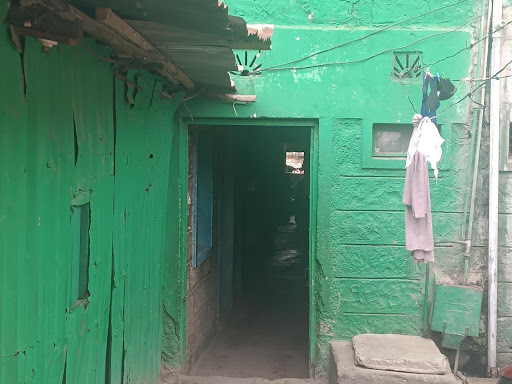
A backstreet clinic located in Mathare Informal Settlement. Photo/William Abala
This is where Mama Aisha comes to steal back control of her body.
In Mathare, proper hospitals with clean tiles and bright lights are for others, for those who can afford both the fees and the judgment. But here, in this crumbling sanctuary hidden like a shameful thing, the rules are different. Here, the midwife knows better than to ask questions. Here, contraceptives are handed over in crumpled brown paper bags, no receipts, no records.
Mama Aisha’s fingers tighten around the 100-shilling note in her pocket.
Mama Aisha tucks her packet of contraceptive pills on a lesso like a stolen secret. She has done this for three years—ever since her neighbor, Mama Njeri, was publicly shamed for using birth control.
“They called her a prostitute,” Aisha whispers, her eyes darting to the dark entrance separating her from prying neighbors. “Her husband left her. Now, I have to hide my pills like a criminal.”
Aisha’s fear is not unique. In Mathare, a sprawling Nairobi slum where over 200,000 people jostle for space and survival, contraception is not just a health choice—it’s a social gamble.
Data from the Kenya Demographic and Health Survey (KDHS 2022) shows that 1 in 4 women in informal settlements like Mathare want to avoid pregnancy but aren’t using contraceptives. The reason? Stigma, shame, and the looming threat of community ostracization.
The Weight of Whispers
The stigma is rooted in culture and misinformation. “Many believe contraceptives make women promiscuous or infertile,” explains Dr. Wanjiru, a clinician at a Mathare Health Clinic. She recalls a patient who bled heavily after a backstreet abortion but refused hospital care. “She said, ‘If my mother-in-law finds out I was trying to avoid pregnancy, she’ll curse me.’”
The numbers paint a grim picture: Only 38% of married women in Mathare use modern contraceptives, compared to 58% nationally (KDHS 2022). 62% of women who avoid contraceptives cite fear of judgment from partners or community (Marie Stopes Kenya).
For young women like 18-year-old Terry, the consequences are dire. Pregnant and abandoned by her boyfriend, she now vends assorted plastic items in Mathare’s streets, her dreams buried under diaper costs. “They told me contraceptives are for sinners,” she says, cradling her belly. “Now I’m the one they call a sinner.”
The Clinic behind Closed Doors
Healthcare workers in the Mathare informal settlement navigate this stigma daily. At the tucked-away clinic, Community Health Volunteer Veronica Muthoni dispenses contraceptives in unmarked bags. “Some women come with fake stomach pains so neighbors won’t suspect,” she says. The clinic’s data shows 40% of clients request discreet services, fearing violence or divorce if discovered.
But secrecy has limits. “We can’t reach everyone,” admits Chris Obera, a public health expert with the County Government of Nairobi. “When community leaders call family planning ‘un-African,’ women listen.”
Breaking the Silence
Activists are fighting back. Moreen Atieno, a representative from Ruaraka Social Justice Centre, a community-based organization (CBO) in Mathare, holds clandestine meetings with women in local churches and markets. “We teach them: Your body is yours,” she says. Her group uses role-play to combat myths, like the belief that contraceptives cause cancer.
Some men are joining the shift. Elias Ndung’u, a reformed critic of family planning, now educates other men in Mathare. “I used to beat my wife for taking pills,” he admits. “Now I know: fewer children mean better schools, not shame.”
Their efforts show glimmers of progress: African Population and Health Research Center (APHRC) data indicates a 15% rise in contraceptive use in Mathare since 2020, thanks to grassroots campaigns. Marie Stopes Kenya reports that male involvement programs have doubled partner-supported family planning in pilot areas.
The Policy Gap
Yet systemic barriers remain. While Kenya’s health policy guarantees free contraceptives, 3 in 5 clinics in Mathare suffer stockouts (KDHS 2022). “Women walk for miles only to find empty shelves,” says Dr. Wanjiru.
Legal protections are equally shaky. “Stigma isn’t just cultural—it’s enforced,” argues Advocate Judith Owenga, a gender rights lawyer. She cites cases where women were shamed for using contraceptives, with perpetrators citing “moral clauses.”
The road ahead demands more than pills. “We need men in the conversation, schools teaching reproductive health, and leaders calling out stigma,” insists Moreen Atieno.
For Mama Aisha, change can’t come soon enough. She dreams of a day when her daughter won’t hide contraceptives like contraband. “Let them judge me,” she says, squaring her shoulders. “But my daughter will choose her future.”
This story was produced under the Kenya Creates – Journalist Fellowship Story Grant Program in partnership with Journalists for Human Rights (JHR).