|
Getting your Trinity Audio player ready...
|
By Juliet Akoth
Nairobi, Kenya: Kenya’s energy and petroleum sectors are entering a new era as the Energy and Petroleum Regulatory Authority (EPRA) has rolled out thirteen newly gazetted regulations.
These reforms, introduced over the past year, are designed to modernize the sector, enhance safety, and create a more attractive environment for investment. They also aim to ensure that the country’s energy systems remain resilient, efficient, and inclusive.
The new regulations cover the electricity, renewable energy, and petroleum sub-sectors, reflecting EPRA’s commitment to aligning industry practices with the Energy Act and the Petroleum Act.
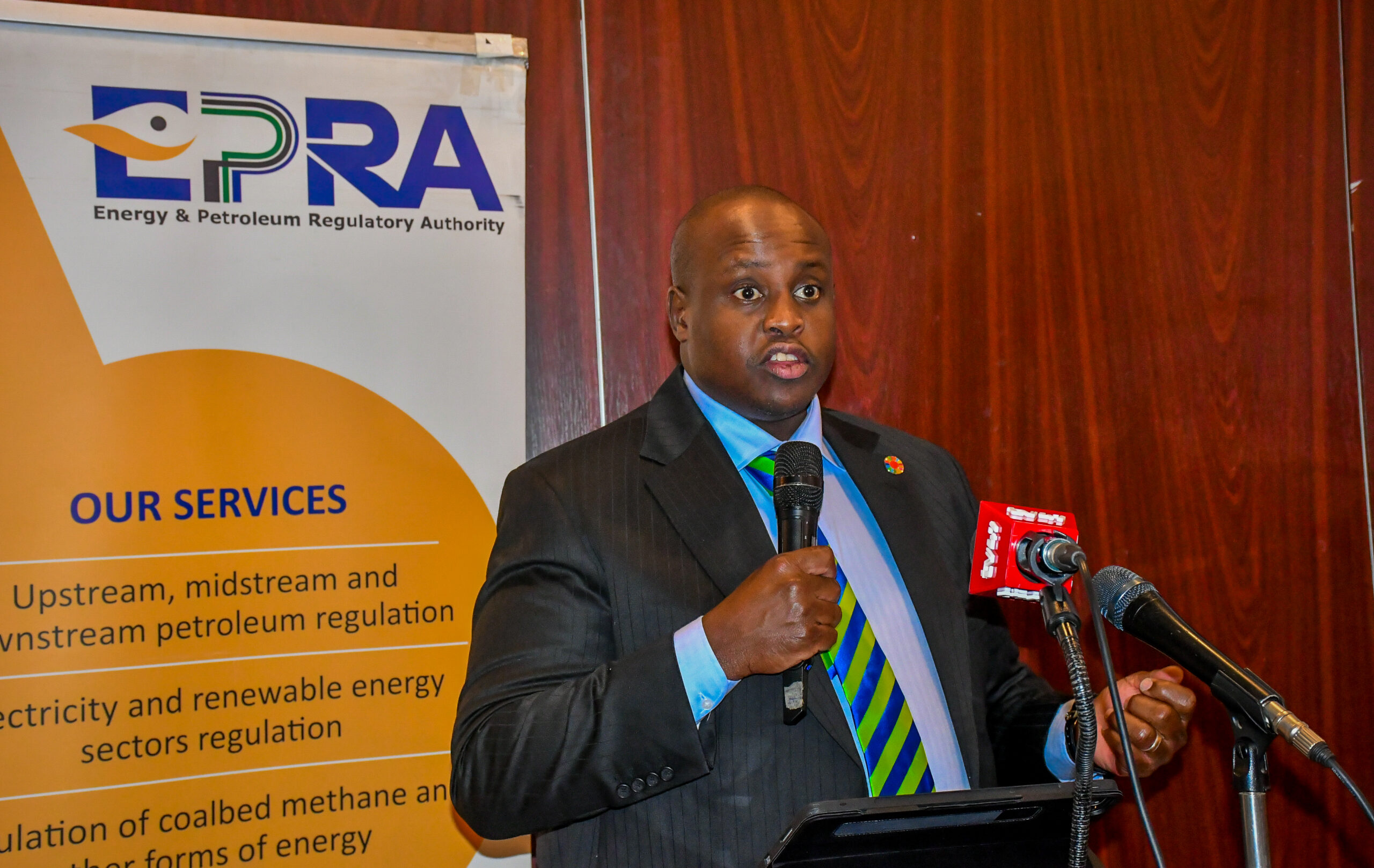
Speaking at a recent media roundtable in Nairobi, EPRA Director General Daniel Kiptoo explained that the changes are about more than just compliance.
“These regulations are strategic tools designed to help us plan more effectively for Kenya’s growing energy demand, align sector priorities with national development goals, attract new investment, and ensure that Kenyans have access to reliable, affordable, and sustainable petroleum and energy,” he said.
Kiptoo also emphasized that Kenya’s rapid economic growth, urbanization, and industrialization require smarter planning and more efficient energy use. He noted that the country’s progress in expanding energy access and diversifying its energy mix must now be matched with robust planning and the adoption of cleaner, more efficient solutions.
“These regulations were developed to close key policy and operational gaps, ensuring that our energy systems remain resilient, competitive, and inclusive,” he noted.
Among the most notable reforms is the Energy (Net-Metering) Regulations, 2024. For the first time, households and businesses that generate their own renewable energy, such as through solar or wind, can feed surplus power back into the national grid and receive credits on their bills. 
Kiptoo called this initiative a game changer, saying it opens the door for small-scale investors to participate in power generation and supports Kenya’s transition to a low-carbon economy.
On the other hand, the Energy (Solar Water Heating) Regulations, 2025, set out clear standards for the installation and maintenance of solar water heating systems.
The rules now require new buildings to make provisions for solar systems, with county governments empowered to decide on mandatory installation. The DG explained that this is expected to reduce reliance on electricity for water heating, lower costs for consumers, and stimulate growth in the solar market.
To further promote efficiency, the Energy (Energy Management) Regulations, 2025, make energy efficiency a central business strategy for large energy consumers. The regulations institutionalize structured energy management and regular performance reviews, which EPRA believes will drive innovation, accountability, and the creation of green jobs.
The Authority has also strengthened licensing for energy auditors and managers, introduced performance benchmarks, and created new opportunities for energy service companies to help industries finance energy-saving projects.
The petroleum sector is also undergoing significant changes. The Petroleum (Liquefied Petroleum Gas) Regulations, 2025, has updated safety and licensing standards for LPG businesses, supporting the government’s LPG Growth Strategy and Clean Cooking Vision.
With over 74% of Kenyan households still relying on wood and charcoal, expanding access to affordable LPG is seen as essential for improving public health, protecting forests, and reducing emissions.
Stella Opakas, EPRA’s Deputy Director for Mid and Downstream Petroleum, provided further insight into the new risk-based licensing approach for petroleum facilities. She explained that licensing will now depend on a facility’s risk profile, with low-risk sites receiving longer permits and high-risk operations subject to more frequent reviews.
Opakas also highlighted the introduction of mandatory tanker tracking, driver insurance, and accident reporting, measures that are expected to enhance safety and accountability across the sector. “All licensed operators must now submit operational data to EPRA, which will strengthen transparency and security of supply,” she said.
The regulatory overhaul is anchored in Kenya’s Constitution and the Energy Act 2019, ensuring fairness and predictability for investors. Deputy Director for Regulatory Affairs, Duncan Ndegwa, emphasized that public participation was central to the process.
He noted that the framework balances the interests of government, investors, and consumers, and ensures that every investor knows the legal requirements upfront.
As Kenya’s energy landscape evolves, EPRA is calling on all stakeholders to embrace the new regulations and work together to build a sector that is safe, efficient, and ready for the future.
Kiptoo concluded by urging the media to help disseminate information about the new regulations, stating that an informed public is key to compliance and progress. He believes these measures position Kenya for steady economic growth and reinforce its status as a regional energy and petroleum hub.