
|
Getting your Trinity Audio player ready...
|
By Maureen Bosire
Nairobi, Kenya: African experts are demanding greater control over the continent’s health, research, and digital agendas at a Nairobi conference.
The event, convened by the African Population and Health Research Center (APHRC) in partnership with the Global Systems for Mobile Communications Association (GSMA),Science for Africa Foundation (SFA), and the East, Central and Southern Africa Health Community (ECSA-HC), focused on the theme “Decolonising Global Health in the Age of Digital Transformation.”
Against a backdrop of shifting global power dynamics, digital expansion, and increasing local innovation, speakers emphasised that Africa must dismantle deep-rooted colonial legacies that still shape health systems, research funding, and knowledge production.
Opening the discussions, Dr. Anthony Mveyange, Director of Programs at APHRC, highlighted persistent structural barriers that continue to undermine Africa’s autonomy in health development. He noted that global health remains challenged by lack of diversity, white supremacy, coloniality, racism, and unequal distributions of power and privilege.
These forces, he said, systematically position African institutions as implementers rather than agenda-setters, limiting the continent’s ability to steer its own health future.
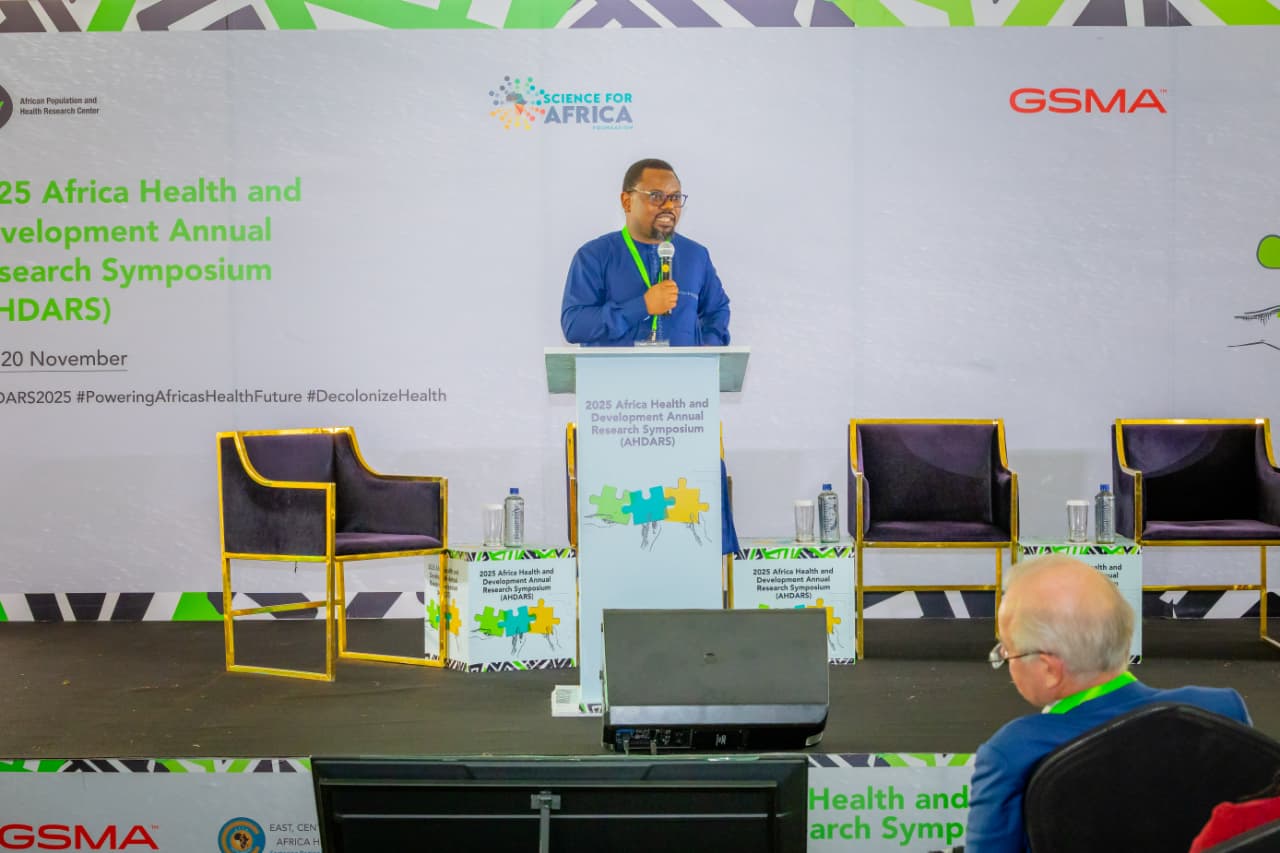
Dr. Mveyange added that while digital tools are transforming healthcare delivery from mobile health to electronic data systems,Africa must ensure that these technologies do not reproduce old inequalities. “Digital transformation should empower, not entrench dependency,” he told participants.
Building on this, Dr. Seye Abimbola, a health systems researcher from the University of Sydney, challenged African governments and institutions to take a more assertive role in shaping local and global health priorities. He urged governments to collaborate more effectively with the private sector particularly through intentional investment in research and innovation.
He noted that the recent reduction of USAID funding has, paradoxically, caused many African governments to increase their own health budgets, signalling a shift toward greater regional ownership. “This is the moment for African countries to build and strengthen our own structures instead of relying heavily on foreign institutions,” he said.
Dr. Abimbola emphasised that true decolonisation requires empowering local researchers, enhancing Africa-led data governance frameworks, and prioritising community-driven health solutions. He argued that global health can only be equitable when African actors are recognised as equal contributors in generating knowledge and influencing policy.
Digital transformation emerged as a central opportunity in this process. Representatives from the Global Systems for Mobile Communications Association underscored the role of mobile connectivity, data protection, and cross-border data flows in expanding healthcare access. They highlighted ongoing efforts to support policy frameworks that enable digital health scale-up while safeguarding privacy and ensuring that data generated in Africa benefits Africans.
According to Sr. Seye Abimbola, decolonising global health in a digital era means shifting power, not just modernising tools. It involves strengthening African institutions, financing home-grown research, and asserting sovereignty over data and technology systems.