

|
Getting your Trinity Audio player ready...
|
By Melisa Mong’ina
Juja, Kenya: At the heart of Jomo Kenyatta University of Agriculture and Technology (JKUAT) music and messages hit harder. But these were not the normal campus entertainment hits. They were hard talks about the harms of alcohol, its growing influence and its effects among young people, and the marketing strategies used to entice them.
To address the rising trend of alcohol use among young people, the NCD Alliance-Kenya (NCDAK), in collaboration with Students Campaign Against Drugs (SCAD), the Ministry of Health (MOH), and the Nairobi County NCDs Advocacy Chapter (NAC-NCD), has partnered with JKUAT to educate students about the health risks of alcohol and the manipulative strategies used by alcohol industries.
Alcohol and the NCD Burden
According to the WHO, non-communicable diseases (NCDs) account for 41% of deaths in Kenya. Alcohol use remains a major, preventable contributor to this growing burden.

Over 40.5% of Kenyan university students have consumed alcohol in their lifetime, according to the 2024 NACADA report. This statistic raises concerns about early exposure and potential long-term risks associated with alcohol consumption.
Additionally, 8.7% of university students were found to have severe Alcohol Use Disorders (AUDs), with male students showing a higher prevalence compared to female students, indicating the need for medical or psychological intervention.
Creating a Healthy and Sober Generation
Harrison Andeko, Program Officer with the NCD Alliance-Kenya (NCDAK), explains that their purpose at JKUAT was to raise awareness among youth and communities about the dangers of alcohol and to promote strategies aimed at reducing its consumption.
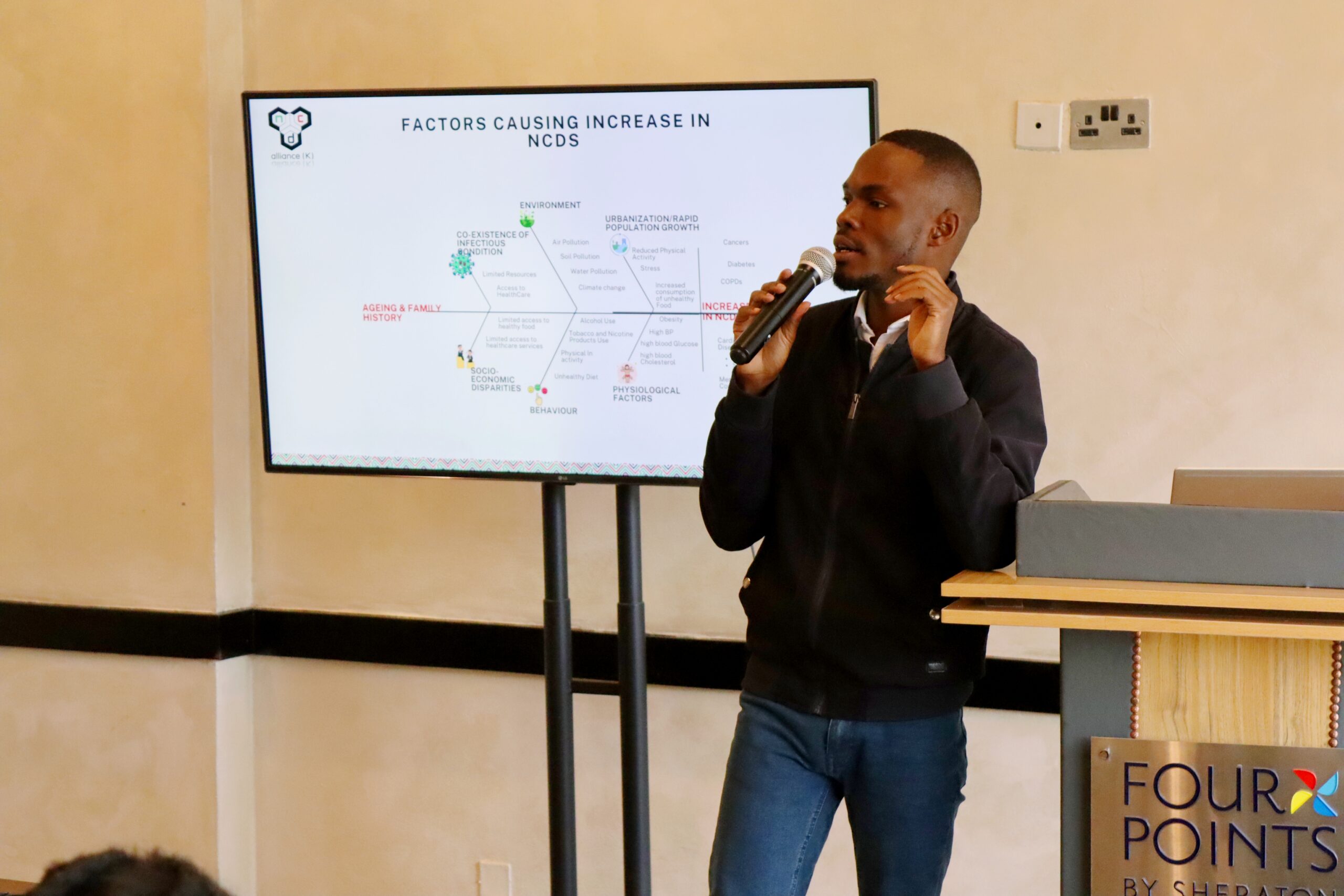
“We are implementing a program supported by the Swedish IOGT-NTO movement that fights alcohol use globally. Part of it involves sensitizing youth and communities on alcohol harm and strategies of alcohol use reduction,” says Andeko.
The program is operated in five counties with trained individuals who report alcohol-related harm and monitor violations of alcohol control policies.
“We work in five counties with Community Alcohol and Rights Monitors who report on alcohol harm and also violation of alcohol control policies in the country. They also sensitize community members on the dangers of alcohol,” he explains.
As part of expanding the monitors’ role, outreach efforts have extended to universities. Andeko says it is a strategy to reach young people and educate them on the dangers of alcohol and methods to reduce use.
“The reach to the university is an extension of what the community alcohol and rights monitors are supposed to do. They are reaching out to young people to get more awareness about the harms of alcohol and strategies to reduce alcohol use so that we can create a generation that drinks less,” adds Andeko.
Reducing alcohol consumption contributes to national development by minimizing economic burdens caused by alcohol-related issues.
He further stresses that awareness should go beyond health effects to include social, cultural, and economic consequences of alcohol use.
“Students need to be aware about the harms of alcohol use before being involved in such talks. These harms are not just health-related but also include sociocultural challenges and the economic burdens such as loss of income, medical expenses for alcohol-related disorders and diseases,” he says.
According to Andeko, raising awareness among students helps cultivate leaders and watchdogs who can monitor violations of alcohol policies and human rights.
Informed students can act as peer leaders who promote a sober lifestyle and advocate for social, cultural, and economic well-being
“Educating the youth will help us have champions who create awareness on the harm of alcohol and act like watchdogs for violation of policy and human rights, and create a more sober society. Alcohol use is also a factor in gender-based violence,” he explains.
Most students are unaware of the strategies used by the alcohol industry to entice them. They are viewed as long-term customers to secure future profits.
“The industry is so keen to hook the young people and women into alcohol use because they are the biggest broad of customers that the industry can have. Sadly, most young people, and even many adults aren’t aware of these strategies,” he observes.
He points out the misleading tactics used by the industries such as promotions and deceits. Many don’t realise that the industry prioritizes profits over public health.
“Whether it’s through promotions, manipulations, false claims, or presenting itself as a good corporate citizen in the society, the industry uses many deceptive tactics that most people, young and old aren’t aware that their goal is to make us all drink, putting profits above people,” he adds.
Policy Advocacy for Reducing Alcohol Harm and Strategic Alignment
Kenya is actively working to reduce alcohol consumption through various initiatives. The Alcoholic Drinks Control Act 2010 is being implemented nationwide, and a new national alcohol policy is in place. Additionally, the Ministry of Health is developing a national alcohol reduction strategy, all designed to curb consumption without industry influence.
These efforts are said to align with global movements supported by organizations like the NCD Alliance Kenya, which advocates for policies that limit alcohol availability and raise prices, fostering a healthier and more sober society.
“Beyond national efforts, we are aligned with global initiatives that aim at ensuring there is less alcohol availability and increasing prices to promote a more sober society,” explains Andeko.
Universities’ Role in Student Protection and Expanding Forums to Other Institutions
He urges universities to be alert about alcohol industry tactics, offer safe spaces for mental health and alcohol-related discussions, and provide support, including psychotherapy, for students battling alcohol use disorders.
“Universities should be vigilant to industry tactics such as sponsoring sports and events. They should educate students on alcohol harm and provide a safe space for students to talk about alcohol and mental health issues. Psychotherapy for students with alcohol use disorders is also essential to help them talk openly and get help,” he advises.
Andeko notes plans to expand these sensitization forums to more universities as resources allow. Through the Alcohol and Substance Use Prevention Technical Working Group, they aim to involve more stakeholders to support and broaden the outreach to youth-friendly spaces.
“We are mobilizing resources to reach more universities and youth-friendly spaces. Additionally, we are part of the Alcohol Use Prevention Technical Working Group and we hope to bring more stakeholders to support and expand these initiatives to reach as many young people in the country as possible,” shares Andeko.
He concludes that alcohol use is a societal responsibility. Addressing it helps achieve multiple Sustainable Development Goals (SDGs), from reducing poverty and violence to promoting education, peace, and well-being.
“Alcohol use is not an individual choice but a society’s responsibility. Preventing it requires collective efforts. Reducing consumption helps to achieve more than just one SDG,” he emphasizes.
Guarding the Youth From The Harms of Alcohol and Industry’s Game
Benjamin Odhiambo, Program Officer with the Students Campaign Against Drugs (SCAD) shares their motivation to be part of the sensitisation forum at JKUAT.
He says their presence was more than just awareness, it was about building a movement of student advocates who understands the industry’s game and are ready to quit alcohol use.
“Besides being members of NCDAK, SCAD’s priority is preparing the next generation of alcohol control advocates. The engagement was an opportunity to spread wings and grow a youthful community, striving for a healthier and safer future,” he emphasizes.
Despite high numbers of students using substances, many remain sober though that’s not worth celebrating since normalisation of alcohol use poses a great threat among campus students.
“As statistics are damning on the number of college students currently using substances, most have managed to maintain a sober, healthy lifestyle. However, the normalisation of substance use may induce more to begin using them, causing various consequences such as mental and substance disorders, violence, and disciplinary issues,” he points out.
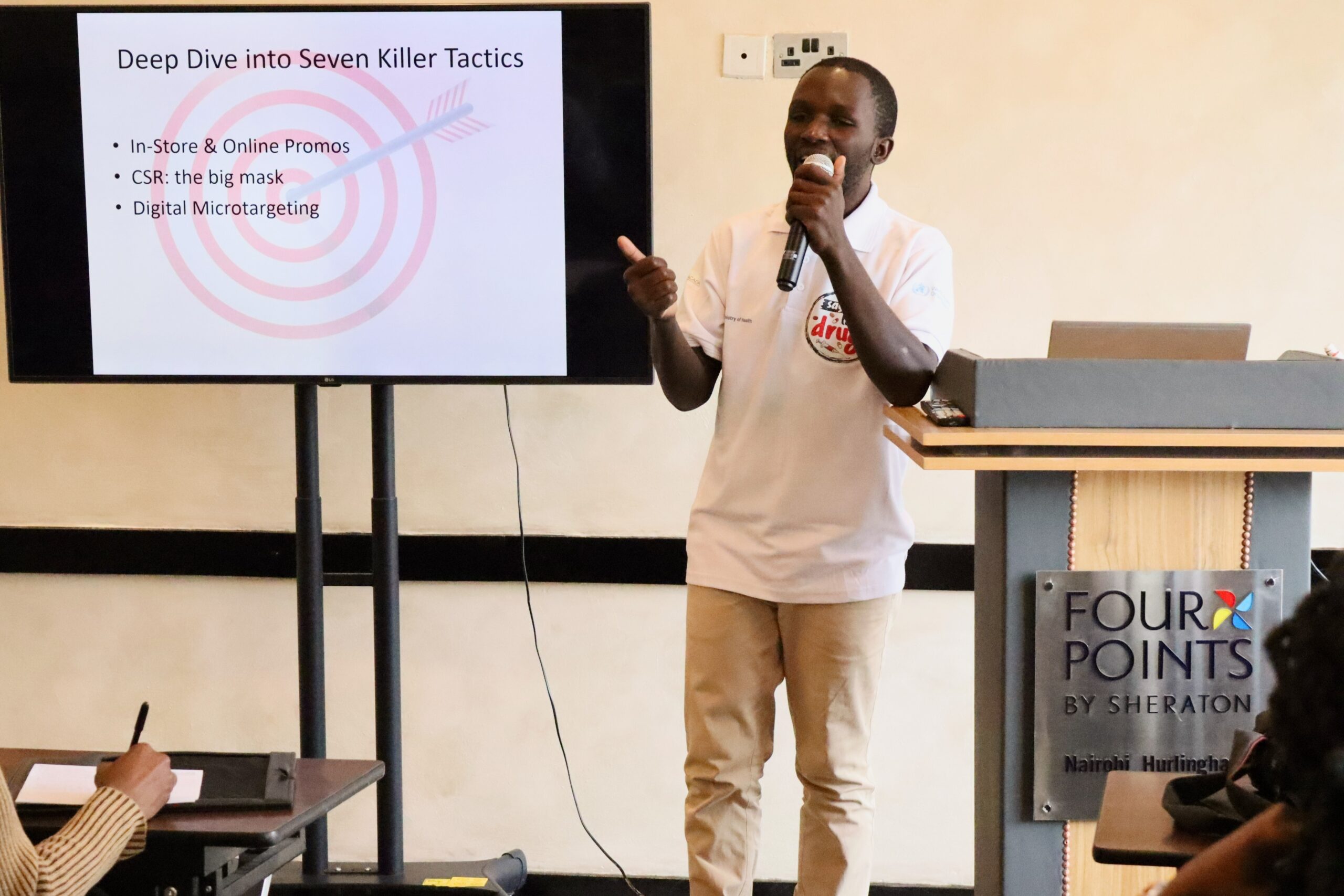
Odhiambo notes the various tactics used by alcohol companies to attract students including offering money for school events, internships, sponsor concerts and sports, and even work with social media influencers to promote their drinks as cool and fun.
He further highlights that the companies also use strategies like the Dubious 5 to lie, manipulate, promote alcohol use, interfere with politics, and even stop good policies from being implemented.
“These industries embed themselves in schools through sponsorships, internships, concerts, and influencers, selling alcohol as fun and socially acceptable,” explains Odhiambo.
“They’re also using tactics like the Dubious 5 to ensure they undermine policies, scrutiny and accountability for maximum profits.”
Apart from the dubious 5 strategy, they now add sweet flavours and bright colours to alcohol to attract the youth. They even go as far as using African themes like “manyatta” in their branding.
“They are now deploying the use of flavours to mask the taste and scent of alcohol, and bright colours that appeal to youth, including use of indigenous outfit colours or names like manyatta in their branding and packaging,” he observes.
With these strategies, it is hard for students to know they are being deceived. However, this changes when the students have been empowered and made aware of them.
“Youths are often unaware of the deception used by alcohol industries until they are critically empowered to spot the problem. This also applies even to the policy makers who are not aware of the tactics,” Odhiambo adds.
Solutions That Will Help Curb Alcohol Crisis
Odhiambo calls for strict marketing tactics, prohibiting online sales and advertisement of alcohol, ensuring that alcohol outlets are far away from schools and residential areas.
“It is crucial to prohibit online sales, regulate ads, and keep outlets at least 300 meters away from any learning institution, residential areas, social places, health institutions, and even government institutions,” he urges.
He also stresses the need for counties to prioritise people’s health rights and invest on alcohol tax revenue in prevention and treatment, not profits.
“Counties should ensure that licensing promotes health rights of the people and not economic gains of a few. National and county governments should both avail resources from alcohol taxation, licensing and import fees to support community interventions on prevention and treatment,” he recommends.
Finally, Odhiambo demands that community members should be part of licensing decisions.
“It is crucial for community members to raise their voices and vote whether an alcohol outlet should be licensed in their community or not,” urges Odhiambo.
Student and Advocate Perspectives: JKUAT and NAC-NCD on the Forum
Brenda Imali, Health, Catering and Accommodation Secretary at JKUAT, shares that the student sensitisation forum was not only insightful but had a strong impact on her peers.
“The event was great. Many students left having learned a lot about drugs and how to handle them,” says Imali.

She highlights the significant turnout and positive response from participants, expressing hope that similar events will be held again.
“We had a large number of students who really enjoyed the session, and the feedback was very positive. I’d really like the organisers to come back and do another event,” she adds.
Imali says her motivation to attend the forum was driven by a desire to understand the relationship between non-communicable diseases (NCDs) and substance abuse.
“I wanted to learn about NCDs and how they are connected to substance abuse, because sometimes people misjudge or separate the two,” she explains.
She debunks the common belief that drug use boosts athletic performance, stating that sports shouldn’t be affected by substance abuse.
“Most people believe they need drugs to be activated before playing sports. The insights on drugs and sports helped me a lot. As a sportsperson, I now know the path I want to follow and sports shouldn’t be destroyed by drugs,” she notes.
She believes that such forums are crucial for university students who are most vulnerable to peer pressure.
“These interactive sessions really help us understand the negative side of alcohol and drug use. Forums like this can change lives because many students start using them due to peer influence,” she affirms.
Imali adds that such engagements can steer students toward healthier decisions.
“Having such forums will also guide the students in the right direction and empower them to make healthier choices,” she stresses.
She also raises concern about the presence of alcohol marketing within campuses, condemning such exposure as it increases curiosity and temptation among students.
“I really don’t support alcohol advertising in universities. Alcohol companies know students are among the largest consumers, so they target us with events. This only makes students want to try it. Restricting such advertisements will prevent students from being influenced,” she warns.
Imali strongly advises her peers to stay away from alcohol, citing its health risks and urging them to educate others on the dangers.
“I would advise students to stop drinking because it harms their bodies. If your friends are using alcohol, find something better to do. Try to educate them on its disadvantages so they can stop as well,” urges Imali.
Mirriam Chepkemoi, a Health Advocate at the Nairobi NCDs Advocacy Chapter (NAC-NCD), Nutritionist, and Content Creator, emphasises the need for public education on alcohol-related harm, particularly among women, as statistics presented during the forum showed an increase in the number of women consuming alcohol.
“What stood out for me during the forum was the emphasis on the rising trend of alcohol consumption among university students, particularly women. It highlighted the need for more awareness to address the growing burden of alcohol use in the country,” she shares.
She stresses that alcohol talks targeting young people are crucial, as they highlight the dangers of consuming alcohol, enable them to make healthier decisions and avoid peer pressure.
“It is crucial to speak to the youth about alcohol, especially its long-term effects on health, academic performance, and overall well-being. Such talks can influence their thinking, encouraging healthier choices and helping them resist peer pressure,” she adds.
Chepkemoi underscores how the forum changed her perspective on alcohol and its influence on young people,challenging her to create content that raises awareness among her peers.
“The forum reinforced my understanding of alcohol’s impact on young people. It also challenged me to use my platforms to create content that raises awareness, especially among youth who may not fully understand the dangers of alcohol use and addiction,” Chepkemoi affirms.
She firmly believes that educating the youth will be crucial in helping them understand the effects of alcohol use. Universities should have support systems to assist those struggling with alcohol addiction.
“Raising awareness through such forums and digital content will help curb the growing burden of alcohol abuse among students. Support systems and counseling services within universities are also crucial, particularly for those struggling with addiction,” she emphasizes.

Parents should also be involved in creating awareness about alcohol risks. Chepkemoi calls for stronger policies that restrict alcohol availability and marketing in universities.
“Universities should enforce strong regulations that restrict alcohol marketing and availability on campuses. Parents must also be intentional in educating their children about alcohol and its risks,” she recommends.
She advises students to avoid peers who may influence them into alcohol abuse.
“We’re often influenced by our peers, so I urge students to be mindful of the company they keep and avoid unnecessary peer pressure,” she encourages.
The fight against alcohol-related harm is far from over, but the collaboration between NCD Alliance Kenya and its partners offers a powerful approach for change and promotion for a healthier and a more sober generation of young people.