|
Getting your Trinity Audio player ready...
|
By Mercy Kachenge
Nairobi Kenya: The Cabinet Secretary for Health Hon Aden Duale has scrapped the mandatory fee for Kenya Medical Training College seeking attachment opportunities at Level 6 hospitals citing concerns over exorbitant charges by these institutions.
The fee being charged for access and experience hinders the quality of training and also undermines the role of KMTC which is a government institution created solely to train health officials.
This comes after the board and management of KMTC raised this concern that has affected medical students seeking clinical services and even the rotation at developed health facilities.
Duale dismissed the practice of national referral hospitals charging medical trainees significant fees for clinical attachments.
“One of the issues raised by the KMTC Board of Management was the excessive and varying amounts students are required to pay during their practical training in public hospitals,” the CS stated.
“This practice, particularly in Level 6 hospitals under my ministry, is unacceptable and must stop,” he warned.
Duale pointed out that facilities such as Kenyatta National Hospital demand up to Ksh10,000 from students for attachment, a figure that is unjustified, especially within public institutions.
He emphasized the need for transparency and valid justification where any form of fee is imposed.
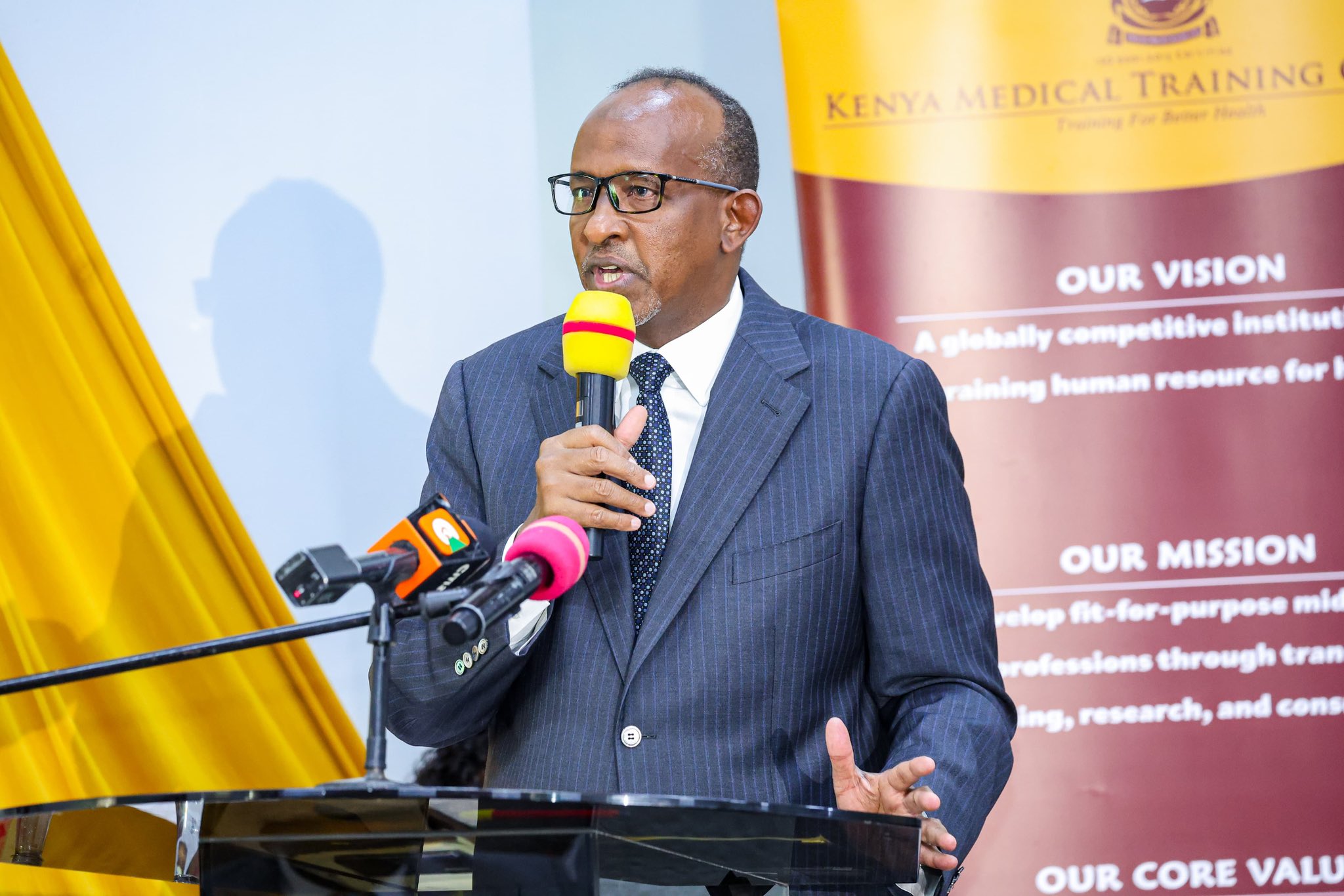 The CS revealed that he will engage with the Council of Governors together with the President to deliberate on the issue in terms of rational fee being charged at the hospital.
“Although health is a devolved function, I will work to ensure fairness in all public hospitals, especially since Level 6 hospitals fall directly under my jurisdiction,” he stated.
Duale underscored Duale that scraping off the fees is a step toward making healthcare training more equitable and restoring public confidence in the health sector.
The CEO of KMTC Dr. Kelly Oluoch underscored the importance of the decision by the CS , noting that students have long been burdened by the costs of accessing practical training in public health facilities.
“KMTC is a government institution established to train healthcare professionals, and attachment fees have been a barrier to quality training, especially for students from underprivileged backgrounds.”
He pointed out that they will make a follow up of the attachment fee being paid by students at facilities.
Dr. Oluoch stated the institution is grappling with the effects of halted donor funding by the US President Donald Trump.The suspension of the “Missing Imara Project,” previously funded by USAID, has disrupted capacity-building programs in 10 counties and led to job losses among project staff, a programme which costed around 4.8 million US Dollars.
In terms of mitigating the halt of donor funding, he affirmed that there are ongoing efforts to partner with other donors to bridge the funding gap and continue supporting healthcare workforce development at county level.
The CEO also raised concerns about staffing challenges facing the college as a result of continued expansion of campuses being in 45 counties which has stretched resources due to growing student population.
Dr. Oluoch called for increased budgetary support to recruit lecturers, equip laboratories, and improve training infrastructure.
“With over 85% of the country’s healthcare workers trained at KMTC, and increasing international demand for our graduates, we must ensure our standards remain high,” Dr. Olouch stated.
He stressed the need of aligning their vision to the bottom-up economic transformation agenda, one which is making sure that there is access to quality health care to all Kenyans. </p