

By Ken Osoro
Nairobi, Kenya: A growing number of farmers, from rural shambas to peri-urban plots and even city backyards, are turning to digital tools that offer something their grandparents never had: real-time weather prediction.
Farmers are embracing the digital transition, especially the use of digital mobile applications to garner information on agriculture. This is guided by hubs that equip start-ups and growers with training, and networks designed for what is now called the twin transition: going green while going digital.
Thanks to digital advancement and the rise of Innovation Hubs, a quiet transformation is taking place across Kenya’s farming communities, urban, peri-urban, and rural alike. Farmers can plan more effectively, reduce risks, and face the uncertainty of climate change with a new kind of confidence.
To see this transformation firsthand, we head out on assignment. It is not every day you find reporters wandering into this corner of the city, but here we are, deep in Njiru ward, Kasarani Constituency.
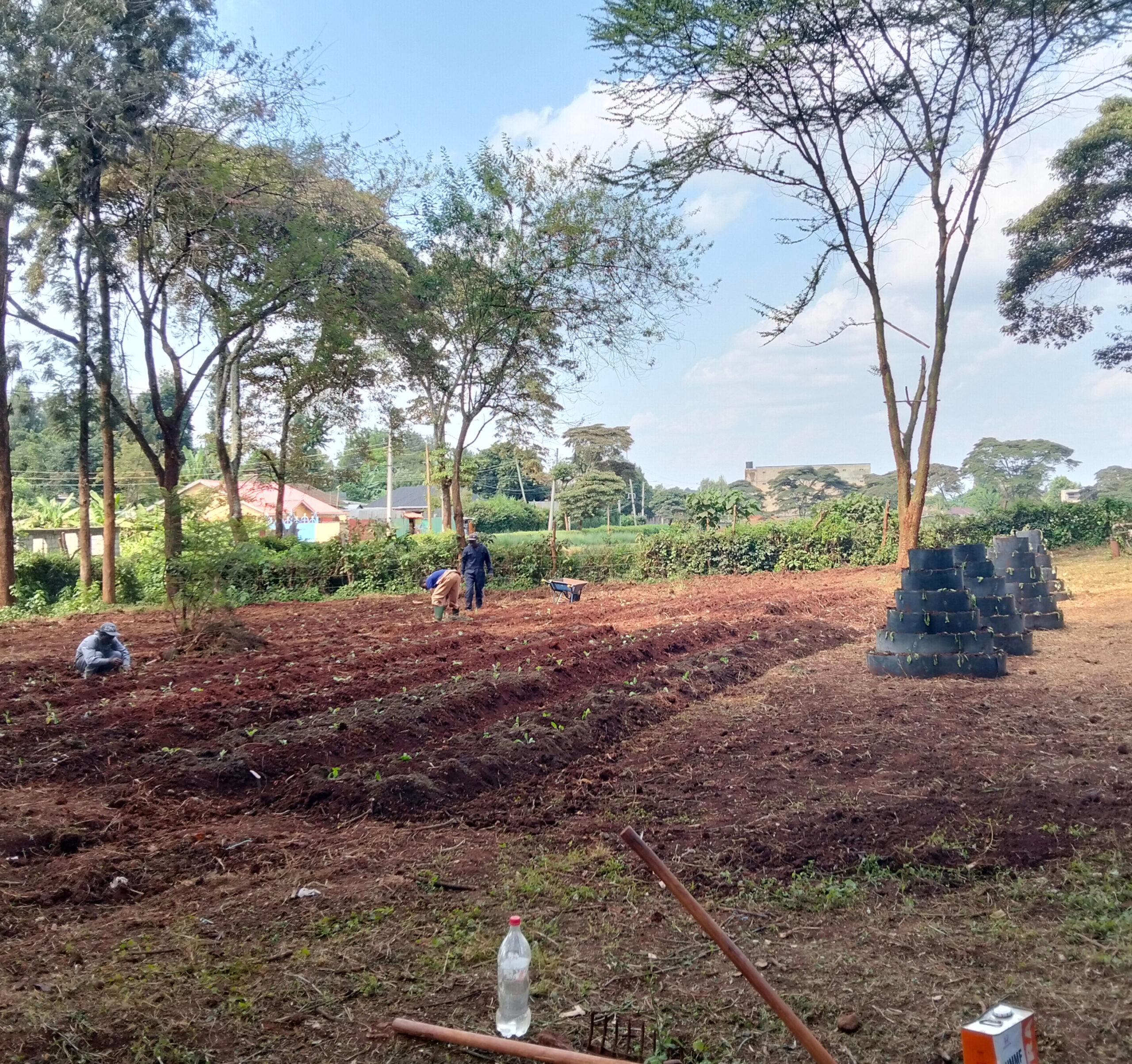
The City Shamba, a thriving urban farm nestled between the Ngong and Nairobi rivers. Around it, estates are rising fast, apartment blocks stacking skyward, yet within the gates, the atmosphere feels different, alive, green, and purposeful.
Farmers, some seasoned, others just starting out, move through the rows with practiced energy, their faces glowing with a quiet pride and shared mission.
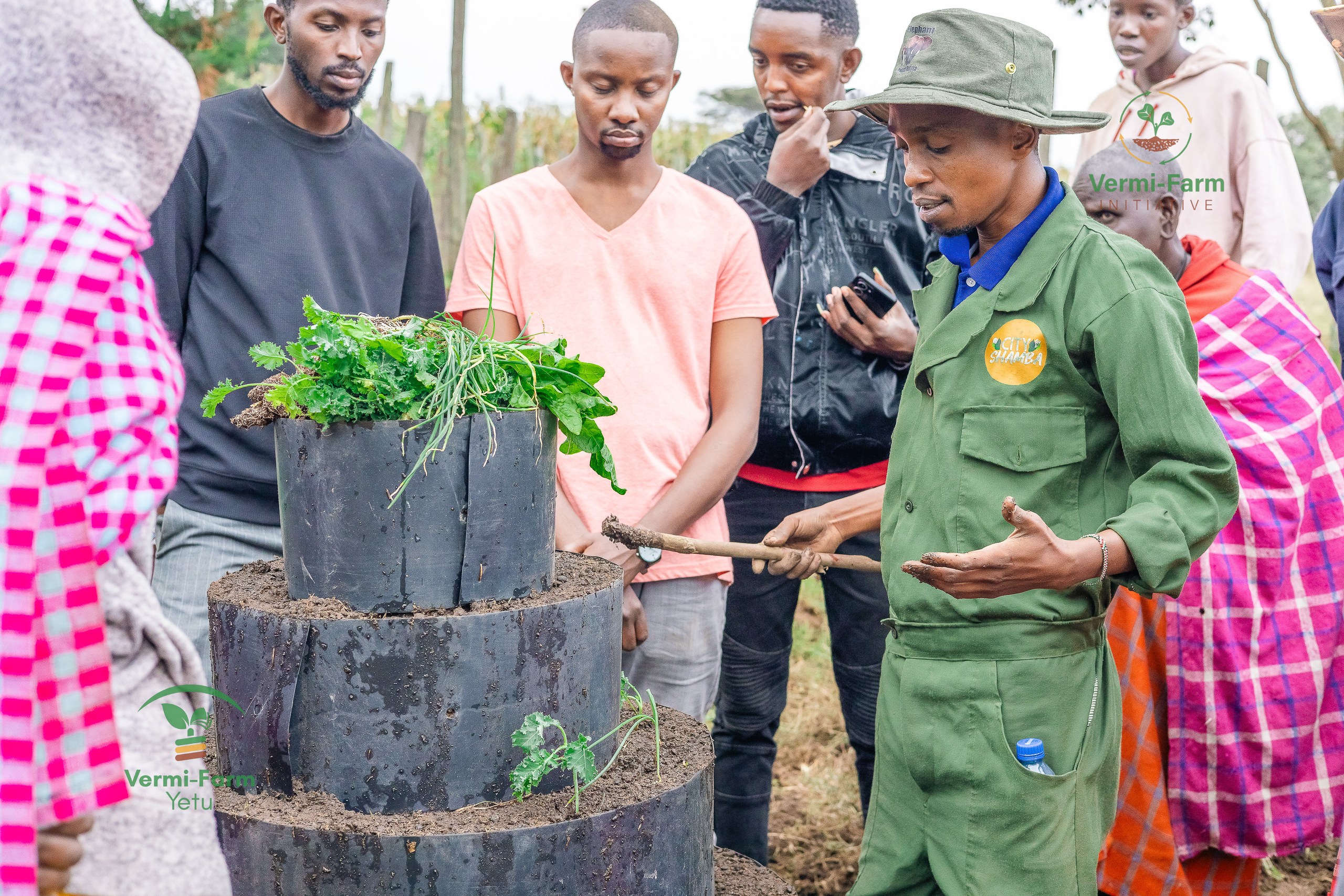
Under a shaded canopy, a group of small-scale growers gathers closely around a farmer, leading a training session. The topic of the day was on smart farming, modern innovation, and the sustainable practices reshaping agriculture for an uncertain climate future.
The officials speak with passion, breaking down how urban farming is more than just food on the table; it is a pathway to environmental greening, cutting emissions, and restoring ecological balance in towns choked by traffic fumes and industrial smoke.
Around them, the farm is alive with quiet industry. On one side, farmers carefully overseed beds, transplanting young seedlings into dark, compost-fed soil rich with life. On the other hand, hands tilt watering cans gently, releasing a fine spray over neat rows of vegetables that glisten under the midday sun.
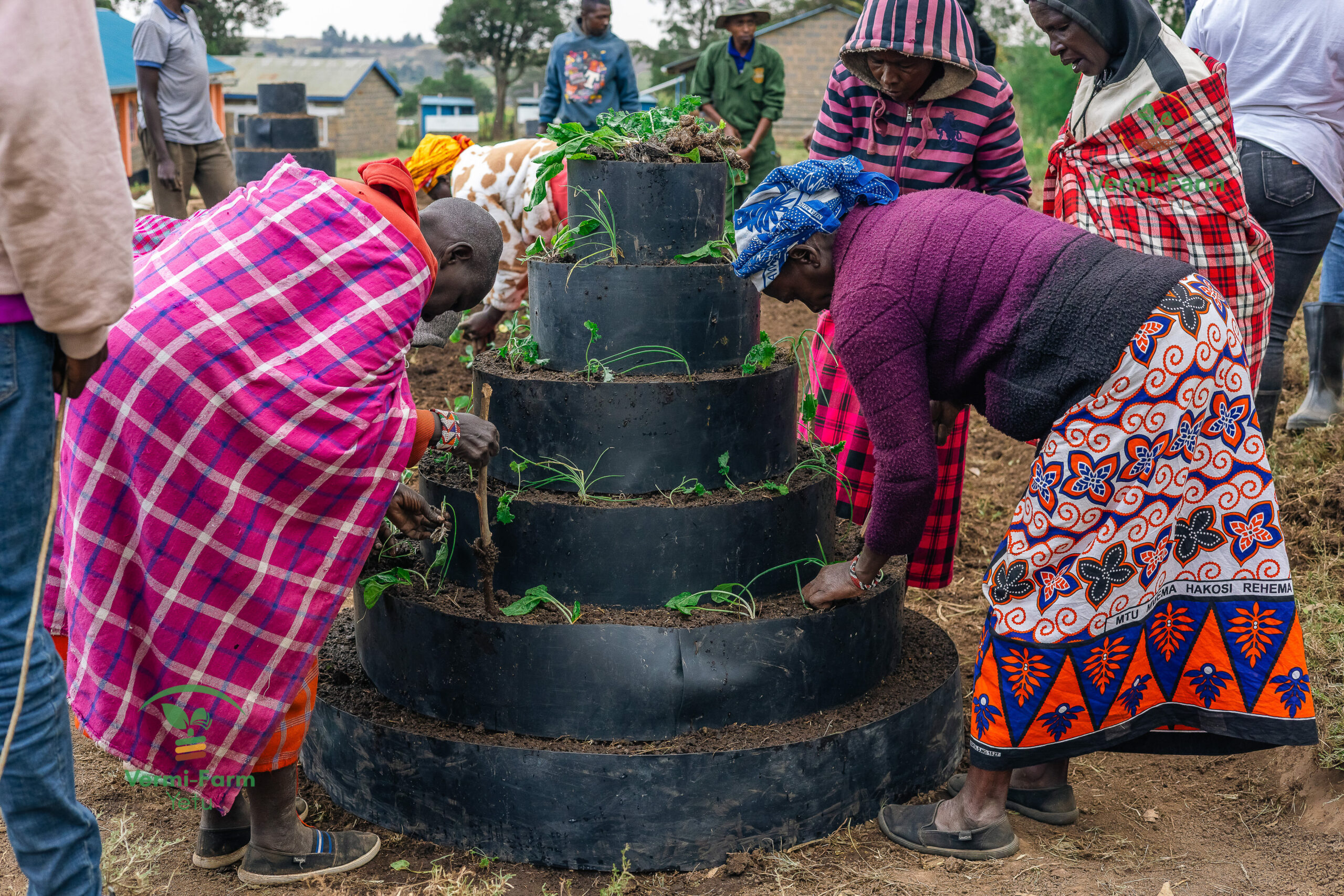
They are proving that climate solutions can sprout in the middle of our towns, one day, one seedling at a time, not just in rural countryside.
These smallholder farmers, who form the backbone of Kenya’s food production and contribute heavily to the national GDP, now find themselves on the frontline of a changing climate.
But they are shaken. The rains that once followed familiar patterns now defy prediction. Farmers speak of long rains that come late, if at all, and short rains that vanish without warning.
For many who still depend on rain-fed cultivation, especially within urban and peri-urban areas, this unpredictability makes every planting season a gamble. The result is reduced yields, tighter household budgets, and the looming threat of food insecurity, unless new tools step in to bridge the gap.
Traditional farming methods, once the bedrock of food security for generations, are now buckling under the weight of unpredictable weather.
Small-scale farmers striving to cultivate change often struggle to secure consistent yield, trapped in a cycle of low productivity and recurring food insecurity, yet a quiet shift is underway.
Modern tools and precision agriculture are stepping in, offering hope against the uncertainties of climate change while driving a new wave of greening across communities.
It is in this space that digital mobile applications have firmly positioned themselves, bridging the gap between farmers and technology, and ensuring that the promise of climate-smart agriculture becomes a reality for those who need it most.
For years, many small-scale farmers, especially in rural areas, have struggled with one fundamental problem: lack of reliable weather data. Without it, choosing the right time to plant has often been little more than guesswork. The risks are enormous, so too early and seedlings wither in dry soil, and if it is too late, and rains drown tender crops. But change is coming.
Where do Mobile Applications fit in this Greening Tide?
Digital platforms are proving to be the most powerful tools linking farmers to knowledge, researchers, and climate champions. Many smallholder farmers operated in isolation, cut off from real-time weather data or expert guidance. Now, apps are creating two-way communication channels that bring evidence-based advisories directly into farmers’ hands, messages that are not just timely but tailored to their realities.
The shift has been profound. Instead of planting by guesswork, farmers now receive SMS alerts about rainfall, crop choices, or pest management strategies. Advisory platforms are becoming a cornerstone of the digital shift, turning the “going green” blueprint into something practical and accessible. If harnessed fully, these tools can bridge the gap between tradition and innovation, and help create farming systems that are not only more productive but also more climate-resilient and environmentally friendly.
Mobile applications such as iShamba are already showing what this digital shift looks like in practice. The platform provides farmers with real-time, location-specific weather alerts, tailored farming advice, agri-tips on different commodities, and seasonal crop guidance delivered straight to their phones via SMS.
It has already been piloted in Kenya, Uganda, and Zambia, offering proof that digital agriculture can cut across borders just as easily as weather patterns do.
Speaking to us, Lilian Kirwa, Product Manager at iShamba, described the app’s mission in simple but powerful terms: “Our goal is to empower farmers to make informed decisions and to build sustainable resilience against climate change.”
She explained that the service goes beyond forecasts. “This information includes advice on drought-tolerant crops, proper water and irrigation management systems, and guidance on how farmers can adapt to changing climate conditions.”
Kirwa also highlighted the science behind the advice. “We partner with organizations to conduct research, and the findings from that research help us deliver relevant information to farmers. Our mission is to support farmers in improving their productivity, increasing their income, and building resilience to climate change.”
According to information available on their website at the time of publishing, iShamba does more than send weather alerts. It also facilitates a vibrant community through WhatsApp groups, where farmers share experiences and receive alerts on upcoming agricultural events, alongside unlimited access to practical information on nearly 44 different commodities.
But access comes at a price. Farmers are required to pay a subscription fee, Ksh.100 per month or Ksh 800 annually. On paper, it looks like a small amount. In practice, however, it is a stumbling block for many smallholder farmers already stretched thin by rising input costs, school fees, and the day-to-day realities of life.
As one farmer, Everline Afwande, told us with quiet frustration, “We often rely on these mobile applications, but finding the money to pay for access to information can be difficult, especially given the current tough economic situation.”
The irony is that the very tools designed to empower farmers can end up leaving some of them behind. Yet the demand remains strong, because the cost of staying uninformed, planting blindly, and losing entire harvests is far higher than the subscription fee itself.
These locally developed mobile applications are quietly revolutionizing climate resilience and pushing forward what experts call the twin transition, going digital while going green. They are not only tools but are lifelines for farmers navigating the uncertainty of climate change.
Despite the challenges posed by subscription costs, the apps are fast becoming indispensable in farming communities across Kenya. From the rooftop gardens of Nairobi’s estates to peri-urban plots in Kiambu and smallholder shambas in Bungoma, farmers are tapping into these platforms for timely forecasts, crop guidance, and market information.
And it is often women, especially in rural areas, who are leading this transformation. As custodians of household food security, rural women have embraced mobile apps not only to safeguard their families but also to drive wider community change. In their hands, technology becomes more than a convenience; it becomes a shield against hunger and a tool for greening both the land and the economy
At the center of this advancement also stands the Green and Digital Innovation Hub (gDIH), which champions environmentally sustainable business practices while helping farmers adapt to such climate-smart tools. By nurturing innovation and practical skills, the hub is not only fostering resilience in agriculture but also fueling the broader greening tide that Kenya urgently needs.

Technological advances in farming, driven in part by the Green and Digital Media Hub campaign, have enabled people to use mobile applications that are quietly transforming how farmers cope with climate stress. Where once growers relied solely on the sky and seasons, today they are tapping into digital innovation to plan smarter, go greener, and stand firmer against the risks of a changing climate.
“Greening,” explains Vox.com, “is the increase in global vegetation, often driven by rising carbon dioxide levels, and, just as importantly, the deliberate process of making our environments more eco-friendly by planting trees, crops, and vegetation.”
In Kenya, it now also means farmers using their phones to drive that change, plotting when to plant, conserving water, and reducing emissions while still feeding their communities.
Modern farming has become a practical and impactful way to fight urban pollution. By reclaiming public spaces and turning them into green zones, urban farms act as living carbon sinks, soaking up emissions from nearby factories and endless lines of matatus and private cars, and in turn, cleaning the very air city residents breathe.
One such initiative is the aforementioned City Shamba in Nairobi, which has transformed public utility land into a hub of environmental change. “The internet and advancements in technology really helped us establish our main agricultural resource center at Mama Lucy Kibaki Hospital,” explained John Njoroge, Chief Operations and Program Planning Officer at City Shamba.
“Beyond offering a learning space for local schools to explore urban farming, we also train farmers in modern agricultural techniques, all while working toward a greener, more sustainable environment.”
The benefits go beyond education. Urban agriculture directly cuts the carbon footprint linked to food transport. Instead of lorries hauling produce from distant rural farms, food is now grown closer to where it is consumed. This means less fuel burned, fewer greenhouse gases released, and fresher vegetables for city families
John Njoroge further emphasized that the benefits of urban farming extend well beyond food. “Urban farming has encouraged sustainable waste management by turning organic waste into compost, which significantly reduces methane emissions from landfills,” he explained. By redirecting what would have been trash into nutrient-rich soil, farmers are not only feeding crops but also cutting one of the most dangerous greenhouse gases.
According to him, this shift has helped transform parts of Nairobi and other towns experimenting with similar models, from pollution-heavy zones into greener ecosystems that actively contribute to climate change mitigation.
City Shamba itself is more than rows of vegetables. The farm also keeps goats, fish, and even snails, but what caught our attention was its decision to keep poultry. At first it seemed ordinary, almost routine, but a closer look revealed the practice had a deeper environmental role, one that prompted us to dig deeper through research.
A 2024 study published in ScienceDirect on poultry science confirmed what many farmers at City Shamba have already seen in practice: when managed sustainably, poultry keeping can play a powerful role in environmental greening and ecological balance.
From the research, chicken droppings are rich in nitrogen, phosphorus, and potassium, essential nutrients that act as a natural fertilizer. By recycling this waste into manure, farmers not only enrich their soils but also cut down on the pollution linked to synthetic inputs.
John Njoroge echoes this view from his experience at City Shamba. “Poultry keeping goes beyond food production,” he explained. “It also plays a role in conservation and greening. The manure feeds our crops, reduces reliance on chemical fertilizers, and closes the loop in sustainable waste management.”
What the Data Tells Us
The numbers confirm what farmers on the ground are already experiencing. Kenya is in the middle of a rapid digital shift. The Communications Authority of Kenya (CA) reported 76.16 million SIM subscriptions by the end of March 2025, an astonishing 145.3% mobile penetration rate. There are now far more SIM cards than people, reflecting just how deeply mobile technology has become woven into daily life.
Between January and March 2025 alone, subscriptions grew by 6.9%, driven largely by demand for mobile data and broadband. Feature phone use rose by 6.5%, while smartphone penetration climbed by 2.1%, a slower but steady increase that signals more farmers are getting access to the devices needed to run agricultural apps.
This digital revolution is not entirely new. Kenya began experimenting with agricultural mobile apps as early as 2012, with platforms emerging to provide farmers with everything from market prices to weather updates.
By 2013, thousands of farmers were already using these tools. Today, more than a decade later, the ecosystem has matured, and the integration of climate-smart apps has become a core part of farming life, just as transformative, in its own way, as M-Pesa was for mobile money.
Also in 2013, agricultural mobile platforms were already in the hands of thousands of farmers, offering everything from market prices to weather alerts, and laying the foundation for today’s digital farming revolution.
Recent data reveals how this innovation has started to ripple through the sector. The Economic Survey Report 2025 points to a steady, if uneven, upward trajectory in agricultural production between 2020 and 2024.
The trend suggests a sector that is stabilizing and gradually expanding, thanks in part to greening efforts and the rise of tech hubs like the Green and Digital Innovation Hub (gDIH), which provide farmers with digital-driven solutions for building eco-friendly practices.
Production increased by 0.7% in 2021 before dipping again, only to climb steadily afterward. While Kenya’s agriculture is benefiting from greening and digital innovation, it is still vulnerable to climate shocks and unpredictable fluctuations. Revamping the sector is underway, but consistency remains the hard nut every farmer and every policymaker must still crack.
Thanks to the work of the Green and Digital Innovation Hub–Kenya (gDIH), the numbers are starting to tell a more hopeful story. Recent data points to promising growth, much of it driven by the rise of new tech hubs that support MSMEs and start-ups in navigating the twin transition: going digital while going green.
The initiative has placed special focus on agriculture, ICT, and energy sectors that together form the backbone of Kenya’s economy and its climate resilience. By equipping entrepreneurs and farmers with digital skills and green technologies, hubs like gDIH are not only shaping more sustainable businesses but also laying the groundwork for an eco-friendly future.
The Green and Digital Innovation Hub (gDIH) is bridging the gap between farmers and the fast-changing digital world. By offering training in environmental sustainability, raising awareness of digital tools across agriculture, ICT, and energy, and skilling farmers in green-enabling technologies, the hub has become a lifeline for communities trying to adapt to climate change.
Beyond training, gDIH also plays a role in developing digital and green maturity tools, frameworks that help farmers and small businesses assess how ready they are for the twin transition. For many modern farmers, these resources have opened doors to tools they might never have encountered otherwise. What once seemed like abstract concepts, climate resilience, digital agriculture, and green innovation, are now practical strategies they can apply in their own shambas
“We are not developing any applications ourselves, but we are taking advantage of the green digital tools already available,” Njoroge explained. “After training farmers, we redirect them to these applications so they can apply the knowledge practically.”
He hinted at possible collaborations with developers of green maturity tools, such as the gDIH, to expand the range of resources that farmers can access. Climate change, he admitted, has already reshaped how agriculture is practiced, forcing farmers to rethink even the most basic decisions.
Because of increasingly unpredictable weather, City Shamba now relies on multiple sources, data from the Kenya Meteorological Department, a variety of weather apps, and climate-smart agriculture platforms. But even with all that, Njoroge acknowledged, forecasts are not always reliable. That is why farmers often compare different sources before making planting or irrigation decisions.
Sometimes, when digital tools fall short, they still turn to traditional knowledge. “At times we had to consult elders for weather prediction,” Njoroge said. “For example, when we visited Ruthu Miti farm during an ant migration, an elder interpreted it as a sign of rain. And it did rain afterward. But we also know such methods cannot be fully relied upon.”
For his part, Njoroge believes this emerging trend is one farmers are eager to embrace, especially when it comes to tracking weather patterns. The reliance on accurate and timely forecasts has never been higher, and with climate unpredictability at its peak, farmers see digital tools as a lifeline rather than a luxury.
There is a growing faith in their reliability. Whether in rural villages or urban estates, farmers are increasingly confident that mobile apps and smart platforms can deliver the insights they need to farm wisely. For many, these tools are not just helping them adapt, they are reshaping the very way agriculture is practiced in Kenya.
Going green is not a task for a few; it is a collective mission. Reducing carbon emissions requires everyone pulling together, and agriculture is right at the heart of this transition. But greening is not just about planting trees; it is about rethinking how we live, farm, and consume.
From composting kitchen waste to conserving water, from adopting climate-smart apps to embracing urban farming, individuals and communities can all play a role. These everyday practices add up, creating a ripple effect that stretches from a single household shamba to the wider fight against climate change.
Agriculture, with its deep roots in Kenyan life, is uniquely positioned to lead this shift, showing that sustainability is not an abstract policy but something that can be lived, planted, and harvested.
This story was developed as part of the Baraza Media Lab and Green and Digital Innovation Hub’s Twin Transition Data Storytelling Project, 2025.













Good article,so educative indeed.
Comments are closed.