|
Getting your Trinity Audio player ready...
|
By Mercy Kachenge
Nairobi, Kenya: The killing of fashion designer and LGBTQ+ activist Edwin “Chiloba” Kiprotich shook Kenya to its core, not only because of the brutality of the murder, but because of what it revealed about how queer lives are treated in death as much as in life.
When his body was discovered stuffed inside a metallic box along a roadside in Uasin Gishu County in January 2023, the horror forced national and international attention onto a community that has long suffered in silence.
Nearly two years later, the legal process has concluded with a conviction. Yet for Kenya’s queer community, the journey toward justice, healing, and dignity remains far from complete.
Chiloba’s family declined to speak about the case, saying “the pain remains too raw.”
According to Masafu Okwara, a Kenyan human rights lawyer and LGBTIQ+ activist who serves as Senior Programme Officer for Litigation and Strategy at the National Gay and Lesbian Human Rights Commission (NGLHRC), the Chiloba case was one of the rare instances where the criminal justice system worked with unusual speed and coordination.
“From the moment the body was found, queer lawyers- that is lawyers who have committed their careers and legal expertise in representing queer clients in terms of protecting their rights, safety and dignity in ensuring their case are handled properly and human rights defenders were present throughout the investigation to ensure that evidence was collected properly, suspects were correctly identified, and procedures were followed to the letter,” said Okwara.
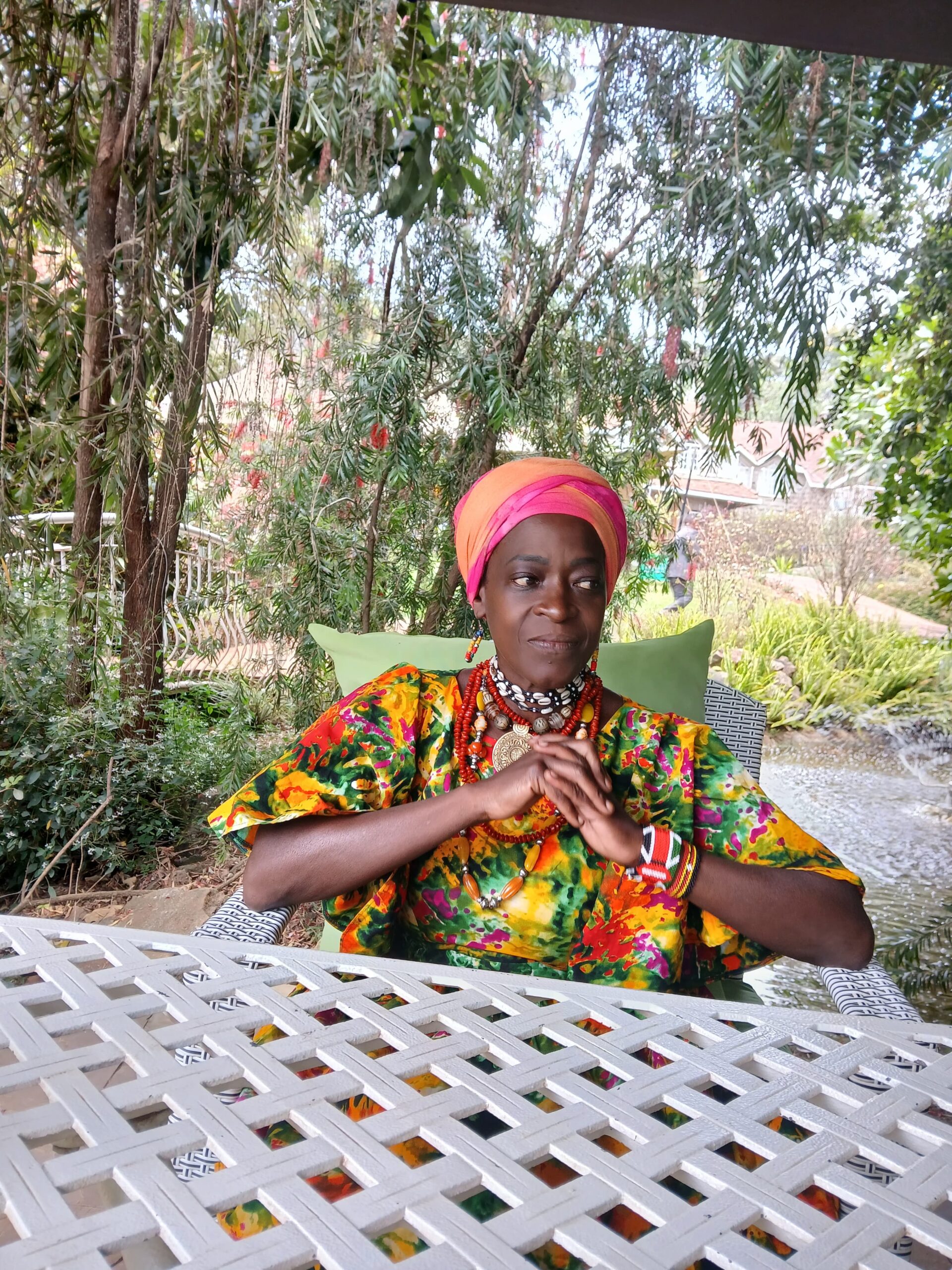
Okwara noted that the case benefited from a proactive judge, a committed prosecution team, and, surprisingly, a commendable level of cooperation from the Directorate of Criminal Investigations.
“We are queer lawyers, and we provide legal care to queer Kenyans,” she explained. “So we were present during the investigation to make sure that the evidence was properly collected, properly documented, and that the right suspects were arrested and presented before the court.”
Beyond the courtroom, NGLHRC worked closely with Chiloba’s chosen family and community in Eldoret, where he had built both his life and his creative career.
The organization coordinated burial arrangements alongside friends and partners, recognizing that for many queer people, chosen family often plays a more central role than biological relatives.
The trial itself lasted one year and eleven months, which Okwara describes as remarkably swift for a criminal murder case in Kenya. Initially, 42 witnesses were identified, but the legal team and prosecutors narrowed them down to 21 key witnesses to build a focused and effective trial strategy.
“We worked in tandem with the prosecutors to make sure the court received all the facts, and that justice was properly dispensed,” Okwara said. “We were also carrying the grief of the family and the grief of our queer siblings across the country.”
Throughout the trial, queer advocates remained vigilant, attending hearings, conferences, and final submissions. Bail for the accused was vigorously opposed due to what Okwara described as the aggravating circumstances of the crime, including the manner in which Chiloba was killed and the desecration of his body.
“I was technically the mouthpiece for his chosen family and friends,” she explained.
When the judgment was finally delivered, Okwara said the legal team appreciated the depth of reasoning that went into the ruling.
“The judge carefully examined the evidence, listened to all sides, and delivered a decision grounded firmly in fact. For once, a queer Kenyan’s life had been fully acknowledged within the justice system.”
Yet even as the court process unfolded with unusual professionalism, the case exposed deep undercurrents of stigma and discrimination.
Okwara recalled that even inside courtrooms, the case was often “othered” as being about “those people”, a phrase that revealed how deeply bias remains embedded within society.
Friends of Chiloba who attended hearings faced silent judgment, although the judge and prosecutors worked to maintain a dignified process. Outside the courtroom, the hostility was far more direct. Online attacks escalated into offline threats, and some of Chiloba’s friends were forced to flee Eldoret for their safety after their faces were circulated on social media. At the height of the backlash, public calls for mass violence against queer people in Eldoret created a climate of fear that extended far beyond the trial itself.
Perhaps the most devastating challenge, however, was grief. Okwara recalled sitting in court as graphic details of the murder were laid bare.
She spoke of the family’s anguish over how Chiloba’s body was discarded in a metallic box, a detail that has become an enduring symbol of dehumanization.
“For us queer people in this country, the last memory we will ever have of Chiloba is that cheap metallic box,” she said. “That is a memory we will live with forever.”
Chiloba was also the last-born child in his family, leaving behind an irreplaceable generational gap that has deepened the family’s sense of loss.
A System of Invisibility: Gaps in the Law and Unlearned Lessons
Despite the conviction, the case highlighted major gaps in Kenya’s legal framework. Kenyan law does not recognize hate crimes. As a result, violence motivated by sexual orientation or gender identity is prosecuted as ordinary murder or assault, without acknowledging the prejudice that drives such crimes.
“The danger is that these cases become invisible,” Okwara explained. “People are killed because of who they are, but the system only records another murder.”
The Kenyan Constitution, as articulated in Articles 26, 27, and 28, guarantees the right to life, equal protection, and equal benefit of the law to all persons, and the right to dignity for all, including sexual and gender minorities. However, in reality, this has not been the case, as seen in the laxity in prosecution in the murder cases of persons of the LGBTQ+ community.
Past cases involving LGBTQ+ victims such as the murder of a Sheila Lumumba a non binary lesbian in the year 2022 who was found dead in their home in Karatina and Other cases including the murder of Erica Chandra a trans woman and Joash Mosoti a gay activist in 2021 among others have seen slow investigations, lack of arrests and even minimal follow up leaving families and communities without closure.
Human rights groups have been demanding accountability and pushing for the government to repeal discriminatory laws that enable such violence. They still argue that Kenya’s law, which discriminizes against non-sexual same sex relations which contributes to a climate of discrimination and violence where perpetrators often act with impunity.
This invisibility, she added, discourages survivors of violence from reporting abuse—especially when police stations often shift focus from the crime itself to the victim’s sexuality.
Okwara, who has handled more than 3,000 human rights violation cases involving queer people, noted that investigations frequently stall due to bias at the earliest stages.
She argues that the decriminalization of same-sex relationships is the most urgent legal reform, as colonial-era laws that criminalize queer identities continue to embolden violence and discrimination. While she points to recent Supreme Court rulings on freedom of association as progress, she insists that true safety will only come when laws used to persecute queer Kenyans are fully repealed.
“We are not asking for special treatment,” she said. “We are asking that the law be implemented as it is.”
According to Amnesty International, the killing of Edwin Chiloba exposes the rise in Sexual and Gender-based Violence (SGBV) and Intimate Partner Violence (IPV) experienced in Kenya. These incidents can be attributed to the absence of strong prevention, weak protection mechanisms for survivors, evasive prosecution of SGBV cases, and an uncoordinated and often reluctant response to SGBV from State and non-state actors.
Beyond the Courtroom: Decolonizing Justice and Reclaiming Humanity
The broader human rights context surrounding such violence is further complicated by history. Human rights defender Nyanchama Okemwa links today’s gender-based violence, including femicide and attacks on sexual minorities, to deep-rooted colonial mindsets.
She argues that colonization entrenched the dehumanization of women and marginalized bodies, stripping them of agency and social value. When applied to African communities, she says, this mentality became even more extreme.
“This mindset was inherited by our own people,” Okemwa explained. “That is why when women and marginalized bodies fall prey to violence, it is not taken as seriously as it should be.”
She is critical of the belief that modern legal systems alone can resolve the crisis of gendered violence. In her view, these frameworks are built primarily on Western justice models that often ignore indigenous African systems of redress, repair, and restitution.
Without restoring these cultural foundations, she warns, justice remains incomplete. True reparation, she argues, must involve rebuilding African systems of justice that once offered protection, social power, and collective healing.
“There is no justice in a justice system that does not see women,” she said. For her, meaningful reform requires dismantling institutions that exclude women and marginalized people and rebuilding systems that recognize the full humanity of every citizen.
For queer Kenyans, the Chiloba case stands as both a rare victory and a sobering reminder of what is still missing. Okwara acknowledges that while some courts are becoming more objective, nearly a third of similar cases still collapse due to weak investigations, public prejudice, or institutional neglect. Media coverage, too, remains a persistent challenge.
She criticizes sensational reporting that reduces victims to their sexual orientation instead of humanizing who they were.
“The life Edwin Chiloba lived was really beautiful,” she said. “He was kind, charming, and friendly. That is the part that is often erased.”
His family and community, she added, were warm, welcoming, and deeply loving, details that rarely make headlines. Instead, stories too often focus on identity in ways that strip victims of dignity. For Okwara, responsible journalism must shift from clickbait to compassion, from labels to lived humanity.
As Kenya continues to debate legal reform, decriminalization, and the protection of sexual and gender minorities, the Chiloba case remains a powerful marker of both progress and limitation. It showed that accountability is possible within the justice system, that dignity can be upheld in courtrooms, and that persistent advocacy can force institutions to act.
Yet it also revealed how fragile that justice remains, dependent on public pressure, rare professionalism, and relentless legal vigilance.
For Chiloba’s family, the wound remains open. For the queer community, fear still shadows daily life. And for the country, the deeper work of law reform, decolonizing justice, and transforming social attitudes is far from complete.
Justice may have been delivered in one courtroom. But the struggle for equality, safety, and recognition continues far beyond it.
This story was made possible with the grant from WANIFRA-WIN SIRI Accelerator Programme.