|
Getting your Trinity Audio player ready...
|
By Joyce Chimbi
Bungoma County, Kenya: Joyce Nakhumicha was born healthy and named after the first planting season in early 1977. She was struck by the crippling polio disease in the early 1980s when already in Wabukhonyi Primary school in Bungoma County, less than an hour to the Uganda border, and a high-risk area for polio.
She is paralyzed from the knees down.
“My younger brother Kennedy and our first cousin were also infected with polio in 1977, as were some other children in the village and school. The two were paralyzed on one leg each. We learnt later that had we been vaccinated against polio, we would all have been saved from disability,” she says.
When the Kenya Expanded Programme on Immunization (KEPI) was established in 1980, no child in Kenya had received the third dose of polio vaccine, despite the polio vaccine being available since the 1950s.
“Today, we have many vaccines available for the protection of children, but there are still many challenges that stand between children and life-saving vaccines. That is why the number of zero-dose children remains high, and this is very concerning and has contributed to the high infant and child mortality rates,” says Elizabeth Munialo, nurse-in-charge of Ndengelwa dispensary in Bungoma County.
She says immunization coverage is influenced by a complex interplay of factors. Some challenges emanate from the clients, such as personal knowledge and beliefs that go against immunization of children, believing that the vaccines are harmful chemicals or contain contraceptives.
Other challenges are long distances to the facility, overcrowding, and long queues that discourage caregivers from seeking the services, and unavailability of vaccines for reasons such as vaccine stockouts or a lack of equipment for the storage of vaccines.
Interventions
Every year, the Ministry of Health targets to vaccinate approximately 1.5 million children against vaccine-preventable diseases such as measles, polio, tuberculosis, diarrhea, and pneumonia. Currently, one in six children under one year old does not complete their scheduled vaccines. These are under-immunized children, and they lack the full protection that immunization provides.
“There are many causes of under-immunization. When a child is born in the hospital, they automatically receive two vaccines at birth. We give them the BCG (Bacille Calmette-Guerin), which protects against tuberculosis, and the Oral Polio Vaccine to protect against polio, which is a virus that causes paralysis. When the child leaves the hospital, other factors can disrupt their vaccination journey, such as vaccines not being available when mothers come to the clinic,” Munialo explains.
But there is an even more vulnerable cohort called zero-dose children. The Ministry of Health defines zero-dose children as those who lack access to or are never reached by routine immunization services, and they have therefore never received a single shot or dose of any vaccine.
Zero dose will have therefore missed BCG and polio at birth, and the first dose of diphtheria (against a bacteria that causes breathing difficulties, paralysis, and death)-tetanus-pertussis (whooping cough) containing vaccine (DTP1) administered six weeks after birth against diseases such as tetanus and pneumonia. According to the Ministry of Health, the DTP1 vaccine is a crucial part of childhood immunization schedules, protecting against three serious bacterial infections.
In the Sub-Saharan Africa region, an estimated 20 percent of children lack access to life-saving vaccines. In Kenya, 18 percent or 400,000 do not have access to vaccines and are classified as zero dose. During the COVID-19 period, 2019 to 2022, nearly 602,000 children were not vaccinated.
According to the most recent Kenya Demographic and Health Survey 2022, Bungoma is one of the 14 counties with a high number of zero-dose children, meaning children who have not received any vaccines.
“Vaccination is the cornerstone of public health and protects thousands of children under five years from vaccine-preventable deaths. There are many factors why a child may miss out on a vaccine, and our goal as the Ministry of Health is to single out these reasons and eliminate them in tandem,” says Adelaide Sara Korir, a health official from the Ministry of Health.
An expert in vaccine-preventable diseases, she says that in Kenya child mortality rate trajectory has largely been slowed down through vaccination. Saying that while two decades ago the child mortality rate was 96 deaths in every 1,000 live births, today, it is 40 per 1,000 live births.
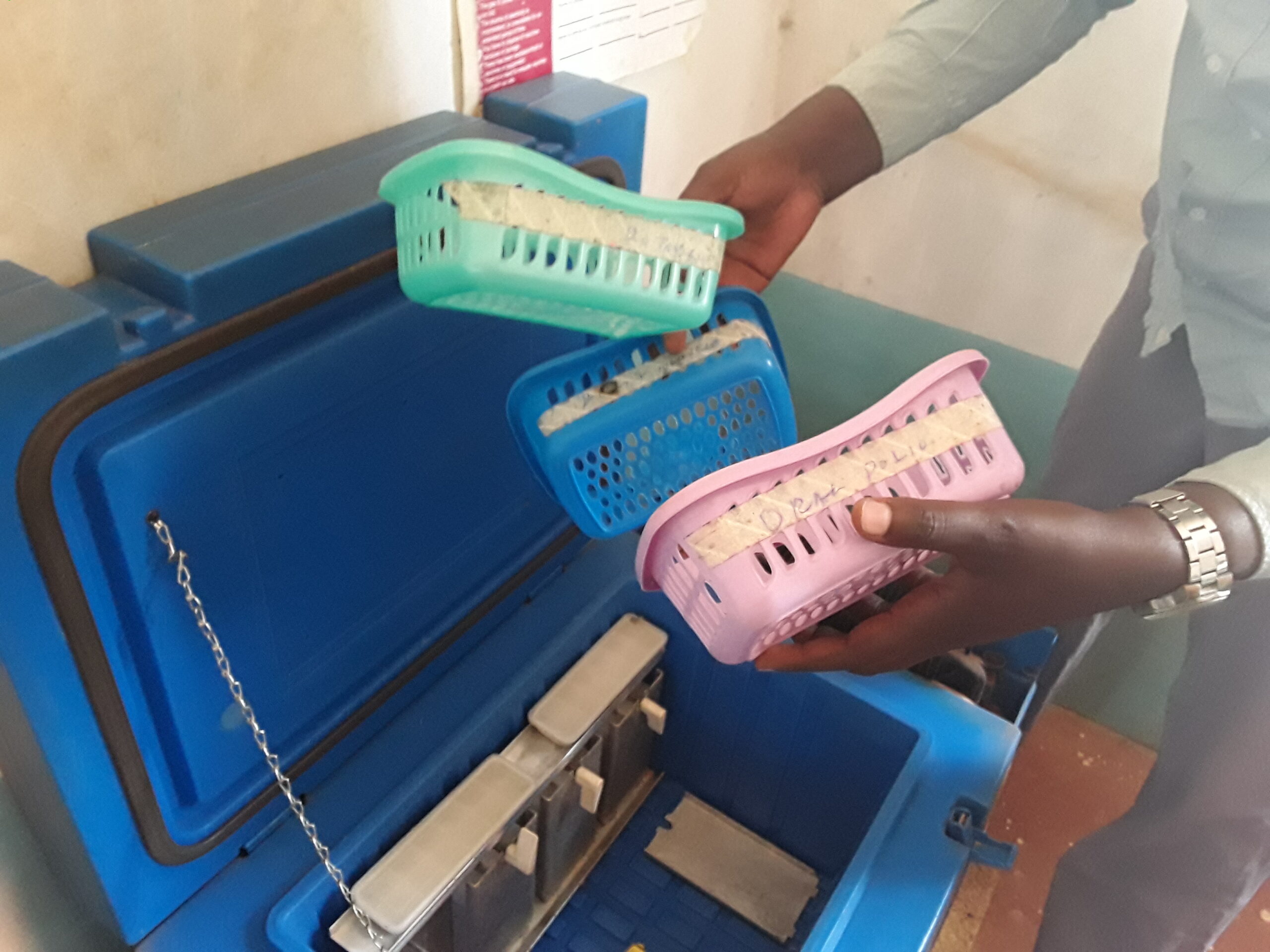
“But one preventable death is still too many. One of the greatest challenges we have faced is the lack of a proper cold chain to preserve vaccines. Cold chain equipment includes refrigerators, cold boxes, and temperature monitors. All vaccines must be preserved at specific temperatures; otherwise, they will, so to speak, lose their power and will not be effective,” she says.
Role of Community Health Promoters
Lucy Wasike, a Community Health Promoter attached to Bungoma’s Ndengelwa dispensary, says there are children who miss out on vaccines due to long distances, and the government is addressing this problem by ensuring that no child travels longer than 5 kilometres to receive a vaccine. This intervention was first piloted in 2018 in four counties and launched in 2021 country-wide, and is currently ongoing.
Longer distances, poor road networks, and a lack of vehicular transportation limit access to immunization. Children who travel long distances to the health facility are less likely to have been born in hospitals, received newborn vaccines, or been fully immunization.
According to the Ministry of Health, closing the distance is one of the single most effective ways of improving immunization rates. For every kilometer travelled, the likelihood of a child receiving a vaccine decreases by about five percent. Counties where public health facilities are accessible in less than a quarter of an hour recorded the highest full vaccination coverage, including Vihiga at 96 percent, Murang’a at 95 percent, Kisii at 90 percent, and Kirinyaga at 87 percent in 2022.
“But even when the health facilities are accessible, there is a large number of children who miss out on vaccines entirely or partially due to a lack of a fridge to store the vaccines. You cannot vaccinate children without the equipment that keeps the vaccines cold,” she says.
A 2016 national cold chain inventory in Kenya revealed that 18 percent of health facilities lacked any cold chain equipment, and a significant 81 percent of those with equipment did not meet WHO standards for immunization supply chains.
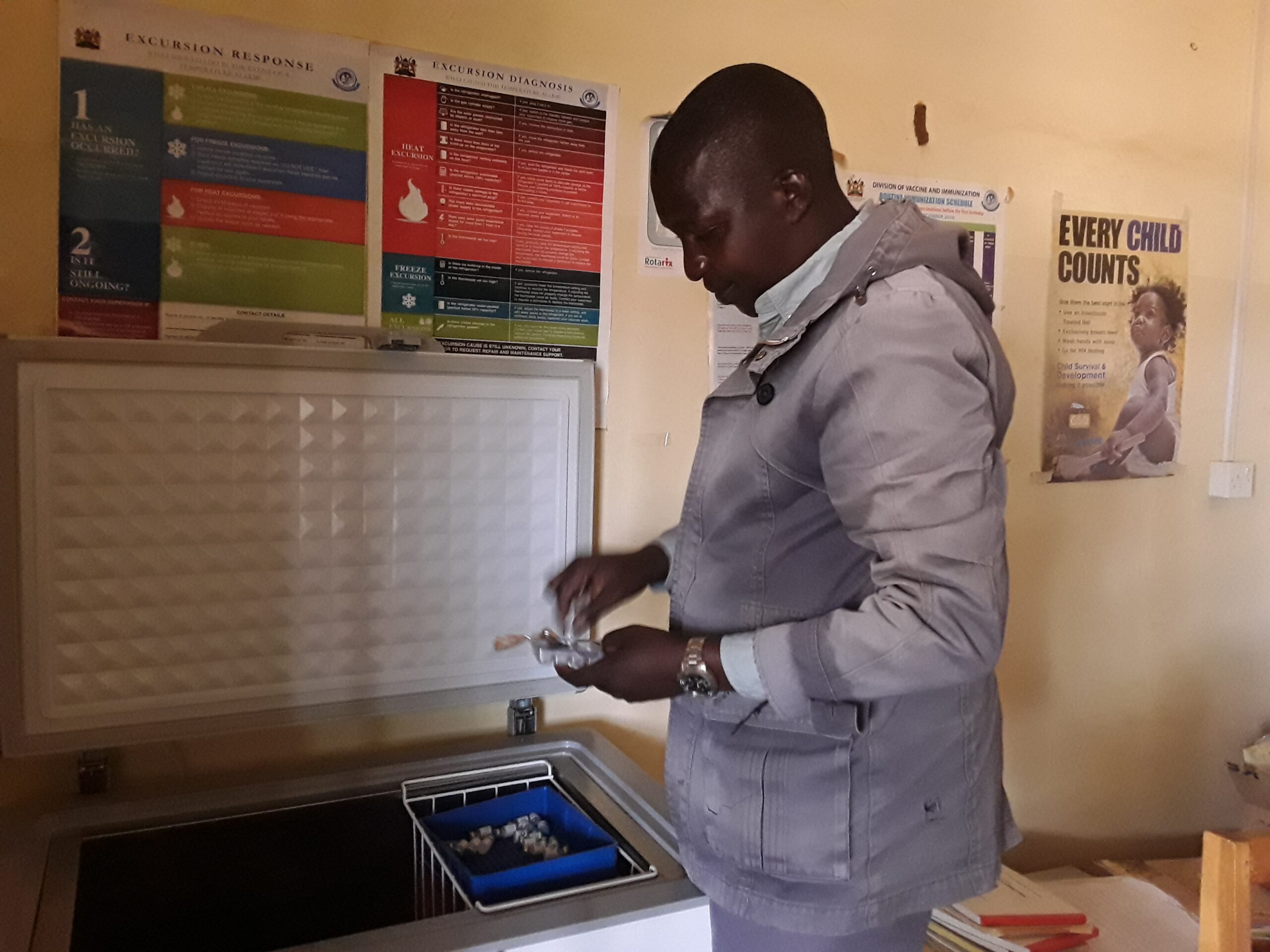
The inventory revealed that “the lack of reliable electricity at public health facilities in Kenya has been a significant challenge to expanding its vaccine cold chain. While residential energy access increased from 52 percent to 70 percent between 2016 and 2019, energy access at government-operated health facilities only grew by 1 percent from 69 percent to 70 percent in the five-year period 2016 to 2021.”
It is against this backdrop that the government began its journey towards ensuring that all health facilities have cold chain equipment, such as refrigerators and cold boxes used to transport vaccines during mass vaccination campaigns, to ensure that mothers can bring their child for vaccination and access a vaccine at any given time.
The first batch of cold chain equipment was dispatched in May 2024, and the second batch was released in May 2025. The Ministry of Health intends to continue procuring and releasing new equipment until all public health facilities have an upgraded and fully functional immunization system.
Nakhumicha is now a mother of three daughters and says all efforts must be put in place to ensure that all children are protected. Stacy Naliaka, who recently moved to Lwakhakha village, is a young mother of three. She is a casual laborer married to a boda boda operator, both working hard to provide for their young family.
In search of greener pastures, they moved the family from Mayanja to Lwakhakha, hoping that the proximity to the Kenya-Uganda border crossing point could translate to more business for the boda boda operator. On immunization, the move has proven to be a success. She speaks of years of frustration and challenges in ensuring that all her children, now 1, 4, and 6 years are fully vaccinated.
“When it comes to vaccination, things have only become smooth for me in the last year. With the other two children, it was always a challenge. When I lived in Mayanja, you could only access immunization one day a week on Tuesday, and that same day, you would be at the clinic the whole day due to the long queues, and many times there would be no vaccination. They would say the fridge has no gas. But at Lwakhakha dispensary, there is always immunization,” she says.
Naliaka’s fortunes have changed because in May 2024, the government dispatched 2,061 pieces of new and improved cold chain equipment worth 1.1 billion Kenyan shillings ($ 7.09 million) to strengthen the immunization system.
This equipment was dispatched across the country and includes small and medium vaccine refrigerators for dispensaries and large vaccine refrigerators for large health facilities. Among them are solar-powered, low-maintenance refrigerators to cater to areas with no electricity or where it is unreliable, especially in rural, remote areas and in high-demand, densely populated informal settlements.
Lwakhakha and Ndengelwa dispensaries are beneficiaries of the new and upgraded equipment. A cold chain begins when a vaccine is manufactured and ends when it reaches the intended recipient, in this case, children under 5 years.
At Ndengelwa and Lwakhakha dispensaries, there is a spike in the uptake of immunization that coincides with the upgrade of the immunization system. Facility records at these dispensaries show that vaccination rates stalled at 50 percent before this equipment was delivered. In the past year, vaccination has improved by 25 to 30 percent. Importantly, the facilities are now able to provide labour and delivery services without interruptions.
Wasike says the Ministry of Health requires all health facilities to post their immunization records on the wall. She says health data collection is a continuous process. In the case of immunization, the charts provide a full picture of a facility’s immunization coverage at a glance that cannot be captured in any other way.
“Most health facilities have a child catchment population of thousands of children. It would take months to go through the registers to find out how many children are receiving the vaccines. You would not be able to track defaulters because you cannot see the full picture; all you have are names in a register. The charts are crucial even for disease surveillance as they can tell you if there has been an outbreak of the most serious diseases, and they are polio, measles, and tetanus,” she explains.
Munialo affirms, stressing that the charts provide for “transparency and accountability as the figures are on the wall for all to see at any given time. Remember, this is the same data that goes to the national database, so it helps in ensuring that the information is accurate and verifiable. You do not need knowledge of statistics to look at the charts and interpret them. At a glance, you can see how many children are getting vaccinated and at what age for a whole year.”
“You can also see if and when there is a rise or decline in immunization, and you can determine what was happening at that particular point to cause such a shift. If it was a rise in vaccine uptake and it coincides with the introduction of the cold chain upgrade, then there you have your explanation as to why there was a change.”
According to the Ministry of Health, the “vaccine supply chain in Kenya is structurally organized into four tiers with one Central Vaccine Store (CVS) situated in Kitengela, Kajiado County. The CVS distributes vaccines to nine regional stores (RVS) on a quarterly basis, from where 304 sub-county stores collect the vaccines and distribute them to nearly 8,000 immunizing health facilities (IHFs) on a monthly basis.”
This system is sustained by cold chain equipment until the vaccine reaches the targeted children. Korir says biomedical engineers in Kitengela, like elsewhere in Kenya, play a crucial role in monitoring the cold chain in health facilities. They are responsible for the maintenance and repair of cold chain equipment, including remote temperature monitoring devices (RTMDs).
Korir says that through remote temperature monitoring, they ensure the proper functioning of RTMDs, which are essential for tracking vaccine storage temperatures and preventing spoilage. The data from RTMDs is often analysed by biomedical engineers and other stakeholders to identify potential issues and prioritize maintenance activities.
Remote temperature monitoring from Kitengela works by using sensors to collect temperature data and transmit it wirelessly to a monitoring system, often via the internet, which then alerts users of any temperature fluctuations outside of predefined ranges. These systems can be used to monitor storage facilities, refrigerators, freezers, or even individual rooms, providing real-time insights and alerts to ensure optimal conditions and prevent spoilage or damage.
A health facility that has no cold chain or a refrigerator does not offer vaccination or delivery services, as the oxytocin drug injected into all mothers immediately, they give birth, and is also used to induce labour, has to be stored within the recommended temperatures. Per the World Health Organization, Oxytocin is the gold standard to prevent postpartum hemorrhage.
“It is important that children are born in the hospital so that they can receive all birth doses, including polio. There is a dose called polio at birth. Vaccines that are to be given at birth cannot be given after two weeks have passed since the baby was born. So, these refrigerators are very critical,” Wasike says.
Government data shows that in Bungoma County, 87.2 percent of pregnant women deliver by skilled labor or by a qualified health professional. Overall, under-five mortality is high at 55 percent. Naliaka says her 6-year-old son missed out on the first doses of immunization because he was born at home, because “the nearest dispensary was not offering delivery services and I would have had to travel at least 10 kilometres on a boda boda (motorbike taxi) to reach the hospital.”
“My firstborn has had many hospital visits, and the more the community health workers educate us, the more we begin to understand that immunization protects the baby. When there was an outbreak of even flu or coughing, or diarrhoea when he was younger, he could not escape it. The lastborn is very strong and we have never had to rush him to the hospital at any time, and he has never missed any dose of vaccine,” she says.
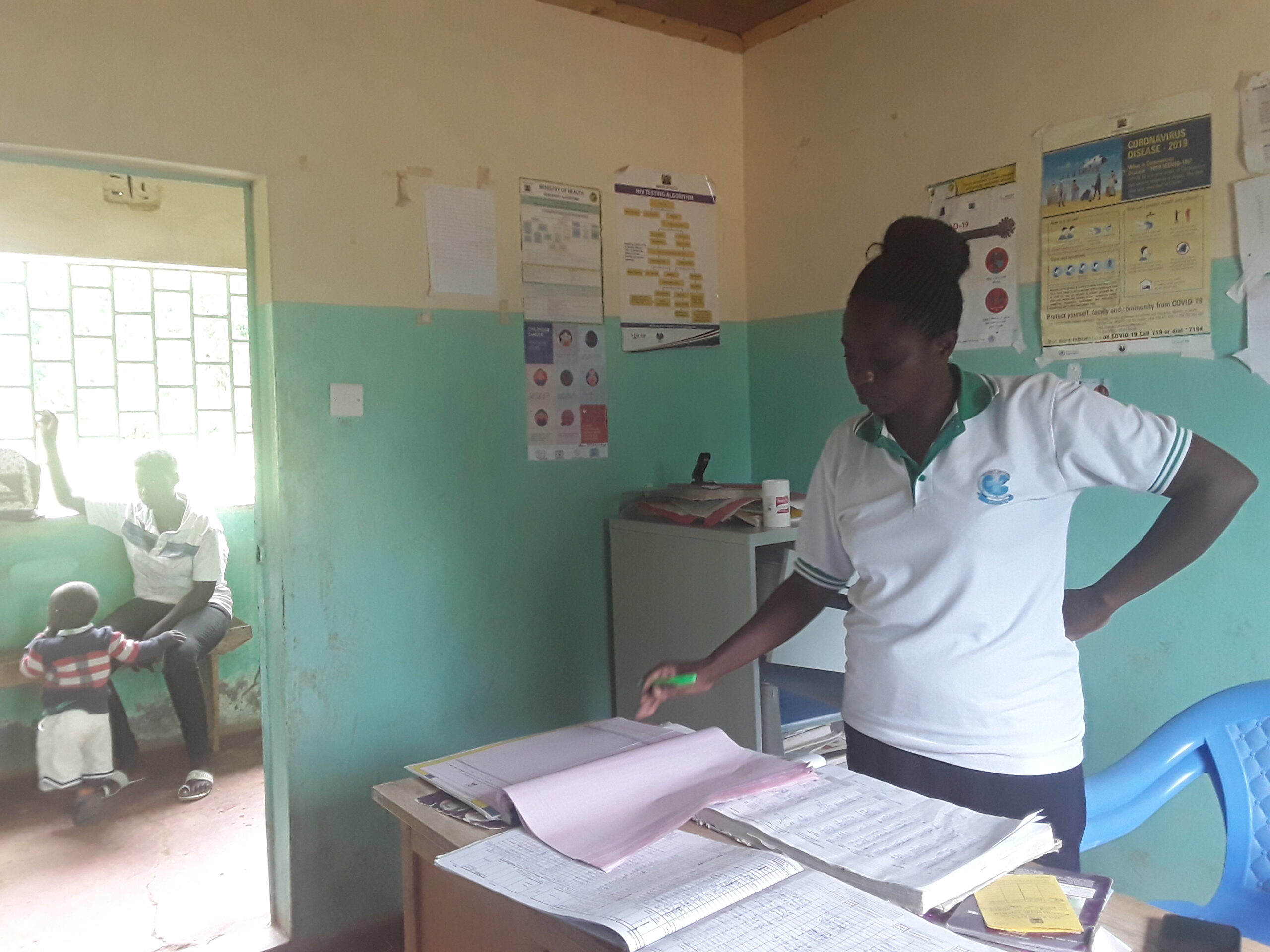
Korir says that the government dispatched another 2,000 pieces of cold chain equipment, one year later, in May 2025, to continue strengthening Kenya’s immunization system across the 47 counties. Although the Ministry of Health is yet to release data on how child immunization rates have improved in the last year with the new and upgraded equipment, a spot check of Lwakhakha and Ndengelwa dispensaries in Bungoma County shows that 25 to 30 percent increment in immunization rates.
Immunization data is typically readily available in health facility records and can be accessed at a glance at the facility’s immunization charts in line with the Ministry of Health directive. Health officials at the Bungoma County Department of Health say that this improvement is likely to reflect when the Ministry of Health releases new national data on child immunization.
Although the cold chain equipment is a critical step towards sustainably strengthening Kenya’s immunization system, the equipment released thus far is only a drop in the ocean. There are 339 public health facilities in Bungoma County.
The Kenya Master Facility List shows there are at least 9,696 health facilities and new ones underway in line with the intervention to ensure no person travels longer than 5 kilometers to access health services. The demand for cold chain equipment is high across the country.
“The vaccine equipment is very useful, but it only solves part of the problem. Availability of vaccines in a health facility does not in itself mean that all children will now start receiving vaccines and complete the immunization schedule,” says Wasike.
Several factors influence childhood immunization rates in Bungoma, such as socioeconomic, logistical, and knowledge-based barriers. Challenges include limited access to vaccination sites, lack of awareness about vaccination schedules, and negative perceptions regarding vaccines. Additionally, factors like maternal education, household income, and birth order can also play a role, as mothers with higher education are much more likely to embrace vaccination.
“We need to increase our vaccination campaigns in the community, to educate people about the importance of vaccines as religion and cultural beliefs, and misinformation and vaccine rumors are some of the toughest challenges to overcome because they call for changing people’s minds and world views, and this is difficult to do,” she notes.
Meanwhile, Nakhumicha is a living testimony of what missed vaccination can do. Paralysed from her knees down, she says that with all the new health facilities and vaccines available, she is optimistic that every child in Bungoma County will have a better start to life than she, her brother, and now departed cousin did.