|
Getting your Trinity Audio player ready...
|
By Lilian Museka
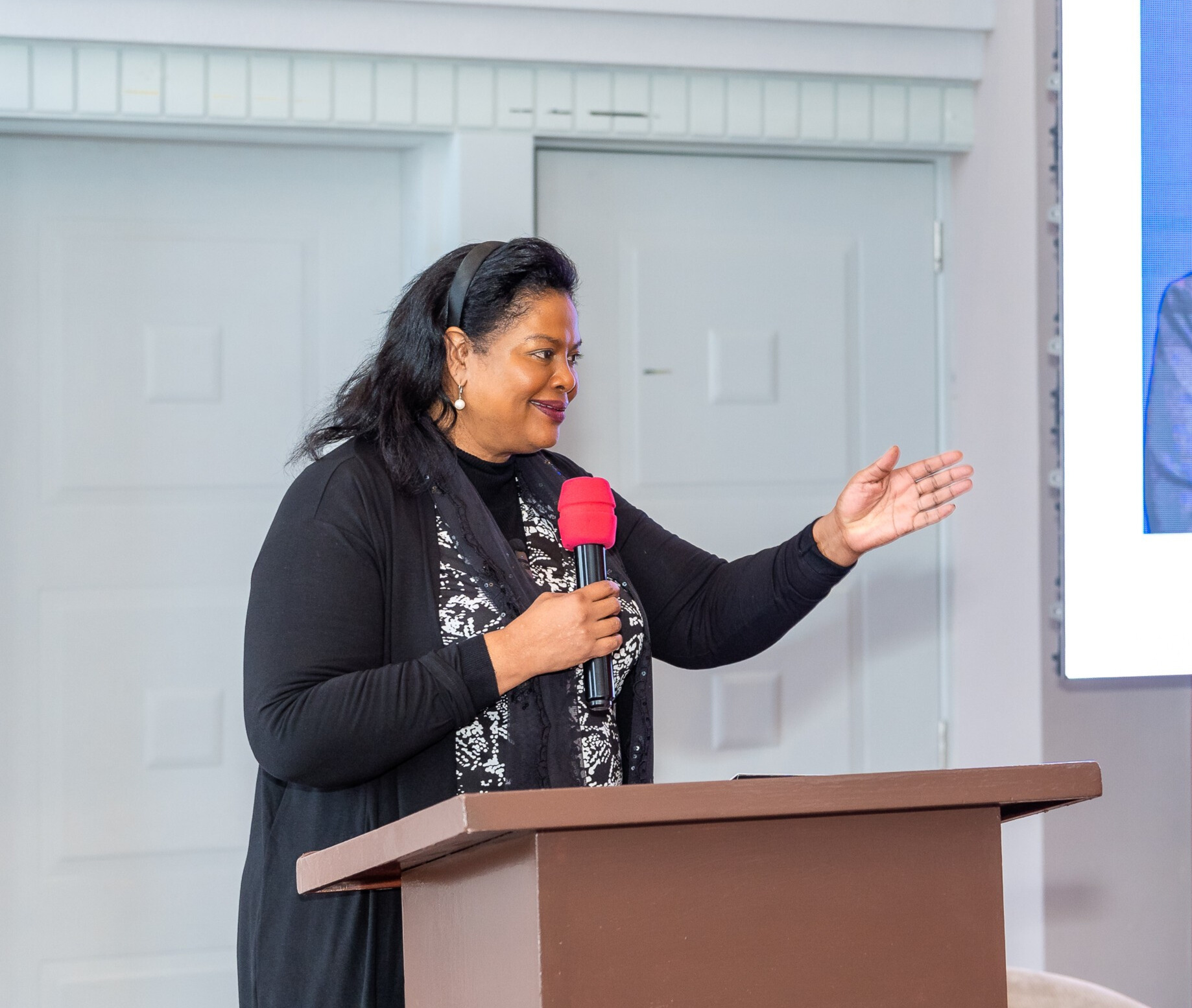
Nairobi, Kenya:Kenya’s Chief Justice Martha Koome has called on legal institutions across Africa to dismantle entrenched systems that hinder women’s leadership in law and justice. In a keynote speech delivered on her behalf by Hon. Justice Njoki Ndung’u at the International Dialogue on Women in Leadership in Law, Koome challenged the continent’s justice systems to move beyond symbolic representation and embrace systemic transformation.
The three-day intergenerational summit, themed “Women Leading in Shaping Justice Across Generations,” held in Nairobi, brought together 100 participants, among them judges, lawyers, policymakers, feminist activists, and media from across Africa to share experiences from their leadership journeys, highlighting both challenges and successes. It aimed to identify systemic barriers and leadership gaps for women in law, while advocating for gender-sensitive institutional reforms. A roundtable with journalists also explored the media’s role in promoting women’s leadership in law, the challenges faced in gender reporting, and strategies for using storytelling and media collaboration to amplify women’s voices and legal issues.
In her remarks, the Chief Justice traced Kenya’s legal evolution from exclusion to inclusion. In 1967, Kenya had its first female State Counsel, Effie Owuor, a pioneer who would become the country’s first female magistrate, High Court judge, and eventually Court of Appeal judge. By 1993, women made up just three members of the Judiciary’s bench. Today, women comprise 42% of judges in High courts, 78% of Registrars, and 58% of Magistrates. While the numbers reflect progress, Koome warned that they are not enough. “We must now confront the deeper inequities, unconscious bias, exclusionary cultures, and digital threats that silence women’s voices.”
She underscored how women leaders have reshaped not only laws but entire justice systems. Laws such as the Sexual Offences Act (2006), championed by lady Justice Ndung’u, the Victim Protection Act (2014) led by Hon. Millie Odhiambo, and the Matrimonial Property Act (2013) driven by women’s rights organizations like FIDA-Kenya are just some examples of the impact of women in law. She credited women lawyers for advocating for child-friendly courts, establishing the Family Division of the High Court, and championing gender-sensitive judicial reforms that center the needs of vulnerable populations.
Despite milestones, Chief Justice Koome raised concern that only 10% of Kenyans have access to formal justice mechanisms, a gap she described as unacceptable.
Under her leadership, the Judiciary is implementing the Social Transformation through Access to Justice (STAJ) blueprint to build a more responsive justice system. Initiatives include expanding Small Claims Courts, launching Gender Justice Courts, and introducing trauma-informed procedures to support survivors of sexual and gender-based violence.
Internally, the Judiciary has operationalized an Employee Protection Unit and rolled out policies on sexual harassment, gender mainstreaming, and diversity and inclusion reforms aimed at institutional accountability and safer workspaces for women. “Flexible work, caregiving support, and strong professional networks are not luxuries — they are essential to retaining and empowering women in law,” Koome stated.
In her remarks, Justice Ndung’u also spoke about the tensions and disconnect between generations of women in leadership, calling for intentional mentorship and collaboration. “We must mentor the next generation. We need women at all decision-making tables, especially where laws and budgets are made,” she urged. She expressed concern over regressive policy decisions, like the taxation of sanitary towels, ironically championed by women legislators, and called on civil society actors to step up and fill leadership gaps in governance.
At the same time, Law Society of Kenya President Faith Odhiambo called on women to use their power meaningfully. “The law, intended as a shield, is now being used as a sword,” she said, referring to recent state violence and the death of protestor Albert Ojwang, adding that “If women’s voices are not heard in power spaces, they are getting lost along the way.”
Odhiambo challenged women to rise above tokenism and take decisive action to protect communities, especially women suffering the brunt of injustice.
FEMNET Executive Director Memory Kachambwa emphasized the importance of intergenerational movement-building. “Young women are not just future leaders, they are today’s changemakers. Let us move from rhetoric to action. Let solidarity become strategy.”
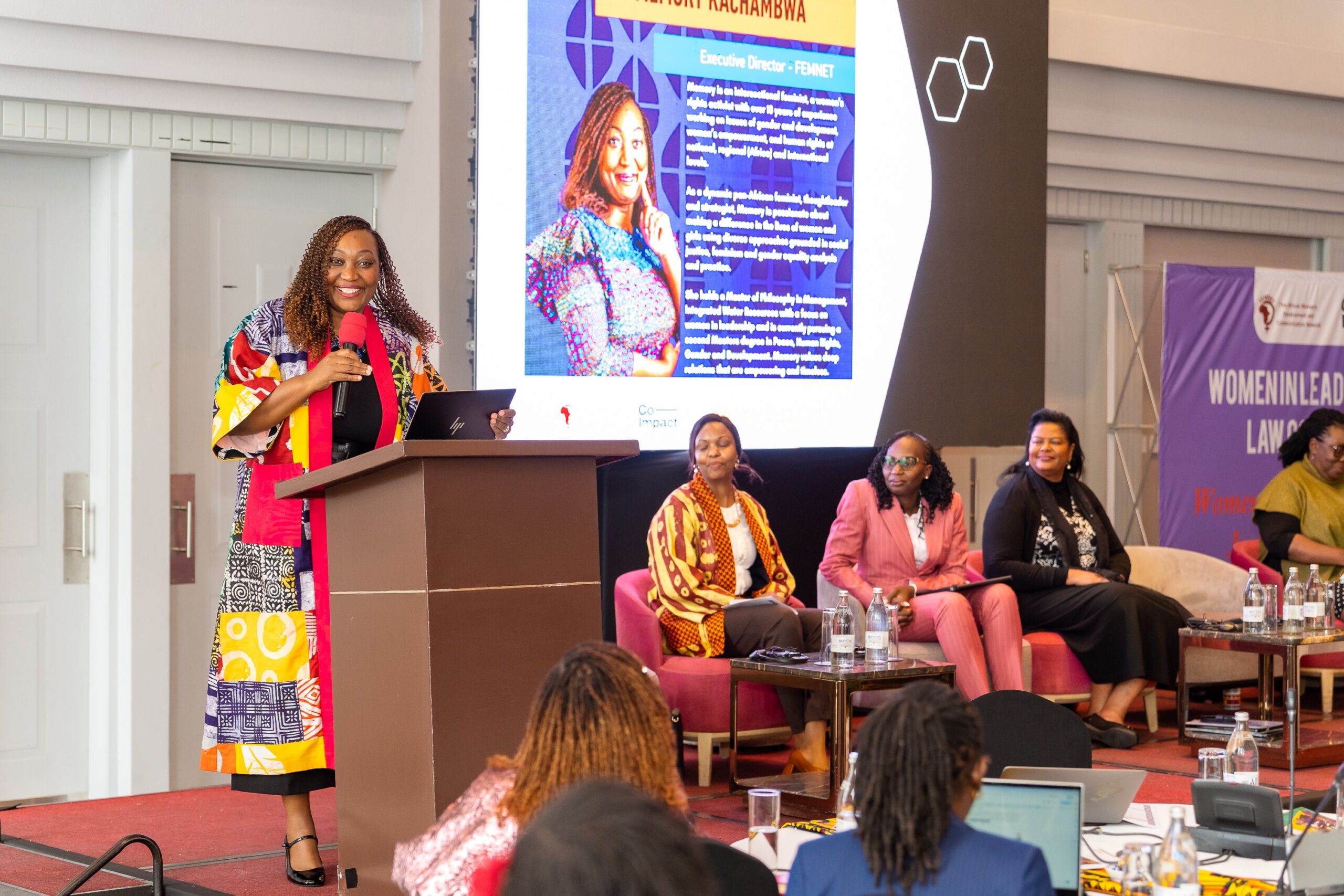
Regional Director at Co-Impact, Wandia Wanjiru, echoed the need for philanthropy to go beyond funding and actively dismantle the systemic barriers that block women’s progress.
The convening aims to foster intergenerational dialogue to address institutional and systemic barriers hindering women’s advancement in the legal profession, while exploring inclusive and equitable solutions. It also focuses on co-creating low-cost, impactful advocacy strategies to advance women’s leadership across Africa, celebrating success stories to enhance visibility, and building a strong movement rooted in solidarity. Additionally, it examines the media’s role in shaping public perceptions of women in law, highlighting opportunities for collaboration between journalists and legal practitioners to amplify women’s voices and influence within the justice sector.