By Mercy Kachenge
Nairobi, Kenya: Caroline Onwuezobe, the Sexual and Gender-Based Violence (SGBV) Storyteller from Nigeria, has turned her personal pain into a movement that gives voice to survivors and challenges stigma through storytelling.
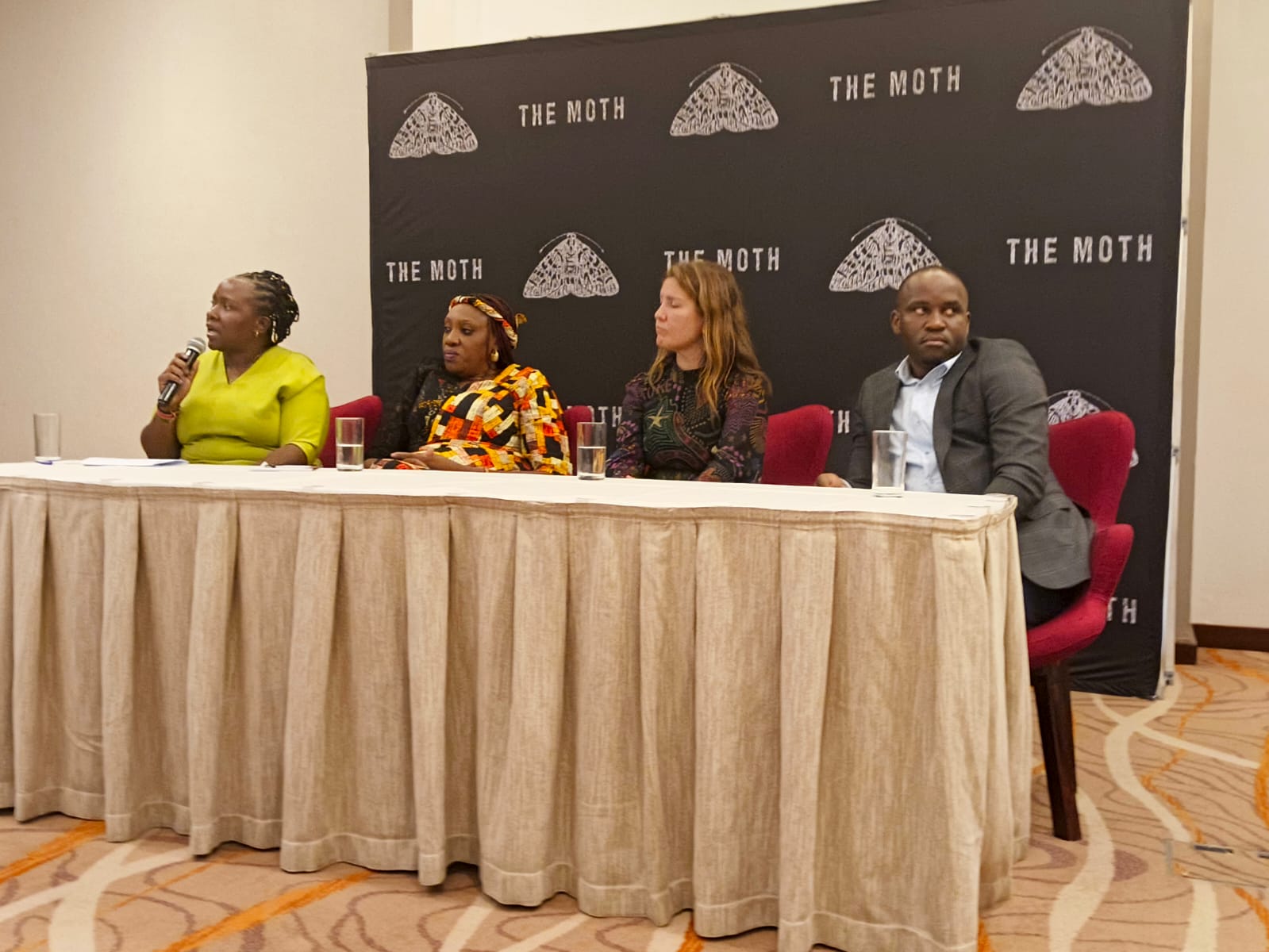
After surviving gender-based violence herself, Caroline found strength in sharing her experience publicly for the first time in 2018, during a storytelling training by The Moth. That single act of courage not only freed her from years of silence but also inspired others to break theirs.
“For a long time, issues around gender-based violence were hidden in secrecy,” she says. “People don’t talk about it because of the stigma and the backlash. But when I shared my story, I realized it was not just about me, it was about helping others to speak and heal.”
From that moment, storytelling became Caroline’s most powerful advocacy tool. Through her work, she brings together survivors to share their experiences in safe spaces, building a community of strength and solidarity.
“After that first workshop, many women came to me privately to say they had also been abused,” she recalls. “We started a group, and that group has grown into a movement. The stories have created a sense of belonging. People who once felt worthless now see themselves as people of value.”
Caroline’s approach to advocacy centers on empowerment. Her organization runs community programs where survivors are encouraged to move from being victims to becoming survivors and storytellers. Some have even gone on to speak on radio and at public forums, using their voices to create awareness and influence change.
The storytelling approach, she says, has not only helped survivors reclaim their dignity but has also attracted donor support to strengthen their interventions. “When people hear real stories, they connect emotionally,” she explains. “They see the human face behind the statistics, and that inspires action.”
But breaking the silence on gender-based violence comes with challenges. Stigma remains deeply entrenched in many communities, often reinforced by harmful cultural and religious beliefs.
Caroline admits that even she once internalized shame. “I was also stigmatizing myself,” she says. “But now I know it’s not our fault. We’ve done nothing wrong. The perpetrators should be the ones to face shame, not the survivors.”
Her work also involves engaging law enforcement and government institutions to ensure justice for survivors. “We’re working with the police and government to make sure perpetrators are prosecuted,” she says. “For too long, impunity has allowed gender-based violence to thrive.”
Central to Caroline’s advocacy is ensuring that survivors’ dignity and safety are protected when sharing their stories. “There’s no pressure,” she explains. “It’s voluntary. Survivors must tell their stories from a place of healing, not trauma.”
To avoid harm, her team often anonymizes stories, uses pseudonyms, and edits out sensitive details that could trigger backlash. “We always get consent,” she says. “Even when someone is ready to share, we still review the content to make sure it’s safe. We do no harm. The goal is to protect dignity and still pass the message.”
For Caroline, emotion is the heartbeat of storytelling. She believes vulnerability builds empathy and drives change. “When I share my story, my emotions are there not because I’m being retraumatized, but because it’s real,” she says. “We use emotions to connect with our audience. People may not have experienced gender-based violence, but everyone has felt sadness, fear, or shame. That connection brings understanding.”
She also encourages men to express emotion and engage in conversations about gender equality. “In my country, men are told not to cry,” she says. “But we tell them it’s okay to cry. It’s okay to feel. That’s what makes us human. And when men understand that, it becomes easier for them to show empathy toward survivors.”
Despite the impact of her work, Caroline has faced backlash. She recounts an incident during a storytelling session where a man asked a survivor, “Did you not enjoy it?” The question, she says, left the room in shock. “It was terrible,” she recalls. “But what gave me hope was that even the men in the room stood up to say, ‘No, that’s wrong.’ Moments like that show we are making progress.”
She has also witnessed similar insensitivity from law enforcement officers, but she remains undeterred. Instead, her focus has shifted to community sensitization, helping people understand that survivors are not to blame.
“Some people even use scripture to shame victims,” she says. “They say a woman who’s been raped is defiled. So, we ask, what about the man? Isn’t he defiled too? We use those same scriptures to teach love and justice.”
Caroline believes storytelling can drive policy reform and improve justice systems across Africa. “Stories are powerful when shared with the right audience,” she says. “In Nigeria, some survivors’ stories have inspired policy changes. When people in authority hear what survivors go through, it pushes them to act.”
Caroline says progress in Africa in terms of tackling gender-based violence and gender inequality is being made, but not fast enough. “We’re on the way, but it has to be deliberate,” she emphasizes. “It shouldn’t just be left to NGOs. The government must integrate it at all levels, schools, homes, churches, and mosques. Awareness must start early, from how we raise our boys and girls.”