

|
Getting your Trinity Audio player ready...
|
By Mercy Kachenge
Nairobi, Kenya: In Kenya, emergencies do not wait and too often, neither do the consequences of a delayed response. From road crashes on busy highways to obstetric emergencies in rural homes, thousands of lives hang in the balance every day.
Yet, even as ambulances crisscross counties, a deeper problem persists: a fragmented and under-coordinated emergency medical system that struggles to deliver care when it matters most.
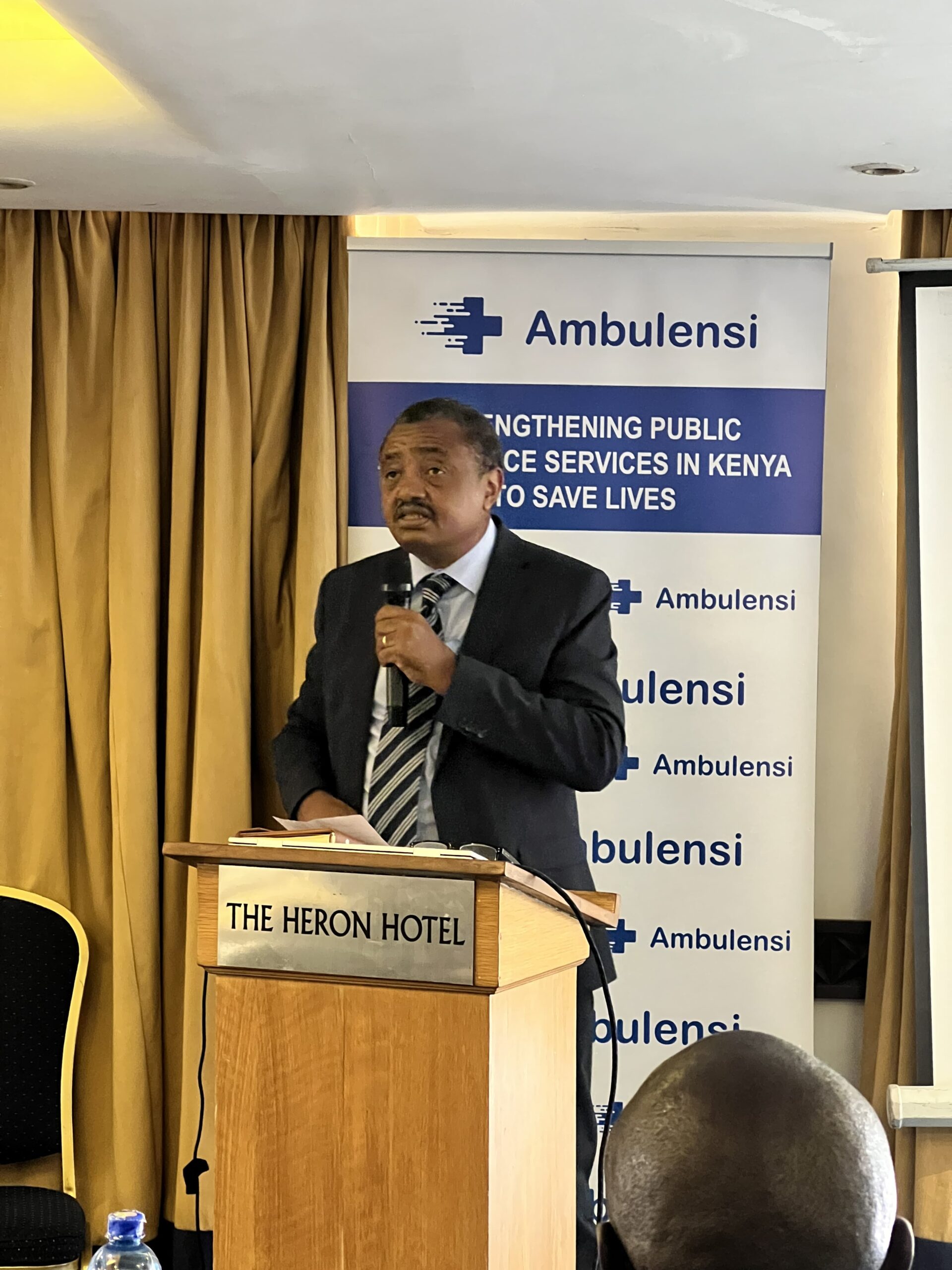
It is this urgent reality that set the tone for the Ambulensi Emergency Medical Services Conference that was convened by the Emergency Medicine Kenya Foundation (EMKF), the inaugural forum brought together a wide range of stakeholders from government officials and healthcare providers to technology innovators and development partners with one shared goal: to reimagine how Kenya responds to emergencies.
A recent media report showed Traffic fatalities rose significantly in early 2026. Police reported 294 deaths in the first 21 days of January 2026, an increase of 18 from the 276 recorded in the same 2025 period.
On January 21st alone, seven people died: two pedestrians, two passengers, two riders, and one pillion passenger. The total fatalities from January 1-20, 2026, included 99 pedestrians, 67 motorcyclists, 61 passengers, 30 drivers, 24 pillion passengers, and 6 pedal cyclists. This follows an overall surge, with NCAJ data showing 5,009 road deaths in Kenya in 2025, up from 4,448 in 2024.
At the heart of the discussions was a critical shift in thinking. The problem, experts argued, is not simply the number of ambulances on the road, but how effectively they are coordinated within a broader emergency care system.
“Every day, thousands of Kenyans face life-threatening emergencies,” noted Dr. Andrew Toro, Director of Curative and Nursing Services at the Ministry of Health.
Adding “Strengthening emergency medical services is not just about increasing ambulances; it is about building systems that connect communities, ambulances, and hospitals to deliver timely, lifesaving care.”
Despite significant investments by both national and county governments, Kenya’s public ambulance services continue to grapple with systemic gaps. These range from weak governance structures and limited workforce capacity to inefficient dispatch systems and inconsistent quality standards.
In many cases, ambulances operate in silos, lacking the coordination needed to ensure patients are quickly located, transported, and treated. The result is a system where response times vary widely and where survival can depend on geography as much as urgency.
The conference spotlighted these challenges while also offering a roadmap for reform. Participants explored strategies to strengthen the Emergency Medical Services (EMS) framework, including standardising training and certification for EMS personnel, developing clear operational guidelines, and investing in infrastructure and equipment.
There was also a strong emphasis on improving dispatch systems and integrating technology to enable real-time coordination between responders and healthcare facilities.
One of the most promising solutions presented was Ambulensi, a digital platform developed by EMKF to streamline ambulance coordination across counties. Designed as an end-to-end system, Ambulensi integrates dispatch, communication, and clinical support into a single platform.
 Crucially, it is offered without the heavy upfront costs that often hinder public sector adoption, requiring only basic expenses such as internet connectivity and call charges. This makes it a viable option for counties seeking to modernise their emergency response without straining already limited budgets.
But beyond technology, it underscored the importance of collaboration. Strengthening EMS, stakeholders agreed, cannot be achieved by the government alone. It requires coordinated action across sectors bringing together policymakers, healthcare workers, training institutions, private providers, and development partners.
The forum served as a space to share county-level innovations, learn from best practices, and build partnerships that can drive long-term change.
As Kenya works toward implementing the Kenya Emergency Medical Care Policy 2020–2030, the stakes are high. A well-functioning EMS system is not just a health priority; it is a matter of life and death.
The discussions in Nairobi made one thing clear: fixing emergency care in Kenya will require more than sirens and vehicles. It will demand systems that work seamlessly, people who are well-trained, and partnerships that are built to last.
For now, initiatives like Ambulensi offer a glimpse of what is possible in a future where a call for help is met not with delays and uncertainty, but with swift, coordinated action that saves lives.