|
Getting your Trinity Audio player ready...
|
By Timon Otieno
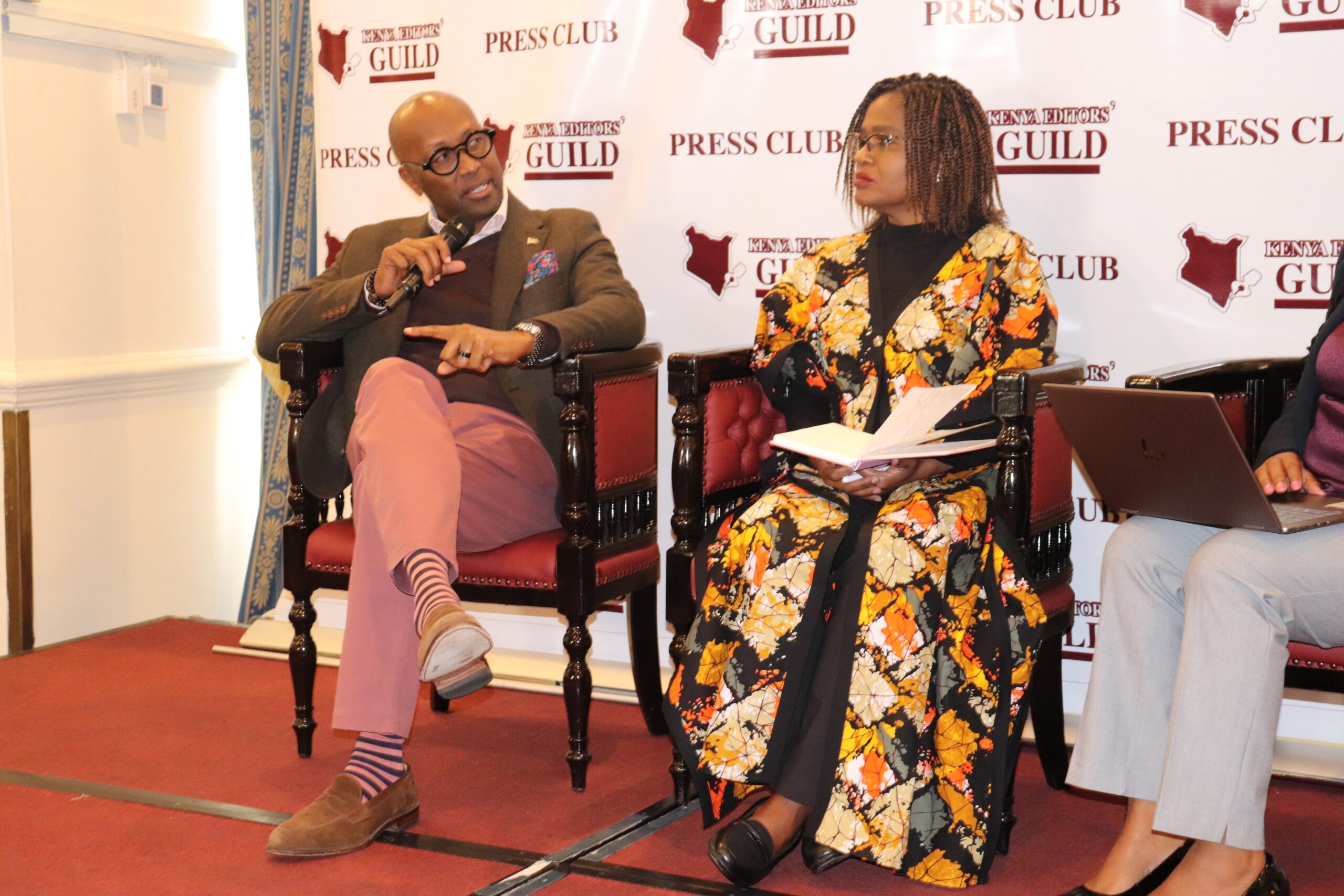
Nairobi, Kenya: Kenya’s heavy reliance on foreign aid to support its healthcare system came under sharp scrutiny during a thought leadership series forum hosted by the Kenya Editors’ Guild at a Hotel in Nairobi on Thursday.
The dialogue brought together policymakers, medical experts, and media professionals to reflect on the shrinking pool of Official Development Assistance (ODA) and its mounting impact on Kenya’s health outcomes.
As global donors scale back financial commitments, experts warned that unless Kenya urgently overhauls its health financing model, it risks a collapse in essential services — from HIV care to maternal health and disease surveillance.
Kenya Has the Resources — Let’s Use Them
Dr. Rose N. Oronje, Director of Public Policy and Knowledge Translation at the African Institute for Development Policy (AFIDEP), issued a clarion call for domestic ownership of health investments.
“We shouldn’t continue depending on aid when we have the resources as a nation,” she said.
“It’s not about plugging donor gaps. It’s about reviewing our health financing strategy — spending smarter, not necessarily more.”
She noted that over 40% of Kenya’s health budget is currently donor-funded — a structure that is not only unstable but also limits national autonomy in health priorities.
Dr. Oronje advocated for a paradigm shift: away from reactive, hospital-centered models and toward proactive, preventive care rooted in communities.
Prioritizing Prevention Over Cure
The AFIDEP director emphasized that early interventions — such as screenings, health education, and lifestyle changes — could significantly reduce pressure on health facilities and lower long-term costs.
“Most terminal illnesses, including cancer and diabetes, can be detected early. Treatment is not only more effective than but also far less expensive,” she noted.
Dr. Oronje also called on Kenyans to embrace healthier diets and exercise habits, pointing out that a population’s health begins with individual responsibility.
Data Systems Are Collapsing
Dr. Willis Akhwale, special advisor at Kenya’s End Malaria Council and former Chair of Kenya’s COVID-19 Task Force, painted a worrying picture of the ongoing fallout from donor pullback.
“We’re seeing job losses among specialists, reduced training budgets, and canceled outreach programs,” he said.
“The data systems that support decision-making are breaking down — and this affects everything from drug supply to patient follow-up.”
According to Dr. Akhwale, donor-supported health information systems were key in tracking medication adherence, drug-resistant strains, and disease outbreaks.
“Without robust data systems, we’re likely to see more mother-to-child HIV transmissions, and a rise in malaria, TB, and other infectious diseases,” he warned.
Rethinking Public Health Financing
Speakers at the forum called for urgent reforms in how Kenya finances its healthcare system. A recurring theme: public funding must be the bedrock of service delivery — not donor aid, and not private investment.
“Public health services are foundational,” Dr. Githinji Gitahi, the global CEO of Amref Health Africa, noted. “The private sector can complement, but never replace, a well-funded public system.” This includes immunization, sanitation, reproductive health, and other life-saving services that often depend on consistent government support.
Busting the Myth: “Private Is Better”
A myth challenged at the forum was the widespread belief that private hospitals provide better care.
“That’s not always true,” Dr. Githinji argued. “Some of the best doctors in Kenya work in public hospitals. Public facilities actually have stronger quality controls in many cases.”
Still, participants acknowledged that the public system must address issues of long wait times, poor customer experience, and bureaucratic inefficiencies.
Barriers to Universal Health Coverage
Despite the government’s commitment to Universal Health Coverage (UHC), systemic weaknesses continue to hinder access. Key challenges raised at the forum included: Overworked health workers with limited support, Insufficient training and outdated equipment, especially in rural counties, Poor customer service and lack of compassionate care, Weak follow-up systems for chronic illness patients
A disconnect between county and national health budget priorities. These problems are exacerbated by the unpredictable nature of donor funding, which has historically supported vertical programs such as HIV/AIDS, tuberculosis, and malaria.
Donors Won’t Fund Us Forever
Speakers stressed the need for Kenya to build a self-reliant, resilient health system — one that can withstand global aid shocks and prioritize citizens’ health above politics.
Dr. Oronje closed her remarks with a rallying cry to the media and civil society to hold government leaders accountable.
“Donors are not going to fund us forever,” she said. “We must invest in ourselves — if we want to survive and thrive.”
Kenya at a Crossroads
With donor funding in retreat, Kenya faces a defining moment in its healthcare journey. The question now is whether the country will continue depending on external goodwill — or take bold steps toward a future built on domestic investment, equity, and sustainability.
The message from the Kenya Editors’ Guild forum was unmistakable: the answers are within reach — but action is overdue. Because lives don’t wait. And neither should leadership.