
|
Getting your Trinity Audio player ready...
|
By Winnie Kamau
Nairobi, Kenya: As the world converges in Cape Town for the Global Digital Public Infrastructure (DPI) Summit 2025, Africa finds itself not just hosting the event but also shaping the global conversation on the future of inclusive digital transformation.
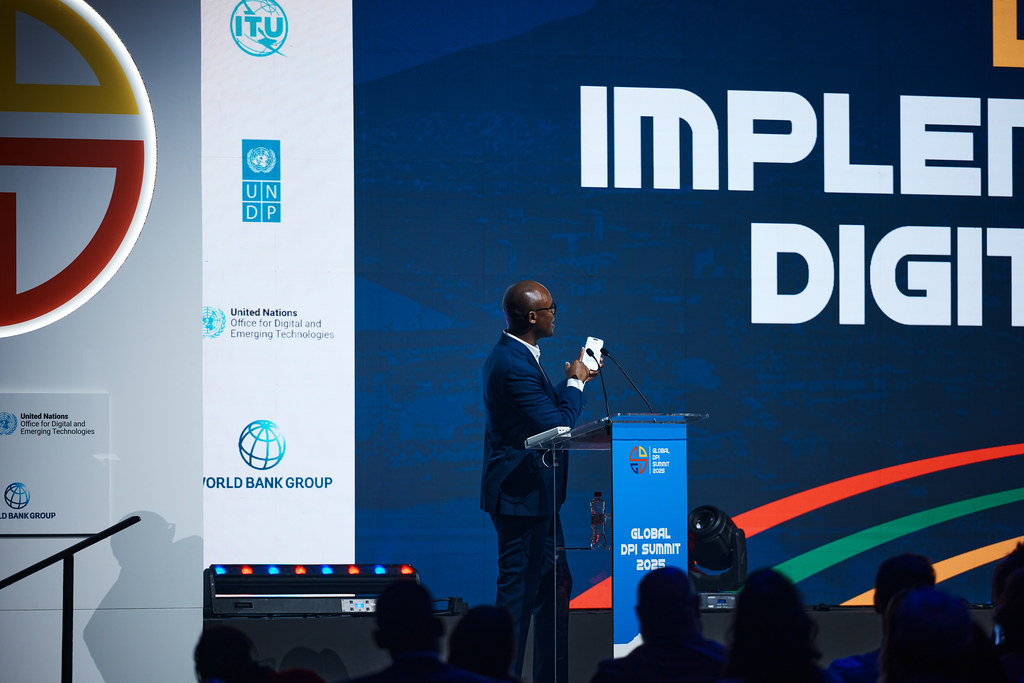
Themed “DPI in Practice: Implementing Tomorrow’s Digital Society Today,” the summit, running at Cape Town International Convention Centre, comes at a pivotal moment for the continent’s digital evolution.
With over 500 delegates from more than 80 countries expected, the gathering builds on the growing momentum following the adoption of the Global Digital Compact by 193 UN Member States, a commitment to digital systems that promote inclusion, trust, and shared prosperity.
For Africa, which faces both the promise and peril of rapid digitization, this summit is an opportunity to steer global frameworks toward local realities and priorities.
A Digital Future Built on African Realities
South Africa’s Minister of Communications and Digital Technologies, Solly Malatsi, will headline the event alongside figures such as Mark Suzman of the Gates Foundation and CV Madhukar, CEO of Co-Develop. Their presence underscores Africa’s growing leadership in global digital policy.
 Across the continent, countries are increasingly investing in digital IDs, payment systems, and interoperable platforms to improve access to public services. Yet gaps persist: millions remain digitally excluded due to affordability barriers, infrastructure challenges, and lack of skills especially among women and rural populations.
“Africa has the potential to define what inclusive digital transformation looks like,” says Malatsi. “We can build systems that are not only efficient but also ethical, secure, and responsive to local needs.”
Trust, Inclusion, and Local Innovation
The summit’s priority areas include inclusion, trust, interoperability, local innovation, and collaborative governance mirror Africa’s own development challenges. For many African countries, DPI offers a path to leapfrog traditional barriers and deliver services more efficiently, from healthcare to financial inclusion.
However, experts warn that without safeguards, these systems could deepen inequality or expose citizens to surveillance risks. Civil society leaders attending the summit emphasize the need for people-centered digital infrastructure, where privacy, consent, and accountability are built into design from the start.
 “Digital systems must empower citizens, not control them,” says a Nairobi-based digital rights advocate. “Africa’s experience should guide the world on how to make technology serve democracy and dignity.”
Women and Youth at the Core
With Africa’s youthful population and growing gender digital divide, inclusion will be a recurring theme. Organizations across the continent are pushing for gender-responsive digital ecosystems from training women coders to ensuring equitable access to online financial tools.
Digital Public Infrastructure, when implemented responsibly, can unlock vast opportunities for women entrepreneurs and youth innovators. Yet, as recent studies show, foreign influence in digital policy including surveillance technologies and data ownership models poses risks that Africa must navigate carefully.
Co-hosted by Co-Develop, ITU, UNDP, the World Bank, and the UN Office for Digital and Emerging Technologies, the summit is also significant because it coincides with South Africa’s G20 Presidency, giving the continent a rare platform to align its digital priorities with global policy.
For Africa, the conversation on DPI is not just about infrastructure it’s about sovereignty, security, and social inclusion. The decisions made in Cape Town will shape how African nations design and govern their digital futures for generations to come.
As one delegate aptly put it, “Africa is not just catching up, we are defining what a fair, inclusive, and open digital society should look like.”