|
Getting your Trinity Audio player ready...
|
By Henry Owino
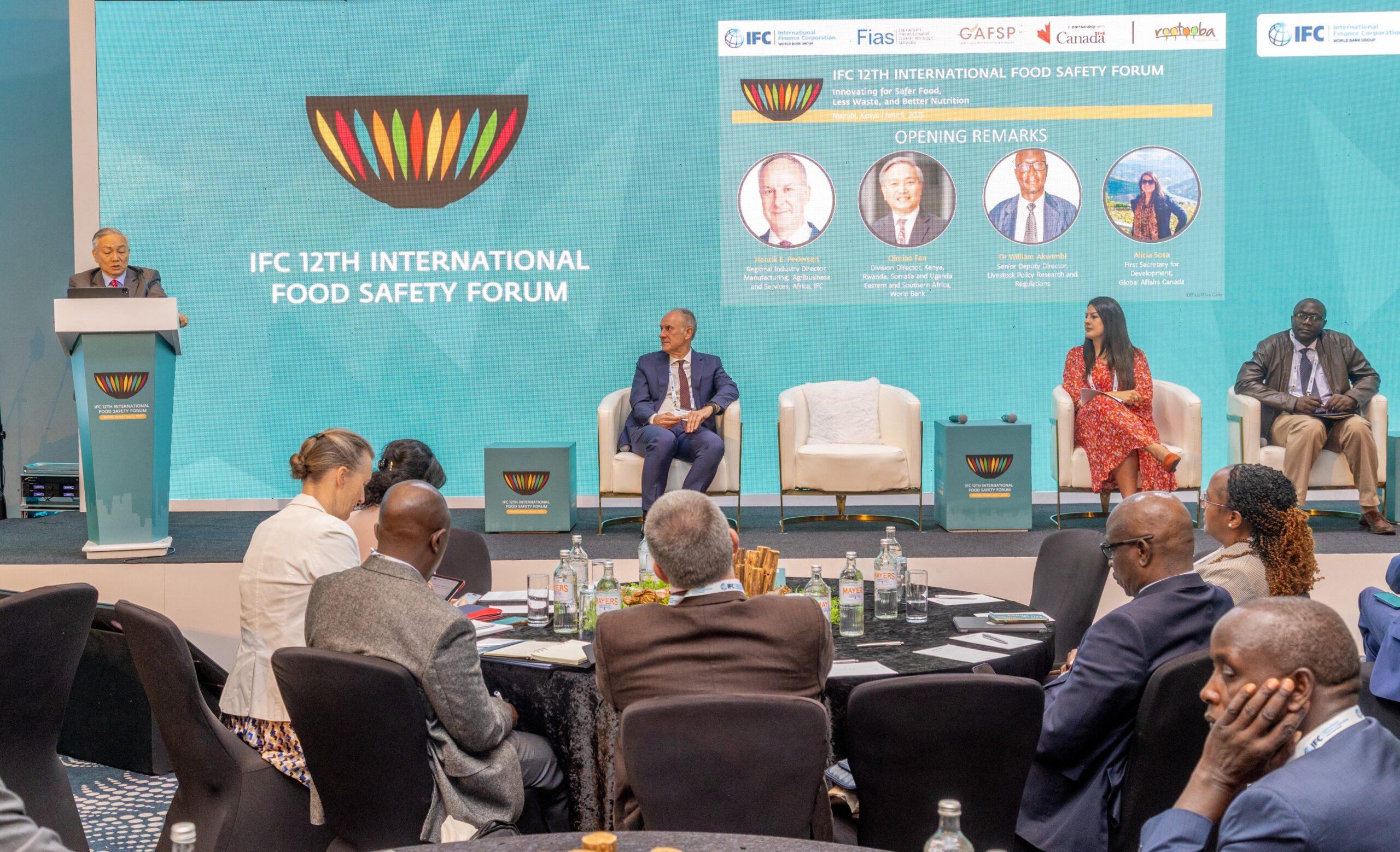
Nairobi, Kenya: The global experts drawn from the international organizations, policymakers, food producers, manufacturers, retailers, and farmers convened in Nairobi, Kenya, to foster collaboration towards building a sustainable and resilient food system that benefits both businesses and consumers.
The teams of experts discussed strategies and innovations around food safety, security, and loss in Africa with the aim of improving food availability, reducing food loss, waste prevention, and quality on the continent.
Speaking during the 12th International Food Safety Forum hosted by the International Finance Corporation (IFC), Dr. Qimiao Fan, the World Bank’s Division Director for Kenya, Rwanda, Somalia, and Uganda, called for modern solutions to address increasingly complex food challenges.
“Let us embrace innovative solutions to tackle the pressing issue of food loss and waste, promote sustainable business practices, and ensure efficient resource utilization,” Dr. Fan told more than 200 delegates attending the forum in Kenya’s capital, Nairobi.
Dr. Fan reiterated the World Bank’s commitment to supporting African nations in addressing barriers to food access and building resilient food systems across the continent.
Henrik Pedersen, Regional Industry Director for Manufacturing, Agribusiness, and Services at the IFC, echoed these sentiments, stressing the importance of public-private partnerships in achieving food safety goals.
“With fertile soil and abundant natural resources, Africa has the potential to feed itself and reduce the $65 billion it currently spends on food imports,” Pedersen said. “We need stronger collaboration between governments and the private sector to unlock that potential.”
“African governments and technocrats must adopt innovative technologies to improve food safety, boost food security, and reduce loss across the continent,” global experts emphasized at the two-day high-level forum held in Nairobi, Kenya.
The forum also highlighted Kenya’s progress in leveraging technology to transform its food systems. This is despite the climate change challenges facing most farmers in the agricultural areas.
Jonathan Mueke, Principal Secretary in the State Department for Livestock under the Ministry of Agriculture and Livestock Development, noted significant improvements in food traceability and safety.
“Through digitized food supply chains, we’ve reduced foodborne diseases by 15 percent over the past year,” Mueke revealed. “We’ve also seen a 20 percent increase in livestock producers complying with international food safety standards.”
He attributed the gains to robust regulatory frameworks, technological advancements, and strengthened partnerships with industry stakeholders.
The experts explored various practical strategies for improving food availability, minimizing waste, and enhancing food quality in Africa.
Discussions were also aligned with the upcoming 2025 World Food Safety Day theme, “Safer Food – Better Health,” focusing on building sustainable food systems that serve both economic and health interests.
World Food Day is an internationally observed initiative that takes place annually on 16 October. It is the day that the United Nations Food and Agriculture Organisation was originally founded in 1945.
As food demand continues to rise amid population growth and climate change, experts unanimously agreed that innovation, collaboration, and strategic investment remain vital to securing Africa’s food future.
Beyond policy dialogue, the forum provided a platform for delegates to share knowledge, best practices, innovative solutions, and network with investment opportunities, thus linking delegates with prospective clients in food safety advisory services aimed at fostering