|
Getting your Trinity Audio player ready...
|
By Henry Owino
Nairobi, Kenya: In Nairobi’s Kibera slum settlement, where survival itself is a daily fight, one woman’s courage stands as a symbol of strength amid despair. Her story is a haunting reminder of how domestic violence destroys lives, and how resilience can rebuild them.
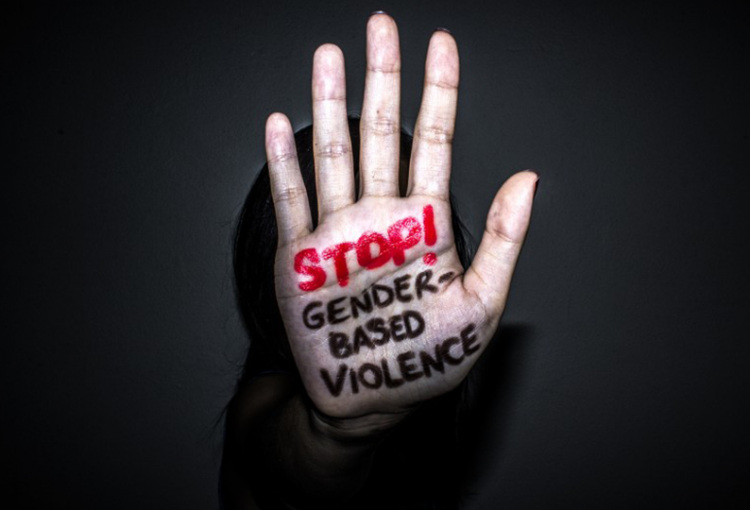
Beaten, broken but unbowed: Rhoda Mwanjira’s battle to reclaim her life after brutal domestic violence vividly reflects the continuing physical, emotional, and social toll of gender-based violence (GBV) in a modern society.
While highlighting the silent suffering and resilience of many GBV survivors in Kenya’s informal settlements, it voices pain, endurance, and the difficult path to healing, hence the urgent need for stronger survivor support systems.
In late 2016, Mwanjira, then 24 (now 33), worked as a laundress in Nairobi’s informal settlement of Kibera. Her life changed forever when she became the victim of a brutal attack by her husband, an assault that left her physically impaired and emotionally scarred.
The ordeal began when her husband, then aged 37 (now 46), attempted to beat their nine-year-old child (now 18). Mwanjira intervened to protect the child, stopping him from striking with a stool. Enraged, he turned his fury on her, raining blows and punches before grabbing her head and slamming it against a wall.
“I screamed for help before losing consciousness,” Mwanjira recalls. “I must have been out for about 10 or 15 minutes before neighbors came to my rescue.”
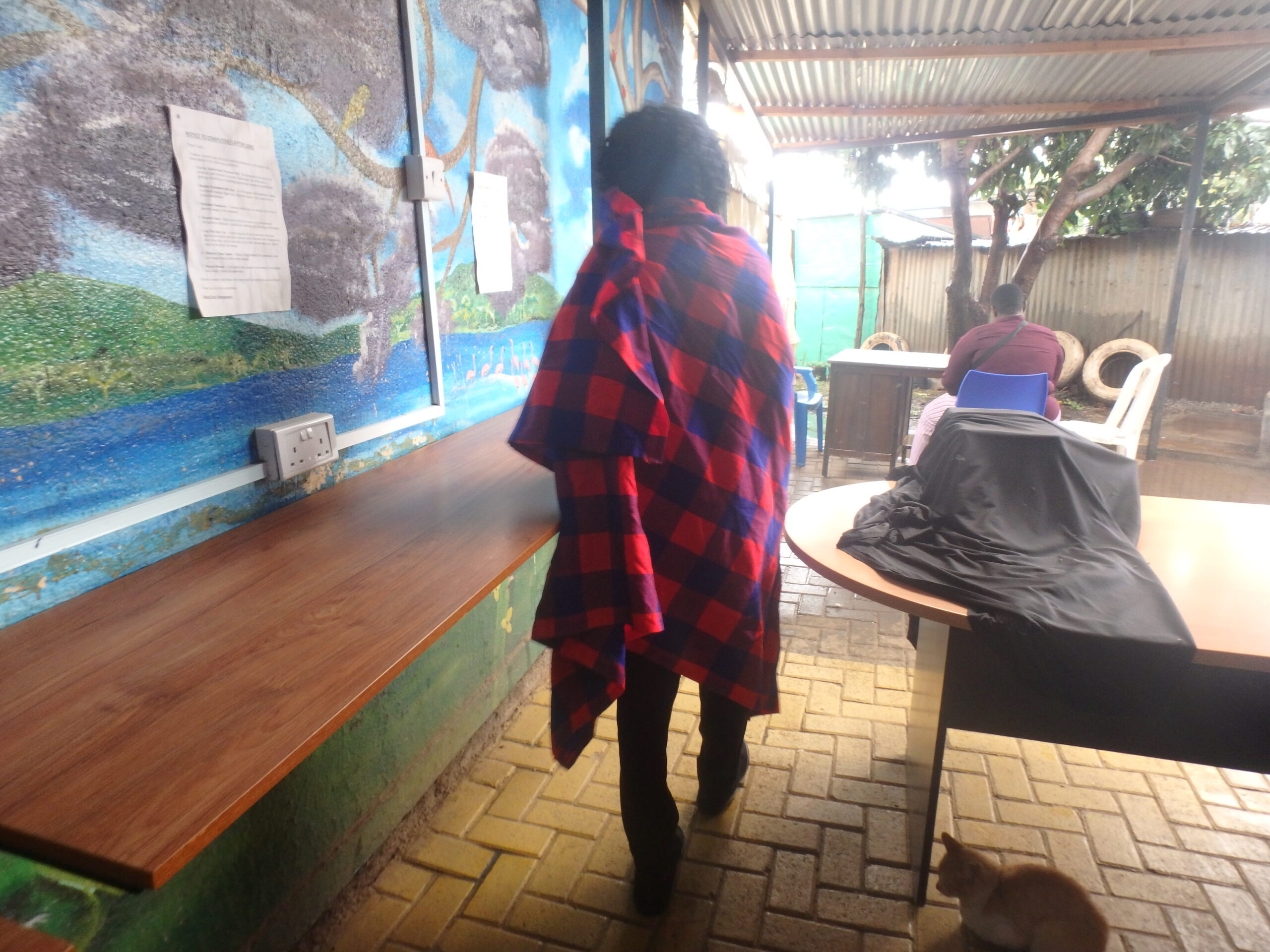
One neighbor helped her reach her brother’s house in Kasarani estate, where she recounted the attack. Later that evening, she returned home and found her husband asleep. Overwhelmed by anger and pain, Mwanjira contemplated stabbing or setting him on fire, but restrained herself for fear of being arrested for either attempted murder or murder.
“I didn’t want to worsen the situation. I feared ending up in jail, leaving behind my dear children with a ‘’murderer’’ father,” she says.
That night, her husband woke up drunk in the middle of the night, demanding sex despite Mwanjira’s sexual anhedonia situation owing to pain and injuries.
Mwanjira said he claimed it was his right to have sex with her whenever he wanted.
Perpetrator Dodging Responsibility
The following day, Mwanjira’s pain intensified, and she needed urgent medical attention. This was not forthcoming two days after the incident. Neighbors intervened and threatened to report the husband to paralegal organizations or the police station. Due to public pressure, he reluctantly arranged for transport to Nairobi Women’s Hospital in Adams Arcade.
“At the hospital, I panicked and collapsed after seeing nurses rush to save another patient with serious wounds and profuse bleeding,” she recounts.
The husband, angered by his wife’s collapse, yelled at her to stop pretending and exaggerating the severity of her sickness. Two security guards immediately ejected the husband from the hospital compound for causing commotion.
His actions were clearly deliberate, an attempt to waste time and escape responsibility for the medical bill, leaving his wife to bear the cost alone. But the hospital had already confirmed his insurance details, including the provider and the balance on his cover.
When confronted, he appeared shocked and tried to deny knowledge of the insurance policy, claiming his employer had not activated it. The hospital administration, however, verified the information directly with the insurance company, which confirmed that his medical cover was valid and active.
Faced with this evidence, he reluctantly authorized the payment, though still attempting to portray himself as a victim of misunderstanding. For Mwanjira, it was yet another painful reminder of how far some perpetrators go to evade accountability, not only in matters of justice, but even in basic moral responsibility.
Doctors Reveal Harsh Reality for Violence Survivor
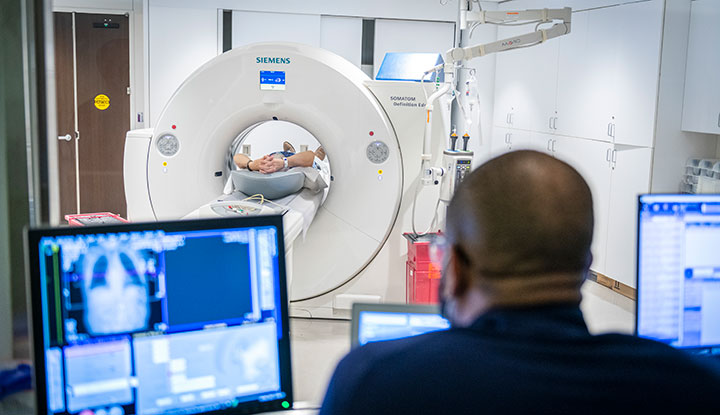
Doctors then speedily performed a CT scan and discovered a blood clot and skull fracture that required urgent surgery to fix. She was then admitted to the general ward for observation and psychological preparation before the impending surgery.
The husband was asked to sign the consent form as the next of kin, but he declined. It took the intervention of security guards, neighbors, and her family members, who explained to him the consequences of not signing, and he reluctantly complied.
A CT scan is a medical imaging procedure that uses X-rays and computer technology to create detailed, cross-sectional images of the inside of the body. It is used to diagnose a wide range of conditions, such as tumors, internal bleeding, and injuries to bones and organs.
At the theatre, the surgery lasted nearly nine hours. “That marked the first of nine operations on my head on the same spot since 2016,” Mwanjira says. “The most recent and last was in 2022.”
Due to her deteriorating health and the risks of further surgery, doctors have since advised against any more head operations. “You are too young to go through another one,” a sympathetic doctor told her. “It’s enough, I don’t want to lose you on the operating table.”
The message hit Mwanjira so hard that she foresaw death forthcoming. She was, however, encouraged by words from the Holy Book: Proverbs 18:21; “Words have the power to either build up and give life or tear down and bring destruction”.
From the doctor’s initial remarks to this day, Mwanjira remains a woman grounded in faith and scripture. “I have cheated death not once, not twice, not thrice, but nine times. I’m not sure why, but I believe I’m still alive to fulfill a greater purpose in life,” she says.
Consequences of GBV
Over the years, her treatment journey has taken her from Nairobi Women’s Hospital to Kenyatta National Hospital, and later to Coptic Mission Hospital, where her final operation was performed. She continues regular check-ups at Kenyatta National Hospital, despite her husband’s earlier attempts to hide her medical record documents.
Today, Mwanjira lives on, but the scars of her ordeal run deep. She struggles with memory loss, limited mobility, cognitive decline, and bouts of depression that come and go. Doctors have warned her never to bear another child, as it could endanger her life. Life that once felt ordinary now carries constant reminders of what she has lost.
“I can’t even go to church,” she whispers, “because the music and preaching are too loud. Sometimes, I feel so forgotten and alone that I have to call friends just to feel connected.”
Even the simplest tasks can feel overwhelming. Walking to the market, keeping up with household chores, or remembering appointments can leave her drained. Nights are the hardest, when silence and darkness bring memories rushing back, making her feel trapped in a body and mind that no longer fully respond.
Yet, amid these daily struggles, Mwanjira persists. She searches for small moments of connection and meaning through a friend’s call, a neighbor’s smile, or simply the sunlight on her porch. Each day is a quiet battle, but it is also a testament to her resilience and the fragile, enduring hope that she can reclaim pieces of the life she once knew.
To stay engaged with people and overcome feelings of hopelessness, she now operates a small fruit parlor next to her rental house on Karanja Road. Her children provide unwavering support, regardless of what others may say.
Mwanjira’s story is one of courage and endurance. Her scars tell not just of suffering, but of survival, a reminder of the deep wounds that gender-based violence leaves behind, and the strength required to heal.
Gender rights activists say Mwanjira’s story underscores the urgent need for stronger community intervention approaches and survivor-centered support systems.
“Gender-based violence is not just physical; it’s psychological, economic, and deeply social,” says Caroline Nganja, a Nairobi-based GBV advocate. “Survivors like Mwanjira show us why access to justice, trauma care, and safe spaces are essential if we truly want to end the cycle of abuse.”
Ms Nganja says that it is possible to empower women and girls and promote champions for violence-free homes, schools, communities, and places of work. She emphasizes it helps in improving the capacity to identify, address, monitor, and prevent subsequent GBVs.
“We have a moral responsibility and legal obligation as leaders and champions of human rights, including the media, to accelerate efforts towards the prevention of, and response to GBV,” Ms Nganja says.
For Mwanjira, the journey to recovery continues, a daily reminder that healing, though painful and slow, is still possible.
Gender-Based Violence in Kenya
- 45% of women in Kenya aged 15–49 have experienced physical or sexual violence, according to the Kenya Demographic and Health Survey (KDHS, 2022).
- 70% of survivors in informal settlements like Kibera never report incidents due to stigma, fear of reprisal, or lack of trust in authorities.
- The Sexual Offences Act (2006) and Protection Against Domestic Violence Act (2015) criminalize GBV, but enforcement remains weak.
- Unfunded grassroots support places compared to major organizations’ support services for survivors, which include:
- Nairobi Women’s Hospital Gender Violence Recovery Centre (GVRC) – 24-hour hotline: 0800 720 565
- National GBV Helpline (1195) – Toll-free, available nationwide
- FIDA-Kenya – Legal aid and psychosocial support for survivors
- LVCT Health – Offers counseling and referral services
Call to Actions by National and County Governments
There is high hope across stakeholders that the formation of a national GBV Technical Working Group Task Force, a presidential committee in Kenya, led by Dr Nancy Barasa, that was established to address the rising rates of GBV, including femicide, did a good job and handed over a comprehensive solution report to Kenya’s President William Ruto.
The task force was appointed to review existing policies and structures, identify trends, and recommend measures to strengthen prevention, response, and survivor support systems, with the goal of submitting a report with comprehensive solutions to the president.
The team began its 90-day mandate on 25 January 2025, which ended on 9 April, but its term was extended for another period of 60 days, with effect from 9 April 2025 to 8 June 2025.
The group was also tasked with examining gaps in resource allocation, operational effectiveness, and training levels within institutions managing GBV-related cases.
A key focus of the working group was legislative review, analyzing the adequacy of current legal and policy frameworks and proposing amendments to close loopholes, bolster protections, and ensure robust enforcement.
The initiative reflects the national government’s commitment to tackling GBV and femicide, ensuring Kenya moves toward a more equitable and just society.
This now calls for all GBV Programme Officers in County Governments’ Departments of Gender, Culture, Social Services, and Sports to collaborate with relevant State and Non-State Actors, in strengthening prevention and response to GBV at the grassroots within Counties.
It is important for every County Government to commit to ending SGBV through sponsoring relevant bills in County Assemblies.
Counties need to push for the effective implementation of existing national/county policies as well as existing laws such as the National Policy on Gender and Development, National Policy on prevention of and response to GBV, and Sexual Offences Act just to mention a few.
If all these are implemented at the county government level, which oversees operations and sensitization approaches done at the grassroots level, it can help reduce the rate if not eliminate GBV and femicide nationally.
Mwanjira’s story is a reminder of the enduring impact of violence, not just on the body, but on the mind and spirit. It highlights the need for sustained support, understanding, and medical care for survivors who face lifelong consequences and the quiet courage it takes to live on despite the harm.
This story is part of an ongoing Talk Africa series highlighting survivors of gender-based violence and the urgent need for policy, healthcare, and social justice reforms to protect vulnerable women and children in Kenya’s informal settlements.
This story was made possible with the grant from WANIFRA-WIN SIRI Accelerator Programme.