|
Getting your Trinity Audio player ready...
|
Jane Meza
Mombasa, Kenya: Menstruation is a natural part of life. Yet for thousands of Kenyan girls, it remains wrapped in silence, stigma, and uncertainty — turning what should be a routine biological process into a monthly disruption of education, dignity, and confidence.
Across homes, schools, and communities, conversations around menstruation are still limited. Many girls encounter their first period unprepared, navigating fear and confusion in isolation. For some, that silence does not just shape their experience — it determines whether they stay in school or fall behind.
At Kadzandani Primary School in Bamburi, Mombasa, 15-year-old Joan Wangare still vividly remembers the day her life changed. “I thought I was sick,” she recalls. “I was in class when I started feeling nausea, shivering, fatigue, and stomach pain. I didn’t know it was cramps. I was so tired I couldn’t concentrate. Then I realised I was bleeding.”
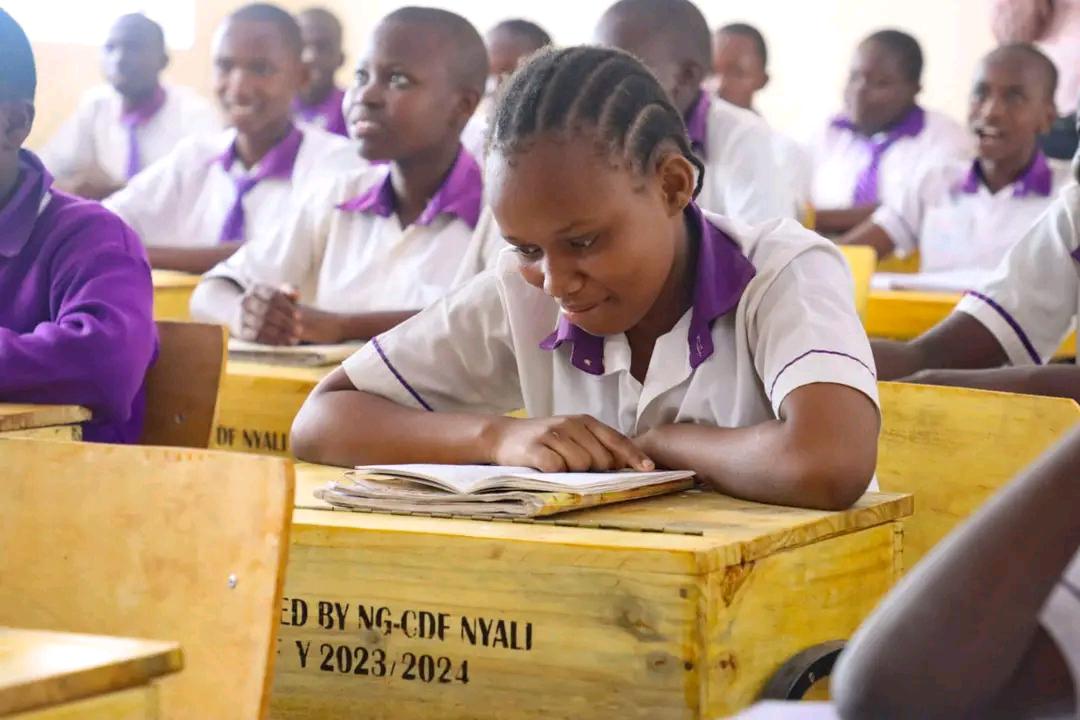
With no sanitary pad, no prior knowledge, and no one to turn to, she sat through the day in fear. “It was unexpected and frightening. I didn’t know what to do. I just wanted to go home, but I was scared my classmates would notice,” she says.
Joan’s story is not unique. It reflects the reality of many adolescent girls whose first menstrual experience is marked not by understanding, but by anxiety and silence.
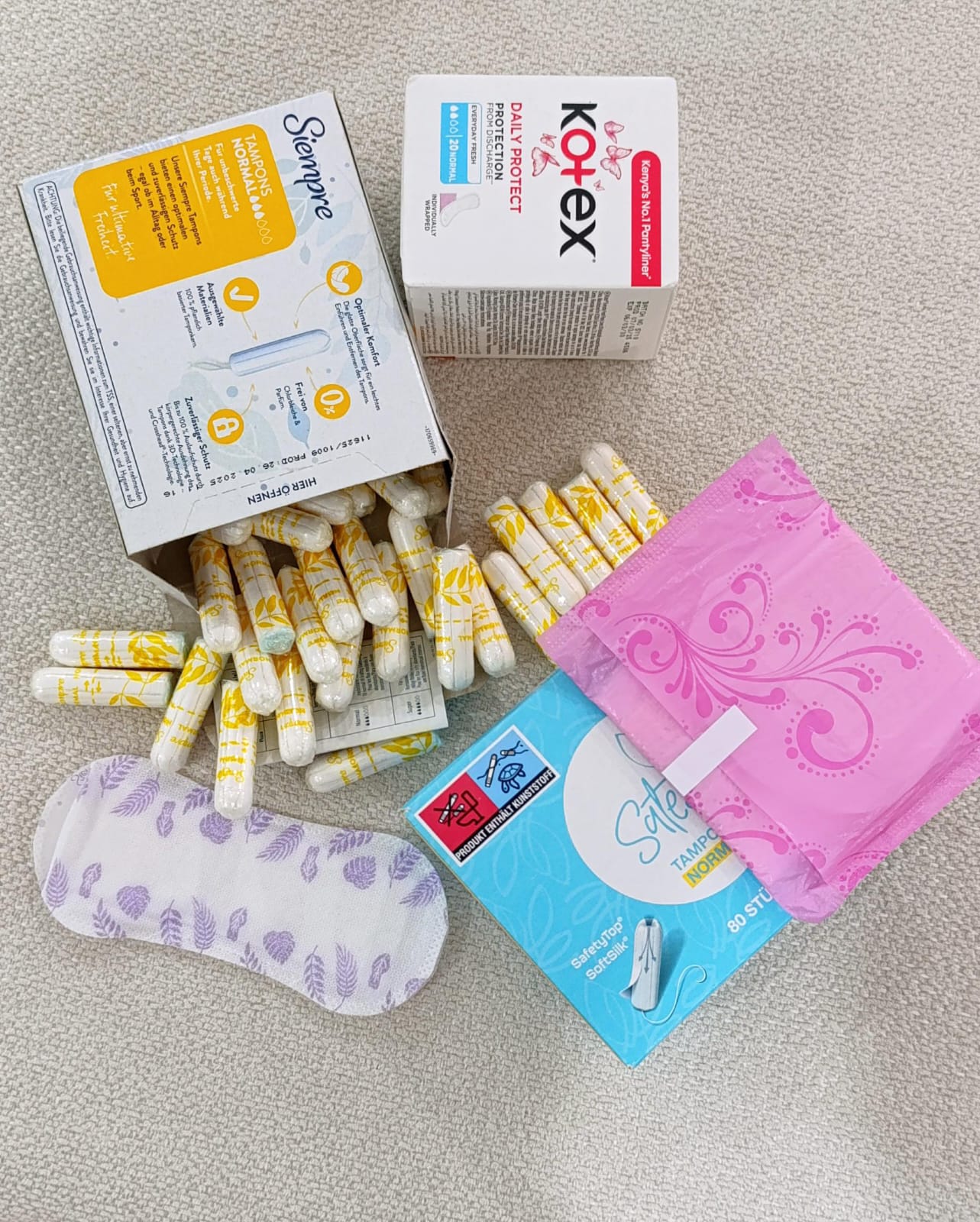
According to Dr. Elias Walubengo Wakoli, an obstetrician-gynaecologist, menstruation sits at the intersection of health, education, and social inequality. While several menstrual products are available — including sanitary pads, tampons, menstrual cups, and reusable cloth — not all girls can access them equally.
“The biggest challenge is availability,” Dr. Wakoli explains. “Without consistent access, many girls are forced to overuse materials or miss school entirely. Water is essential, and without it, even reusable options become unsafe.”
In low-resource settings, some girls resort to improvised materials such as cloth, which require proper washing and drying conditions that are not always guaranteed. Others stretch the use of a single pad for extended hours, increasing the risk of infections.
For adolescents, the challenges go beyond access. Many grapple with pain, confusion, and unanswered questions. Some wonder whether their periods will ever stop, while others seek ways to control them during exams or school activities. Dr. Wakoli notes that menstrual pain varies widely and must be managed individually, sometimes requiring medical support.
He also challenges harmful cultural perceptions that equate menstruation with maturity. “In some communities, once a girl starts her periods, she is considered ready for sex or even marriage,” he says. “But adolescence is a much broader stage of development — physically and psychologically — and extends into the early twenties.”
Experts say addressing menstrual health requires involving everyone, not just girls. Boys who share the same learning spaces often grow up excluded from the conversation, reinforcing stigma through teasing or silence. “When boys understand that menstruation is normal, they become part of the solution rather than part of the stigma,” Dr. Wakoli says.
The inequality is evident in everyday school life. A boy can attend class even if he has skipped bathing, but a girl without a pad often has no choice but to stay home. Fear of embarrassment, leakage, and stigma turns menstruation into a silent driver of absenteeism.
Teachers are witnessing this reality firsthand. At Kadzandani Primary School, one teacher says absenteeism among girls remains a persistent challenge. “Many girls miss classes because they cannot afford pads or feel unwell during their periods,” she explains. “If the government could consistently provide sanitary towels in schools and introduce counselling support, it would help thousands of girls from poor backgrounds stay in class.”
Beyond schools, community-based organisations are stepping in to bridge the gap. In Kasarani, organisations working with refugees and vulnerable families are combining menstrual health education with broader social support.
Rose Mwikali Maingi, a community health promoter, says access to sanitary products in schools could transform girls’ lives. “It would make a huge difference because no girl would have to stay at home,” she says. “If pads are available, girls remain in class and continue learning.”
However, access is not always straightforward. In many schools, girls must request pads from teachers or matrons — a process often accompanied by embarrassment. “Sometimes a girl is given just two or three pads to help her at that moment, but it is not enough for the entire period,” Rose explains.
She advocates for discreet distribution points within schools to allow girls to access sanitary products without stigma. “If girls can easily access pads and change them every two to three hours, they will maintain proper hygiene and avoid infections,” she adds.
Through partnerships with organisations such as the Health and Social Empowerment Foundation (HESEF), outreach programmes are providing menstrual education, soap, and at least four packets of pads per term to girls aged nine to sixteen. The initiatives also include mentorship, warning girls against exploitation — particularly by individuals who may take advantage of their vulnerability.
According to Rose, the biggest challenge they face is inadequate funding, which makes it difficult to provide enough sanitary products to vulnerable teenage girls. As a result, funding constraints continue to limit the reach of these programmes.
“Sometimes we don’t have enough resources,” Rose says. “If we plan to give four packets per girl, we may only manage two. That is not enough.”
At the policy level, the Government of Kenya has acknowledged menstrual health as a barrier to education. Through the National Sanitary Towels Programme, the Ministry of Education aims to improve retention, participation, and performance among girls in public schools.
Education officials have consistently emphasised that menstrual health is not just a hygiene issue, but a matter of dignity and equality. However, gaps in supply and access persist, particularly in low-income areas.
Globally, UNESCO estimates that one in ten girls in Sub-Saharan Africa misses school during her menstrual cycle. In Kenya, UNICEF reports that about 9.3 million women and girls of reproductive age are affected by challenges related to menstruation, including stigma, limited access to sanitary products, and poor sanitation facilities.
Education reports further indicate that girls who miss three to four school days each month due to menstruation can lose up to 39 learning days annually — nearly a full academic term. County-level data also suggests that nearly three in ten girls miss school monthly for the same reason.
Back in Bamburi, Joan reflects on her experience with quiet honesty. “If someone had explained it to me, I wouldn’t have been so scared,” she says.
Her words echo the reality of many girls across Kenya. Menstruation is universal, but its impact is shaped by knowledge, access, and support. As conversations begin to open up, the challenge remains clear: ensuring that no girl is forced to choose between her education and a natural process she cannot control.
mezamwanza.meza@gmail.com