|
Getting your Trinity Audio player ready...
|
By Lenah Bosibori
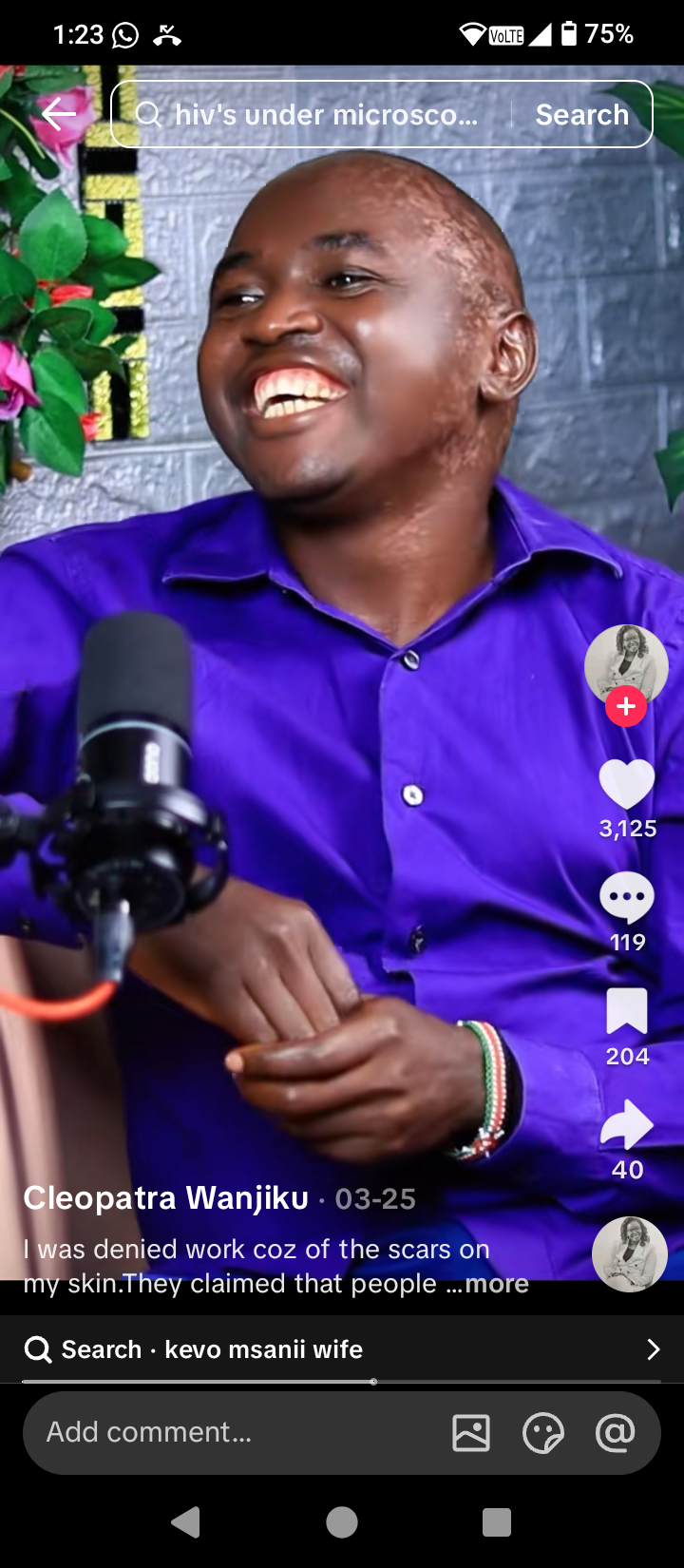
Nairobi, Kenya: Kelvin Barasa, popularly known on social media as Kevo Msanii, still remembers the day a job opportunity slipped through his hands, not because he lacked qualifications, but because of how he looked.
“The scars on my skin told a story many were not willing to understand,” he said during a YouTube podcast. “They said customers would not buy food from me.”
Barasa was born with Human Immunodeficiency Virus (HIV), but for years, he did not fully understand his condition. At around 10 years old, he grew tired of taking medication and stopped. His health quickly deteriorated, leaving visible scars across his body.
HIV attacks the body’s immune system, weakening its ability to fight infections. If untreated, it can progress to Acquired Immunodeficiency Syndrome AIDS, the most advanced stage of the disease. While there is no cure, antiretroviral therapy ART allows people living with HIV to lead long, healthy lives.
“Before I understood what the medication was for, my mother and grandmother told me it was for my chest,” Barasa recalls. “At some point, I got tired and stopped taking it. Then I became very sick and ended up in the hospital on oxygen.”
 Although he later received counselling, acceptance did not come easily. The consequences of stopping treatment extended beyond his health. Visible symptoms made school life unbearable.
“I blamed my mother for not telling me earlier,” he says. “In school, other children trolled me, and I had no friends. When I saw drawings about HIV stages, they scared me.”
He adds that people avoided him because of the visible wounds on his body, fearing they could get infected if they came close to him.
Finding Acceptance Through Community
After completing primary school, Barasa left his rural home and moved to Athi River in Machakos County. There, while seeking treatment, he found something he had never experienced before in a community.
“That is where I met others like me,” he says. “We shared experiences, and I realized I was not alone.” That support marked a turning point. “I finally accepted my status in 2020, when I was almost 18. It took me nearly ten years.” Kelvin Barasa talking about his HIV status
Still, stigma followed him into adulthood. His decision to speak publicly was sparked by a painful moment.
“A friend told me his mother wanted to kill him after learning he was HIV positive,” Barasa says. “That really moved me.”
From that point, he chose to speak out to challenge stigma and show that HIV is not a death sentence.
At first, he spoke cautiously. “I started indirectly because I was afraid,” he says. “When I posted about HIV, the reactions were mixed. Some people supported me; others were very hurtful.”
“A day cannot pass without me talking about HIV,” he says. “I share about it on all my platforms.”
Today, his Facebook profile openly states his HIV status, a bold act in a society where stigma remains deeply rooted.
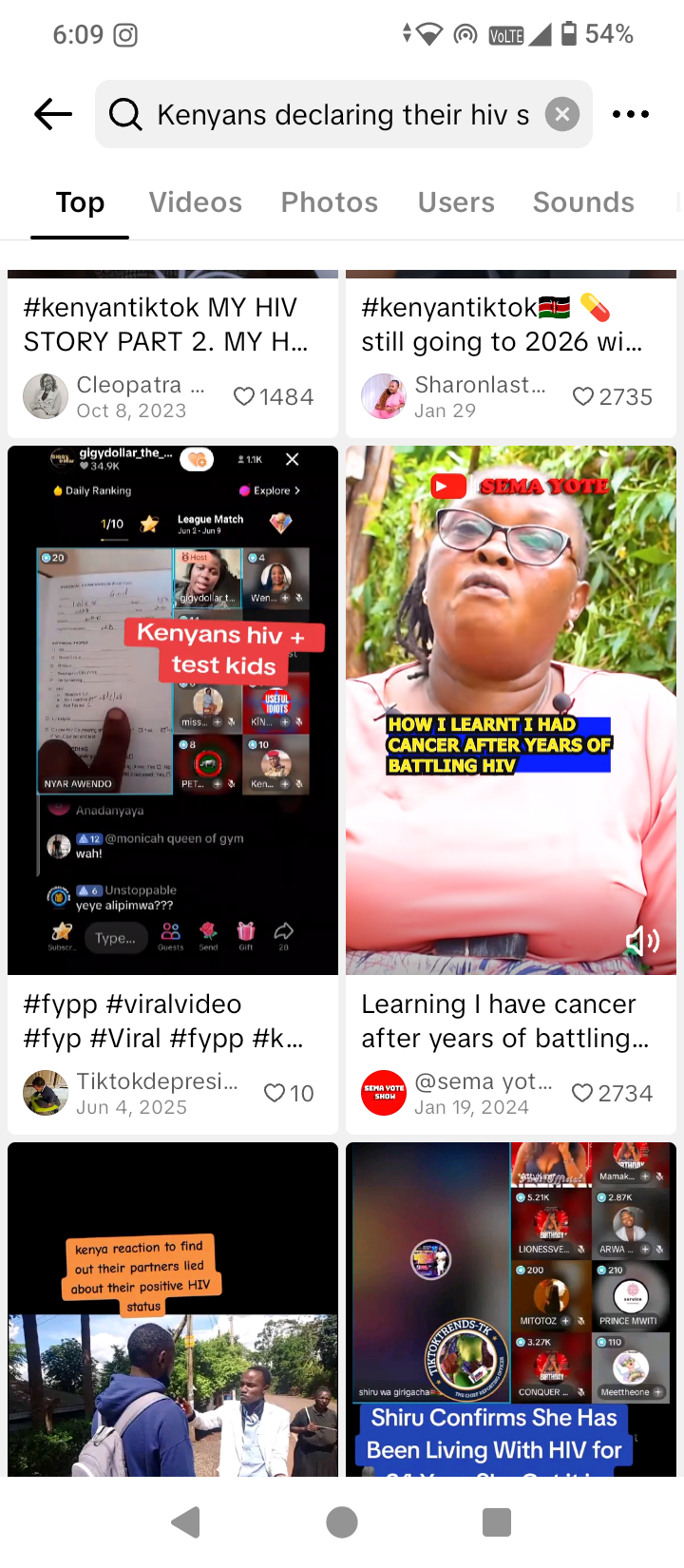
Barasa is part of a growing number of Kenyans using platforms like TikTok, Facebook, and Instagram to challenge misconceptions, share personal experiences, and educate others.
A Digital Shift in HIV Conversations
Despite decades of awareness campaigns, HIV stigma remains a major challenge in Kenya.
Data from the National Syndemic Diseases Control Council NSDCC shows that Kenya recorded nearly 20,000 new HIV infections in 2024, a 19 percent increase from the previous year. Young people aged 15 to 34 account for the highest number of new infections. National Syndemic Disease Control Council Estimates
During World AIDS Day celebrations in 2025 in Kajiado, Pauline Waweru, an AIDS Control Unit coordinator at the Kenya National Bureau of Statistics, noted that Kenya is experiencing a rise in HIV infections.
“We rely heavily on international funding, and when that support drops, prevention programs are affected,” she said.
While Barasa chose to disclose his status publicly, TikTok creator Miss Nelima documented her journey differently by sharing the day she went for testing at Bungoma Hospital.
“I am going to confirm my HIV status today,” she said in her video. “You cannot just wake up and do this. I am being pushed by emotions, but it is important to know your status.”
“The world is full of secrets and hidden dangers,” she added. “That is why knowing your status and being honest in relationships is more important than ever.”
Her video reached thousands, turning a deeply personal moment into a public conversation.
The Power and Fear of Disclosure
For many, speaking openly about HIV remains difficult. Laura Thuo, an HIV awareness content creator, says disclosure is one of the biggest challenges.
“People think it is easy to say you have HIV,” she explains. “But when it comes to actually saying it, it is very hard. You start wondering what if they hate me?”
Doreen Moraa, who was also born with HIV, echoes that reality. “I have dated people who are HIV negative,” she says. “But you have to disclose early.” Even then, acceptance is not guaranteed.
“I was once left alone on Ngong Road after disclosing my status,” she recalls. “Someone just disappeared, do not expect everyone to accept you,” she says. “But there are people who will understand.”

Fear of being identified has long driven HIV stigma in Kenya. But technology is reshaping that landscape.
Online platforms now offer spaces where people can speak openly or anonymously without fear of immediate judgment. For many, these digital communities provide support, connection, and a sense of belonging.
Technology is also expanding access to information. People can now ask sensitive questions privately and receive immediate answers about relationships, having children, or living safely with HIV.
According to UNAIDS, more than 1.4 million Kenyans are living with HIV. While treatment has improved significantly, stigma remains a major barrier, especially among young people.
For Barasa, speaking out was not easy, but it was necessary. “I wanted people to understand that HIV is not a death sentence,” he says. “It is a condition, and people can live normal lives.”
Today, his voice and many others are reaching thousands online, even beyond Kenya. Stories that were once hidden are now being told openly.
In Kenya, the fight against HIV stigma is no longer confined to clinics or policy spaces. It is unfolding on phones, in videos, and through voices that refuse to stay silent. And in those voices lies the power to change lives.