|
Getting your Trinity Audio player ready...
|
By Juliet Akoth
Nairobi, Kenya: In an era when false claims about climate and conservation spread rapidly, journalists and environmental advocates are turning to an unexpected tool: local languages.
When torrential rains recently flooded Nairobi’s streets and displaced families, many residents perceived it simply as severe weather, failing to recognize the underlying role of climate change or environmental degradation.
This gap between lived reality and scientific understanding highlights what Philip Newell, an information integrity specialist at Global Strategic Communications Council, describes as propaganda’s ultimate goal.
“Disinformation doesn’t make you think that you’re wrong. It makes you feel like you’re alone,” Newell told journalists and conservation experts in Nairobi at the launch of Mongabay’s new Swahili platform, designed to reach over 200 million speakers across East and Central Africa.
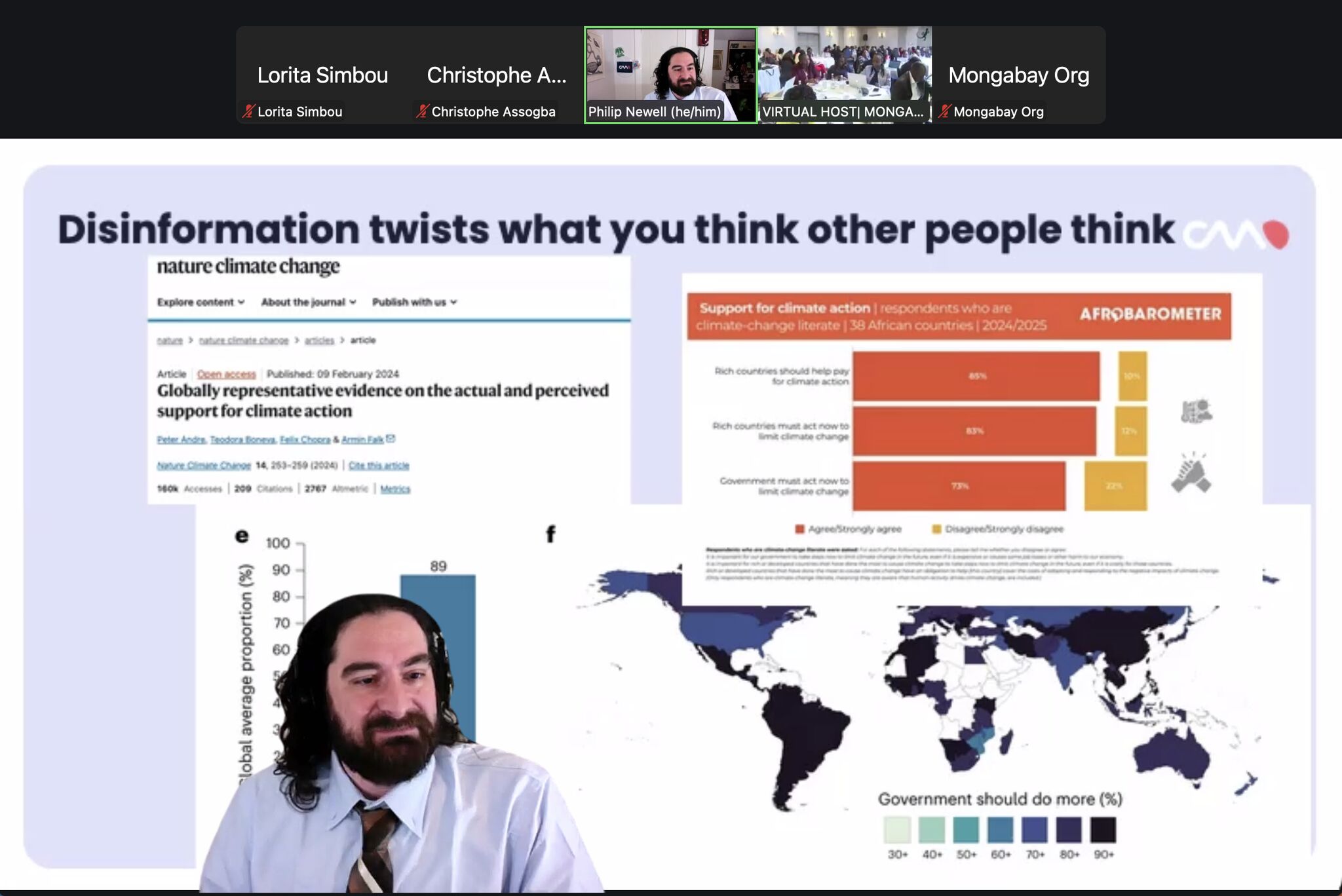
The timing reflects growing urgency. Disinformation about climate and conservation has evolved into a sophisticated system that can manipulate reporters into amplifying falsehoods. Newell, speaking virtually, emphasized that no one is immune.
The stakes are clear. While 97% of climate scientists agree that humans are causing climate change, disinformation campaigns have exploited the journalistic principle of balance to create what Newell calls “false balance.” Reporters aiming to present both sides can unintentionally suggest a scientific debate where none exists.
“If you want accuracy in your debate on climate science, it wouldn’t be between two people, but between like a hundred,” Newell explained. “We’re well beyond a scientific debate, and have been for quite a while.”
A 2024 Nature Climate Change survey found that 89% of the global public wants more climate action. In Africa, 73% of climate-literate citizens want governments to act. Yet disinformation distorts this consensus, creating what Newell described as a “funhouse mirror” effect where a small number of voices appear dominant.
Newell pointed to a specific example in 2009, when a hacked climate scientist emails were misrepresented and amplified before verification. Although multiple investigations later cleared the scientists, the damage shaped public discourse.
“Before journalists did their due diligence to see if those claims were true, they broadcast them,” he said. Today, similar dynamics play out as viral content drives coverage before facts are confirmed.
David Akana, the Program Director of Mongabay Africa linked this challenge to how African stories are framed. Analysis of coverage by Mongabay revealed a pattern dominated by conflict, corruption, and poverty, with little attention to solutions.
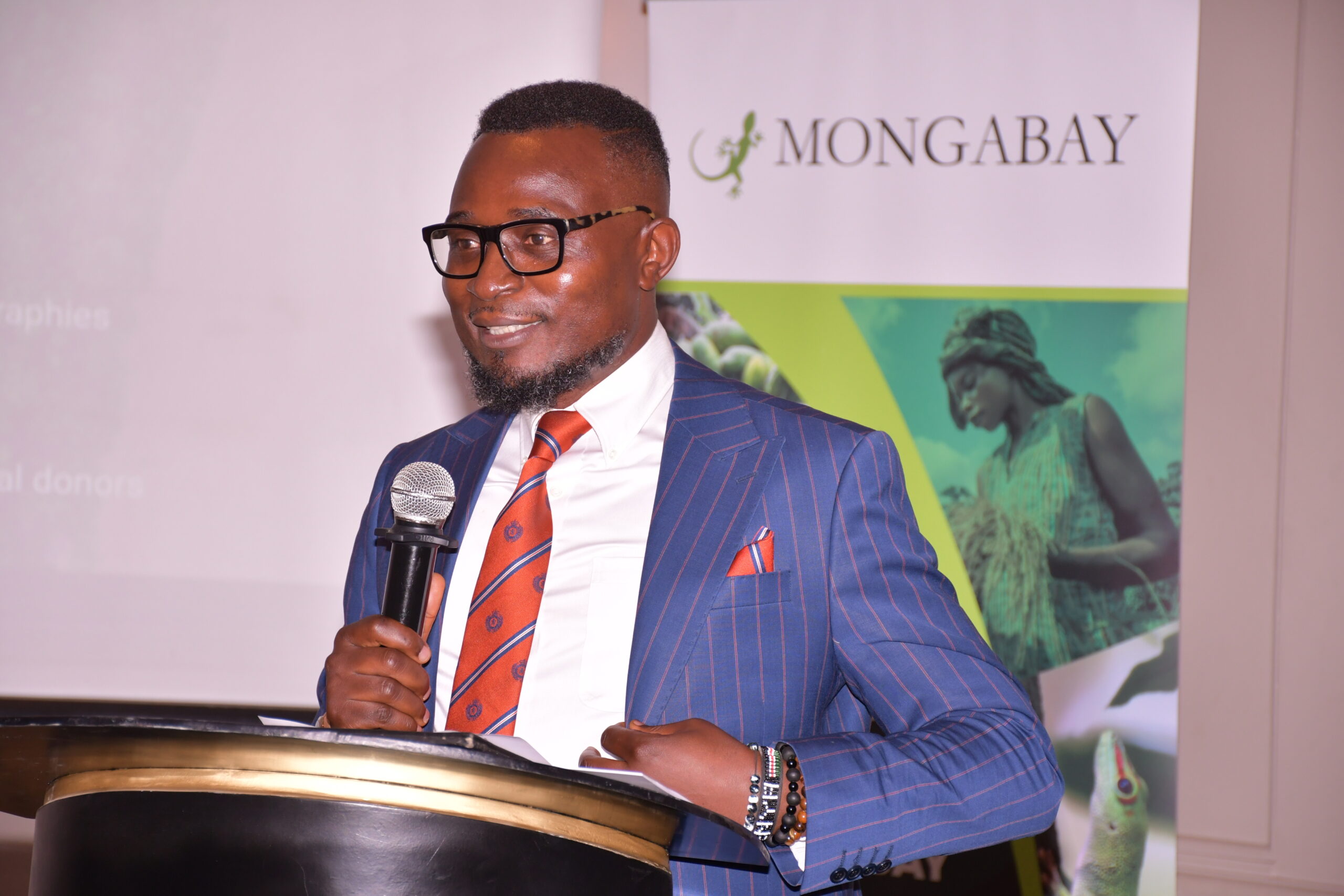
“For the most part, it’s always negative,” Akana said. “There’s nothing good that’s happened in Africa when you look at Western media at times.”
According to Akana, Mongabay’s response to this issue combines investigative accountability with what he called solutions journalism, profiling conservation leaders and documenting policy wins alongside exposés of corruption.
The organization’s investigations have triggered government sanctions against firms operating illegally in the Democratic Republic of Congo, prompted South African Parks to implement new anti-poaching DNA technology, and drawn international scrutiny to luxury hunting operations displacing Maasai communities in Tanzania.
“That’s how we measure success,” Akana said, pointing to impact on communities rather than clicks or page views.
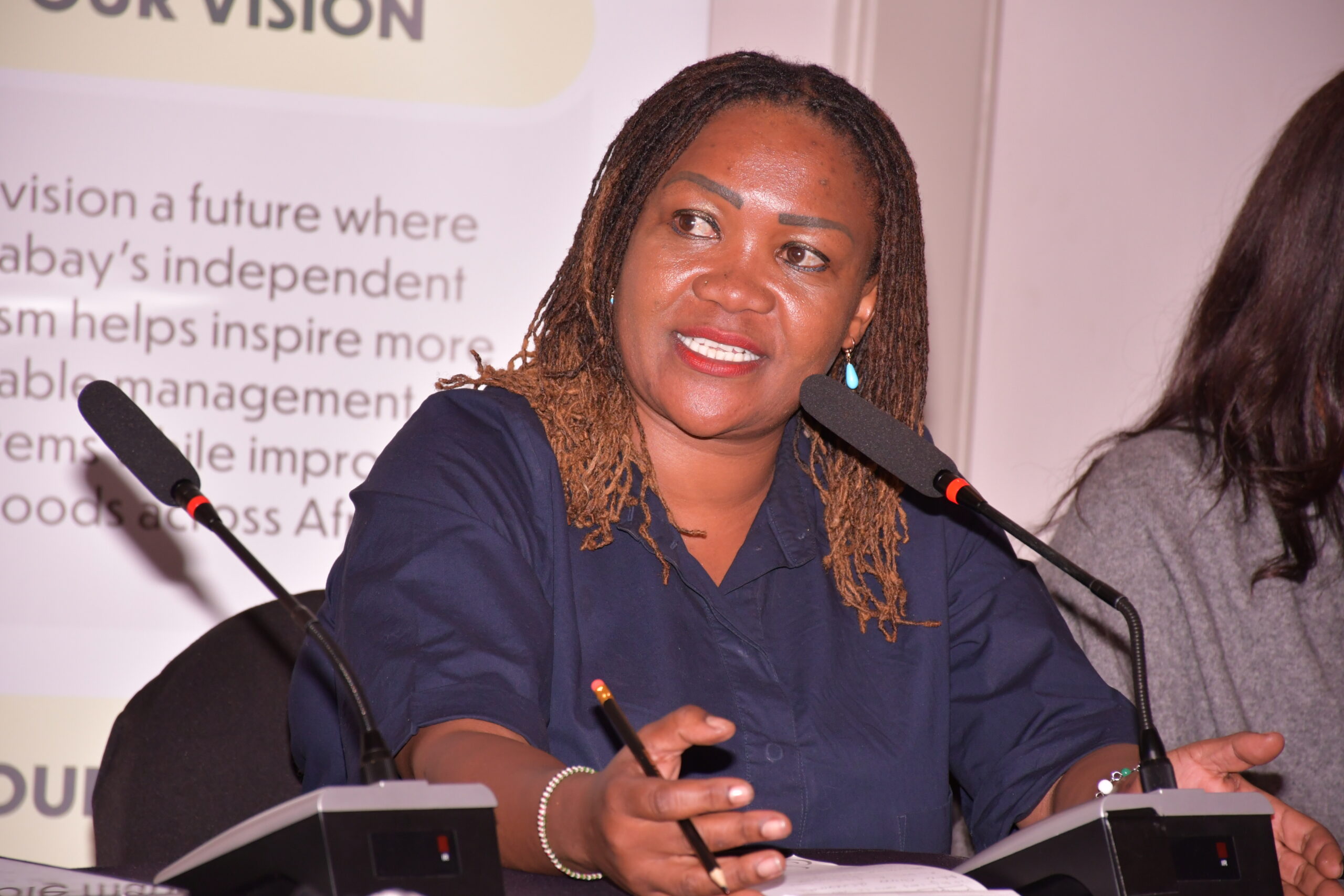
Yet even rigorous investigations lose power if they don’t reach the people most affected. Ann Ngugi, a veteran Kenyan Swahili broadcaster and former anchor at BBC terms this gap as “information justice.”
Standing before the Nairobi audience, she described reporting from Amboseli National Park in 2023, where an elephant, older than many in the room, had died not from poachers but from drought intensified by climate change. Maasai communities living around the park understood the land intimately, yet climate conversations often excluded them because the language was English, the jargon was technical, and the framing was distant.
“Terms like carbon emissions, biodiversity loss, climate resilience, and ecosystem degradation. They are mouthful, right?” Ngugi said. These concepts can feel distant despite their direct impact on daily life. “They experience environmental change every single day. But because the language used to explain is complicated, many people cannot connect what they are seeing with what scientists are explaining.”
This disconnect leaves audiences vulnerable to misinformation, including AI-generated content spreading on social media. Ngugi argued that technology must support truth rather than amplify misinformation and disinformation.
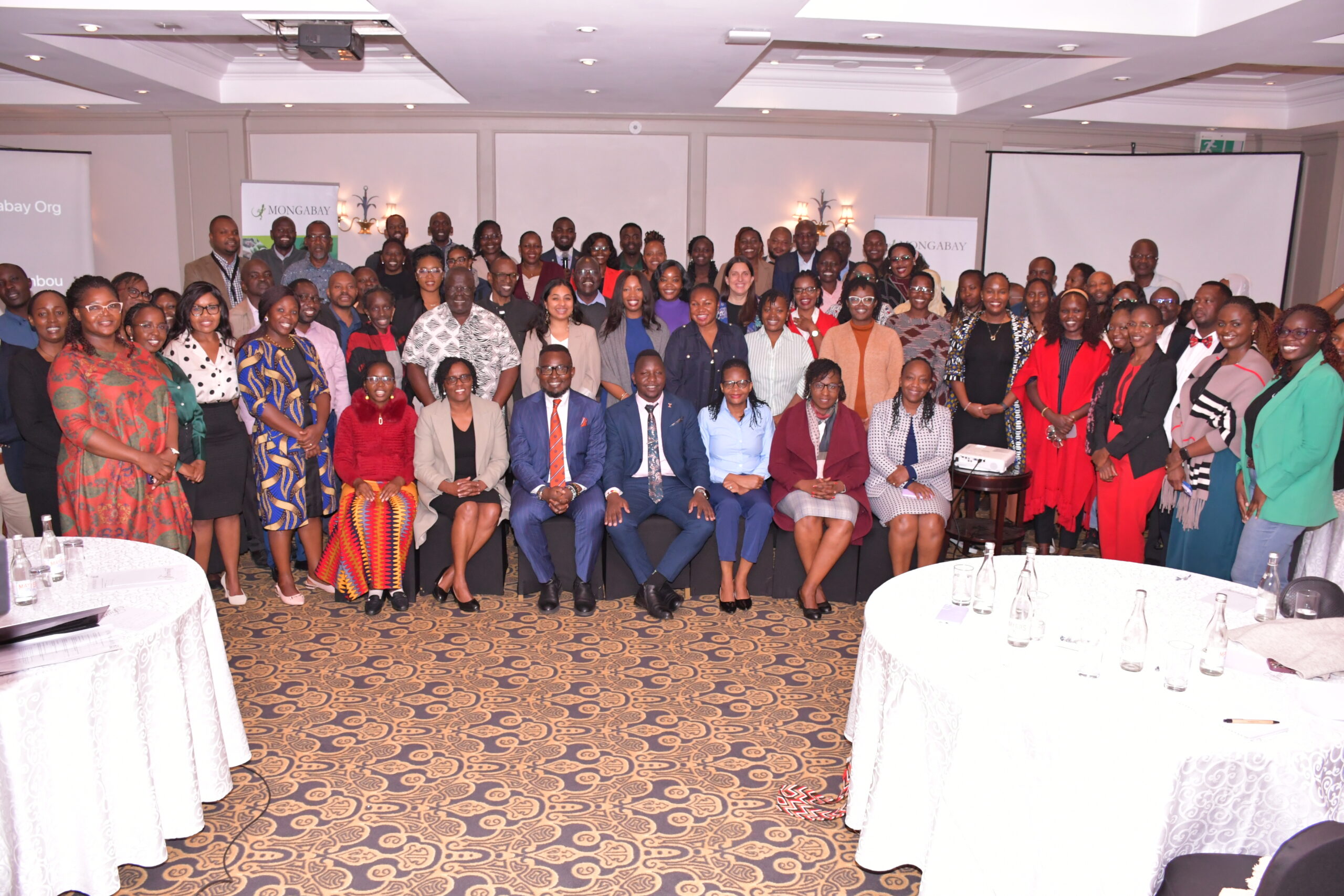 Hence why Mongabay Swahili platform aims to bridge this gap through locally grounded reporting and accessible language, with partnerships including Kenya Broadcasting Corporation.
“When environmental journalism speaks in the language of the people, information becomes understanding, and understanding becomes action, and action becomes change,” Ngugi said.
Representing the Cabinet Secretary for Information and Digital Economy, Temesi Mukani, the Secretary of Information and Broadcasting, reinforced the need for credible information as digital infrastructure expands.
“We are living in a time when information travels faster than verification,” Mukani said. “Misinformation, disinformation on environmental issues can undermine public trust, distort policy debates and weaken conservation efforts. Credible journalism therefore plays a critical role in protecting the integrity of public discourse.”
Mukani also noted that artificial intelligence presents both risks and opportunities, particularly for fact-checking and translation, as Kenya advances its national AI strategy.
For Newell, countering disinformation requires more than debunking individual claims. Journalists must investigate bad actors and expose the systems that sustain false narratives. He pointed to examples of sponsored content disguised as reporting and individuals with criminal histories influencing energy debates.
Most importantly, he stressed the role of collective understanding. “Climate policy is popular,” he said. “And if the situation were hopeless, they wouldn’t be wasting their time and money on disinformation.”
As the Mongabay Swahili platform grows, it offers a critical tool in the fight against conservation disinformation: credible journalism rooted in local language and lived experience.