|
Getting your Trinity Audio player ready...
|
By Melisa Mong’ina
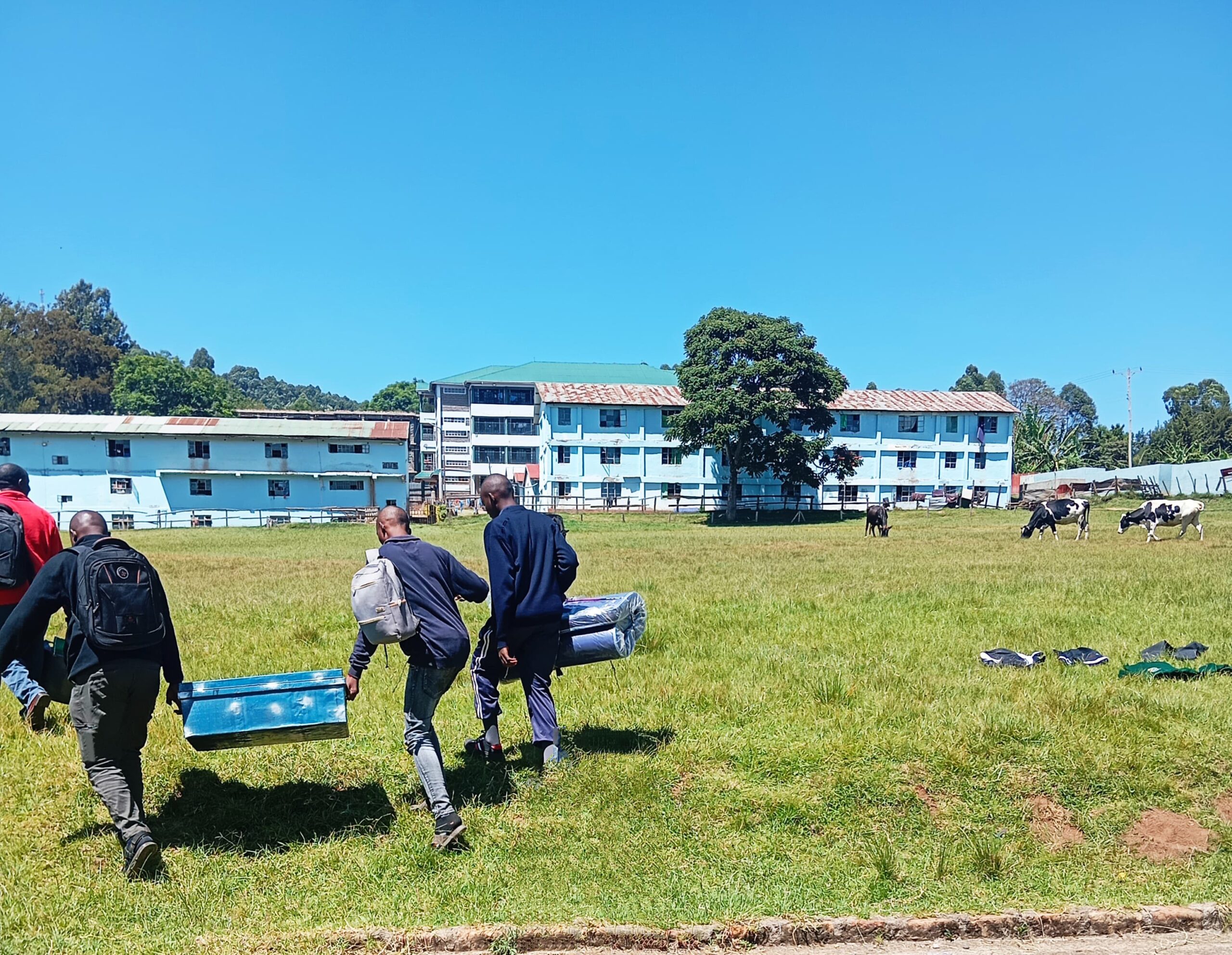
Kilifi County, Kenya: Kenya’s senior school placement is intended to mark a new beginning for grade 10 learners under the CBE system. Yet, at St. Kizito Nyansiongo Boys, one father’s journey from Kilifi highlighted the quiet struggles of distance, worry, financial strain, and unanswered questions after being denied a chance at nearby school.
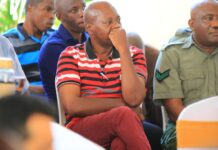
Samuel (not his real name), a grade 10 parent Kilifi County, stood among unfamiliar faces holding documents in one hand and exhaustion in the other, wondering how his son ended up hundreds of kilometers away from home.
He had hoped for a nearby school to care for his asthmatic son, but the government placed him at Nyansiongo Boys instead. Multiple appeals for a transfer to a nearby school were denied, leaving him no choice but to accept the placement.
“I have come to enroll my son here at St. Kizito Nyansiongo Boys. It is far. I expected that he would be placed at Kwale boys high school, but that wasn’t the case,” says Samuel.
The journey from Kilifi to Nyansiongo was both long and costly, adding to the financial strain of admission. The exhaustion and expenses continued to increase as he traveled from Nyansiongo to Keroka to deposit the fees and purchase the necessary items that he lacked.
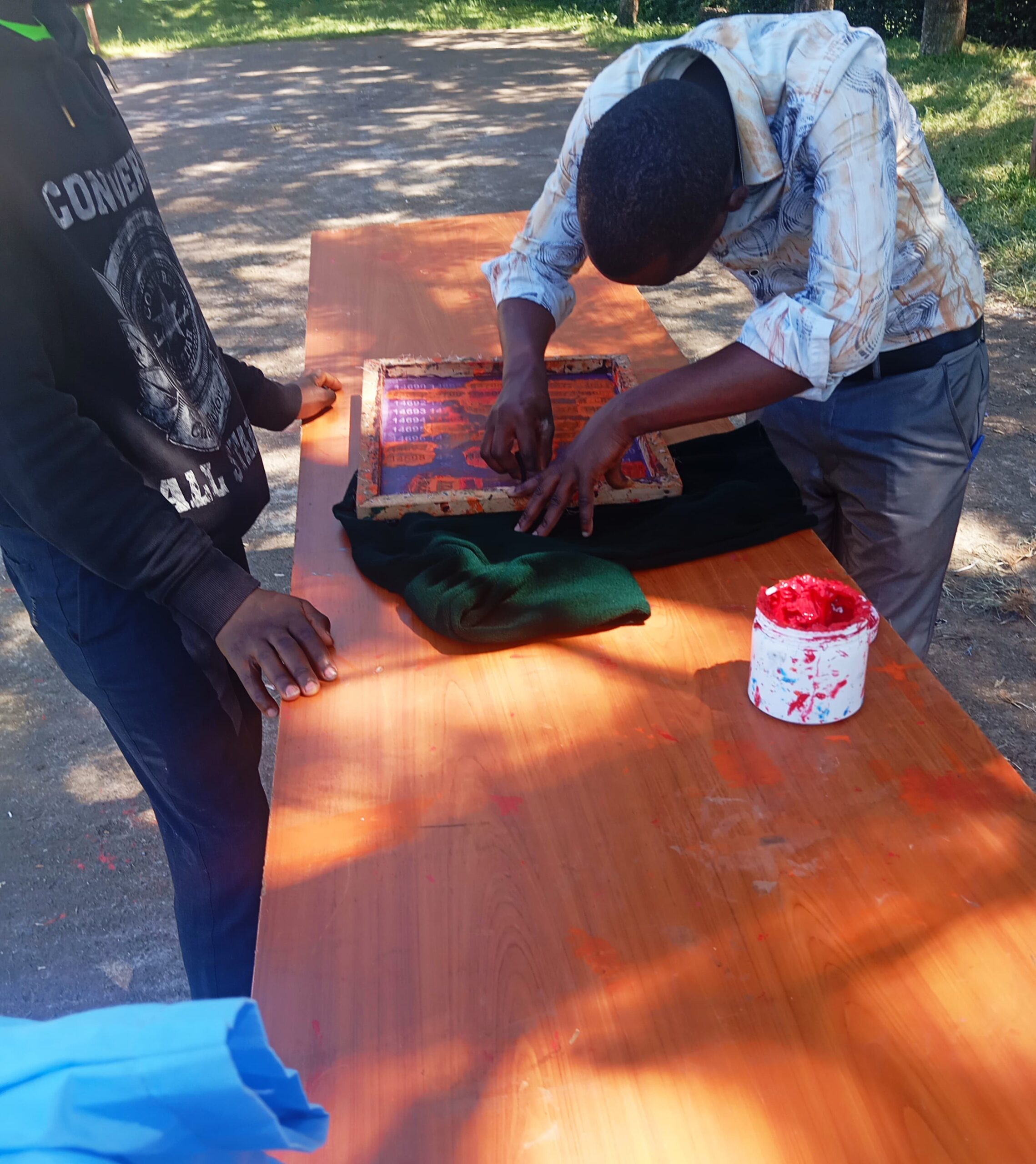
“It cost me around KSh 7,500 to travel here with my son, and I will still spend about KSh 3,500 returning home after admitting him,” he says. “I had thought that the uniforms would cost at least 8000 Ksh, but it was the opposite because they cost me around 17, 250 KSh.”
Samuel had wished to secure a scholarship to support his son’s education, as he had excelled very well, scoring 62 points in the 2025 KJSEA exams. He also tried applying for a bursary and even went to their governor for help, but they were sent back and told to report to school first.
“My son’s strong performance in the 2025 KJSEA exam made me hope that he could get a scholarship to support his education. I applied for two scholarships, KCB and Jomo Kenyatta Foundation, and he was called for an interview, but we never received a response,” he explains.
He had no option but to borrow money from friends and relatives so that he could take his son to school since the reporting deadline was fast approaching.
“I also tried applying for a bursary and even went to the governor’s office for help, but he sent us home to first report our learners to school. I didn’t have any choice but to borrow money so that I could enroll my son in school,” he laments.
At Nyansiongo, during the admission process, he lacked some items and was again forced to call back home for financial support. Although the admission was successful, Samuel now has a significant amount of debt to repay.
“Even at Nyansiongo boys, during admission, I lacked essential items, and had to call back home for more money. The process is now over, but I know that I have a lot of debt to pay,” adds Samuel.
Samuel’s main concern was his son’s asthma, a condition he has been managing carefully at home. Placement at a distant school means he cannot assist quickly in emergencies, but he remains hopeful the school will support his son’s needs.
“Although I am worried about admitting my asthmatic son to a school so far from home, I trust that they will care for him. I am determined to do whatever it takes to support his education, and I remain hopeful that despite these challenges, he will succeed,” he says.
Stories like his are not isolated, but reflect broader challenges within Kenya’s senior school placement system.
According to Kennedy Kamau, a Data Scientist at the African Population and Health Research Center (APHRC), long-distance school placements often inflict heavy burdens on families, especially those with limited incomes. Beyond the initial admission journey, parents must prepare for repeated travel in case of emergencies, school meetings, or welfare concerns.
“When learners are placed in schools far from home, distance can become more than logistics. Conservative estimates show that long-distance placements, combined with school fees, can cost families over KSh 200,000 annually, often exceeding their disposable income,” says Kamau.
He notes that for some households, even a single emergency trip can consume a month’s earnings, gradually turning education into a source of financial and emotional burden rather than opportunity.
“In households with multiple children, one distant placement distorts everyone’s routine. Beyond money, there is constant anxiety. For parents unable to respond quickly to emergencies, every school phone call triggers fear,” he notes.
Kamau explains that placement systems rarely consider learners welfare, particularly for children living with chronic conditions such as asthma. Placing learners hundreds of kilometres away from home hinders parental care, leaving schools to manage health needs that they may not be adequately equipped to handle.
“When learners with health conditions are placed at distant schools, parents are unable to respond to emergencies, monitor medication, or advocate in real time. The burden shifts to overstretched teachers, in most cases unaware of specific needs, hence making a manageable condition becomes a crisis risk,” he warns.
He underscores that placements under the CBE system have not adequately taken learners’ health needs into account, it serves all of them uniformly, leaving the most vulnerable behind.
“Current placement processes give no special consideration to chronic conditions. It treats all learners as equally mobile, quietly disadvantaging those who need support most,” Kamau observes.
He further argues that the lack of clear explanations around placement decisions worsens parents’ frustration and erodes trust in the education system.
“Trust isn’t built through perfect decisions. It’s built through clarity, responsiveness, and respect. When parents understand the logic behind a placement, even disappointing outcomes feel fair. Without that understanding, the education system loses legitimacy,” explains Kamau.
For him, a genuinely child-centred placement process should treat distance and welfare as core considerations. Kamau stresses that equity should go beyond identical treatment and instead recognise different needs among learners.
“Equity does not mean treating every learner identically. It means accounting for different needs, so all learners can thrive,” he says. “A truly child-centred system would incorporate welfare safeguards: allow distance caps for learners with documented health conditions, proximity weighting for younger students, and mandatory boarding availability for distant placements.”
In conclusion, Kamau states that placement justice begins earlier, when families understand the real options, when vulnerable learners receive protections, and when decisions can be explained and questioned.
As Samuel travels back to Kilifi, leaving his asthmatic son hundreds of kilometres away, many of the questions that brought him to Nyansiongo remain unanswered. For now, he only carries hope, that the school will be able to manage his son’s condition, and that the cost of this journey will not outweigh the promise of education.