|
Getting your Trinity Audio player ready...
|
By Shaban Makokha
Kakamega, Kenya: For many households, fetching water is a time-consuming and physically demanding task. As climate change continues to worsen water shortages, the need for sustainable solutions has never been more critical.
This reality has pushed both national and county governments to prioritize household and institutional water connections, ensuring communities benefit directly from government water sources. Progress is evident; a 2024 UNICEF report showed that 59 percent of Kenyans now have reliable access to safe drinking water, a significant improvement from 47 percent in the year 2000.
County governments, including Kakamega County, have developed policies to not only improve water access and reduce the distance to water sources but also to create employment opportunities for youth and women. A key example is Kakamega’s ambitious target to connect over 500,000 residents to clean, piped water by 2027 under its “Last Mile Connectivity” program.
However, this vision was recently challenged when residents in Mumias sub-county noticed discolored substances in their drinking water, sparking fears of a potential outbreak of waterborne diseases. For two months, households and trading centers in Mumias were left underserved as cases of discolored water surged, leading to public outcry against the supplier, the Kakamega County Water and Sanitation Company (KACWASCO).
Vicky Hamadi, a resident, described the water coming from the taps as colored with soil particles. “We fear a possible outbreak of waterborne diseases, especially amoeba,” she lamented. Another resident, Rashid Wamukoya, said the problem began in December of the previous year, but their initial concerns to KACWASCO were ignored. “I raised the issue in its formative stages, but nothing was done. It escalated into February when the situation worsened,” he said.
On February 10, 2026, the water company finally took action to address the quality concerns, aiming to improve, expand, and sanitize the water supply in Mumias. The water supply was temporarily shut down as a technical team began troubleshooting to find the cause of the contamination. Management conducted site visits from customers’ homes all the way to the Nambacha Treatment Plant in Navakholo sub-county to determine the root cause.
Mariam Were, the Kakamega County Chief Officer for Water and Sanitation Services, stated that a technical team from the Ministry of Water and Sanitation intensified interventions to resolve the water quality issues. “We received the concerns on social media platforms because no one called or visited any of our offices to officially report the challenge. However, our technical team initiated corrective measures, and the problem has been resolved,” she told the media on February 13.
She explained that a multi-agency team of public health officials, county government officers, and KACWASCO leadership embarked on a thorough inspection of all the company’s facilities. The exercise included rehabilitating reservoirs, rigorously treating and cleaning water sources, storage tanks, and distribution points, and maintaining the large elevated tanks at Ekero. The Chief Officer urged Kakamega residents to report any safety concerns or water contamination directly to enable swift action.
Michael Ogol, the KACWASCO Managing Director, noted that this type of contamination was a new occurrence, prompting the formation of the multi-agency team. He said the investigation pointed to the possibility of other river users discharging waste into the water source upstream, and they had contacted the Water Resources Authority to assist in profiling the river.
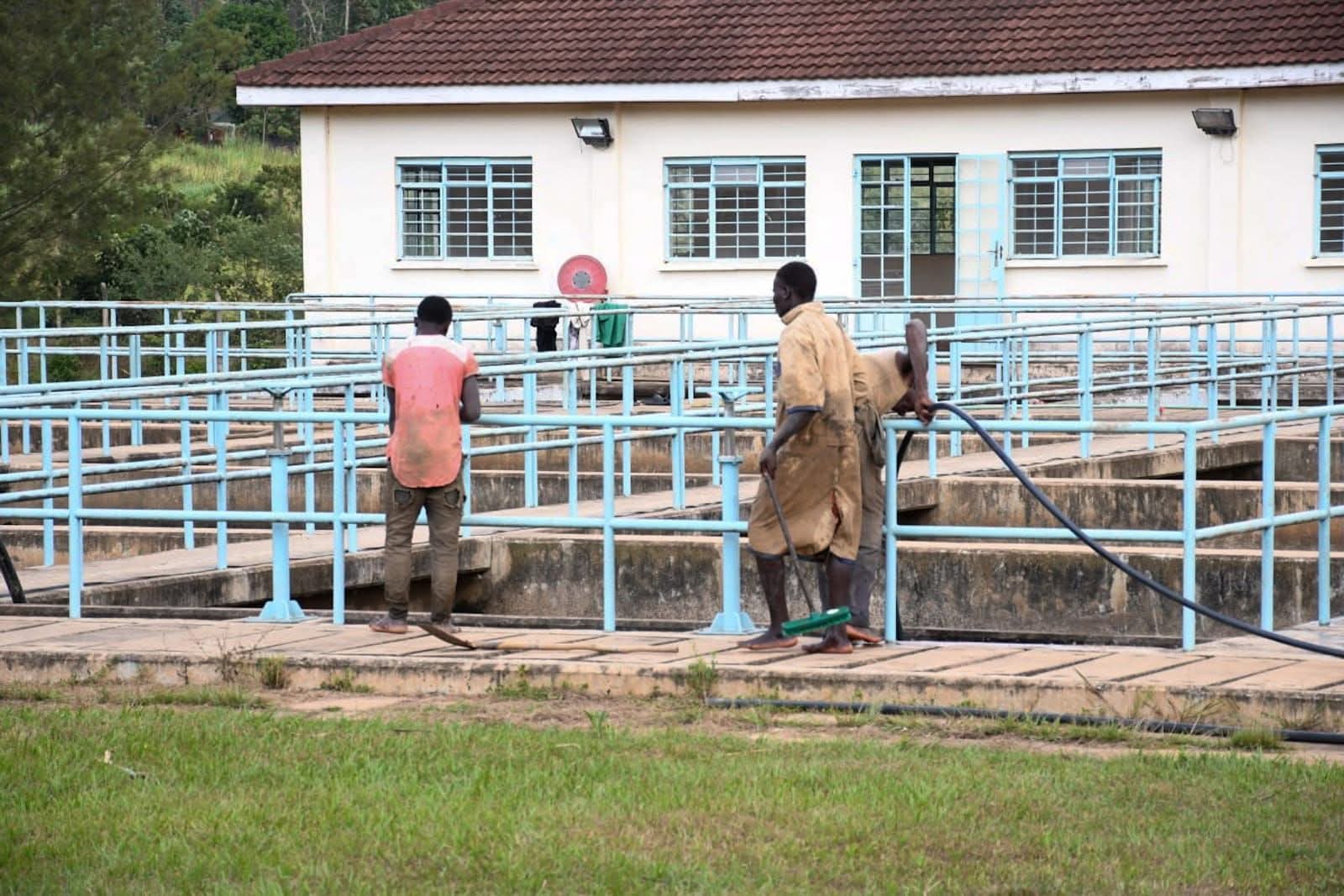
“We discovered sediment accumulation at the Nambacha Treatment Plant and launched desludging activities to eliminate it. This was a key intervention aimed at restoring water clarity and quality and improving overall treatment efficiency,” said Mr. Ogol. He added that water samples were taken to the Kenya Bureau of Standards (KEBS) to confirm the source of the contamination.
The team also inspected the Ekero Water Supply Point, a 50-cubic-meter facility that serves more than 4,500 households. “KACWASCO is actively engaged in the cleaning, rehabilitation, and maintenance of all its water storage tanks to ensure safe and reliable water access. These initiatives are aimed at removing accumulated sludge, algae, and bacterial biofilms that can lead to waterborne diseases,” Mr. Ogol added.
According to Mr. Ogol, the tank cleaning follows a five-to-seven step process to ensure water safety. The steps include dewatering (safely draining the tanks), physically removing accumulated debris, rust, and algae, followed by high-pressure washing and scrubbing of interior surfaces. The tanks are then disinfected using approved agents to eliminate bacteria like E. coli. “What I know is that the water was physically contaminated. Had it been biologically contaminated, we could be talking of several casualty cases,” he explained.
He promised to ensure regular maintenance every six to twelve months for all domestic tanks to prevent health risks, extend the infrastructure’s life, and guarantee water quality. The exercise was supervised by Moureen Aura, the KACWASCO Monitoring and Evaluation Manager.
Mr. Ogol reassured customers in Mumias and its environs that the issue had been addressed conclusively and that the company remains fully committed to providing clean, safe, and reliable water to all clients.
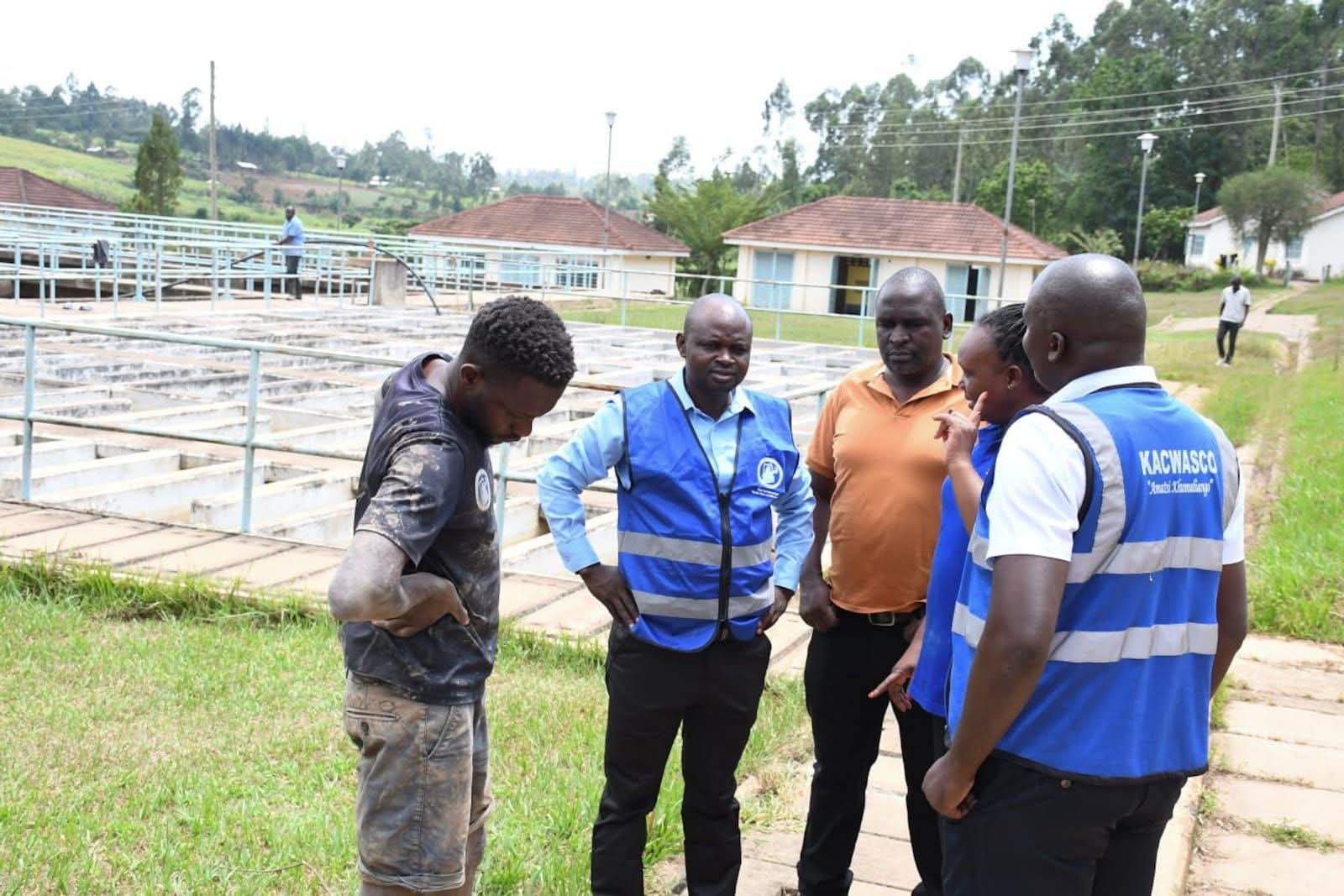
The Sh1.7 billion Nambacha water plant, established in 2014, extends its pipes to Matungu, Navakholo, Mumias East, and Mumias West sub-counties. These bulk water systems were designed to improve distribution efficiency and reduce non-revenue water losses.
Complementing these efforts, the county government has helped an additional 6,400 rural households access clean and safe drinking water through Governor Fernandes Barasa’s program, Amatsi Khumuliango (Water at the Doorstep). This initiative has helped improve the county’s overall water access rate to 74 percent, up from 62 percent in 2022, with a target set to exceed 90 percent by 2027. The county is partnering with various stakeholders, including the Western Kenya Water Project, Lake Victoria North Water Works Development Agency, The Water Project, the Western Water Sanitation Forum, and the Believers Revival Mission.
Despite these successes, challenges remain. Eng. Ogol decried the destruction of water pipes during road construction and the increasing theft of solar pumps, water pumps, and other equipment across the county. “Our major challenge is tackling illegal connections and water theft to reduce our ‘non-revenue water’ rate. Consumers illegally tapping water lines allow mud and other infiltrations to get into the line,” he lamented.