|
Getting your Trinity Audio player ready...
|
By Elizabeth Angira
Kisii, Kenya: Beatrice (not her real name), a tiny 13-year-old, is suckling her nine-month-old daughter.
She conceived after months of sexual abuse by a close relative who lived with her family because his parents are based in a foreign country.
“When I told my mother, my parents said reporting him to the authorities would bring shame and deny us the support his family was giving us,” she says.
Being poor, the foreign-based relatives sent the family money to house their son, which they spent on their needs, including buying food.
Beatrice’s parents did decide to report the case, but it was withdrawn after relatives interfered and pressured police to let them “solve it at home.”
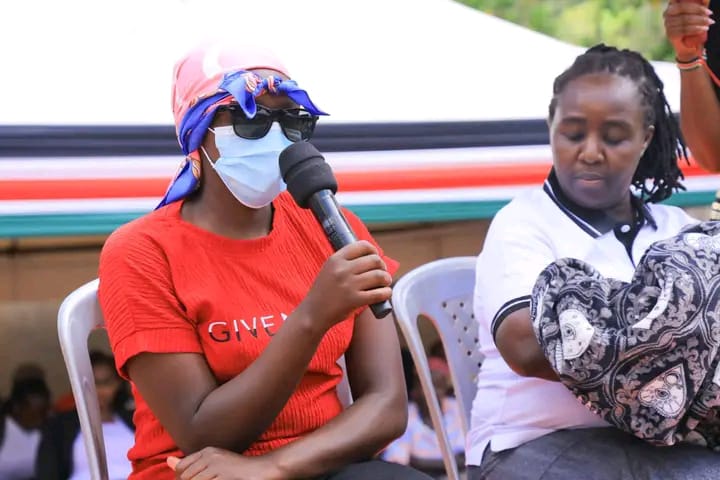
“No justice. Nothing,” Beatrice says, wiping tears. “I want my daughter to have a different life. I do not want her to experience the pain I have had to endure.”
Nearby, Maria (also not her real name), 14, clutching on her sleeping baby, recalls how a boda boda rider who frequently offered her a lift turned into her tormentor one evening.
“Instead of dropping me at my home, he diverted into a thicket and sexually assaulted me,” she explains while sobbing, “ I screamed but no one heard me.”
Terrified from his threat to kill her if she told anyone about it, she kept silent until her pregnancy became visible. By then, the perpetrator had disappeared from the area.
“I thought my life had ended,” Maria whispered. “But I want to go back to school even if it means me dropping to a lower class.”
Rape victims-cum-teenage mothers
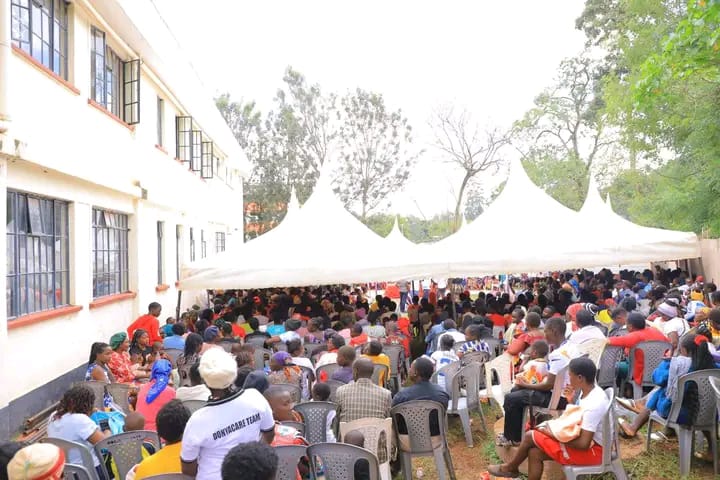
Beatrice is one of about 300 teenage mothers from across Kisii County, most of them children themselves, who are seated in a tent erected outside the office of Kisii Woman Representative, Dorice Donya Aburi, on this Monday morning.
With some of these teenage mothers like Beatrice suckling their babies, others are lost in thought as their babies wrapped in shawls sleep comfortably in their arms, while a few toddlers play innocently, unaware of the unfortunate circumstances that brought them to this world.

When Donya walked into the tent, her face instinctively tightened with pain. With her voice trembling slightly, she spoke to the girls, encouraging them.
“What you have gone through is painful and what you are facing is challenging but do not let it define you and your future. Let your loving babies be your inspiration and believe that you will succeed in life,” she says in a soft motherly voice.
A hidden national crisis
Donya says she has conducted several outreach missions across Kisii County in which she sensitises young girls on the dangers of teenage sex, alcohol and drug abuse.She says her team and her have gathered disturbing statistics during the missions.
“What we have encountered during our outreach missions is nothing short of a crisis, widespread sexual abuse cases of young girls, many of them unreported and most of them resulting in teenage pregnancies, “she explains.
Citing the girls gathered in her compound to back up her claim on the magnitude of the crisis, she notes that one girl is 11 years old, 50 are under 13, and nearly 200 had not yet turned 15.
Relatives brought some to her, others came on their own, carrying their babies with a quiet desperation.
Donya says teenage pregnancies in Kisii County have persisted due to poverty, family breakdown, domestic violence, and cultural silence. Many incidents occur within homes, often involving people trusted with childcare.
“The parents who brought their children here have no power,” she says, “When you hear your child has been defiled, you would fight for her. Then fight for all of them.”
She stresses that the figures represented only a fraction of the true scale. For every girl reached, countless others remain hidden from the public, silenced by stigma, threats, or forced family negotiations.
“If we double the number of those we have here and extrapolate it across the country, we would still not capture the true picture,” she said. “These cases are everywhere.”
Dr. Oimeke Mariita, the Kisii Teaching and Referral Hospital (KTRH) Chief Executive Officer, however, says they have recorded a slight decline in cases of teenage pregnancies and sexual and gender-based violence (SGBV) in the last three years.
He says the hospital recorded 389 cases of teenage pregnancy in 2022–2023, 303 cases in 2023–2024 and 215 cases in 2024–2025.
“While the decline is encouraging, the numbers remain deeply concerning,” he says.
Similarly, the SGBV cases they recorded showed equally troubling patterns during the period.
In the period 2022–2023, they recorded 163 cases, with 130 survivors arriving within the 72-hour treatment window while in 2023–2024 there were 268 cases, with 204 survivors arriving early and 201 receiving Pre-Exposure Prophylaxis (PrEP), which is a treatment to reduce the victims risk of getting HIV.
In the 2024–2025 period, there were 281 cases, with only 167 put on preventive medication.
Statistics
A survey by the Kenya National Bureau of Statistics (KNBS) found that Kenya recorded a drop in the number of teenage pregnancies in 2024.
The KNBS’ Economic Survey 2025 shows that girls aged 10 to 19 presenting with pregnancy at their first antenatal care (ANC) visit declined by 4.8 per cent in 2024.
Data from the Kenya Health Information Systems showed a total of 6,110 were among pregnant adolescents aged between 10 to 14 years, while another 104,711 were between the ages of 15 and 19 in 2023 .
This is almost half of pregnant adolescents, which was recorded in 2022, which stood at 260,734.
The pregnancies were 316,187 in 2021 and 331,549 in 2020.
The KNBS report shows that younger pregnant teenagers aged 10 to 14 recorded a decline in 2024, with the number falling by 14.4 per cent to 10,126.
Gavi, the international organisation created in 2000 to improve access to new and underused vaccines for children living in the world’s poorest countries, says that the global maternal mortality rate for pregnant adolescents aged 15-19 years is much higher than that of young women aged 20-24 years.
“Adolescents also face much higher risks of complications in childbirth, putting both themselves and their babies in danger,” says Gavi, whose key partners include the World Health Organization (WHO), United Nations Children’s Fund (UNICEF), World Bank and Gates Foundation.
It adds that babies born to adolescent mothers are more prone to neonatal conditions, low birth weight, and preterm birth.
System failures that betrays survivors
Stella Achoki, the Director of Center for Community Empowerment (CECOME), a community-based organisation seeking to promote society’s basic development and human dignity, attributes teenage pregnancy to systemic failures, poverty, poor reporting structures, victim-blaming, and a culture of silence.
“These girls are not statistics,” she says, “They are survivors of a system that has failed to protect them.”
Ruth (not real name), a parent of a teenage mother, admits that she only realised her child was pregnant when it was too late and feels parents are failing our children without realising it.
“I was busy looking for money, working late, thinking I was doing the right thing. I did not see her pain. I did not hear her cry,” she says bitterly, “Now I am here to ensure no other mother misses these signs.”
She urges other parents to stay vigilant, insisting that children need protection, not punishment or silence.
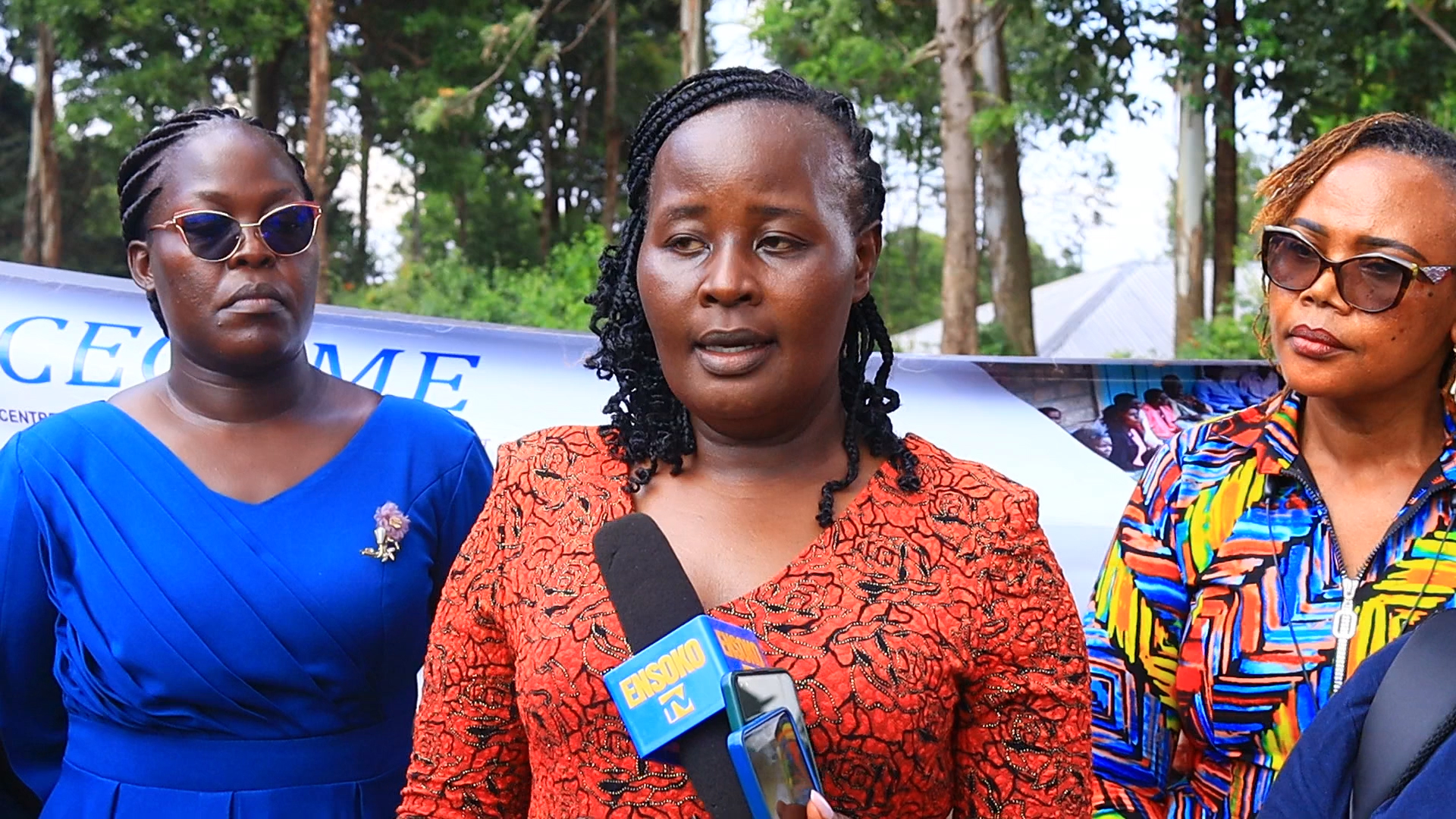
Donya praises the law enforcement officers who genuinely help survivors but condemned those who allow justice to collapse.
“There are police who assist,” she says. “But others tell victims to bring the case to the house. Some laugh at the child before she even explains what happened.”
In many cases, girls are blamed, mocked, or discouraged from reporting. Even worse, families, elders, or local leaders often pursue informal settlements in what she called kangaroo courts. Parents accept money, evidence disappears, and defilers walk free.
“Mothers accept money and pull out their cases,” she says. “You get people who want arbitration in cases of defilement. Surely, what is that?”
She estimated that only about 40 per cent of officers actively support survivors, while the rest contribute to the collapse of justice.
“When defilement cases are high, someone has put a kangaroo court somewhere,” she says.
Donya urges journalists to investigate these networks, saying more exposure is needed to dismantle them.
Kenya risks losing a generation
Donya warns that the country risks losing an entire generation if leaders and parents fail to act on the unfolding crisis.
“We have no future generation if we do not seek the root cause of this crisis and address it,” she says.
She says sensitisation of the girl and, in some cases, parents would go a long way to tackling it.
“Some of these children did not understand what was happening when they were defiled, says Donya, “If we had met them earlier and sensitised them well, they would never have brought children to this world when they are below 17 years.”
Most of the girls had dropped out of school and many did not know if they could return to class again. Others were unaware they were entitled to free maternal healthcare or that vocational training options were available to them.
“They do not know a lot of things and some think their life has ended,” Donya says, “ But they can still go back to school, learn a skill and rise again.”
Donya urges parents to be cautious about who they welcome into their homes, warning that many abusers hide in plain sight.
“We welcome everyone into the house, even strangers,” she says. “But those are the criminals we have in this world.”
She insists that only collective action from communities, parents, law enforcement, leaders, and the media can reverse the crisis.
“This is a fight for all of us,” she says. “If we do not rise, our children will continue to suffer.”
Donya says her Sexual Offences Amendment Bill has passed the first reading in Parliament.
The proposed amendments seek to introduce mandatory sensitization programmes in all schools and teach children about sexual health, rights, and reporting mechanisms.
She notes that many victims unknowingly destroy evidence, often being bathed immediately after the assault.
“The Ministry of Education must teach children about these things,” she says. “Children should know.”
Achoki calls on improved family and community surveillance, comprehensive education on sexuality, survivor-centered justice, and safe spaces where girls can report abuse without fear.
“We need the county governments, police, teachers, and parents on board,” she says, “This is a collective fight not a charitable project.”
Donya says the disturbing teenage pregnancies are fueled by impunity.
She says that in some instances, perpetrators move from village to village abusing children with little fear of consequences.
“That man who defiles one girl will move on and do the same elsewhere,” she says, “They leave in their wake a trail of children whose lives have been destroyed.”
She says her proposed Bill, if enacted, would also strengthen penalties for defilement, boost public awareness on female genital mutilation (FGM) and teenage pregnancy
It would also ensure stricter investigations and proper handling of evidence.
The legislator, however, has some radical proposals.
“The government should consider castration for those who defile minors,” Donya says matter-of-factly, “It would create the deterrent effect the country urgently needs.”
Why such a drastic measure?
“When someone hears he will be castrated, he will not defile another child,” she alleges. “The penalty must be harsh.”
She likens the approach to the COVID-19 lockdown, when strict enforcement drastically reduced crime and movement.
“Strong action yields immediate results,” she says.
Dr. Mariita of KTRH stresses the importance of timely reporting of SGBV cases because survivors who arrive early are tested for pregnancy, offered emergency contraceptives if eligible, and screened for HIV, Hepatitis B and C, and syphilis.
“In this era of HIV and other sexually transmitted infections, no one should be left at risk when lifesaving medication is available,” he says.
Conclusion
Donya promised the teenage mothers gathered in her office that she will be launching a structured program in which she will register, counsel, mentor, and reintegrate them into school and vocational institutions.
“You will undergo mentorship on navigating motherhood, emotional healing, and reclaiming your ambitions,” she says, “At the end of the program, you will graduate together, a symbolic gesture of resilience and rebirth.”
She told them that they will be her champions to fellow girls who may be feeling hopeless because of teenage pregnancies and motherhood
“There is life after everything,” she told them.
Maria, the teenage mother, rose slowly, adjusting her child on her back. Her fragile face lit up with a renewed sense of hope and determination.
“Hon. Donya’s promise marks the beginning of my journey toward restoration,” she said.