|
Getting your Trinity Audio player ready...
|
By Shaban Makokha
Kakamega County, Kenya: Despite teenage pregnancy being a primary cause of school dropouts, a group of teen mothers in Kakamega County has beaten the odds, graduating with certificates in Plumbing and Pipe Fitting as well as Food and Beverage Production through targeted support programs.
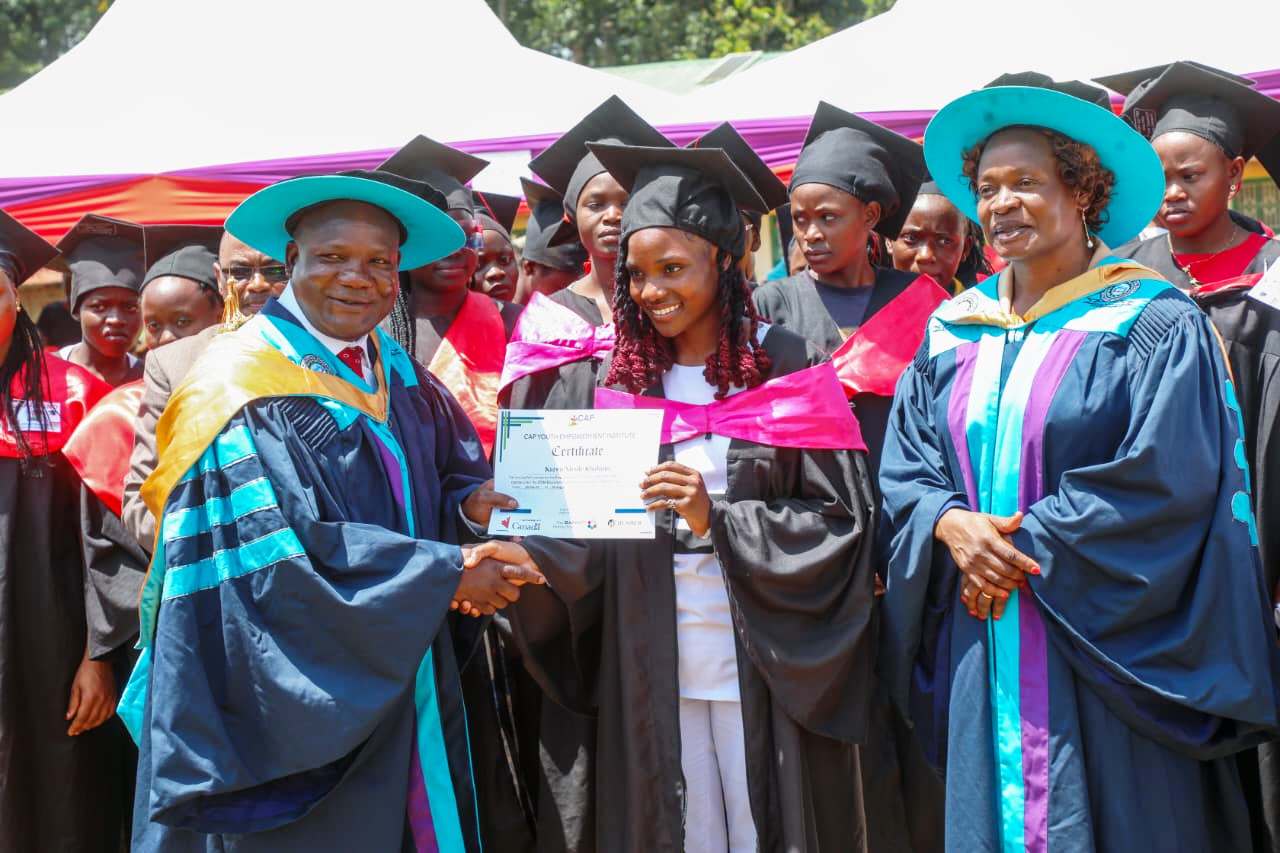
A total of 391 girls, aged between 14 and 18, graduated from Kakamega County Polytechnic after successfully completing nine months of training. The program provided emotional support as the young mothers balanced education, motherhood, stigma, and their relationships with the fathers of their children.
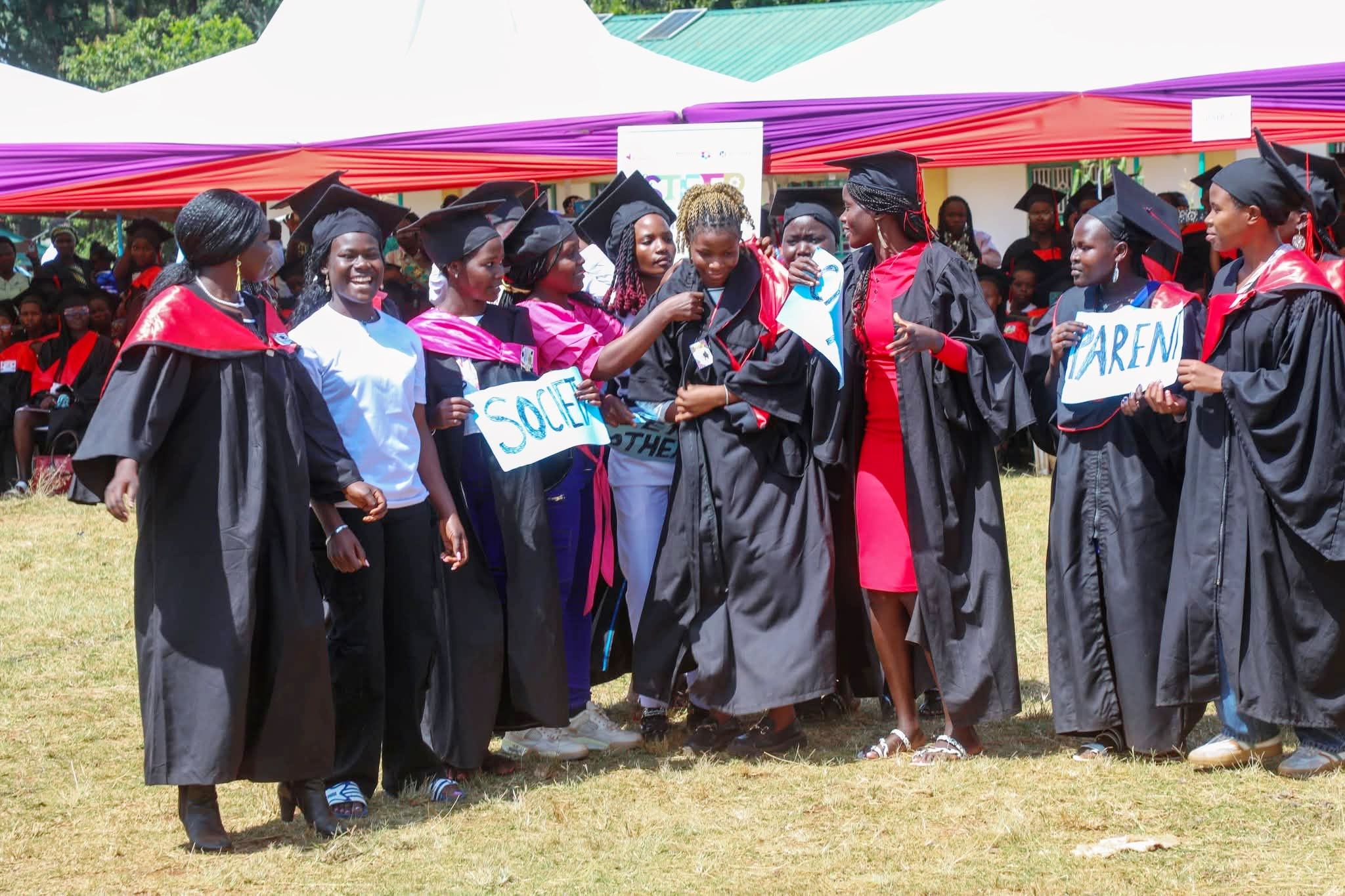
Many of the graduates are teen mothers and girls from underprivileged backgrounds supported by the STEM Education for Empowerment Programme (STEEP). This initiative aims to break down gender stereotypes that have traditionally limited girls’ participation in STEM-related courses and locked them out of well-paying career opportunities.
Funded by Canada’s Global Affairs and the Barrett Family Foundation, STEEP targets out-of-school adolescent girls from low-income communities in Kenya, equipping them with technical skills and entrepreneurial training to overcome gender barriers in STEM careers.
The program is being implemented in Kisumu, Kakamega, Siaya, Nyeri, Kisii, Homa Bay, and Addis Ababa, Ethiopia, with the goal of enhancing gender equality, improving STEM skills, and fostering entrepreneurship to facilitate entry into the Science, Technology, Engineering, and Mathematics sector.
Courses offered include Food and Beverage Production, Plumbing, Electrical Installation, Wiring, and Solar Installation—all designed to address structural barriers and shift social norms regarding girls in technical fields.
The project collaborates with technical training institutions such as Kakamega County Polytechnic to offer industry mentorship and work-based learning. Beyond technical training, the program provides a second chance to young women who had dropped out of school due to social and economic challenges.
Kakamega Governor Fernandes Barasa, who presided over the graduation, praised the partners and institutions involved, noting that the initiative is already transforming lives across the region. He encouraged the graduates to be bold and confident as they enter the job market and not to shy away from fields long perceived as male-dominated.
He also reaffirmed the county government’s commitment to supporting programs that empower girls and women through skills development, stating that such initiatives are key to economic growth, self-reliance, and social transformation.
“I challenge the graduates to take leading positions in plumbing, masonry, and the rapidly growing hospitality industry. I am confident you are going out empowered and ready to face the market,” said Governor Barasa.
Prof. Janet Kasili Barasa, the Governor’s spouse and a leading advocate against teen pregnancies in the county, called on stakeholders to join hands in ending teen pregnancies in Kakamega.
“Despite being teen mothers, these girls are marching out of college as capable as anyone else, prepared to face the world as though nothing had happened before,” she said.
The STEEP project also facilitates child care options with flexible scheduling and specialized counseling, significantly improving graduation rates.
Mr. Bob Barrett, a representative of the Barrett Family Foundation, emphasized that the project aims to empower young women to create a better future for themselves, their families, and their communities.
“In this program, educators are critical partners in reducing teen pregnancy rates and connecting pregnant and parenting youth to the services they need to continue their education. The initiative plays a vital role in helping young mothers stay in school,” he said.
Surrounded by family and friends, the teen parents took to the stage in black gowns and caps with pink ribbons to celebrate their achievements.
Many expressed gratitude for earning their certificates despite the challenges, noting that while the program was demanding, the reward was worth it.
Reflecting on her experience, Rosemary Shiloya, an 18-year-old mother and program beneficiary, described the graduation as a celebration of courage, resilience, and hope.
“It’s been very challenging—waking up at 5 a.m. every day, getting myself and my baby ready, and catching the bus on time. But I made it work. I feel nervous, but I’m also ready to start my adult life,” she said.
“We are strong and resilient. People think life ends when you get pregnant—that you can’t finish school. But this graduation proves we can get through anything we put our minds to.”
According to the CAP-Youth Empowerment Institute Kenya, seven out of ten teen mothers live below the poverty line, which can lead to challenges that affect their children’s future. Children born to teen mothers face higher risks of low birth weight, infant mortality, behavioral problems, chronic medical conditions, and foster care placement.
The young mothers credited the county government and the program’s resources for helping them reach the finish line.
“It’s emotional because we’re done—we did it. We got through it with our babies. People doubted us, but we made it through everything,” Shiloya added.