|
Getting your Trinity Audio player ready...
|
By Jane Meza
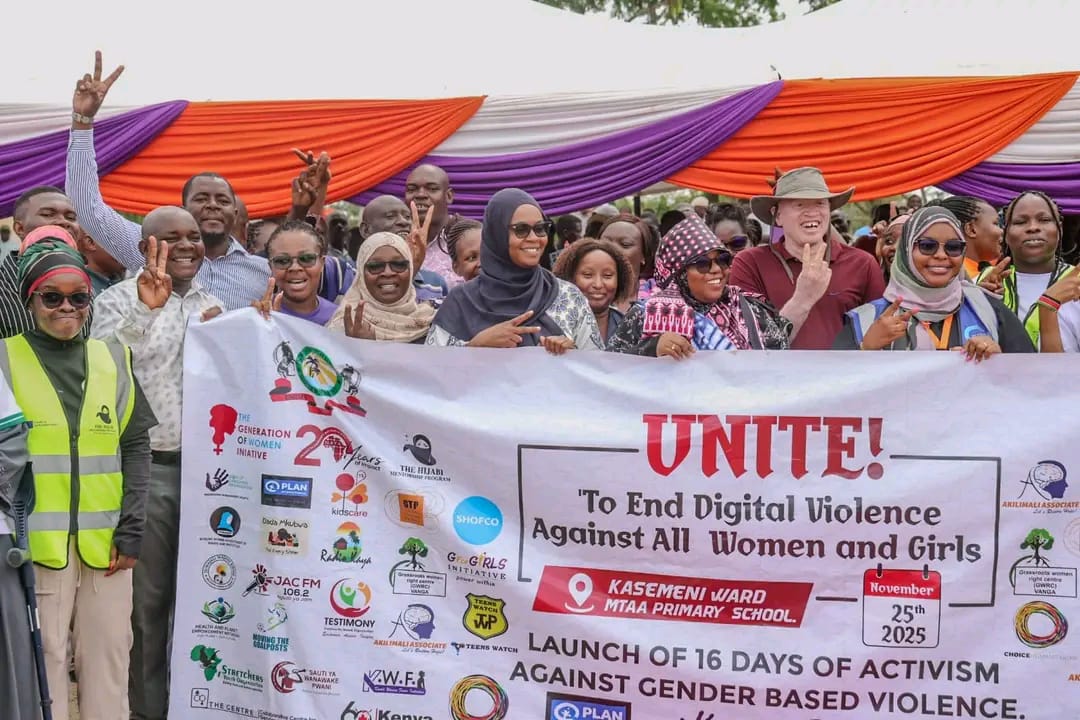
Mombasa County, Kenya: The launch of the annual 16 Days of Activism Against Gender-Based Violence on Kenya’s coast recently highlighted a painful paradox: new laws designed to protect women are being rendered powerless by poverty and logistics.
In Puma Ward, 16 Days of Activism, the crisis is distilled into a single, devastating calculation. A 47-year-old woman, a survivor of violence from three years ago, weighs her options. The nearest police station is over 20 kilometers away, and the 3,000 Kenyan shilling boda boda fare for a single trip—just one part of a total justice cost exceeding 11,800 shillings—could feed her family for days.
She chooses silence.
“I wanted to report,” the survivor said, speaking on condition of anonymity. “But when I asked how much it would cost to go to the police and the hospital, I knew I could not afford it. My children needed food, so I told myself: justice can wait, but hunger cannot.”
Her story is not an exception. It is the reality for many survivors of GBV in Kenya’s coastal counties, where poverty, distance, and weak service delivery quietly undermine the promise of justice.
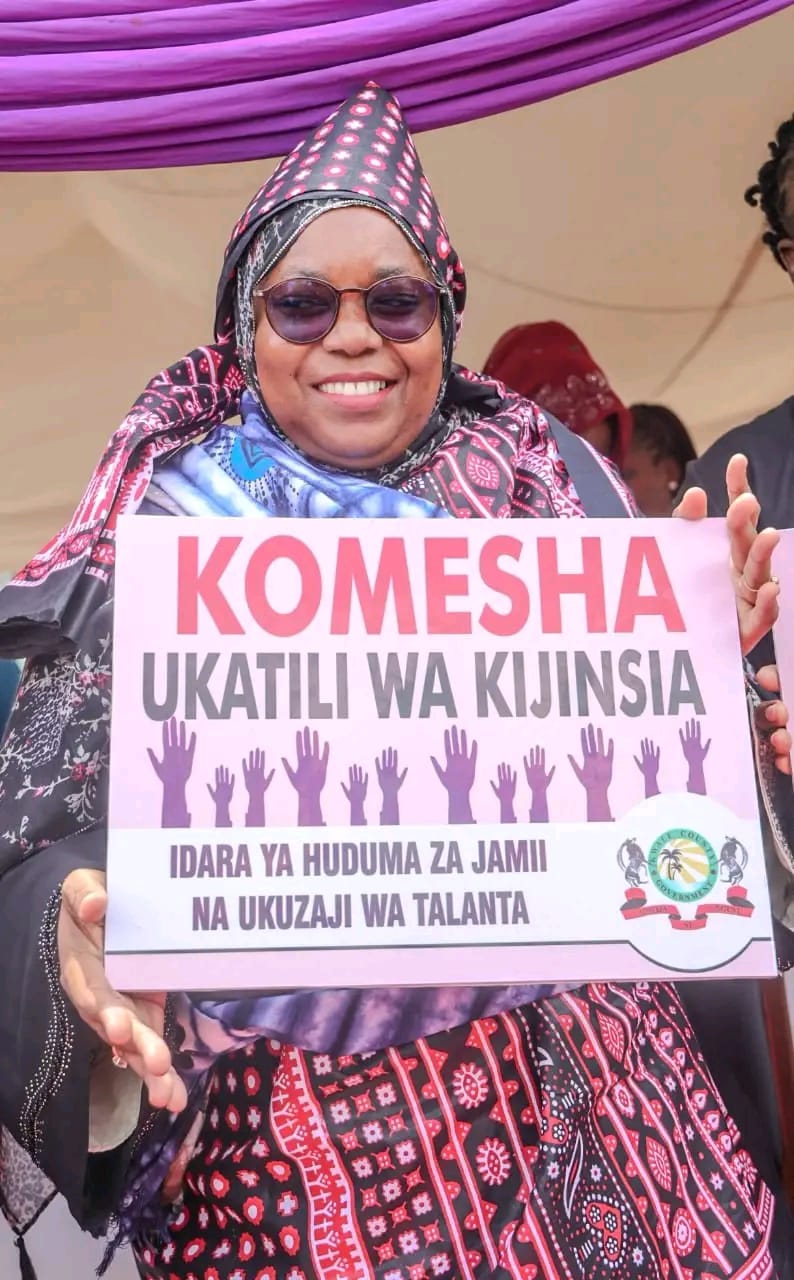
This stark financial barrier directly confronts the legislative progress celebrated by local leaders. Addressing residents during the launch at Mtaa Primary School, Kwale Governor Fatuma Achani urged survivors to break their silence.
“Many people have been victims of gender-based violence, and it is high time we openly talk about it so that we can end it. I therefore encourage residents to make use of the available support systems we have,” Achani said.
The Governor also highlighted the new legal framework: “As a County, we have passed the Kwale County Sexual and Gender Based Violence Prevention and Protection Act, 2023, which aims to provide the legal framework for protecting victims.”
Yet while the law is essential, a recent report by the Human Rights Agenda (HURIA) makes it clear that an act of legislation cannot travel 20 kilometers on its own.
According to HURIA, the average transport cost of over 11,800 shillings forces survivors into an impossible choice. Additional obstacles compound the crisis: police stations often lack P3 medical examination forms; survivors sometimes walk over 50 kilometers to report cases; and cases collapse because the perpetrators are often the family’s sole financial providers.
“This report isn’t just statistics; it’s stories of women and girls who walk 50+ kilometers, who sell their last goat, who drop cases because the perpetrator is the same person paying school fees or putting food on the table,” stated Teddy Otieno of HURIA.
A National Crisis with a 46-Billion-Shilling Price Tag
The struggle in Kwale reflects a systemic national failure. During the national launch in Kilifi County—which holds the dubious distinction of having Kenya’s highest GBV cases—Cabinet Secretary for Public Service, Affirmative Action and Gender, Hon. Aisha Jumwa, framed GBV as an economic disaster.
“Gender-based violence costs the Kenyan economy over 46 billion shillings annually, including healthcare costs, legal services, and the loss of economic opportunities from injuries and death,” Jumwa said.
This immense economic loss, which diverts funds from critical social services, underscores the urgency of confronting what is recognized worldwide as a silent killer of human rights. Kilifi was chosen to host the national event precisely to highlight this urgency.
Violence Has No Demographic
Dr. Sam Thenya, Founder and Group CEO of the Nairobi Women’s Hospital and the Gender Violence Recovery Centre (GVRC), powerfully illustrated the pervasive nature of the crisis.
“The youngest survivor we have attended to was three days old, while the oldest was a woman aged 105. This shows that gender and sexual violence are not just about sex—they are about power, and they concern everyone,” said Dr. Thenya.
GVRC has provided direct medical services to over 55,000 survivors, but demand continues to overwhelm available services—a situation worsened by climate-related stresses.
Annette Msabeni, Deputy Secretary General of the Kenya Red Cross, noted that rising GBV cases are linked to tensions caused by prolonged drought, stressing the need to “mainstream GBV prevention services” into disaster response.
The Survivor’s Demands
As the 16 Days of Activism concludes, survivors are demanding an end to the “justice-as-a-luxury” model. Their dignity is compromised by a system that requires them to be wealthy enough to seek help.
The demands are clear:
-
Immediate investment in transportation support to eliminate the choice between seeking help and feeding a family.
-
Fully equipped, survivor-centered facilities where reporting is handled with dignity and all necessary resources are available.
-
Trained and accountable duty bearers to ensure the first point of contact is one of support, not re-traumatization.
-
County budgets that reflect the true scale of GBV, making protection a critical, financed government function.
As night falls again in Puma Ward, the 47-year-old survivor is still calculating what justice would cost her. Until the 11,800-shilling barrier is removed and support is guaranteed, silence remains the cheapest option—and justice in Kenya is an unaffordable privilege rather than a human right.