|
Getting your Trinity Audio player ready...
|
By Juliet Akoth
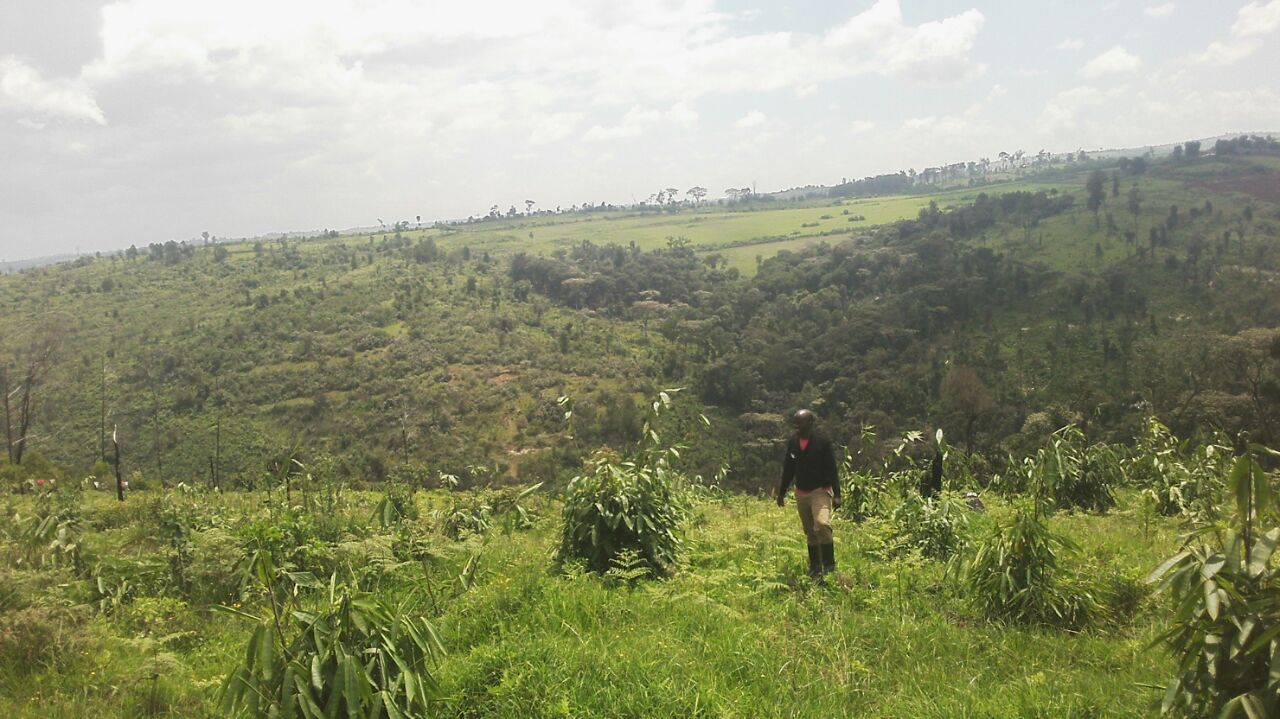
Nairobi, Kenya: Across Africa, the Irish potato (Solanum tuberosum), also known as the white potato, has become far more than a simple side dish. It is a livelihood, a staple food, a source of income, and for many rural households, a crop that stands between food security and scarcity.
According to 2025 data from the Food and Agriculture Organization of the United Nations, Egypt leads the continent in potato production with over five million metric tons annually. Algeria follows closely with nearly 4.8 million metric tons, while countries such as South Africa, Morocco, and Kenya remain among Africa’s top producers.
Despite its importance, the potato sector is under strain. Farmers face a combination of old and new challenges: disease outbreaks, unreliable access to high-quality seed, shifting market demands, and the mounting pressures of climate change.
A recent study on the impacts of climate change on potato yields in East Africa reveals that rising temperatures are projected to sharply reduce potato yields and shrink the land suitable for cultivation, even in areas receiving more rainfall, confirming heat stress as the dominant climate risk.
Furthermore, another study in Kenya revealed that more than 80% of small-scale potato farmers identified pests and diseases as their most urgent concern. It further notes that most African farmers harvest only a fraction of what is possible under optimal conditions, often due to the use of recycled seed tubers infected with viruses and other pathogens.
The same study also highlighted a layered set of economic hurdles: high production costs, limited credit access, postharvest losses, and poor pricing. Less than 10% of farmers engage in value addition such as making chips, crisps, or flour, despite higher profit margins for processed products.
Against this backdrop, the International Potato Center, widely known as CIP, has become a critical scientific ally. Founded in 1971 and headquartered in Lima, Peru, CIP focuses on potatoes, sweet potatoes, and Andean roots and tubers. Today it operates in more than 20 countries, including a strong research presence across Africa.
Its African regional office sits within the International Livestock Research Institute (ILRI) campus in Nairobi, where scientists work closely with national partners to breed varieties that can thrive under Africa’s rapidly changing climate.
Four Pillars of Innovation at CIP
According to Dr. Mukani Moyo, head of the Urban Food Systems Science Goal at CIP Africa, their work rests on four interconnected pillars: biodiversity, crop improvement, regenerative agriculture, and urban food systems.
“Our research is built around four pillars, and the first one, which is biodiversity, is about conserving and multiplying our germplasm,” she explains. “We ensure that the varieties we have spent years developing are not lost.”
She emphasizes that these genetic resources are living insurance. “As the environment changes, some traits that were bred for past conditions may become valuable again. Our gene banks allow us to preserve and move varieties as needed.”
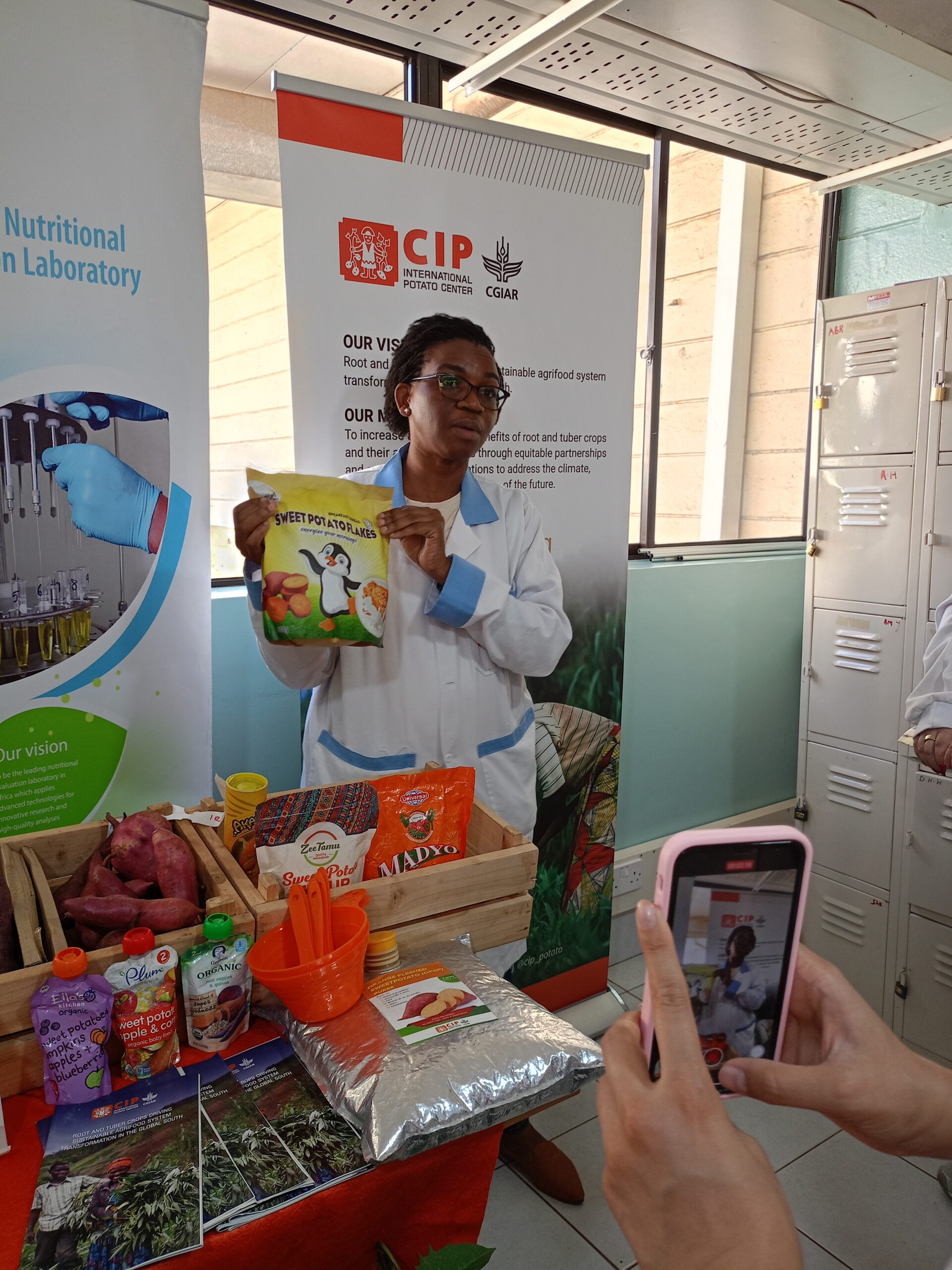
The second pillar, crop improvement, focuses on developing varieties that perform well in African environments while also meeting nutritional and consumer preferences. “For example, our orange-fleshed sweet potato is high in vitamin A, while the purple-fleshed variety is rich in antioxidants,” Dr. Moyo says. “These are not just nutritious but they are also appealing to consumers.”
The third pillar, regenerative agriculture, tackles climate change mitigation and soil health. CIP works with farmers to promote climate-smart practices that improve soil fertility while reducing environmental degradation.
“We want all our innovations to be climate-smart and environmentally friendly,” Moyo adds. Dr. Moyo’s sentiments are backed by recent reports
which demonstrate that farmers using climate-smart practices such as improved seed, soil management, and integrated crop protection achieved substantially higher potato yields than non-adopters.
The fourth pillar, urban food systems, responds to the needs of rapidly growing African cities. “We are working to ensure our agricultural innovations meet the demands of urban populations, with value-added products like sweet potato flakes, cookies, and flour.”
CIP’s Nairobi office is also home to the Food and Nutritional Evaluation Lab, known as FANEL, which supports partners by analyzing nutritional content and food safety attributes. “We help partners deliver the highest quality products,” Dr. Moyo says. “It is not just about producing more food, but producing better food.”
Harnessing Biotechnology for Resilience
Despite advances in traditional breeding, some potato diseases have remained difficult to manage. One of the most destructive is
late blight disease, the same disease that triggered the Irish Potato Famine. In Kenya, late blight still threatens over 70% of potato yields. Fungicides provide partial relief, but they are costly, environmentally taxing, and often out of reach for small-scale farmers.
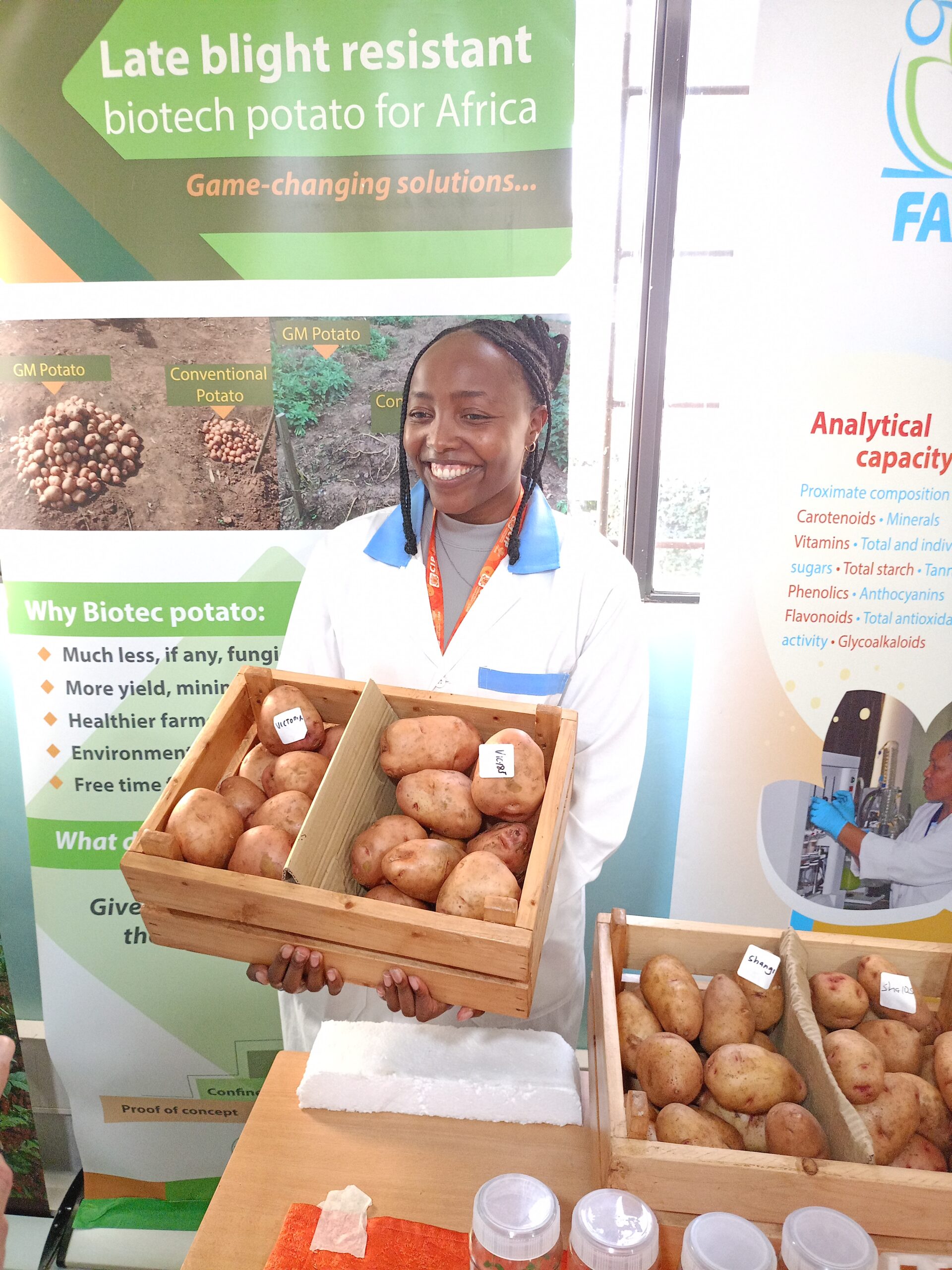
For this reason, CIP has turned to biotechnology to tackle the problem more directly. One of their flagship efforts is the development of late blight resistant potatoes. According to Mary Mwangi, a biotechnologist and research assistant at CIP, progress has been remarkable.
“Late blight is a devastating disease. It caused the Irish Potato Famine and still threatens up to 70% of yields in Kenya,” she says. “We have bioengineered farmer-preferred varieties like Shangi to be resistant by introducing genes from wild potato species.”
Shangi was chosen because of its immense popularity among East African farmers. It is known for its cooking quality, taste, and early maturity.
“Farmers love Shangi,” Mwangi notes. “So instead of replacing it, we improved it.” The team introduced naturally occurring resistance genes from wild potato relatives, and trials have shown promising results.
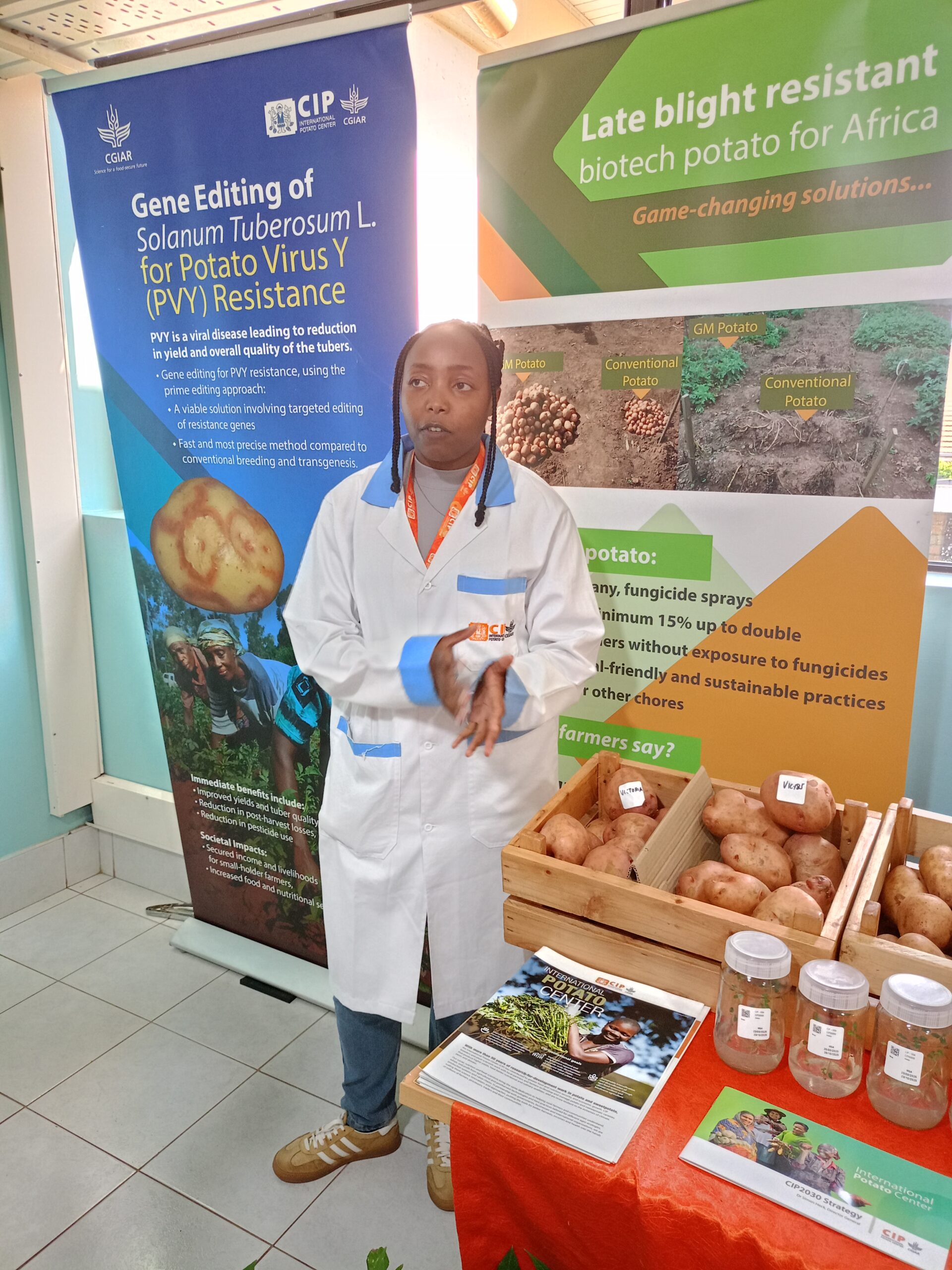
“After rigorous greenhouse and field trials in Kenya, Nigeria, and Rwanda, we have proven these biotech potatoes are completely resistant to late blight,” Mwangi explains. “This technology could save farmers more than two million dollars each year in Kenya alone by reducing the need for fungicides.”
But CIP’s biotech work does not stop at late blight. Mwangi and her team are using gene-editing tools to address other major threats like bacterial wilt and Potato Virus Y
“We are working to develop varieties that can withstand these challenges,” she says.
Adding “Our goal is to help farmers adapt to a changing climate.”
Wild potato varieties are crucial to this work. “Some of the resistance genes we use in our biotech work come from these wild or historical varieties,” Dr. Moyo explains.
“If we lose them, we lose options for the future.” Mwangi adds that improved biotech potatoes are visually identical to their conventional counterparts.
“After improvement, you cannot tell the difference between transgenic and nontransgenic potatoes by looking at them. Farmers still get the varieties they prefer, but with added resilience.”
As climate pressures intensify, the stakes for Africa’s potato sector continue to rise. Through a combination of traditional breeding, biotechnology, conservation of wild varieties, and partnerships with farmers and governments, CIP is helping build resilience from the soil upward. The organization’s work offers a model for how science, innovation, and collaboration can safeguard food security and strengthen rural livelihoods.
Still, challenges remain. Regulatory systems must keep pace with scientific progress, and public understanding of biotechnology needs to deepen.
“We are making progress with regulations,” Dr. Moyo says, “but public understanding is key. Our goal is to ensure that science benefits farmers and consumers alike.”
For farmers across Africa, especially in countries like Kenya where potatoes are central to household income, the prospect of climate-smart, disease-resistant varieties represents more than a scientific breakthrough.
It is a lifeline and a path toward stability in an uncertain world. Many are watching closely as new varieties move closer to commercialization, hopeful that these resilient roots will help secure Africa’s food future.