|
Getting your Trinity Audio player ready...
|
By Melisa Mong’ina
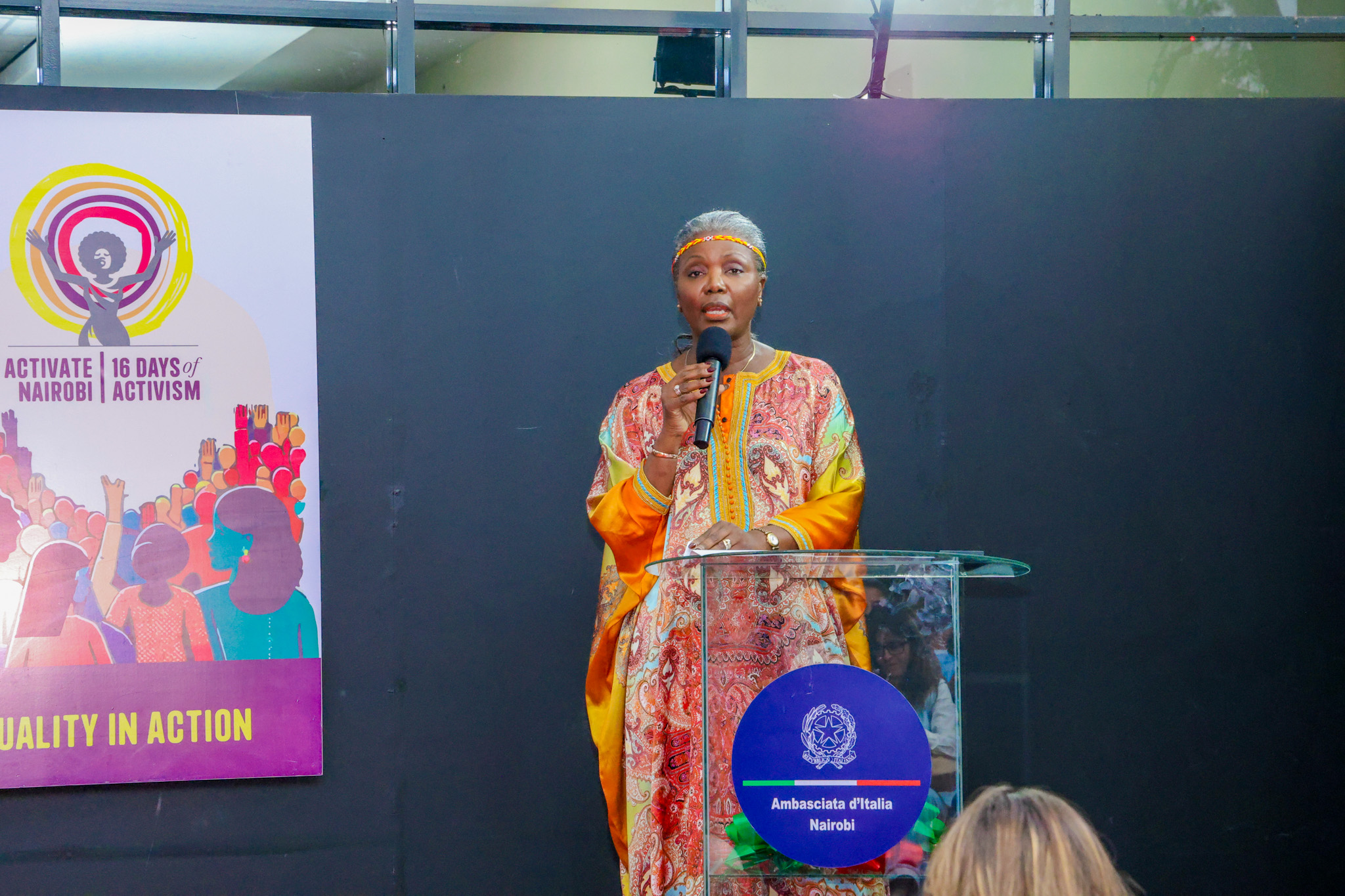
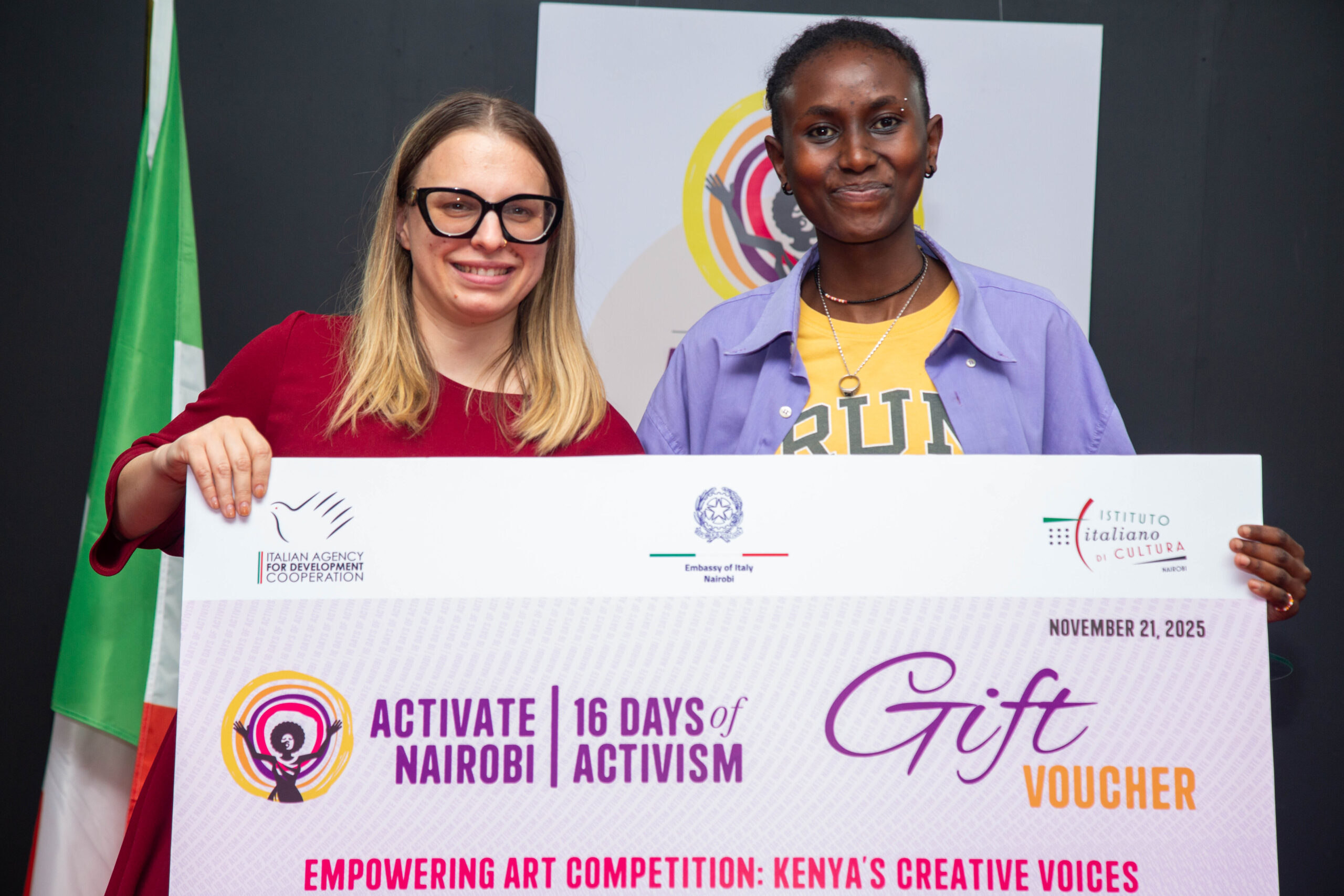
Nairobi, Kenya: At the “Canvas of Change: An Exhibition to Celebrate Women’s and Girls’ Rights” held during the Activate Nairobi Campaign launch, art became more than decoration; it became testimony.
In a room filled with colour, emotion, and resistance, artworks pulled viewers into the hidden world of gender-based violence, a reality many women silently endure. Behind every piece was a story of fear, courage, and resilience. A story that reflected what countless girls face across the country.
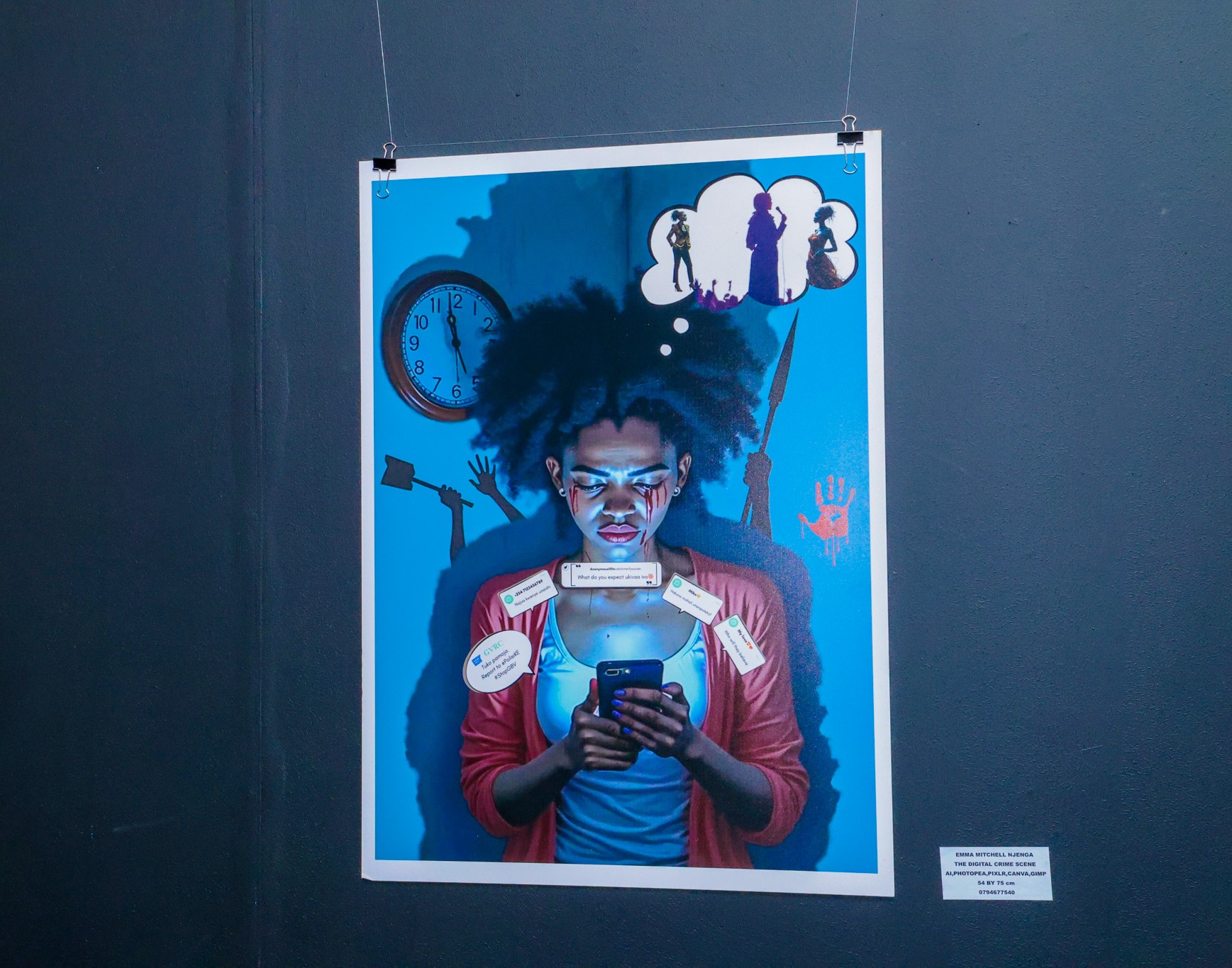
Mitchell Njenga, a multidisciplinary artist, is using her craft to confront the growing threat of technology-facilitated gender-based violence (TGBV). Her motivation comes from a painful experience a close friend endured. Her latest digital piece reflects this year’s 16 Days of Activism theme on Unite to End Digital Violence Against All Women and Girls.
“I usually do hand-drawn art, but for this one I tried digital art because it reaches more people since everyone is online. For me, it was personal because I’ve seen what online violence does to women, and it’s often the first step before physical violence starts. I wanted to portray that in my art,” she says.
Hope, not her real name, was still in high school when a slightly older male friend developed romantic feelings for her. She made it clear she was not interested and that they could only remain friends.
“This is a story of a friend of mine. She was in high school when this happened. Hope was hanging out with this older guy. He had a crush on her, but she wasn’t interested. She made it clear they could only be friends, and the guy agreed or so she thought,” Mitchell explains.
One evening, the two were hanging out and it got so late, and Hope had nowhere to spend the night. He offered her a place to sleep in his home. As she tried to rest, the man began taking photos of her.
Trapped and terrified, Hope froze, her body curled into a corner of the bed as she waited for sunrise. Beside her, he began engaging in self-sexual activity, leaving her to pray desperately for morning to come.
“He invited her to his place, and while she was sleeping, he started taking photos, thinking she was asleep. She could hear him. A few minutes later, he began touching himself sexually next to her. It was so bad, but she couldn’t leave. She just tried to get through the night until the light came,” Mitchell recalls.
The man didn’t touch her, and Hope rushed home in the morning. But later, after a disagreement, he used the photos, threatening to post them online unless she did what he wanted.
“There was a time they had a disagreement, and he threatened to post the pictures online. He was using the pictures to extort her. He wanted money,” she says.
Eventually, Hope sought help from Mitchell. Together with a group of women, they managed to have the images deleted completely. Reporting the man was not easy since he was well-known, widely liked, and there was no proof.
“Thankfully she came to us, and we made sure those pictures were erased. I wish we had called him out, but it was so hard because he’s well-known and loved. It was difficult to get support since we had no evidence. If we tried, he would delete everything, and he would get away with it. We also didn’t want to make Hope feel more helpless,” she explains.
Mitchell says Hope’s story depicts what many women across the country face. Through her art, she hopes to raise awareness about tGBV and offer women a sense of hope and healing.
“We tried to educate other women to be careful with the guy. By putting my art out there, I believe it will help create awareness not just for women, but for everyone so we can get more support for cases arising every day. It’s not just a message of hurt. I want it to be a message of hope that women can always reach out and get help,” she says.
She also criticizes women who shame or tear down fellow women on platforms like TikTok. She believes women must uplift one another instead of putting one down.
“Honestly, it’s very discouraging hearing such comments from fellow women. We’re supposed to empower each other. Seeing a woman body-shaming, fat-shaming, or telling another woman to be submissive so they accept what’s done to them is very sad,” Mitchell says.
Rising Cases of Digital Violence Against Women and Girls in Kenya
UN Women raised concern over the growing threat of digital violence against women and girls in Kenya, calling it an urgent crisis that demands immediate action.
Speaking during the opening of the Activate Nairobi campaign, the UN Women representative, Ms. Antonia Sodonon, said technology is increasingly being used as a tool of harm rather than empowerment.
She highlighted that online harassment, cyber-stalking, non-consensual sharing of intimate images, hate speech and digital exclusion are now widespread forms of abuse, which hinder women’s full participation in digital spaces.
“This year, the Unite Campaign 2025 once again calls on all of us to invest to prevent violence against women and girls. The year’s theme is to end digital violence against all women and girls. Technology is increasingly being used as a tool of arm,” said Ms. Antonia.
She stressed that the digital world must become a space of safety, opportunity and empowerment, not one of intimidation and fear.
“The digital space must be a space of safety, opportunity, and empowerment for women and girls, not one of intimidation. This theme reminds us that prevention must extend to every sphere of women’s life, physical and digital,” she added.
Ms. Antonia reaffirmed Un Women’s commitment to work with government institutions, counties, civil society and youth movements to confront digital and physical violence, emphasizing that young people, especially digital creators and freelancers, are key to transforming online spaces.
“UN Women is proud to work with Italy and other developing partners in Kenya’s institutions to strengthen prevention, response and accountability because ending violence against women and girls requires the strength of so many hands,” she stated.
She also highlighted the importance of male leadership, saying men and boys must become central allies in ending online abuse.
“We need to elevate youth leadership and men’s leadership. Kenya’s young people and our male champions are central to the fight. When we are looking at young people, they are digital creators and freelancers. Their leadership is indispensable in ending digital and physical violence,” stressed Ms. Antonia.
Champions of Art in the Fight Against Gender-Based Violence in Kenya
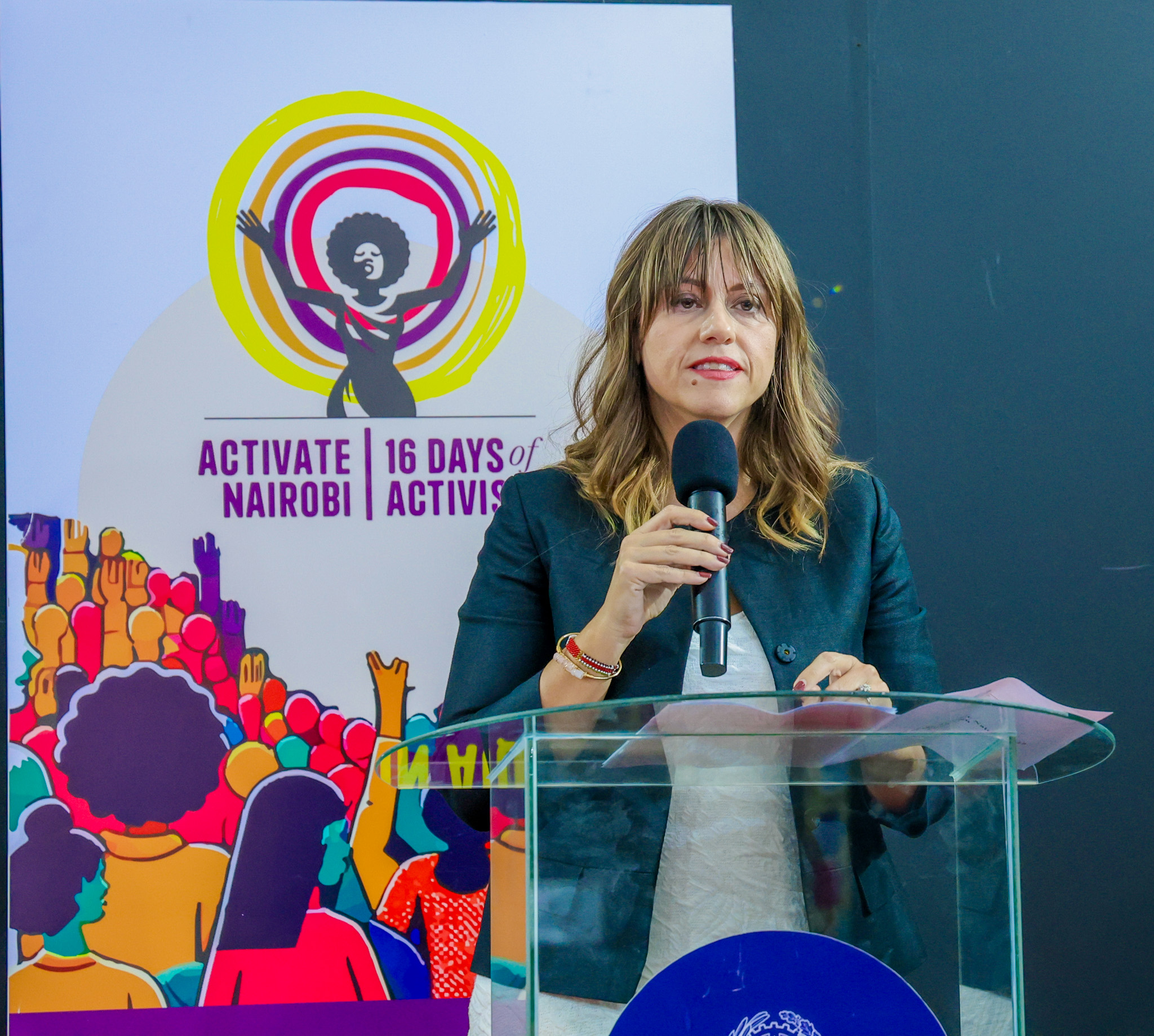
Speaking at the event, Ms. Lorenza Gambacorta, Deputy Head of Mission, Embassy of Italy, explained that the exhibition is part of a year-long effort that began in March during International Women’s Day and was intentionally aligned with the 16 Days of Activism Against Gender-Based Violence.
“The 16 Days is a way to remind the world that violence against women is not something that is limited by development or linked to just a specific part of the world. North, South, East, and West, every society faces the same challenge. It’s the only campaign that lasts so long,” she stated.
She stressed that Italy’s financial support for GBV programs is important, but without a change in attitudes, even well-funded initiatives may fall short.
“Art is a tool to have a shift of mindset. If we don’t link those activities to some that are linked to a mind shift, we will not reach our main purpose,” said Ms. Lorenza.
In a significant announcement, Ms. Lorenza revealed that Italy is ready to sign a new intergovernmental agreement supporting a new project. The initiative will provide €2.25 million to the National Government Affirmative Action Fund as part of broader efforts to strengthen GBV prevention and response in Kenya.
“This is just one of the many initiatives the Italian government has taken to fight against gender-based violence, not only in Kenya, but all around the world,” she added.