|
Getting your Trinity Audio player ready...
|
By Portus Chege
As news broke of Raila Odinga’s reported passing in India, attributed to hypertension and a leg ailment, a profound sense of irony gripped Kenya. While the titan of the country’s freedom struggle lay dead, President William Ruto was busy signing into law a series of bills that critics argue severely limit freedom of expression and digital rights.
These new laws, passed alongside the controversial Finance Bill 2024, have sparked widespread condemnation for granting the state sweeping powers to regulate and potentially shut down the internet, monitor online activity, and criminalize dissent under the guise of combating misinformation.
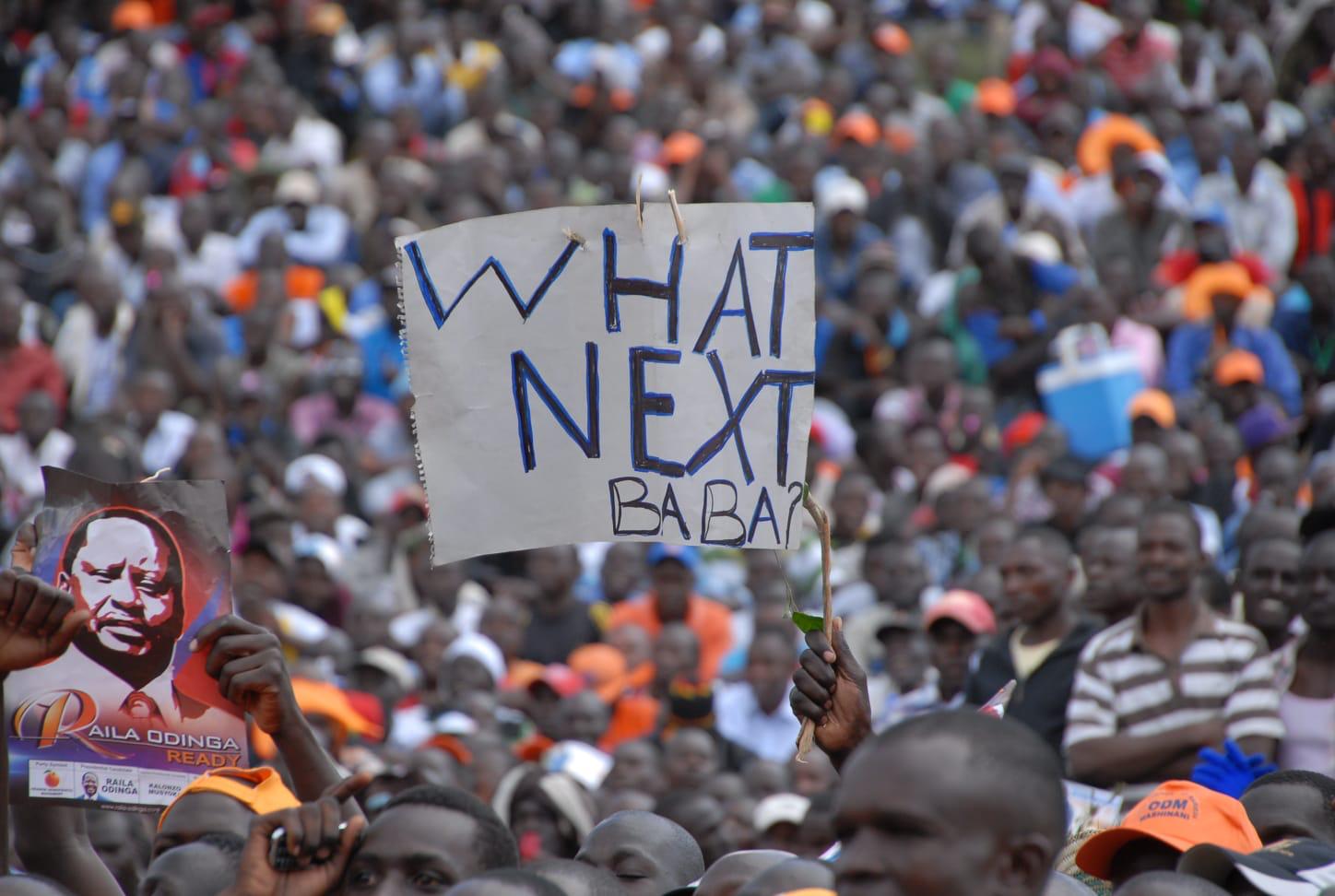
Raila Amolo Odinga, the man affectionately known as ‘Agwambo’ and ‘Tinga,’ was a political master of a rare breed. A veteran who suffered nine years of detention without trial under the autocratic regime of Daniel arap Moi, his understanding of the Kenyan dilemma was profound, and his rhetorical power unmatched. Yet, as the nation processes his reported demise, his recent political maneuvers have left many Kenyans questioning the legacy of the quintessential doyen of protest.
This questioning stems from what many see as a squandering of his hard-earned democratic credentials. The final straw for numerous supporters came in July 2024, when Raila rode the wave of nationwide youth protests against the government’s Finance Bill to strike a political deal with President Ruto. This move, which saw some of his allies incorporated into the very government they were protesting, was widely condemned as an act of supreme political opportunism. Fellow opposition leaders, like Kalonzo Musyoka, accused him of “going to bed with the devil” while the nation reeled from reports of hundreds of protesters killed, abducted, or tortured by state agents.
This was not an isolated incident in Raila’s long career. His political journey is marked by a series of self-interested alliances that have often bewildered his supporters. In the run-up to the 2002 elections, he orchestrated a merger with Moi’s KANU party—the same machine that had jailed him. When questioned, he famously retorted, “In politics there are no permanent friends or enemies; only permanent interests. I went into Kanu to destroy it from within.” He later served as a minister under Moi before leading an exodus from KANU to help opposition leader Mwai Kibaki win the presidency.
A similar pattern emerged during former President Uhuru Kenyatta’s second term. Raila’s “Handshake” with Uhuru sidelined then-Deputy President William Ruto and brought Raila into the inner sanctums of power.
Political observers see this as a shrewd move by Ruto to clear the field for the 2027 presidential race, a contest that already promises to be titanic with figures like the hugely popular former minister Dr. Fred Matiang’i said to be preparing to run.
Raila has run for president five times unsuccessfully, though it is widely believed he was the rightful winner of the violently disputed 2007 election. Throughout his career, he has been a member of at least five different political parties, a habit he defends by saying, “I align myself with the people.
I do what the people tell me to do.” Yet, many Kenyans now wonder if the people advised him to lead them into an alliance with a government they feel has caused them untold suffering.
This sentiment is captured by people like David Ongeri, a boda boda rider, who said, “Raila is a selfish person. He should forget my vote. He betrayed the Gen Z.” This betrayal is felt deeply, especially as the government enacts laws seen as repressive. Even within his own Orange Democratic Movement (ODM) party, former associates describe a leader who brooks no dissent and runs the party as a personal fiefdom.
As he moves into his political sunset, the political Phoenix in Raila, which for decades enabled him to resurrect from seemingly impossible situations, appears to have finally extinguished. The shining star of Kenya’s opposition has dimmed, not by death alone, but by a series of choices that have left a legacy of admiration and disillusionment in equal measure.
Portus Chege is a freelance journalist based in USA.