|
Getting your Trinity Audio player ready...
|
By Mary Mwendwa
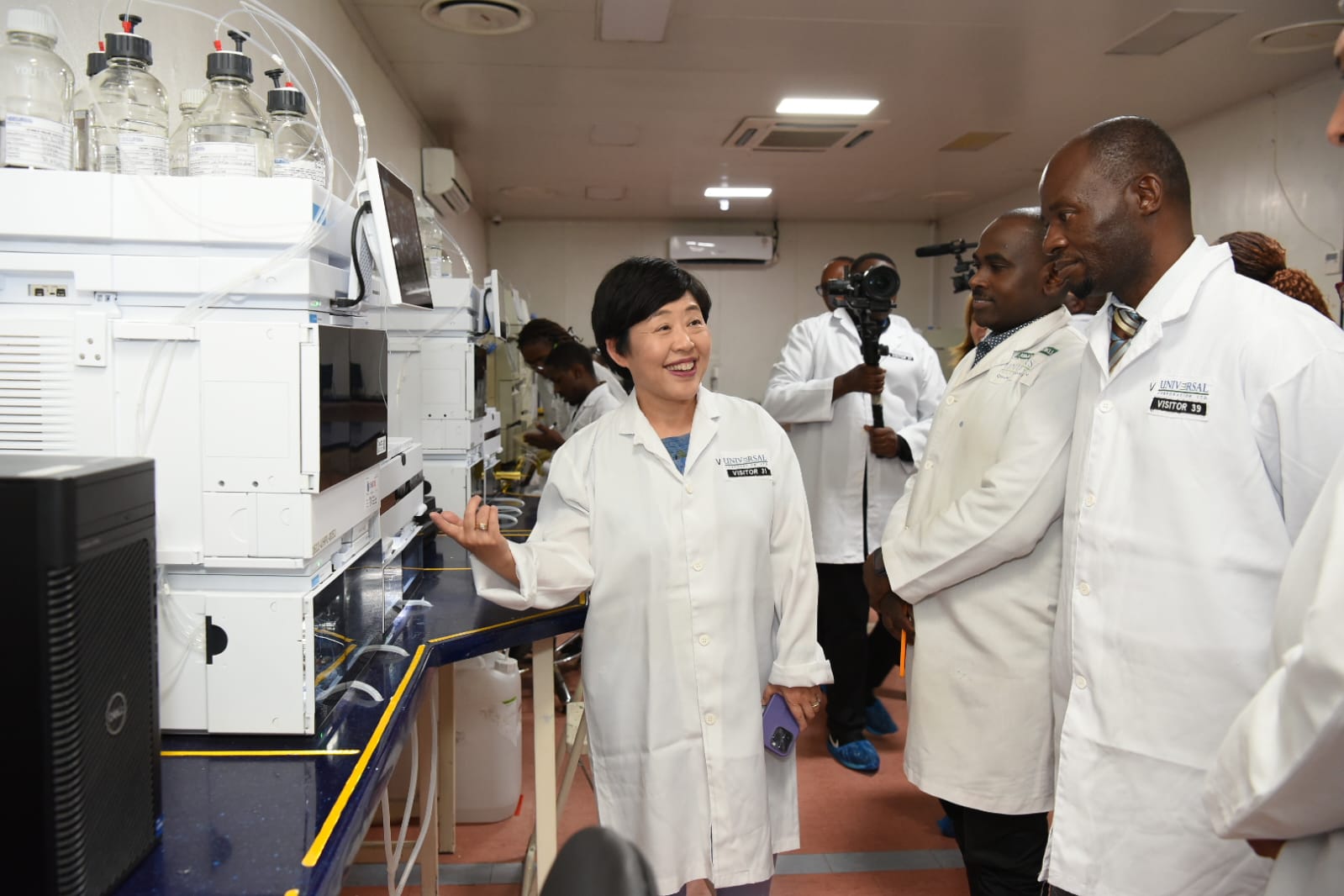
KIAMBU, Kenya – In a quiet industrial area in Kikuyu, the whir of machinery at Universal Corporation Ltd. is blending with the sounds of ambition.
This facility, now a beacon of continental aspiration, has been chosen as the epicenter for the local production of a critical medicine, arpraziquantel, to combat schistosomiasis, a parasitic disease that has plagued millions of African children for generations.
This isn’t just about making pills; it’s about manufacturing a new future for African healthcare.
The strategic decision to base this production in Kenya, announced during a high-level visit by executives from the science and technology company Merck, marks a pivotal shift in the global health landscape. It signals a move from a model of aid-dependent donation to one of sustainable, regional self-reliance.
“Our technology transfer to Universal is a long-term commitment to sustainable access – supporting Kenya’s manufacturing capacity so the region can rely on locally produced treatments,” said Hong Chow, Member of Merck’s Healthcare Executive Committee and Head of China and International. “Collaborations like this are about more than medicine. They are about knowledge transfer, technical expertise, and empowering Kenya as a regional leader in pharmaceutical innovation.”
Why Kenya? The Foundation of a Hub
Kenya was selected not by chance, but by design. The choice underscores the country’s robust pharmaceutical capacity, its established status as a regional economic hub, and the government’s demonstrable commitment to public health. This is evidenced by Kenya’s diligent work to maintain the World Health Organization’s Maturity Level 3 (ML3) status for its regulatory authority, a crucial benchmark for quality and safety.
Universal Corporation Ltd., as a WHO pre-qualified manufacturer, stood out as a trusted partner for the complex process of technology transfer. This partnership positions Kenya not merely as a production site, but as a leader in Africa’s pharmaceutical landscape and a key player in advancing the continent’s health sovereignty.
“This partnership shows what ‘One Merck for and in Africa’ means in action, working hand in hand with African manufacturers, regulators, and health authorities to build shared capacity,” said Karim Bendhaou, Head of Merck’s Africa Bureau. “We are proud that Kenya is developing the infrastructure, expertise, and regulatory excellence needed to make Africa’s manufacturing future a reality.”
From the Factory to the Field: A Dual-Pronged Attack
The initiative is a masterclass in synergy. While engineers and scientists in Kikuyu prepare for scaled-up production—with the goal of supplying sub-Saharan Africa from 2028—another critical mission is unfolding nearly 300 kilometers away, in the communities of Nyando, Kisumu.
Here, the fight against schistosomiasis is visceral. Through community-based Mass Drug Administration (MDA) campaigns, health workers deliver treatments directly to those in need. This is where the future output of the Universal factory will ultimately make its impact, ensuring a stable, regionally-produced supply of a pediatric formulation specifically designed for preschool-aged children.
“Seeing mass treatment in Kisumu is a powerful reminder that partnerships, sustained treatment and community engagement deliver real progress,” said Hong Chow, after witnessing the MDA campaigns firsthand. “Every tablet of medicine provided represents a healthier future for a child, a family, and a community.”
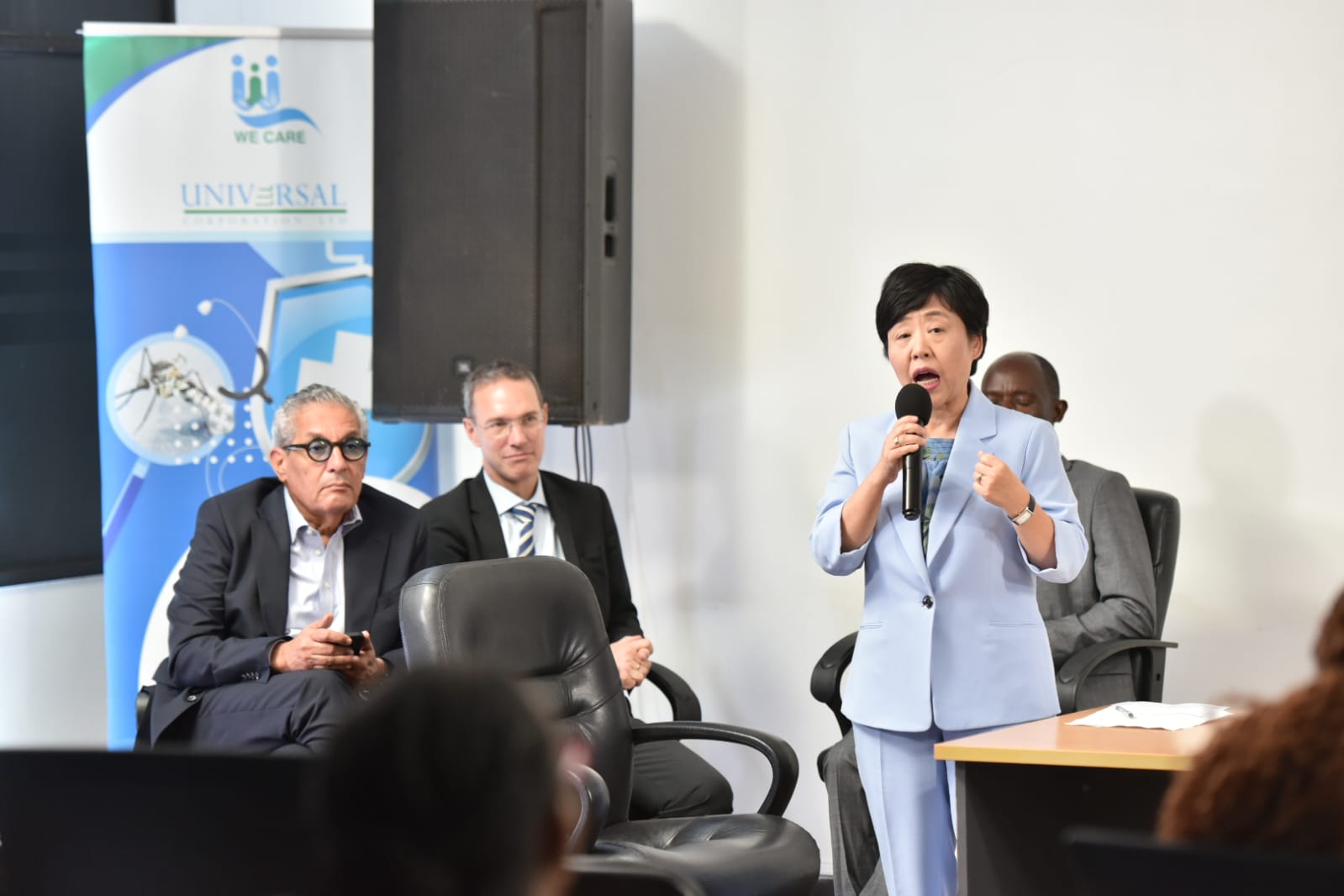
The new arpraziquantel formulation will be integrated into these existing platforms, including child health days, through the Pediatric Praziquantel Consortium’s ADOPT program. This implementation research will identify the best ways to reach the youngest, most vulnerable children. Supply will be managed through a pooled procurement mechanism involving NGOs and Ministries of Health, ensuring sustainable and equitable access.
“The success of Kenya’s mass drug administration campaigns against schistosomiasis is proof that when governments, partners, and communities work together, we can make a measurable difference in lives,” said John Ndeti, General Manager for East Africa & Nigeria in Healthcare at Merck. “Together, we are building models that can be scaled across Africa.”
The Deeper Impact: Jobs, Equity, and Sovereignty
The ripple effects of this partnership extend far beyond the disease itself. Local manufacturing is a powerful engine for economic and social development.
“For us in East Africa, local production means faster access to medicines and greater self-reliance. It is a critical step towards making healthcare delivery more resilient,” explained John Ndeti. The technology transfer builds local technical expertise, creates skilled jobs, and strengthens the entire Kenyan pharmaceutical sector. By producing medicines within the region, access becomes faster and less dependent on volatile international donor supply chains, which can be disrupted by global events.
“Building local manufacturing capacity is one of the most powerful ways to advance health equity,” stated Harald Nusser, Head of Global Health & Health Equity at Merck. “When medicines are produced closer to where they are needed, we strengthen access, independence, and sustainability.”
This vision of health equity was echoed in the fields of Kisumu. “Health equity starts in communities,” Nusser added. “Every mass drug administration campaign reminds us that behind every statistic is a child, a parent, and a community regaining its future.”
Navigating Challenges: The Path to True Self-Sufficiency
The path to pharmaceutical sovereignty is not without its hurdles. A key question revolves around the sourcing of the Active Pharmaceutical Ingredient (API), which will initially come from China. Skeptics ask whether this undermines the goal of self-sufficiency.
The response from the partners is one of strategic, long-term vision. They assert that self-sufficiency is a process, not a single event. Establishing local manufacturing capacity for the finished product is the massive and essential first step. APIs can be stockpiled and suppliers diversified to mitigate risk. This foundational capacity is non-negotiable for building long-term health sovereignty.
To ensure the economic viability of this local production, Merck is working with global health partners and procurement agencies to shape new mechanisms for equitable and affordable access. While formal purchase guarantees are still being finalized, these discussions are central to creating a sustainable model that can withstand fluctuations in official development assistance.
“By investing in technology transfer, regulatory know-how, and regional capacity, we are helping ensure that access to medicines can be maintained even in a challenging donor landscape,” a Merck representative explained.
As the sun sets over the Universal Corporation Ltd. facility, the sense of possibility is palpable. The partnership is a living blueprint, demonstrating that the fight against neglected tropical diseases and the building of resilient health systems are two sides of the same coin.
“Kenya is proving that when science, community, and partnership come together, African leadership can set the pace in the fight against neglected tropical diseases,” concluded Karim Bendhaou.