By OMBOKI MONAYO
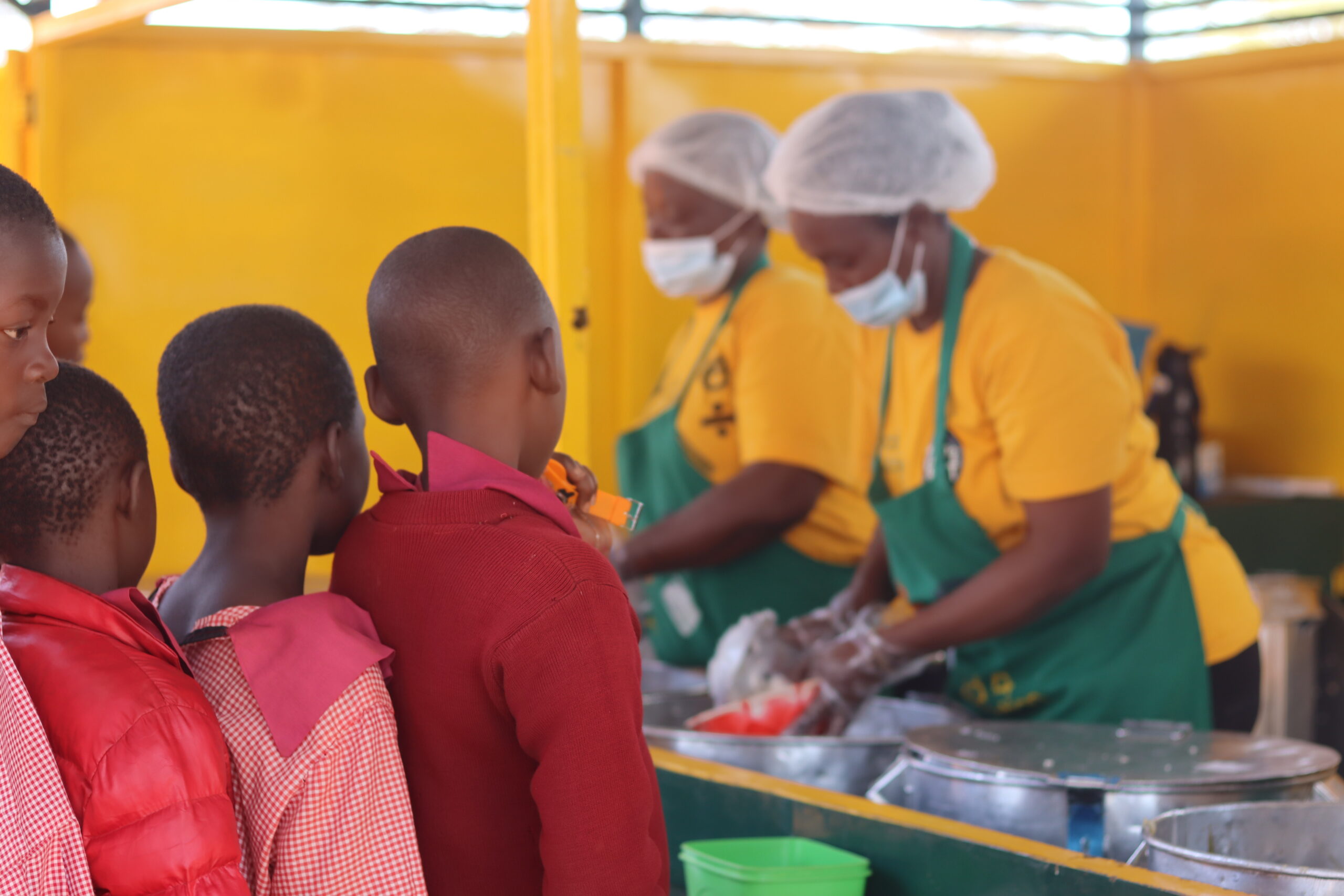
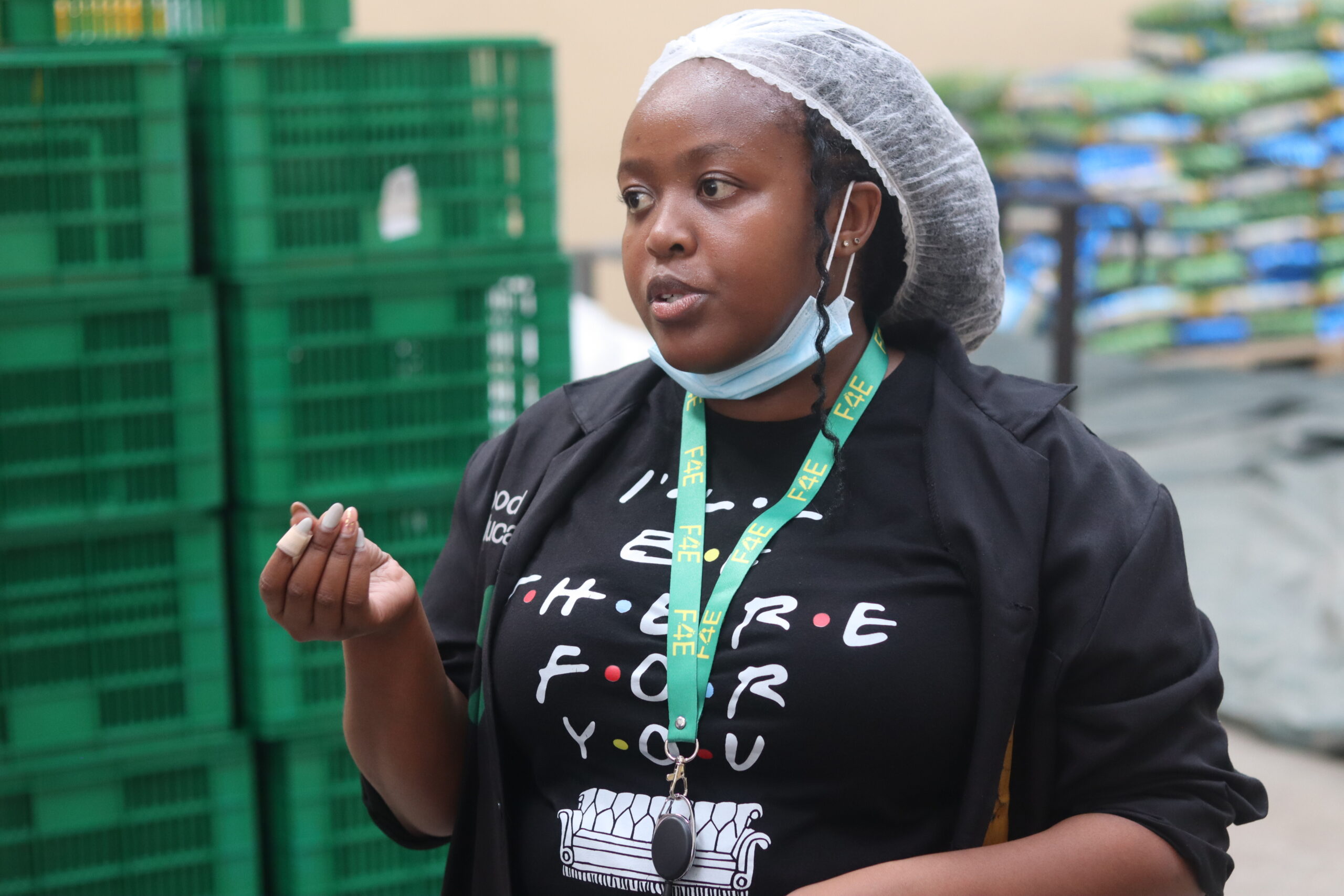
Ruiru, Kenya: At 3 a.m. each weekday, the Ruiru megakitchen roars to life. By lunchtime, over 6,000 hot meals have been dispatched to 54 schools across Kiambu and Muranga Counties. Among the team is Naomi Waceke, a former food vendor turned kitchen assistant, whose children now benefit from the very meals she helps prepare.
“My children who also study here, are assured of a nutritious meal every day. I have also taught them to get used to eating nutritious foods. Apart from the food they eat in school, they are now eating fruits, vegetables and plenty of water,” she tells Talk Africa.
Before joining Food 4 Education (F4E), Waceke struggled to maintain consistent nutrition at home. “I would buy them cakes, biscuits and sugary beverages when the money was available. But at other times… I would struggle to feed them properly,” she recalls.
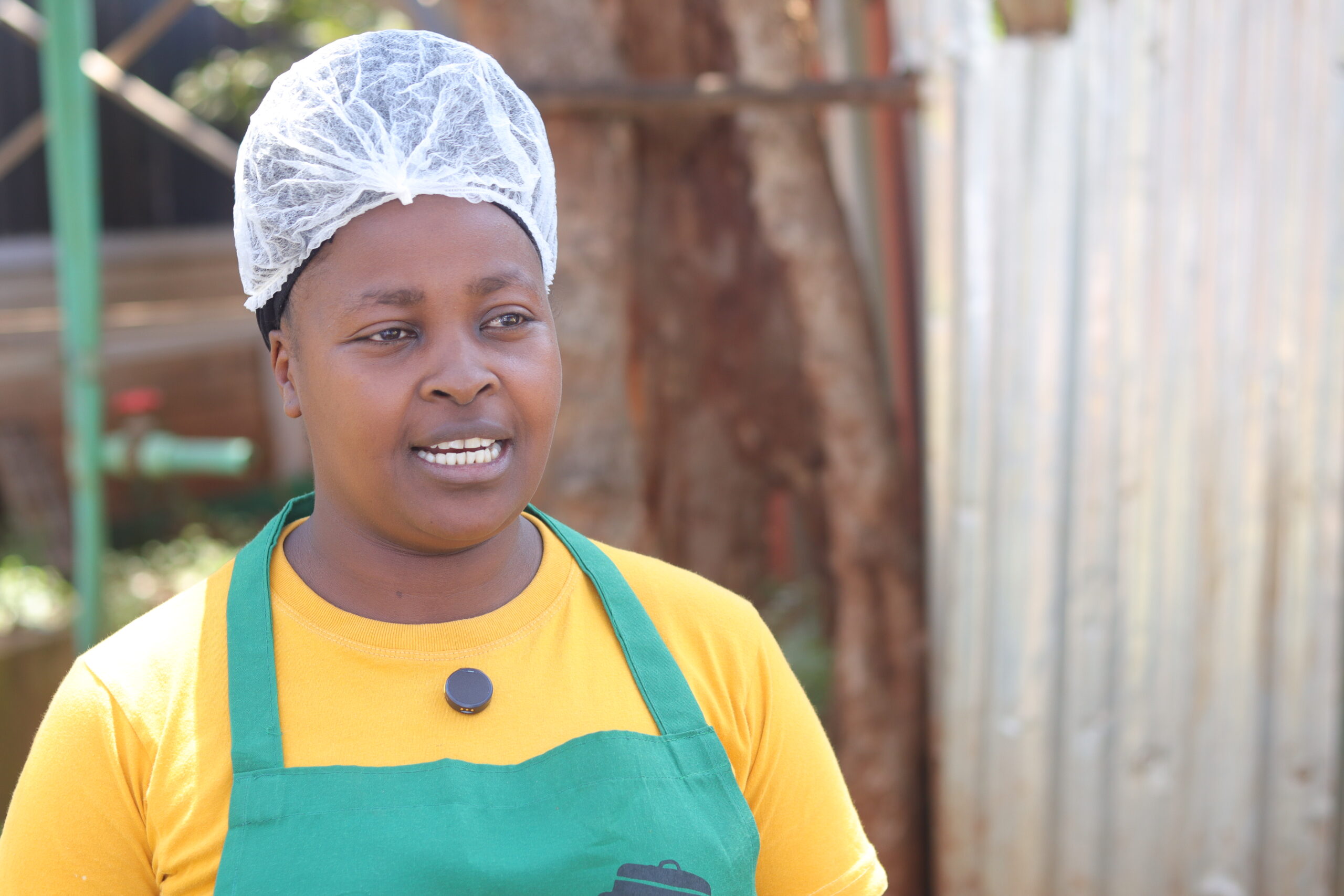
Waceke is one of thousands of parents participating in Food for Education’s Tap 2 Eat program, a virtual wallet system that allows families in Kiambu County to contribute just Ksh32 per day—Ksh16 per child—for guaranteed school meals.
At her school, 950 learners are registered, and lunch service runs like clockwork between 12:40 and 13:30. “We have to work very fast to serve the learners on time,” she explains.
“As soon as their orange smart wristband is scanned for payment, we serve their portions into small containers they bring from home. Some of them don’t eat the whole lunch, but save some for dinner. If there is food left over, we call a second round.”
What the Giga Kitchen Offers
In Nairobi’s Industrial Area, the Giga Kitchen on Enterprise Road is a logistical marvel. It produces over 60,000 meals daily, serving learners in Nairobi and surrounding counties.
“When you go at 4 a.m. to Giga and you see those women… they get to see the impact every day,” says Wawira Njiru, founder and CEO of Food 4 Education. “They’ve left their homes, left their families, come there to make sure that when a child wakes up, they go to school, they will be there for a meal to provide to them.”
The kitchen operates with military precision—cooking, packaging, and dispatching meals to schools across the city. “We prepare meals that are delivered to the schools at the standard temperature of 65 degrees centigrade,” says floor manager Catherine Mwangi. In Muranga County alone, over 1,000 boda boda riders are contracted to deliver meals.
Women make up 80% of the workforce, and ingredients like ndengu, tomatoes, onions, and bananas are sourced locally.
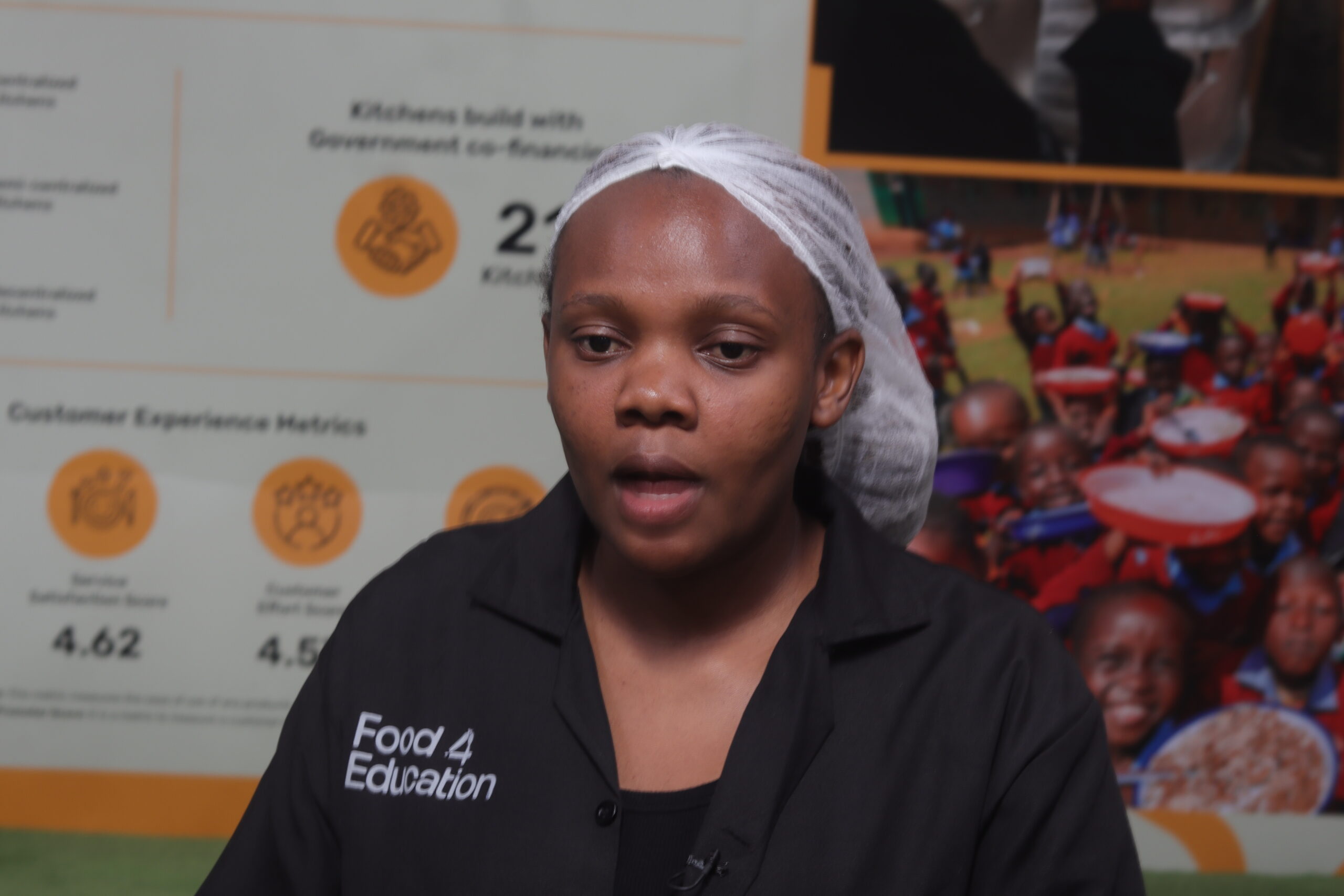
“We get 80% of our ingredients locally using small scale and large-scale suppliers. All our fresh produce is locally sourced. Only rice is imported due to supply constraints and the size of the batches we require, which start from 1,000 bags,” says Felistas Wambui who is in charge of the Juja Godown.
The 35,000 square feet godown consists of a receiving bay that is 6,421 square feet, a sorting and machine area of 5,685 square feet, a rice storage space covering 6,922 square feet that can hold about 8,000 bags of 90-kilogram bags of rice, a laboratory, boardroom and customer care centre.
At the machine area, the milling machine has a capacity to sort and process 500 bags of rice and green grams in a day, which can produce 550,000 meals a day. Prior to its purchase, the facility had to employ 50 women to sort the rice by hand.
After the bags are sorted, the bags are repacked into 50-kilogram bags before distribution to the various kitchens is done. The receiving process also goes in tandem with tests at the on-site laboratory for aflatoxin and other mycotoxins to confirm that it meets the stringent global and national food standards.
“Once we receive the cereals, we test them for aflatoxin and other mycotoxins according to preset quality standards. Our suppliers are aware of these requirements as we specify it in our purchase orders and therefore expect full compliance for every shipment. If a consignment doesn’t meet the standards, we reject it and return it to the supplier,” she says.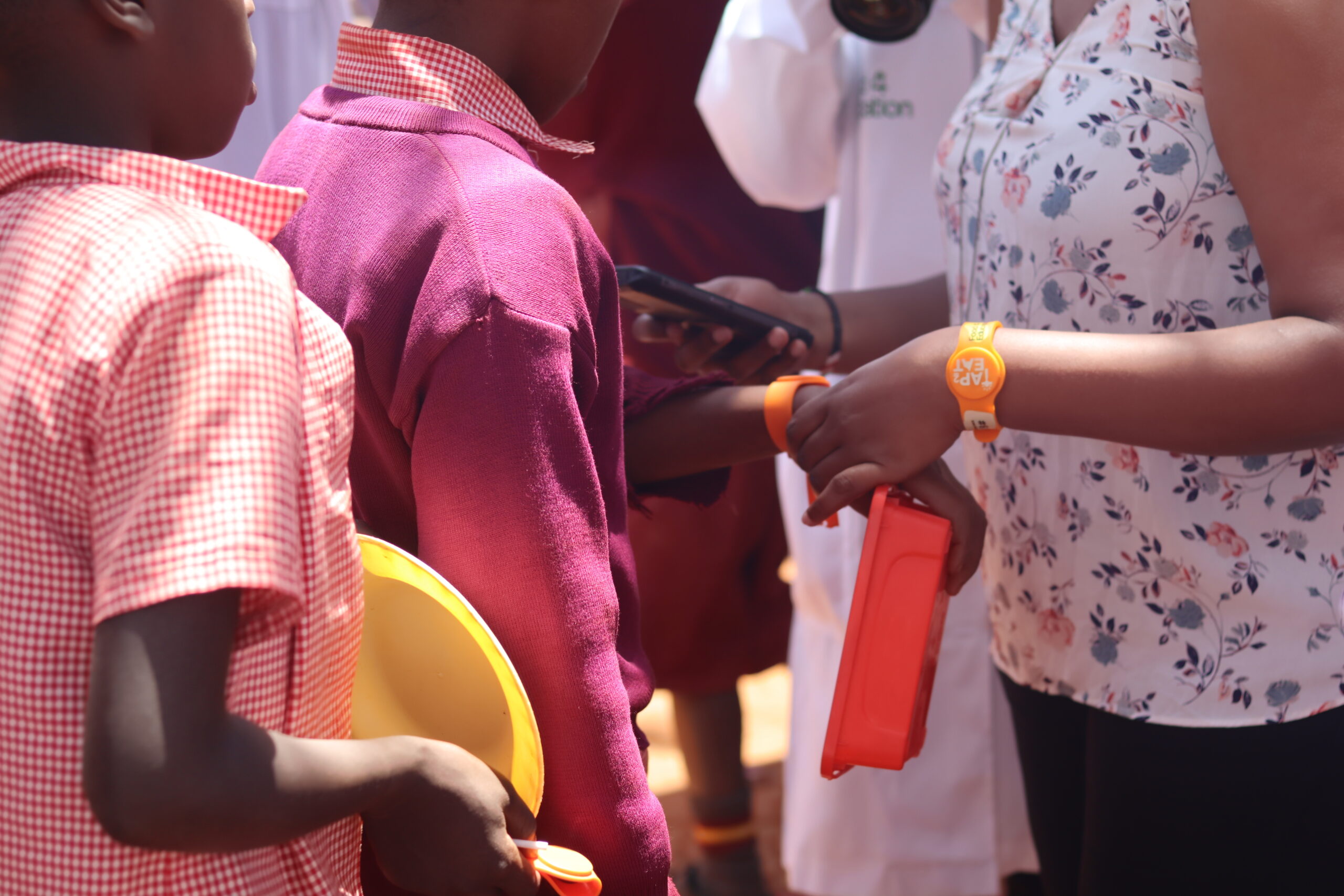
This social enterprise has come a long way. From humble beginnings with a single kitchen at Ruiru Primary School in 2015, it has grown in leaps and bounds, getting to 5,000 meals a day by 2020.
In 2023, the organization inked a landmark deal with the Nairobi County government to feed 250,000 learners in all its public schools through an initiative christened “Dishi Na County”. It has successfully achieved 100% coverage for the early childhood education learners in two counties.
As of October 2025, Food 4 Education operates in 13 counties, with 31 centralized and over 120 decentralized kitchens, feeding more than 600,000 children daily in over 1,500 schools.
The social enterprise has served over 150 million meals to date, reinvesting its revenues into community empowerment and operational sustainability.
“We try and feed as many public schools as we can,” says Njiru. “If we go to a region, it’s mostly the entire region… because children will leave a school that doesn’t have a feeding program to go to a school that has one.”
To ensure no child is left behind, F4E subsidizes costs and offers free meals to 10% of learners in each school. “Even when you say five shillings, there’s a child who’s thinking, my parents don’t have five shillings every single day,” says Ms Njiru.
Food Safety Measures
Food safety is paramount. At the laboratory located at the warehouse, cereals as well as samples from every distributed batch are tested for aflatoxins, mycotoxins, and E. coli.
“We do different case analysis and quality checks for samples right from sourcing to serving. The lab surveillance covers all the preproduction, production and postproduction stages and includes moisture analysis for mycotoxins including the lethal and hazardous aflatoxin and any other impurities.
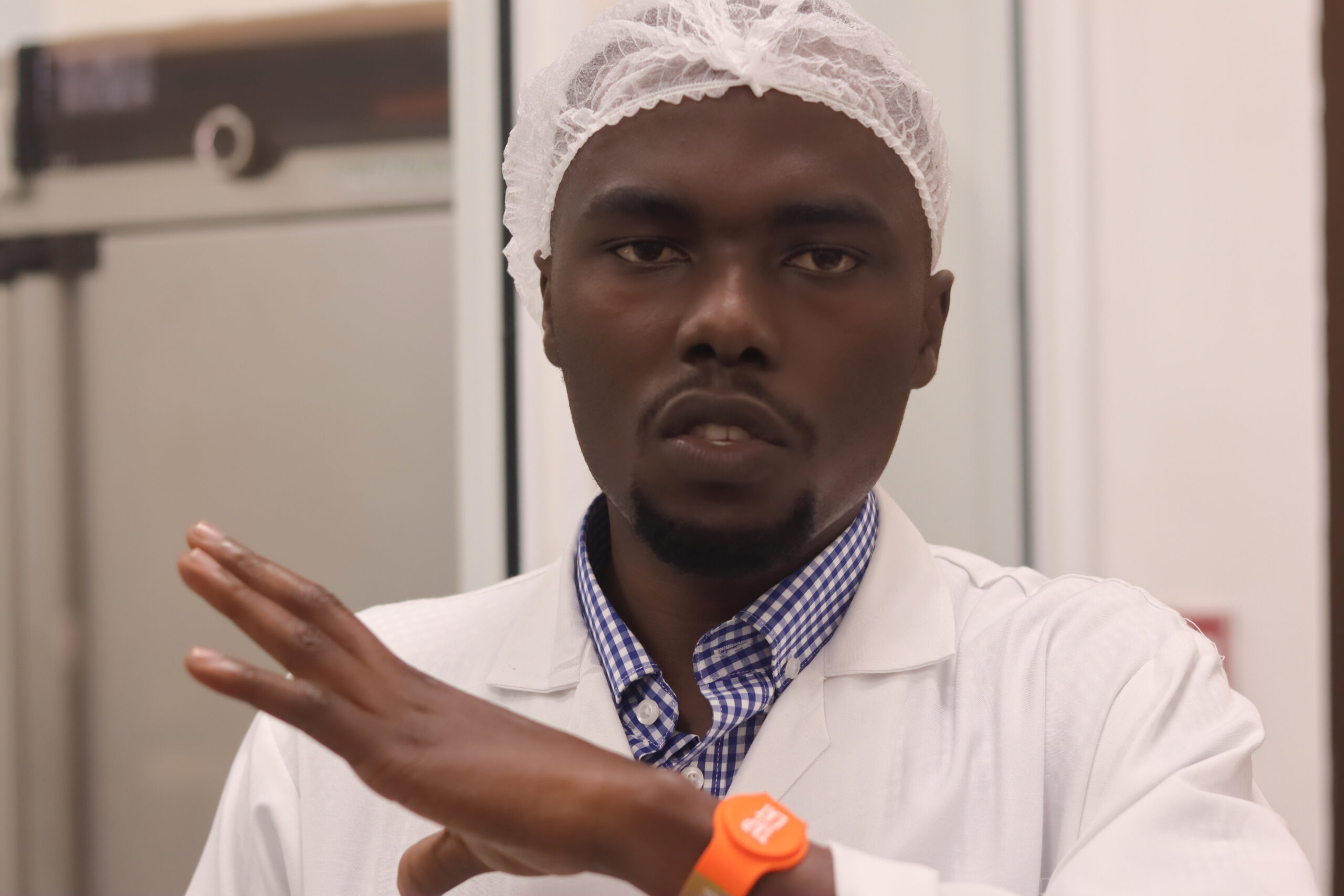
“If we suspect the food was contaminated, we collect samples that are stored for up to 22 hours to determine what time it was cooked, what batch it was and other details,” laboratory technician Daniel Makwata explains.
So far, the programme has not reported a single case of aflatoxin poisoning, which has led to the suspension of feeding programs organized by schools and county governments in other regions.
As a trained nutritionist and food scientist, Ms. Njiru brings scientific rigor to every plate. “We make sure that we have… all our meals go through dietary testing to see what’s the composition of various nutrients and micronutrients.” The program has an average of 7.0 food categories as compared to the 5.3 average recorded for other school feeding programs on the African continent.
Early assessments revealed an over-reliance on carbohydrates, prompting a shift toward a more balanced plate. “Now we serve an approximate one to one ratio of protein. The protein ration is a bit more than the carbohydrates,” she says.
Meals include turmeric rice, pilau masala, and fresh fruits including over a million bananas distributed monthly. “Our program is designed such that the learner gets a banana every two weeks,” she says.
The Food For Education Journey
Ms. Njiru’s journey began in Ruiru, where she witnessed childhood hunger firsthand. “I saw a lot of disparity from seeing kids who I would play with, who are my friends who lacked sufficient food and didn’t have the same opportunities.”
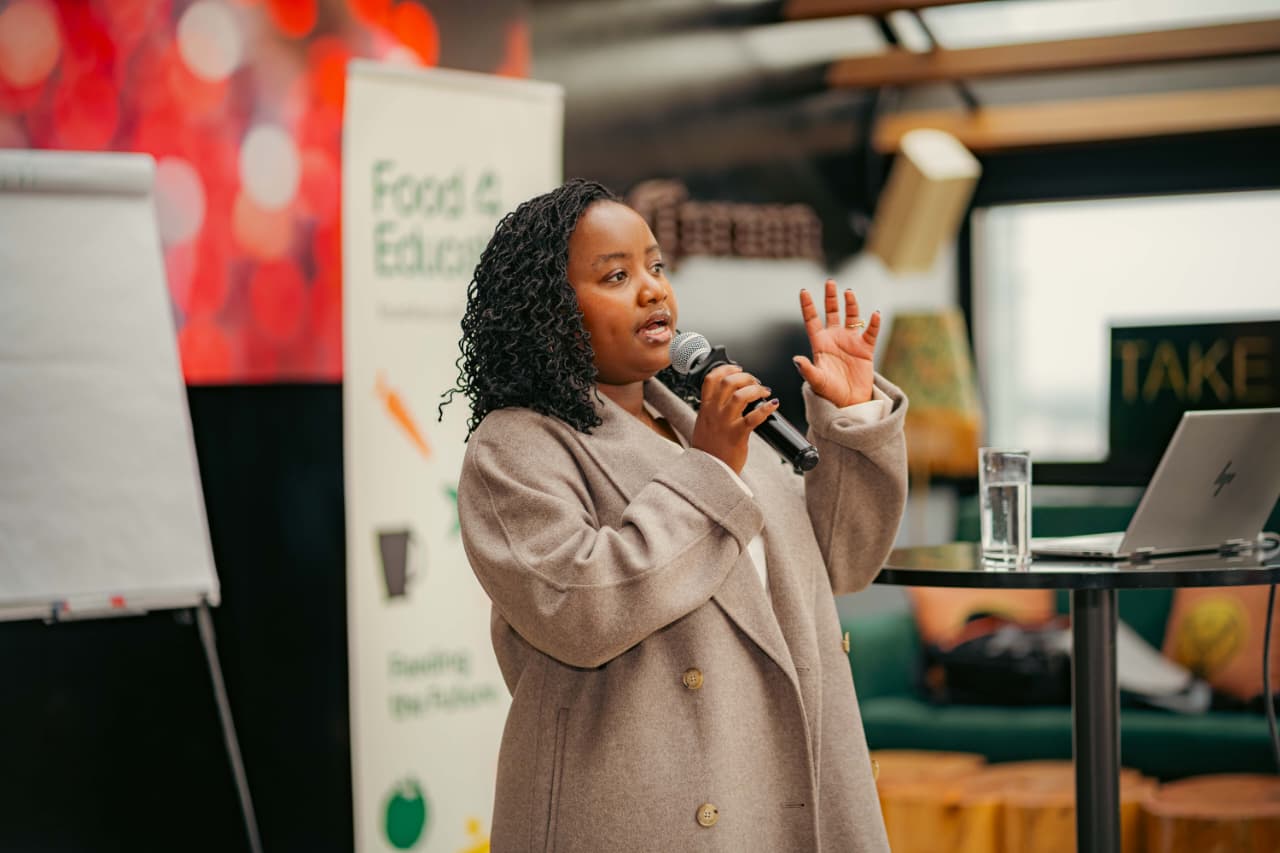 She remembers sharing frozen githeri with neighbourhood children: “I went and took the frozen githeri, and I took it to them, knowing it’s going to defrost after some time,” she says.
While studying in Australia, she organized a Kenyan dinner fundraiser. “It wasn’t the best food,” she admits, “but people enjoyed it and we raised about AUD 1,250.” That money launched a makeshift kitchen feeding 25 children.
“The first list had about 200 names, which was a bit intimidating since I didn’t have the money to feed 200. It was at that point that I realized the need to aggressively source for more funds to feed a larger number of learners.”
Inspired by India’s centralized kitchen model, Njiru launched the “Food 4 Plate” campaign in 2015. “In India, the central kitchens distribute meals to the schools. So I saw that’s something we can do here.”
By 2016, the program had scaled up to 300 children. “It’s slowly progressed like that, sometimes making big jumps, and now we feed 600,000 learners every day,” she says. Her motivation remains deeply personal.
“What motivates me still is that impact that we make every single day. If I can make their lives a little bit better with this one meal that gives them security, gives them a guarantee, I’ll try and do that,” Wawira points out.
Beyond nutrition, the program is a catalyst for national development. “If every child was eating, you can imagine the jobs that will be created. It would create a very big economic stimulus,” Njiru says. “Studies have shown that for every dollar invested, there’s a $20 return from a school feeding program.”
Her advice to young changemakers? Start small. “If you say you want to feed a million and you feed 25, you look crazy, but if you say 100, even to you, you’re like, Wow, maybe I can do that.”
Among other awards that she’s picked up in her illustrious journey of feeding learners, Wawira was recognized as the UN Person of The Year in 2021. For her revolutionary work in the school nutrition sub-sector, she received the accolade for “her leadership and personal sacrifices in ensuring thousands of meals are served daily so that children don’t go to school hungry”.
From a single act of compassion to a nationwide nutrition movement, Food 4 Education is reshaping Kenya’s school feeding landscape—one plate, one child, one community at a time.