|
Getting your Trinity Audio player ready...
|
By Henry Owino
Dodoma, Tanzania: Tanzania’s political landscape is currently dominated by the recent swearing-in of President Samia Suluhu Hassan for her new five-year term (2025-2030). This event, however, has not been without controversy.
Opposition parties have vocally asserted that the national election, which preceded the inauguration, was neither free nor fair, raising significant concerns about the democratic process in the East African nation.
The election itself was reportedly hotly contested, with numerous claims of irregularities and a perceived lack of transparency from various opposition factions. Despite these serious allegations, the swearing-in ceremony proceeded as planned, albeit under notably tight security measures, highlighting the underlying tensions within the country.
Critics have continued to press their accusations, alleging widespread voter intimidation and unfair practices during the polls. In stark contrast, the ruling party has maintained that the electoral process was entirely free and fair, adhering to all democratic principles.
A critical aspect of the Tanzanian legal framework that impacts such disputes is the country’s constitution. It explicitly prohibits the challenging of election results in a court of law, effectively rendering the outcome indisputable through judicial means.
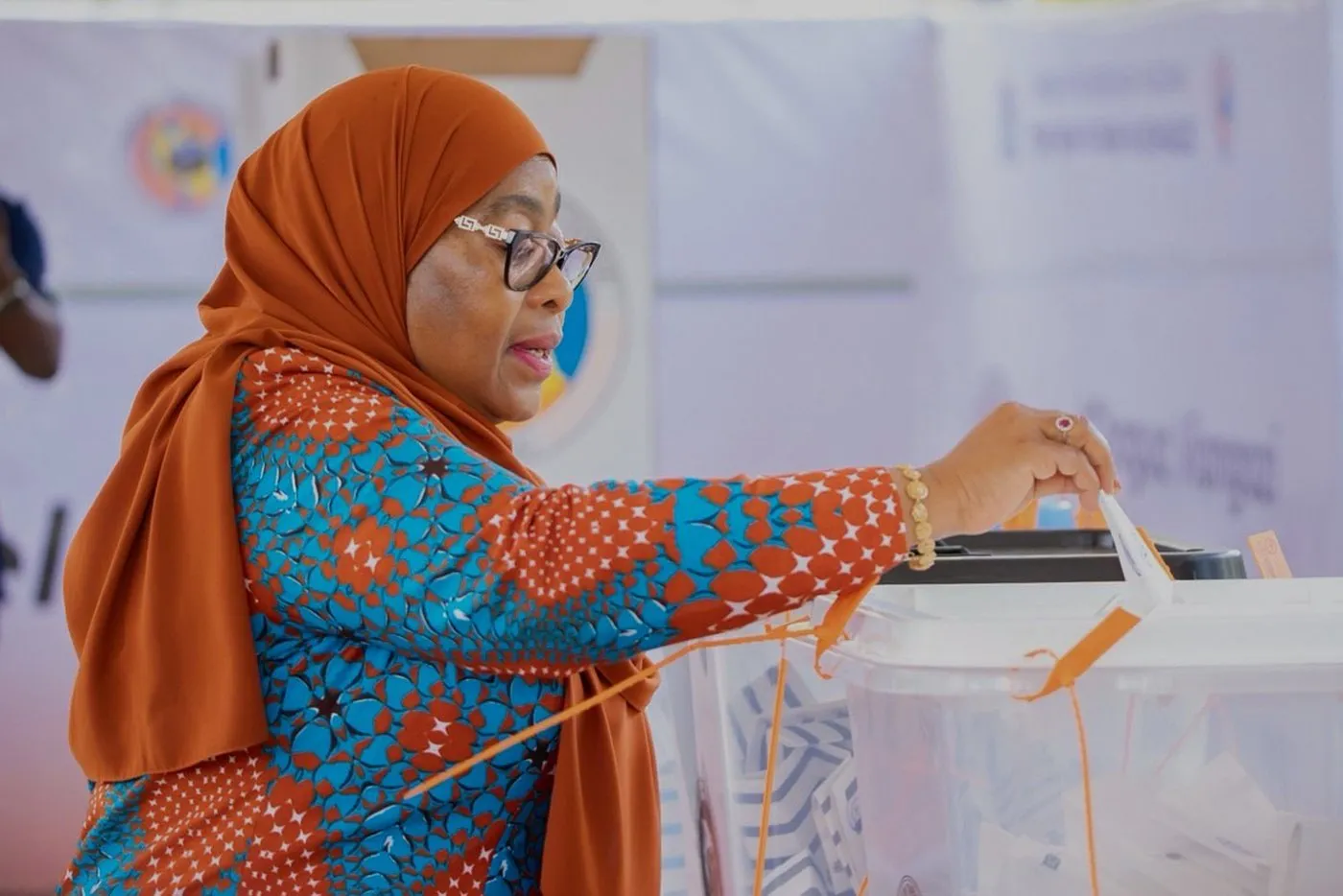 This constitutional provision has been a point of contention for opposition parties and international observers alike, as it removes a key avenue for addressing grievances and ensuring accountability in the electoral process.
Disputed Inauguration Ceremony
Consequently, the inauguration of President Suluhu took place on Monday, November 3, 2025. The ceremony was a heavily secured event, held at a military parade ground in Dodoma, the administrative capital, and involved extensive multi-agency security deployment.
With this inauguration, President Suluhu has officially begun her second term in office, a period many observers have characterized by the contentious national presidential elections that preceded it.
The political landscape is highly charged, presenting the new administration with the formidable task of unifying a populace fractured by the recent electoral disputes.
A key challenge for President Suluhu will be to demonstrate an unwavering commitment to democratic governance, thereby restoring public trust and fostering national cohesion. Her success in addressing these divisions will be crucial for the stability and progress of the nation moving forward.
President Suluhu made history in March 2021 when she became Tanzania’s first female head of state, succeeding the late President John Pombe Magufuli. Before that, she had served as Vice President since 2015 under the ruling Chama Cha Mapinduzi (CCM) party.
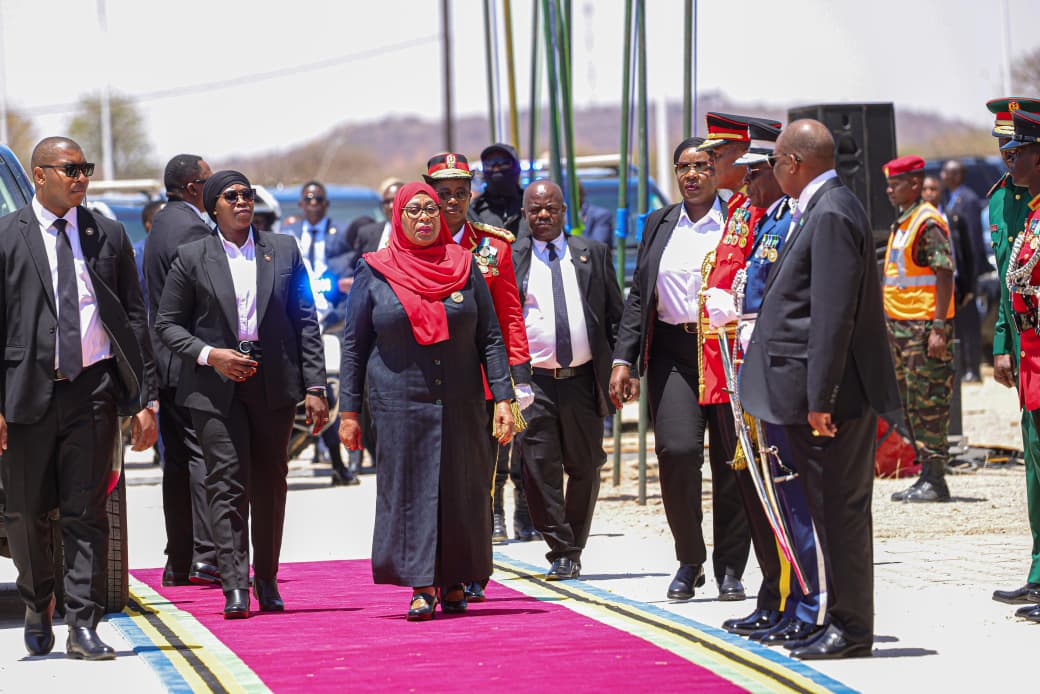 Notably, the event was not open to the general public. Access was exclusively reserved for those who had received a formal invitation, a measure likely implemented for security and protocol reasons. The exclusive nature of the gathering highlighted the importance of the presidential inauguration, a pivotal moment in the nation’s political landscape.
The public followed the presidential inauguration proceedings from big screens mounted in strategic places. This was the first time in recent times where a country head of state was sworn-in outside a public national stadium, with the majority of the members of the public also barred from accessing the public facility, only following the ceremony proceedings from the national broadcaster-Tanzania Broadcasting Co-operation, (TBC).
PROTESTS AND QUEST FOR REFORMS
After the casting of ballots which ended at 4:00pm from 7:00 am on Wednesday, 29 October, chaos erupted from opposition leaders who alleged widespread electoral malpractice and intimidation.
Judge (Rtd.) Jacobs Mwambegele, Chairperson, National Electoral Commission (NEC) denied wrongdoing, insisting that the elections were conducted transparently. However, governance experts say the dispute underscores the urgent need for electoral reform to strengthen accountability and restore confidence among Tanzanian voters.
“Our democracy cannot thrive under fear,” said one opposition figure, calling for electoral reforms and a stronger role for independent institutions.
The unlawful imprisonment of Tanzania’s opposition leader, Tundu Lissu of the Party for Democracy and Progress (CHADEMA) who has been the main challenger of President Suluhu was arrested on trumped -up charges of treason by the Tanzania government as the country held its general election.
This followed nationwide elections protests in various parts of the country with law enforcers lobbying teargas canisters and shooting bullets which saw hundreds reportedly killed.
As part of the effort to tame the chaotic situation from the opposition and their supporters, the government imposed stringent measures which included; nationwide internet shutdown, dusk to dawn curfew thus 6:00pm to 6:00am and arrest of offenders.
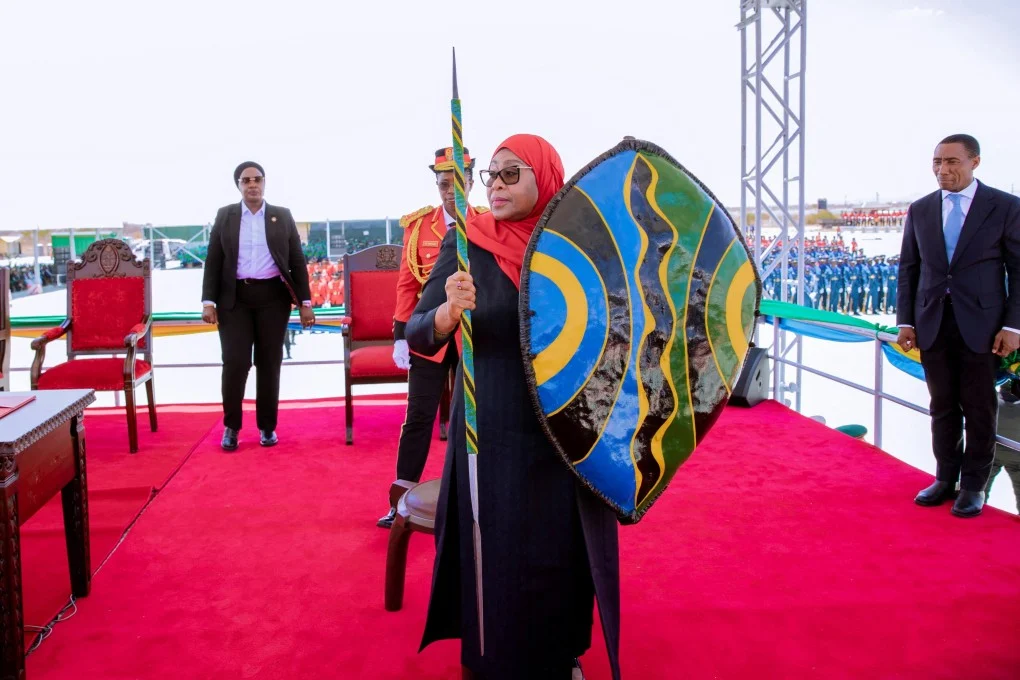
Despite all the protests, dissenting voices across Tanzania and from neighboring countries, President Suluhu took the oath of office which will see her at the helm until 2030. She was handed a shield and a spear which signify her role as the defender of the country.
President Suluhu who won the national presidential election by 98% of the total votes cast, thanked her fellow competitors for being patriotic. She commended the 16 presidential competitors for upholding peace during campaigns and thus shows politics is not war but demonstration of maturity in democracy allowing for free competition.
“I would like to greatly thank my fellow and worthy competitors for demonstrating mature democracy in the political campaigns which we valiantly competed in. Therefore, we all have explicitly shown that politics is not war,” President Suluhu acknowledged.
Tanzanian President however, condemned plotters and sponsors of the deadly protests that rocked the country during and after the election day. They blamed it on outsiders who were incited and became part of the protesters who caused massive damage.
“Let me take this opportunity as a mother to warn those who sponsored protests and chaos in Tanzania. Chaos is usually a plot to test and evaluate how strong and well-armed a country is and prepared for war,” she cautioned.
Tanzania’s President claimed the protests were infiltrated by foreign elements. She further disclosed the majority of youth who were arrested are not Tanzania citizens. She vowed to deal with plotters and violent protests.
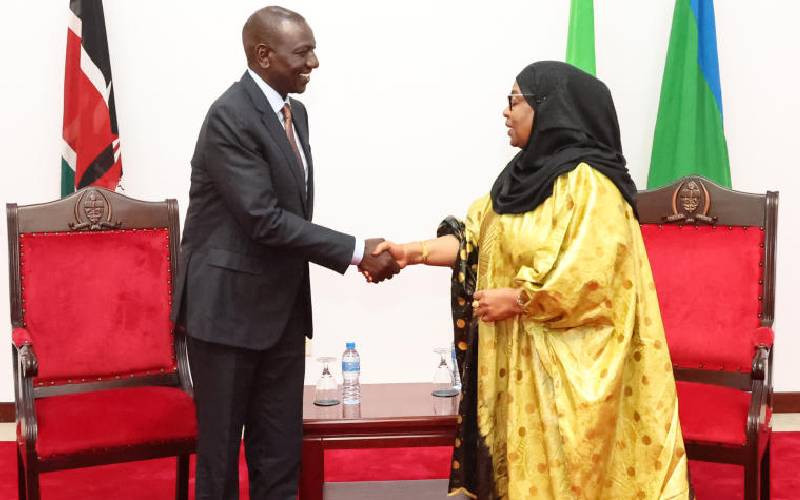 Among those who sent congratulatory messages to President Suluhu include; President William Ruto of Kenya who said: “I encourage all political actors and stakeholders to embrace dialogue and tolerance as they seek to resolve any issues at hand in order to safeguard democracy and stability.”
President Ruto was represented in the inauguration ceremony by his Deputy, Kithure Kindiki (Deputy President of Kenya). Other guests included; Hakainde Hichilema (President of Zambia), Évariste Ndayishimiye (President of Burundi), Hassan Sheikh Mohamud (President of Somalia), Daniel Francisco Chapo (President of Mozambique), Jesca Rose Alupo (Deputy President of Uganda), Constantino Chiwenga (Vice President of Zimbabwe).
Observers and civil society groups (CSOs) have raised concerns about restricted political space, limited campaign freedoms, and media censorship during the polls. Opposition representatives accused security forces of harassment and arbitrary arrests, saying such tactics undermine public trust in the democratic process.
On the other hand, political analysts noted that while Tanzania remains one of East Africa’s most stable nations, its democracy continues to face tests as citizens demand greater transparency, fairness, and pluralism in future elections.
Background on President Suluhu
Full Name: Samia Suluhu Hassan
Born: January 27, 1960 — Zanzibar, Tanzania
Age: 65 (as of 2025)
Education:
- Mzumbe University, Tanzania — Public Administration
- University of Manchester, UK — MSc in Community Economic Development
Political Career:
- Member of Parliament (1995–2010)
- Minister of State, Union Affairs (2010–2015)
- Vice President of Tanzania (2015–2021)
- President of Tanzania (2021–Present)
Party Affiliation: Chama Cha Mapinduzi (CCM)
Historic Achievement: First woman to serve as President of Tanzania and one of the few female heads of state in Africa.