|
Getting your Trinity Audio player ready...
|
By Mercy Kachenge
Nairobi, Kenya: Kenya faces an urgent need for robust climate adaptation and mitigation strategies, as evidenced by its high vulnerability to climate change.
The 2021 Global Climate Risk Index identified Kenya as one of Africa’s most climate-affected nations, and the 2022 ND-GAIN index ranked it 145 out of 187 countries.
These critical indicators highlight the necessity of protecting Kenya’s population, ecosystems, and economic stability from the escalating impacts of climate change.
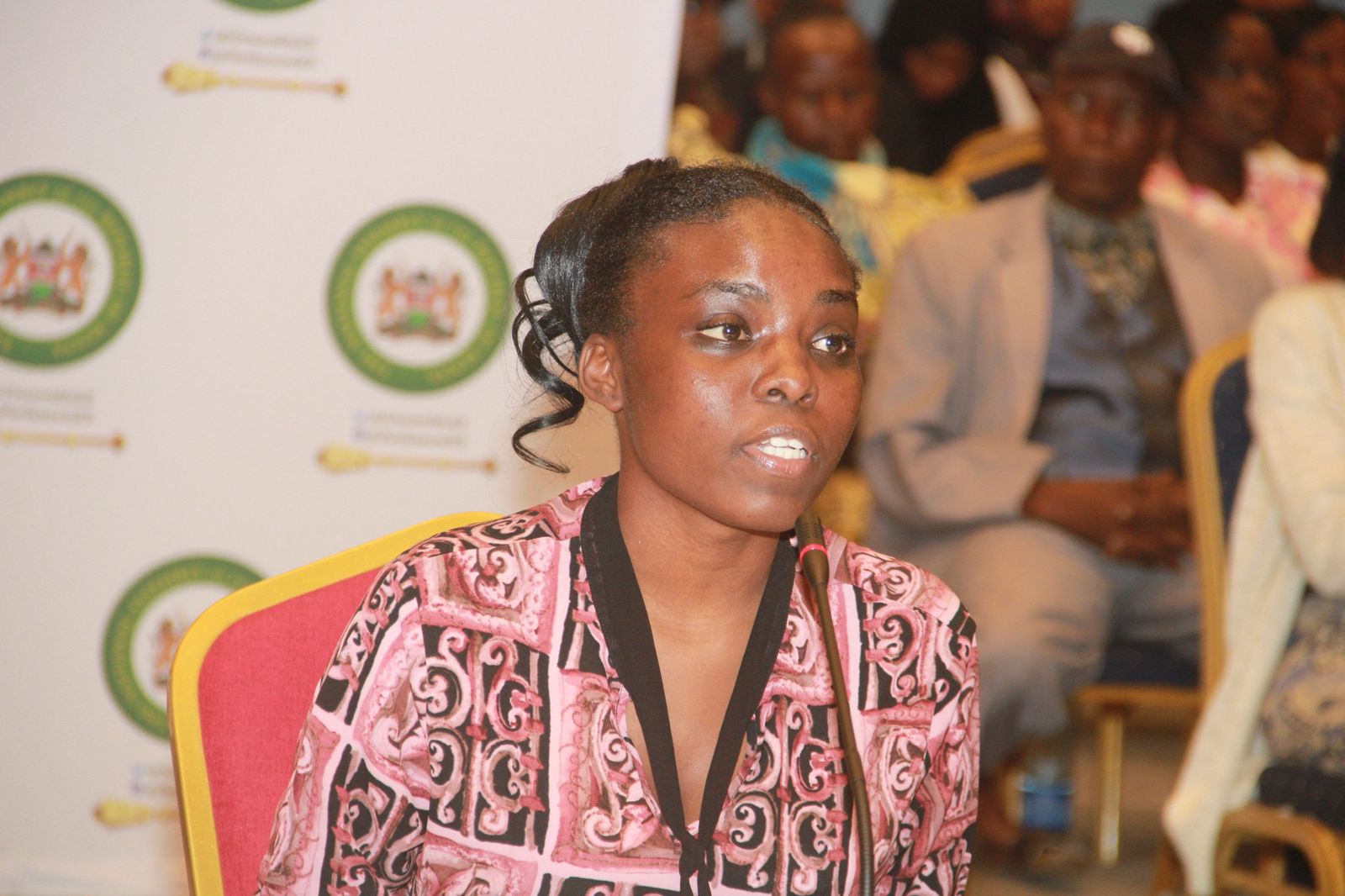
Vallary Ochieng, Organizing Secretary of the Kenya Youth Climate Advisory Council (implemented through the Organization of African Youth Kenya), is a Youth Climate Advocate. Her title constantly reminds her of her responsibility regarding the climate risk in Kenya, a risk of which many are incognisant.
For her, climate advocacy is not just about attending global conferences or drafting policy statements, it is about confronting the daily realities of a planet in crisis and ensuring that young people are no longer treated as mere tokens in decision-making spaces.
Her journey into climate action began not in the boardrooms of Nairobi but in her rural community, where devastating floods forced families to rebuild homes, farms, and lives. At the time, she was volunteering with a Community Based Organization (CBO) that mobilized residents into the global climate movement.
For Ochieng, activism is firmly tied to the global agenda for sustainability. She works directly within the framework of the United Nations Sustainable Development Goals (SDGs), particularly SDG 13 on Climate Action.
“As a council member, most of the time we mobilize youth leaders and stakeholders to ensure the government actually prioritizes climate issues in their county,” she explains. Beyond government engagement, she emphasizes amplifying youth voices ensuring that young people who are already implementing climate solutions on the ground are heard at county, national, and even international levels.
This deliberate alignment with SDG 13 also extends into Kenya’s own Vision 2030 blueprint. But Ochieng is clear-eyed: the aspirations remain unmet. “Vision 2030 was a good vision for us as African countries, but I would say we are not on track,” she says.
Her concern echoes the Sustainable Development Goals Report 2025, which shows the world is far off track from achieving the 2030 Agenda. Of the 169 SDG targets, only 35% show adequate progress, while 48% reflect insufficient progress and 18% have regressed below the 2015 baseline. Climate action SDG 13 remains particularly behind, with less than 40% of targets showing trend data coverage.
Frustration, however, is matched with determination. Achieng sees Kenya’s climate discourse dominated by grand promises, from Parliament to high-profile pledges made at global conferences like Conference of Parties (COP) summits, but with little local impact.
“Counties and even the government are always committing, always pledging, but we don’t really see that reflected in our nation,” she laments. “African countries still suffer the brunt of most of the climate issues.”
For young advocates like her, pushing climate priorities in Kenya is fraught with systemic obstacles. The first is the mismatch between national climate policies and local realities. “Most of our policies, especially in the climate space, don’t really align with what communities are going through,” she says.
Floods, droughts, and crop failures devastate households, yet the frameworks designed in Nairobi often miss these urgent needs. Another challenge is exclusion. “The one gap that’s really affecting us as a nation is the fact that youth are not made part of policymaking or validation processes,” she insists.
Too often, youth are invited for photo opportunities but denied genuine influence. “Most of the time, we are used for tokenism or propaganda. We’re invited to sit there, but our voices are not taken seriously.”
This exclusion is deeply disheartening because youth are already demonstrating leadership at the frontlines. Across Kenya, young people are running recycling projects, championing tree planting drives, and innovating climate smart agriculture initiatives. Yet, as Achieng points out, their work rarely makes its way into policy frameworks.
Despite these challenges, she has never considered walking away from climate activism. Her motivation comes from the resilience and innovation of her peers. “As much as it’s hard to advocate for these issues, you find that youth are not stopping,” she says with admiration.
“They keep pushing forward. People are coming up with innovations, initiatives around climate action. That actually makes me push forward too, because we are the ones who will inherit the consequences.”
Brendah Oluoch, Chairperson of the Kenya Youth Climate Advisory Council. A voice for young Kenyans at both county and national levels, insists that meaningful inclusion of youth is not just desirable, it is urgent.
“With only five years to implement the SDGs, and climate change being one of the greatest challenges of our generation, youth inclusion in Kenya’s climate policymaking has certainly improved, but it remains uneven and fragile,” she says.
Adding “Effective inclusion must mean more than just seats at the table, it requires decision-making power, resources, and accountability mechanisms to ensure youth voices shape outcomes.”
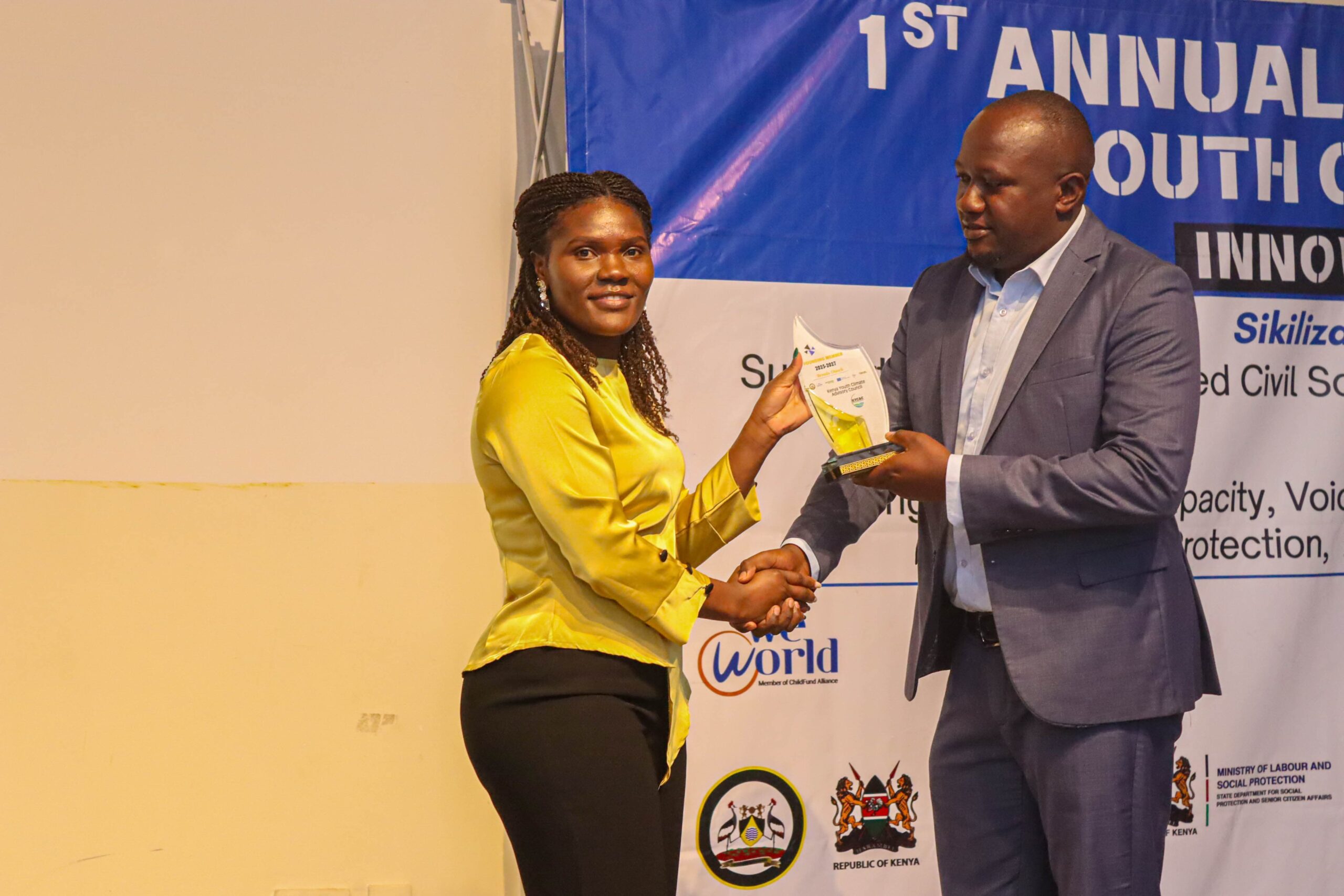
At the Kenya Youth Climate Advisory Council, Brendah and her peers are working to close the gap between national commitments and grassroots realities. In August, they convened over 70 civil society organizations and more than 150 youth participants during the National Youth Climate Summit in Nairobi.
Together, they developed the Kenya Youth Climate Compact, a bold youth designed vision placing climate finance, governance, and meaningful youth inclusion at the center of Kenya’s climate future.
But Brenda does not shy away from pointing out the gaps. “Today, not a single young person sits on the National Climate Change Council established by the President even though youth make up 75% of Kenya’s population. That exclusion is not only unacceptable, it is unjust,” she says. “Genuine inclusion is not charity, it is a matter of intergenerational justice.”
Kenya has made commendable progress in renewable energy, positioning itself as a continental leader, yet climate adaptation remains chronically underfunded, and communities continue to suffer from droughts, floods, and displacement. Brendah believes embedding climate resilience into every sector is the only way to make Vision 2030 a reality.
And still, youth are not waiting. At the summit, young innovators showcased transformative ideas that are environmentally friendly sanitary pads made from banana fibers, an air purification system created by high school students, and projects turning waste into valuable products to fuel the green economy.
“These are not side projects, they are scalable solutions that, with the right support, could transform Kenya’s climate resilience,” she says.
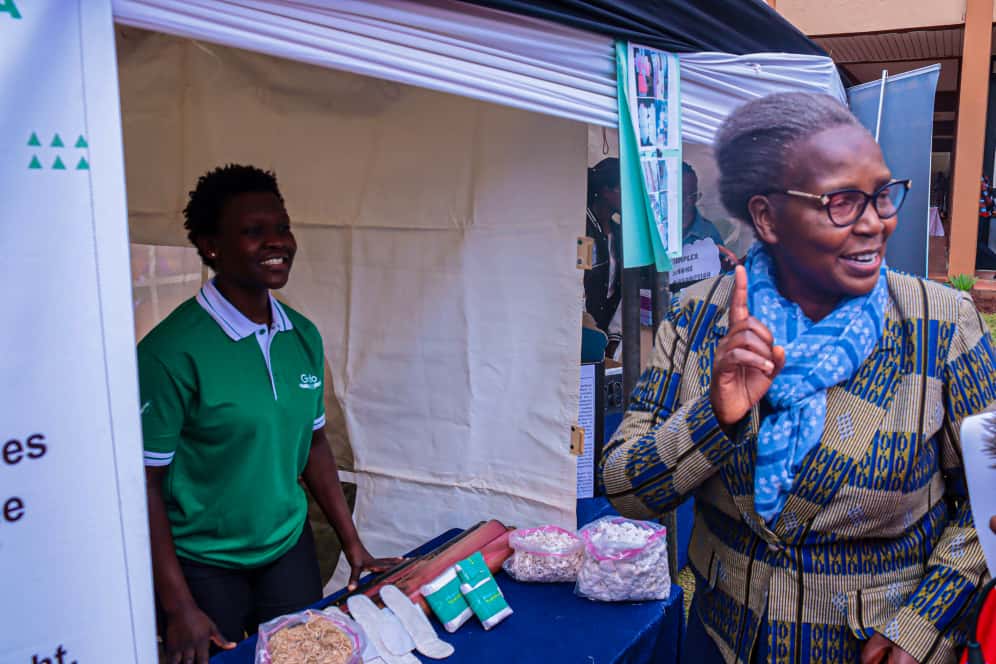
They envision a climate movement where young people are not just present at global forums but driving change from the grassroots, shaping strategies, and scaling innovations that work for their communities.
“With the climate, there are always a lot of talks. People are always going to conferences for talks. But there’s not enough community work, youth led climate action must move from the margins to the center of Africa’s development agenda.”
For a youthful nation where over 75% of the population is under 35, climate change is not just an environmental issue, it is an existential threat.
Achieng and Brendah’s insistence on meaningful youth inclusion is therefore not just a moral demand but a practical necessity. Young people bring energy, innovation, and urgency that could accelerate Kenya’s response to climate change. Excluding them is a missed opportunity the country cannot afford.
As Brendah puts it, the path forward requires three essentials, resources to scale youth innovations, protection of civic space to hold power accountable, and intergenerational partnerships grounded in respect rather than hierarchy.
“The climate crisis is not a distant threat; it is our lived reality. Youth are already paying the price, but we are also leading the solutions. What we ask is not charity or tokenistic recognition. What we demand is genuine partnership, so that together, Kenya and Africa can build a climate-resilient, just, and sustainable future.”