|
Getting your Trinity Audio player ready...
|
By Gabs Mia
North Kivu, DRC: Just after midnight, the General Hospital in Walikale faced a tragic reality. A young mother, hemorrhaging for hours after childbirth, was beyond their help.
Her life ebbed away with each passing moment, a victim of the critical blood shortage plaguing the region.
“She could have lived,” one nurse whispered, her voice heavy with exhaustion. “If only we had blood.”
Walikale, a remote mining town nestled in the dense forests of North Kivu province, about 230 kilometres west of Goma, is a place where life and death often depend on access to the most basic medical supplies.
The woman’s death on the night of 12 October is not an isolated tragedy, it is a painful symbol of a worsening health crisis in Eastern Democratic Republic of Congo (DRC), where hospitals like Walikale’s are running dangerously low on blood.
Despite a campaign launched more than three months ago by local health authorities to encourage voluntary blood donation, the situation has become desperate.
“We are facing a real emergency,” said a member of Walikale’s health management team. “Children and pregnant women are the first victims.”
Every day, the hospital needs around 15 units of blood. On most days, it manages to collect fewer than five. The small association of volunteer blood donors, once able to meet local needs, can no longer keep up with demand.
In the maternity ward, the walls are painted pale blue, but the air feels heavy. “We lose babies to anaemia and mothers to haemorrhage,” said another nurse. “We have learned to hope less and pray more.”
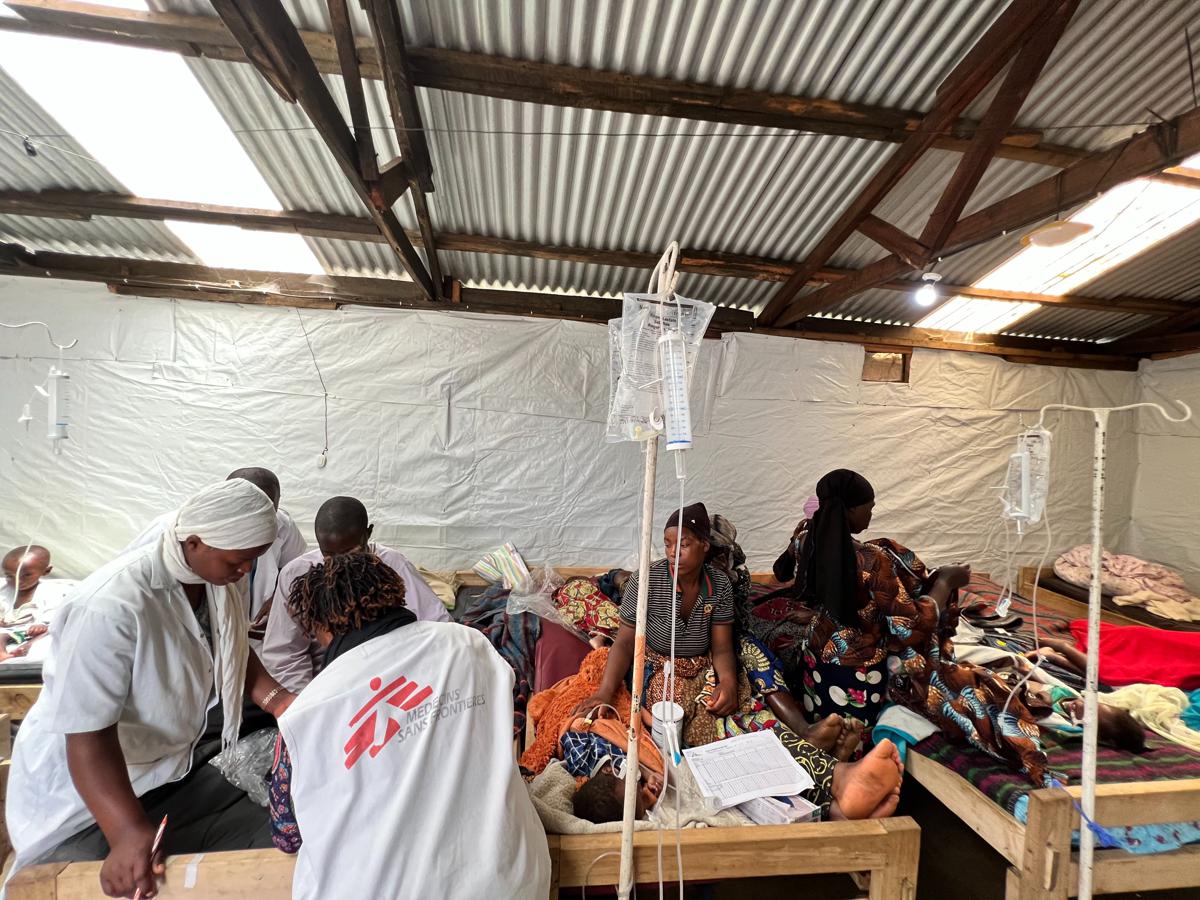
The shortage has been made worse by conflict and isolation. Walikale’s main hospital was previously supplied by the Provincial Blood Transfusion Centre of Goma, through support from Médecins Sans Frontières (MSF). But since parts of Goma fell under the control of M23 rebels, that supply line has been severed.
Now, the hospital stands almost cut off, surrounded by insecurity, with roads too dangerous to travel and health workers stretched beyond capacity. Violence in the region continues to displace thousands, compounding an already dire humanitarian crisis.
Drained of resources but not of courage, health workers continue to plead for help. “Every pint of blood can save a life,” said a local doctor. “But here, every day, we watch people die because there’s simply none.”
Insecurity in the region has already displaced thousands, straining an already fragile health system.