|
Getting your Trinity Audio player ready...
|
By Henry Owino
Addis Ababa, Ethiopia: The stakes could not be higher as global leaders gather in Addis Ababa for the 2nd United Nations Food Systems Summit+4 (UNFSS+4) Stocktaking Moment. It was officially opened with a powerful High-level Inaugural: “Harnessing a Changing World for the Future of Sustainable Food Systems.”
The event built on the momentum of the 201 UN Food Systems Summit and the first Stocktake in 2023 (UNFSS+2), focusing on accelerating sustainable, inclusive, and resilient food systems transformation.
Ethiopia, following its strong leadership at UNFSS+2, co-hosted the UNFSS+4 Stocktake with Italy, a consistent advocate for food systems transformation.
Leaders at the conference assessed national progress and identified requirements for developing more resilient, inclusive, and sustainable food systems. A prominent message from the event was the appeal for increased private sector involvement.
The UN Secretary-General António Guterres stated: “The private sector must play a vital role—from innovation and logistics to finance and investment. We need responsible business practices aligned with the public good and enforceable guidelines for corporate accountability.”
As the world faces growing geopolitical tensions, rapid technological change, and deepening divisions, the private sector is reaffirming its commitment to an inclusive, effective, and trusted multilateral system.
The UN Global Compact signed a joint statement backing the reform and modernization of multilateralism as the United Nations approaches its 80th anniversary. Global Businesses backed inclusive multilateralism as the UN turns 80.

This comes as the world is grappling with unprecedented levels of hunger as increasing conflicts, climate shocks, and shrinking humanitarian funding are pushing millions deeper into food insecurity.
However, the gathering also presented an opportunity for Africa and the world to chart a new course from crisis to resilience. The High-Level meeting came amid growing concern over nutrition gaps especially in low and middle-income countries.
The UNFSS+4 was more than a global meeting; it was a call to rethink how nations grow, distribute, and consume food. In 2021, countries made bold commitments to transform their food systems to make them more sustainable, inclusive, and resilient. Now, in 2025, leaders gathered to take stock of their progress and ensure that food systems transformation remains a top global priority.
The 2025 State of Food Security and Nutrition in the World (SOFI) report that was officially launched in late July in Addis Ababa, Ethiopia spotlighted worsening global hunger trends and the growing unaffordability of healthy diets, particularly in low-income countries.
The annual report by several UN agencies published in July 2025, provided an update on global efforts to end hunger and malnutrition and meet the Sustainable Development Goal (SDG) 2 targets by 2030.
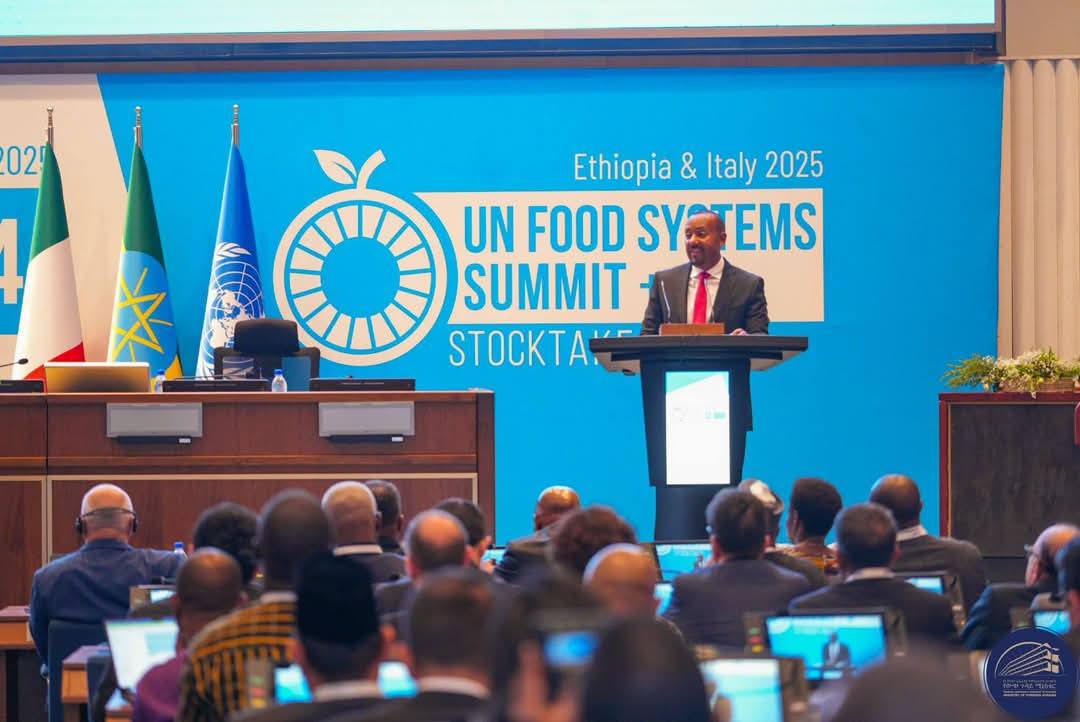
The 2025 report’s central focus was on the impact of high food price inflation on global food security. The report was co-authored by the Food and Agriculture Organization (FAO), the International Fund for Agricultural Development (IFAD), the United Nations Children’s Fund (UNICEF), the World Food Programme (WFP), and the World Health Organization (WHO)
Key findings from the SOFI 2025 report include:
- Global hunger: While the report showed a slight global decline in hunger for the second consecutive year, progress was described as “modest and uneven”.
- Regional disparities: Hunger continues to rise in Africa and Western Asia, contrasting with modest improvements in some other regions.
- Food affordability: As of 2024, an estimated 2.6 billion people could not afford a healthy diet, though this number has decreased slightly since 2019.
- Child nutrition: The report highlighted both progress, such as a decline in child stunting, and persistent issues, like largely unchanged rates of child wasting and overweight.
- Drivers of inflation: The report linked the ongoing food inflation to factors like the COVID-19 pandemic, the war in Ukraine, and extreme weather events.
The high-level meeting launch took place on the sidelines of the Second UNFSS+4 Stocktaking Moment at the UN Economic Commission for Africa headquarters, in the presence of global leaders, UN officials, and policymakers.
President of Ethiopia, Taye Atske Selassie, who addressed the event, described the report as a critical policy tool for confronting the global food crisis and mobilizing long-term solutions.
“The data provided are a sobering call to all of us, and clearly show the gravity of this food security crisis and the immense challenge that lies before us,” President Taye said.
President Taye emphasized the need for collective, coordinated action across national, regional, and global levels, and called attention to the report’s findings on food price inflation and its impact on vulnerable populations.
The report, jointly produced by FAO, IFAD, UNICEF, WFP, and WHO, presents the latest estimates on hunger and food insecurity worldwide, while assessing progress toward Sustainable Development Goals 2.1 and 2.2: ending hunger and all forms of malnutrition by 2030.
“This year’s edition places particular focus on the global rise in food prices and its erosion of purchasing power, especially in developing countries. It also analyzes underlying inflationary drivers and outlines key policy responses,” President Taye reiterated.
UN Deputy Secretary-General Amina J. Mohammed, who also addressed the launch, warned that millions of families are being forced to make difficult decisions due to the cost of food.

“Since 2020, food price inflation has consistently outpaced general inflation in low-income countries,” she said. “This means skipping meals, selling assets, or taking children out of school just to afford to eat.”
This year’s edition highlights are on how elevated inflation in many countries has undermined purchasing power and, especially among low-income populations, access to healthy diets.
Ms. Mohammed underscored that overlapping crises ranging from conflict and climate shocks to displacements are exposing the fragility of current food systems.
“Cooperation must replace conflict,” Mohammed stressed. “We must transform how we feed the world urgently, inclusively, and systemically.”
Ms. Mohammed emphasized the central feature of the UNFSS+4 Summit, aimed to provide a global platform to assess progress since the 2021 Food Systems Summit and to renew commitments toward achieving food security and nutrition for all by 2030 which is just 5 years away.
Countries with Transformative Food Systems
A few countries in Africa have embraced the challenge of food systems transformation with ambition and clarity. For instance, by 2030, many African countries are developing food systems that are climate-smart, nutrition-sensitive, and rooted in local contexts, driven by continent-wide strategies from the African Union and specific national initiatives.
This reflects a shift toward more holistic and sustainable approaches, rather than focusing solely on increasing production. For example, Ethiopia envisions a food system that is climate-smart, nutrition-sensitive, and rooted in both innovation and indigenous knowledge.
Kenya has a clear action plan on Food Systems and Land Use for 2024–2030 which provides a detailed roadmap for a more sustainable, inclusive, and resilient food system.
For instance, Kenya has established a two-tiered governance structure, including a National Food System Steering Committee and a multi-stakeholder Technical Working Group. This ensures multi-sectoral coordination on agriculture, health, education, and finance.
The country is a hub for agricultural technical innovation, with digital platforms that provide farmers with training, market access, and services, driving productivity and sustainability
Zambia which has policy focus actively promoting climate-smart agriculture and has adopted a National Climate Change Policy. Initiatives include conservation agriculture, low-tillage farming, mulching, composting, and the promotion of drought-resistant crops.
Its food and nutrition support multi-sectoral platforms for nutrition and has a National Food and Nutrition Council (NFNC) to operationalize its food systems pathway.
Tanzania has created a national food systems pathway to ensure access to healthy diets and resilient food systems by 2030. Its National Nutrition Strategy has established cross-sectoral coordination committees to improve nutrition outcomes. The country is also implementing climate-smart initiatives, including irrigation projects and multi-storeyed agroforestry systems.
Senegal has prioritized climate adaptation actions and mainstreamed them into development planning. This includes promoting climate-smart agricultural practices to build resilience. Its local focus incorporates agricultural innovations, tools, and policies rooted in indigenous practices that have helped farmers adapt to changing conditions.
Nigeria has reviewed its National Policy on Climate Change to promote climate-resilient and low-carbon development. Digital tools are also being used to help farmers with tasks like renting tractors. For research purposes, climate-smart agriculture is also being implemented in specific regions, such as Yobe and Adamawa states.
Togo- working with international partners like the FAO, she has developed an ambitious roadmap for food systems transformation by 2030. This plan has led to significant results, including a record cereal harvest and increased poultry and fish farming production. The strategy focuses on sustainable farming, agro-processing, nutrition, gender equality, and stronger governance.
Cameroon is driving the convergence of food systems, climate action, and biodiversity through ministerial collaboration. It has a Climate-Smart Agriculture Investment Plan (CSAIP) to mainstream CSA into national agricultural policies.
Rwanda takes on a holistic “agri-food systems” approach which looks beyond farms to consider the entire value chain, putting nutrition at the heart of the strategy. The country seeks to transform into a knowledge-based, high-income economy by 2050; hence agriculture must evolve from subsistence and low production and productivity to a modern, climate-smart, and market-driven sector.
Generally, countries across Africa have embraced food systems transformation with ambition, guided by national strategies and broader continental initiatives. While progress and implementation are varied, many nations have developed clear pathways and governance structures to address hunger, improve nutrition, and build resilience.