|
Getting your Trinity Audio player ready...
|
By Lenah Bosibori
Nairobi, Kenya: Poor diets remain one of Kenya’s greatest yet most preventable public health threats. From undernourished toddlers in rural villages and informal settlements to rising obesity in urban areas, the nation faces a “triple burden” of malnutrition that continues to undermine lives and livelihoods.
When a child in Kenya sits down for a meal, what’s on the plate may shape not only their health but also the country’s future. Yet for millions, those meals fall short.
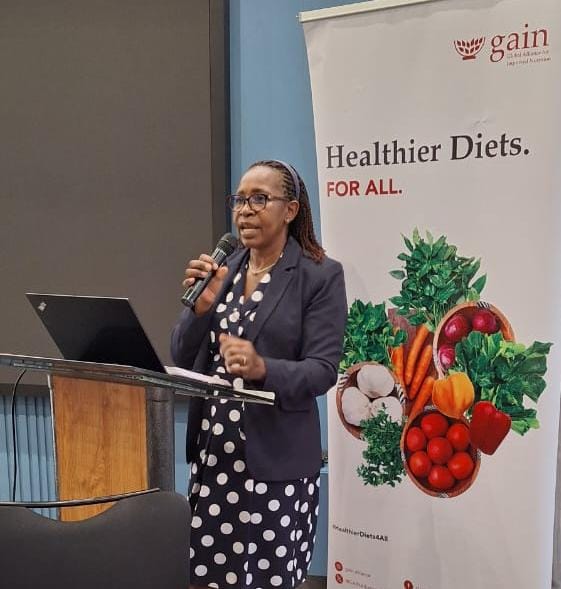
At a recent media roundtable in Nairobi organized by the Global Alliance for Improved Nutrition (GAIN) and the Ministry of Health (MOH), Veronica Kirogo, Head of the Division of Nutrition and Dietetics at MOH, warned that poor nutrition is driving many of the health problems seen in hospitals visits that are largely preventable.
“If we address malnutrition, we will see fewer cases of disease. And when illness occurs, integrating nutrition into treatment improves recovery outcomes and shortens hospital stays,” Kirogo said. “This allows health workers to focus more on critical cases while boosting overall productivity, because a healthier population can learn, work, and contribute more effectively.”
Despite some gains in reducing stunting and expanding access to balanced diets, Kenya still struggles with undernutrition, hidden hunger from micronutrient deficiencies, and a surge in diet-related illnesses.
The Heavy Cost of Malnutrition
The human toll is staggering, but the economic burden is just as heavy. A joint study led by the National Treasury and international partners estimated that Kenya loses about Ksh 374 billion annually – roughly 7% of GDP – due to child undernutrition. Although the study dates back to 2019, experts believe the losses are just as severe today, if not worse, given rising healthcare costs and reduced productivity.
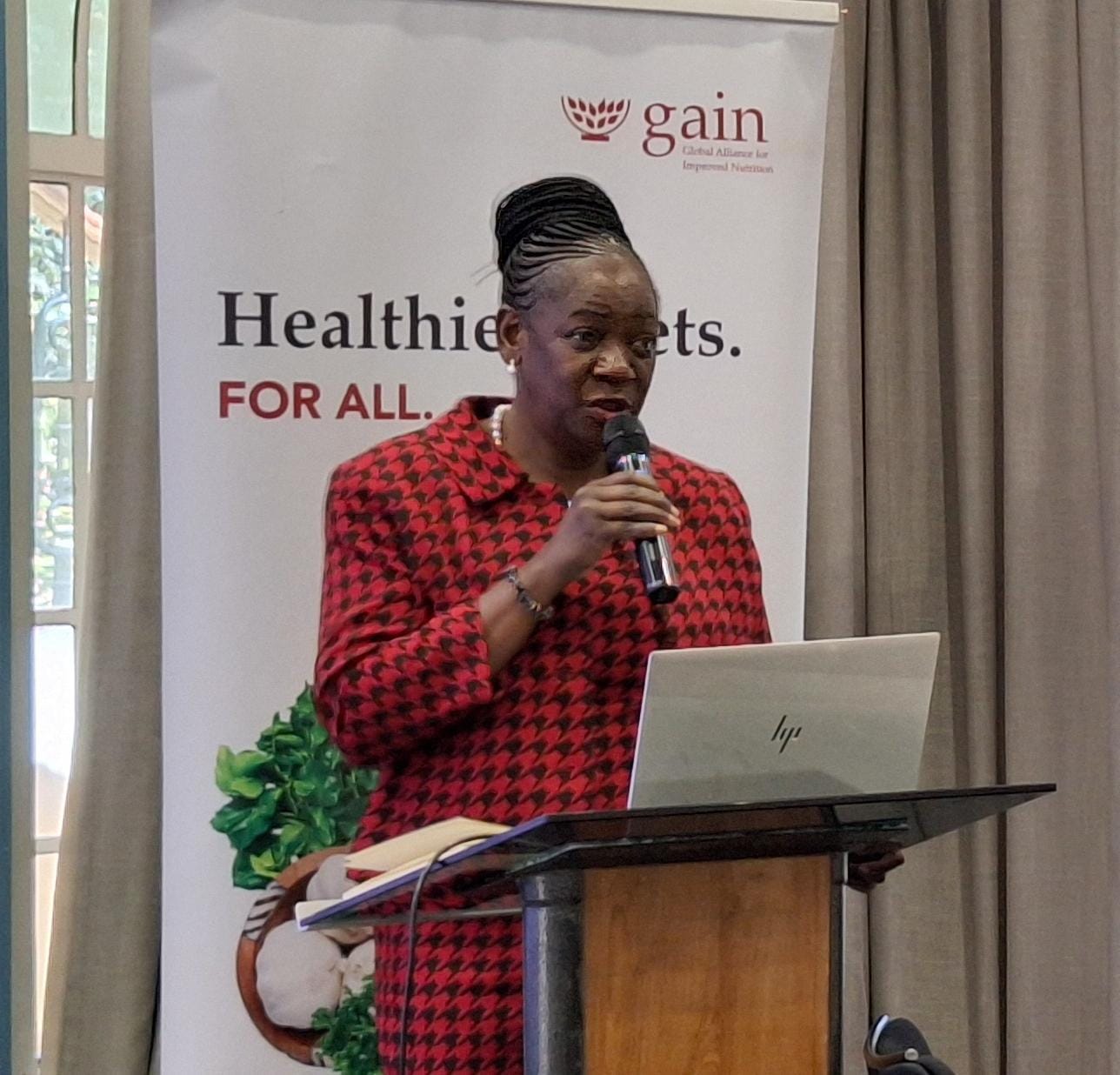
Ruth Okowa, GAIN Kenya Country Director, emphasized the urgency: “Every shilling lost to malnutrition is a shilling taken away from education, innovation, and development. We cannot afford to treat nutrition as an afterthought; it must be at the center of policies and programs.”
Okowa stressed that nutrition is not just about food but about systems that span agriculture, health services, social protection, and education. Kenya has strong policies on paper, she said, but implementation remains uneven, especially at the county level.
Kenya’s nutrition crisis wears three faces—stunting, hidden hunger, and obesity. According to the Kenya Demographic and Health Survey (KDHS), stunting among children under five has fallen from 35% in 2008 to 18% in 2022, but counties like Kitui and West Pokot still record high rates. Meanwhile, urban centers such as Nairobi and Mombasa face rising obesity, fueled by processed foods and sedentary lifestyles.
Hidden hunger, and deficiencies in iron, vitamin A, zinc, and other nutrients, cuts across both poor and middle-income households. “A child may eat every day but still be malnourished if their diet lacks essential nutrients,” Kirogo explained. “That’s the silent crisis we must urgently address.”
Both experts further warned of the rapid rise in diet-related non-communicable diseases (NCDs) such as cancer, diabetes, hypertension, and cardiovascular disease. “These conditions not only strain our health system but also erode family incomes and threaten the wellbeing of future generations,” Kirogo noted.
Linking Nutrition to Social Protection
One promising response is linking nutrition to social protection. Kirogo highlighted a little-known initiative under the government’s Inua Jamii cash transfer program.
“We are implementing a program called Nutrition Improvement through Cash Transfer,” she explained. “For households benefiting from Inua Jamii, we identify those with children under two and pregnant or lactating women. In addition to the standard KSh 2,000, they receive a top-up of KSh 500 per child, up to KSh 1,000. This money is paired with nutrition education so families spend it on better diets.”
The program also integrates the Baby-Friendly Community Initiative, which trains caregivers on breastfeeding, complementary feeding, and hygiene. “Cash alone doesn’t solve nutrition challenges. Families must know how to use it in ways that improve children’s health,” Kirogo said.
Early results are encouraging, but expansion is limited by resources, and only a fraction of households benefit.
Experts agree that Kenya cannot defeat malnutrition without tackling diet diversity. Many households still rely heavily on maize, ugali, and tea, with limited fruits, vegetables, and protein sources.
“Diets in Kenya are monotonous and starch-heavy,” Okowa observed. “We must make fresh produce, pulses, and fortified foods affordable and accessible. That means supporting smallholder farmers, fixing food supply chains, and regulating markets so healthy food is cheaper than junk food.”
Nutrition International and partners are working with counties to strengthen food fortification, that is simply when extra vitamins and minerals are added to everyday foods like flour, sugar, or salt to make them healthier and protect people from diseases caused by poor nutrition. But weak enforcement means many products on shelves remain unfortified.
With devolution, the transfer of power and resources from the national government to the 47 counties, bringing services closer to the people, counties are now responsible for nutrition programs. While places like Makueni and Kakamega are leading with integrated approaches, many lag behind due to tight budgets and weak political prioritization.
“Counties must see nutrition as a development investment, not just a health issue,” Okowa urged. “A nourished population means better education outcomes, higher productivity, and stronger local economies.”
Kirogo added that social protection systems only work if counties allocate their own resources: “If nutrition-sensitive cash transfers are left to donors alone, they won’t last.”
Kenya has the tools to turn the tide from the National Nutrition Action Plan and universal health coverage agenda to school feeding and fortified food programs. But progress will remain slow without stronger investment, better coordination, and consistent accountability.
“Nutrition is not a privilege; it is a right,” Okowa said. “Every Kenyan child deserves a fair start in life, and that begins with a nutritious meal.”