|
Getting your Trinity Audio player ready...
|
By Juliet Akoth
Nairobi, Kenya: It’s a little after 10 a.m. on a sunny Saturday morning in Korogocho, one of Nairobi’s most densely populated informal settlements. The streets are already alive with vendors hawking their goods, the sound of matatus blaring, and children playing in narrow alleys. But beyond this daily chaos, something quieter and perhaps more powerful is unfolding in the compound of Daniel Comboni Primary School.
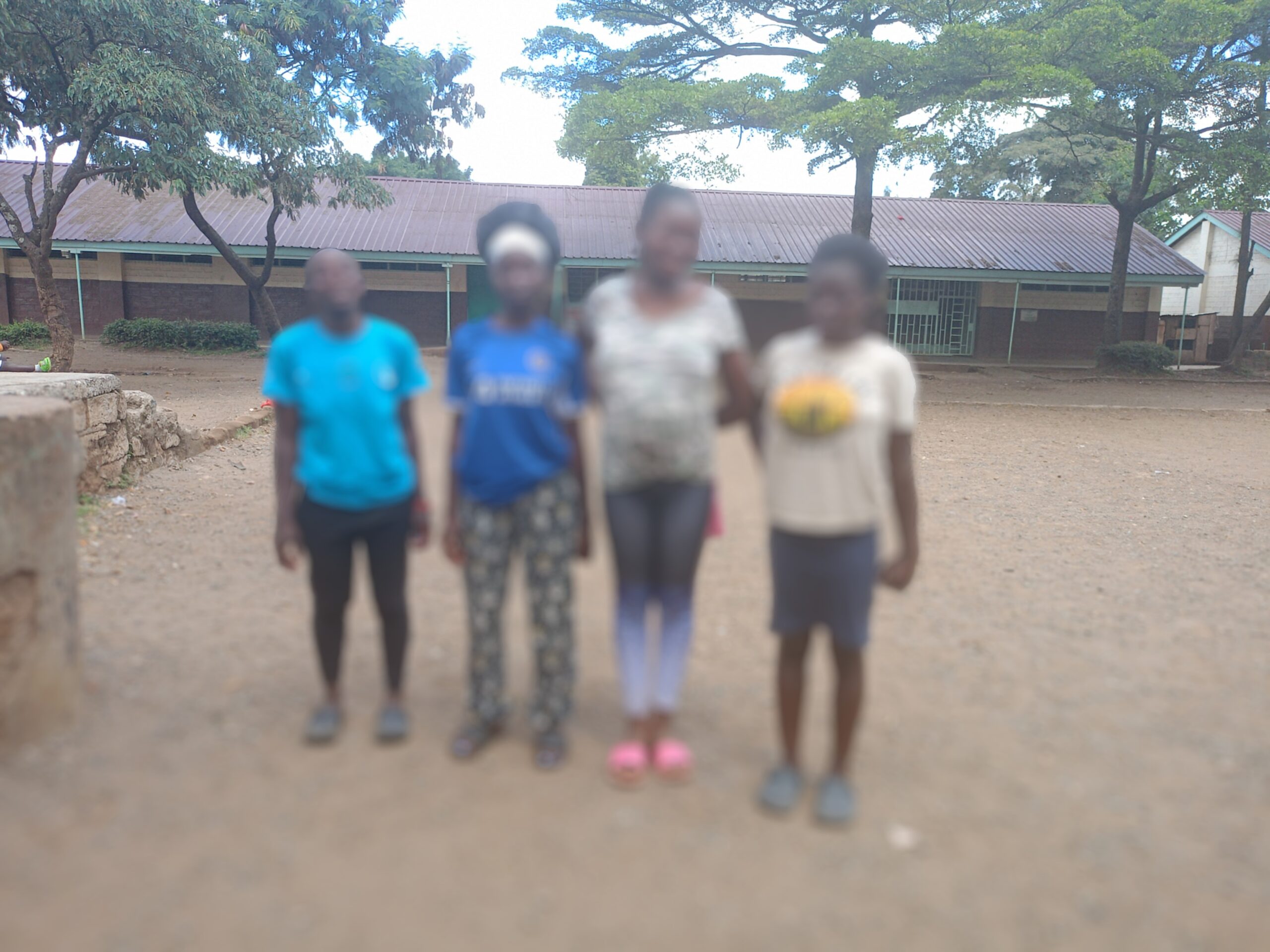
Here, adolescent mothers gather, not for lessons in mathematics or science, but for solace. They come seeking something their harsh world rarely offers them: support, empathy, and healing. Laughter fills the air as teenage girls, some with swollen bellies, others balancing toddlers on their hips, sit in a circle talking, sharing, and learning. For a few hours, they are not just mothers or statistics in a rising tide of teenage pregnancies. They are young women reclaiming their voices, futures, and dignity.
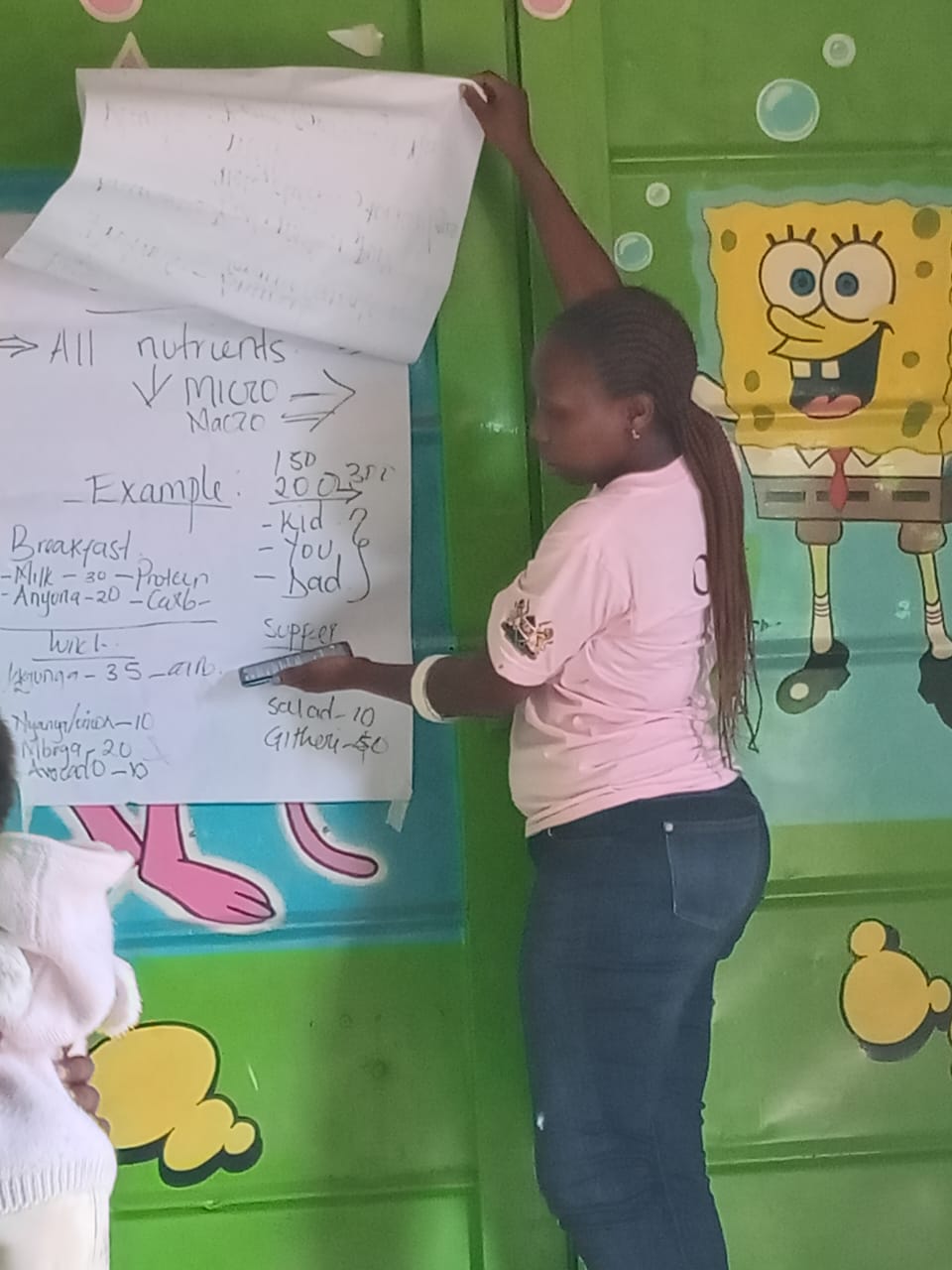
This is the heartbeat of Empower Her- Korogocho Young Mothers Initiative. It is a community-based program designed to support adolescent mothers through a blend of vocational training, mental health services, nutrition guidance, and early childhood development. Funded by the Children’s Rights and Violence Prevention Fund (CRVPF), the program is managed by a consortium of three grassroots organizations: Miss Koch Kenya, Footprints for Change, and Women United for Social Transformation.
Creating Spaces of Hope
Empower Her organizes adolescent mothers into four clusters spread across Korogocho. Two groups meet every Saturday at Daniel Comboni Primary School, one in the morning and one in the afternoon. A third meets at the Chief’s office in the area, while the other gathers in Ngomongo, one of the nine villages that make up Korogocho. More than 100 girls are enrolled across these clusters, which function as safe spaces for mentorship, training, and support.
Mary Oliech, a programs officer at Miss Koch Kenya, has spent the past two years working closely with girls under this initiative. The notes that the three-year program supports pregnant teens and young mothers with children aged 0-3 years, providing them with essential services and emotional support.
One of the standout features of the initiative is a daycare facility established within Daniel Comboni Primary School, created with the school administration’s approval. Here, the mothers can leave their children in safe hands for just five shillings a day, allowing them to pursue income-generating activities or attend vocational training. The daycare operates from morning until 4 p.m., with flexibility to accommodate those who may need extra time.
“We provide a safe space for them to just be young again. To dance, talk, even laugh,” Oliech says. “At home, they’re mothers. Here, they’re girls. But we also mentor them and support them in enrolling in courses such as tailoring and hairdressing.” Miss Koch Kenya, in collaboration with its partners, covers the full cost of vocational training for the girls. For instance, a hairdressing course that runs for three months costs a minimum of 7,000 Kenyan shillings per student.
Stories of Struggle and Resilience
Scholastica is 19 and seven months pregnant. Until last year, she was in Form Two, but her father’s death left her mother struggling to raise four children alone. Although Scholastica has two older siblings, both have already married and moved out, leaving the weight of the household on her mother’s shoulders. To help keep the family afloat, Scholastica dropped out of school. It was a painful sacrifice, one that soon left her vulnerable and eventually led to an unplanned pregnancy.
“The man was a boda boda rider. When I told him, he denied everything and walked away,” she says quietly. “I did not know how to face my mother. I was ashamed and afraid.”
Her mother’s anger was fierce, and she even demanded that Scholastica end the pregnancy, insisting she was too young to carry such a burden. Yet Scholastica held her ground, and over time her mother softened and began to support her. But within her wider family the stigma was heavier. Her older brother erupted in rage, going so far as to threaten her with violence if she continued to carry the pregnancy to term. “He still cannot look me in the eye,” she says. “Whenever he visits home, I have to leave.”
A friend introduced her to Empower Her, and it has since become her anchor. She now receives counseling, mentorship and most importantly, encouragement. “When people insult me now, I brush it off,” she says. “I have gained confidence. This group has changed how I see myself.”
Her experience mirrors a broader mental health crisis unfolding across Nairobi’s informal settlements. A 2025 study by the African Population and Health Research Center (APHRC) reported that nearly one in four adolescent mothers in Nairobi’s informal settlements showed symptoms of postpartum depression. The study highlighted social support as one of the strongest protective factors against this mental health crisis.
Auma, 19, knows this reality well. Orphaned as a baby, she was raised by her grandmother but had to leave school in Form One when fees became unaffordable. She found work as a house help in Eastleigh, where at 14 she became pregnant.
“I did not even know I was pregnant until I was four months along,” she says. “When I went to the clinic, they told me I was not only expecting but also HIV positive. It was too much; I couldn’t believe it.”
The child’s father, a man nearly twice her age who survived on casual work in the neighborhood, disappeared as soon as he learned about the pregnancy. Auma recalls meeting him at 14, describing how he would occasionally buy her lunch or give her small amounts of money. At the time, she never imagined he had other motives. “He used to treat me well as he would sometimes buy me lunch and give me small amounts of money. I didn’t think he had other intentions since he was my friend,” she said.
Later, another relationship turned abusive, leaving her with a second pregnancy. Today she lives in a rented single room with her two children. On the hardest days, she leans on other young mothers in the group who share food when she has none. Through training sessions, she has learned about nutrition, hygiene, and child care. The girls also occasionally receive diapers and sanitary towels from the organizers.
For Anyango, now 16 years old and a mother of one, her struggle began while she was still in primary school. Pregnant while in grade seven, she tried to stay in school, but the ridicule from classmates and her own despair drove her to drop out. “I felt like ending my life when I realized I was pregnant,” she admits. “I thought I had disappointed my grandmother, who raised me alone.” Now raising a nine-month-old baby, she says the program’s safe space has been a lifeline. “When I am feeling down, I know I can talk to someone who understands.”
Nafula, 18, carries a similar determination. After her mother’s death and abandonment by her partner, she moved into a single room she rents for 2,000 shillings a month. She leaves her child at the daycare each day while she attends training. She is currently preparing to begin a hairdressing course. “My dream is to open a boutique and stand on my own,” she says.
The Challenges Ahead
While the Empower Her – Korogocho Young Mothers Initiative has made notable strides in supporting pregnant teens and adolescent mothers, it continues to face significant challenges that affect the consistency and impact of its programming.
According to Oliech, the program officer at Miss Koch Kenya, one of the main challenges is sustaining consistent participation among the girls. “Some of them drop out or disengage because they don’t see immediate financial benefits from being part of the group. To them, attending Saturday sessions feels like a waste of time,” she explained.
Another concern is the girls’ limited interest in returning to formal education. While donors have offered to cover school fees, most mothers prefer vocational courses or small business ventures. “One of our partners hoped to sponsor school fees, but the girls declined. Instead, they expressed interest in starting small businesses, and we encouraged them to submit business proposals,” Oliech says.
Substance abuse also presents a tough barrier. A few adolescent mothers struggle with drug and alcohol use, affecting both their behavior and ability to participate in the program. “We have some girls who attend meetings intoxicated, using substances including miraa and alcohol. On such days, it’s nearly impossible to engage them productively. We’ve tried involving counselors, but so far, there’s been little progress,” she shared.
A Call for Action
According to counselling psychologist Lilian Amusolo, teenage pregnancy, particularly in low-income, high-stigma environments such as Korogocho, takes a profound toll on girls’ mental health. “Many of these girls struggle with low self-esteem, a diminished sense of self-worth, and an overwhelming lack of trust in themselves and others,” she explains. The situation is often worsened by verbal abuse, rejection from partners and families, and public shaming, which can trigger serious psychological conditions such as depression, anxiety, and even suicidal ideation.
“Without emotional support from their partners, families, or communities, these young mothers internalize blame and shame. They begin to feel unwanted, unloved, and angry at themselves. This emotional burden frequently manifests as depression and, in more severe cases, suicidal thoughts,” Amusolo says.
She sees safe spaces provided by initiatives like the Empower Her as a lifeline. “These programs are not just places to gather. They are sanctuaries where adolescent mothers can feel seen and heard. Through mentorship and mental health sessions, they begin to rebuild trust, confidence, and a sense of belonging,” she noted.
Moreover, she underscores the importance of encouraging adolescent mothers to resume education where possible, as it restores a sense of purpose and self-belief. She also advocates for individualized therapy, anger management programs, and self-love initiatives tailored to address deep emotional wounds.
Beyond community efforts, she calls on the government to establish structured support centers dedicated to teenage mothers. “These centers should offer not only a safe space for them to speak freely about their experiences but also access to vocational training. With the right skills and emotional support, these young women can begin to rebuild their lives and reclaim their futures.”
Programs like Empower Her show what is possible when girls are given a chance to breathe, to belong, and to dream again. As the laughter fades and the girls begin packing up for the day, one thing is clear: Support isn’t just a program, but it’s a lifeline. And in Korogocho, it’s changing lives, one mother at a time.
Names of adolescent mothers have been changed to protect their identities.