|
Getting your Trinity Audio player ready...
|
By William Abala
Nairobi County, Kenya: Nairobi residents are being urged to lace up their running shoes this weekend for a cause that could shape the city’s environmental and public health future.
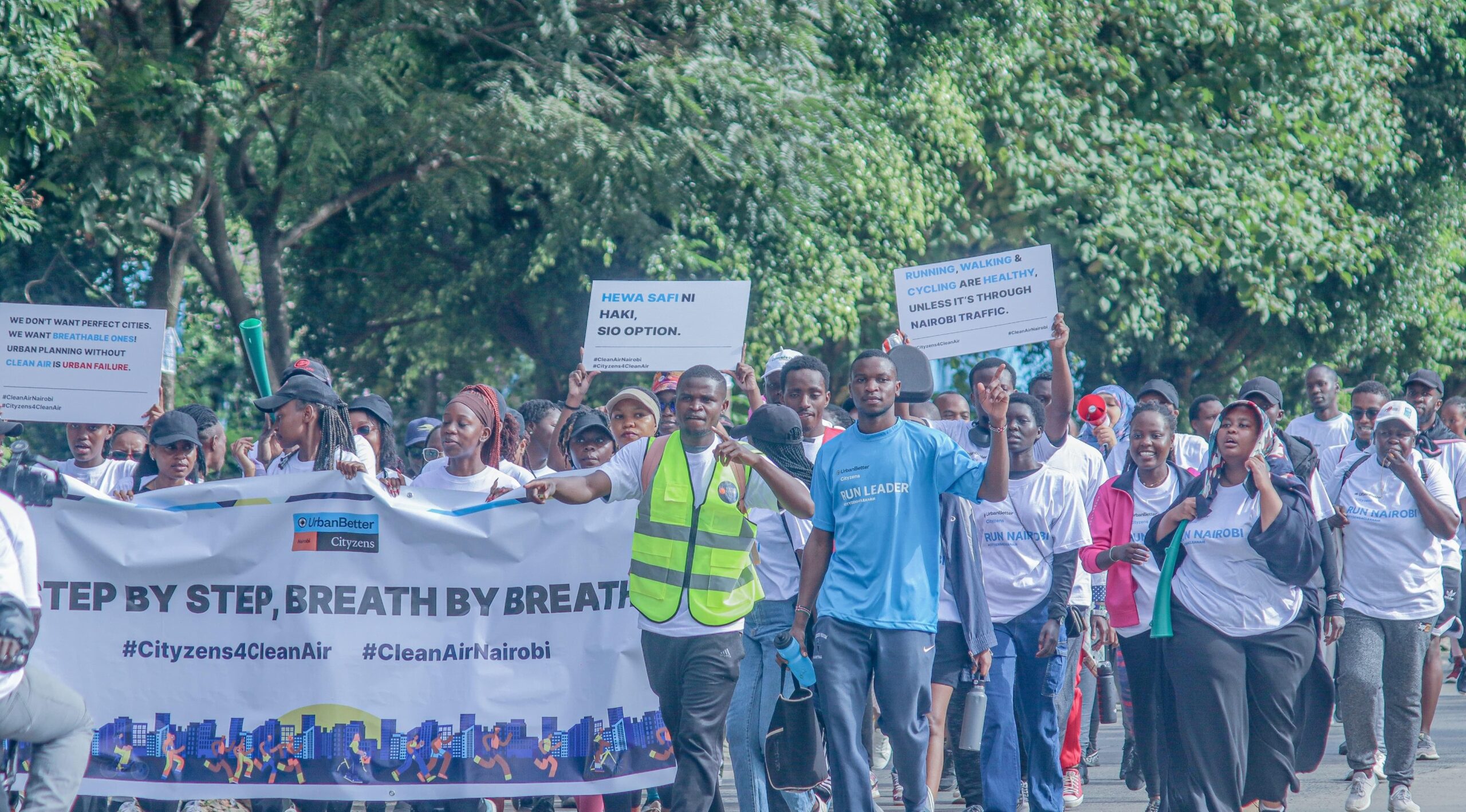
The UrbanBetter Nairobi Cityzens Hub has announced the Pumzi ya Nairobi: Misitu Yetu Wajibu Wetu Run/Walk, an interactive environmental health activation set for Saturday, August 16, 2025, starting and ending at John Michuki Memorial Park.
The hybrid event, which features a 10.1km running route and a 6.3km walking route, will take participants through some of Nairobi’s most important green spaces, including City Park, while blending movement, citizen science, and storytelling. Organisers say the aim is to rally public support for the preservation of urban forests and to shine a spotlight on their crucial role in improving the city’s air quality.
Live data on the move
What makes the event unique, participants will use portable AirBeam3 sensors to collect real-time PM2.5 air quality data as they run or walk. This will allow them — and later the public — to see first-hand how tree cover affects the air they breathe. The data will be mapped along the route, creating a visual demonstration of how urban forests act as natural air filters.
The event comes at a time when Nairobi’s urban green spaces are facing mounting threats from encroachment, neglect, and competing land-use pressures.
Forests such as Karura (1,041 hectares) and Oloolua (618 hectares), and parks like City Park and John Michuki Memorial Park, are vital to the city’s ecological health. They trap particulate matter on their leaves and bark, absorb harmful gases through their stomata, and help reduce ground-level ozone by regulating temperatures. Yet, activists warn that the slow erosion of these spaces could have serious consequences for both environmental and public health.
The cost of dirty air
Air pollution is already a pressing crisis in Kenya’s capital. According to WHO (2021) and IQAir (2023) data, outdoor air pollution is linked to nearly 18,700 premature deaths annually in Kenya, with 8,000 in Nairobi alone. Around 30% of hospital visits in the city are linked to respiratory illnesses caused or worsened by poor air quality.
These statistics, say organisers, underscore the urgent need to integrate robust urban forestry strategies into Nairobi’s climate action plans.
“Urban forests are Nairobi’s green lungs,” said Maryam Wangeshi, Hub Coordinator at UrbanBetter Nairobi Cityzens Hub. “They protect our health by cleaning the air we breathe, cooling our city, and reducing the risks from climate change. When we lose them, we lose an essential line of defence.”
She added that Pumzi ya Nairobi is about moving beyond talk to tangible action. “Through this run and walk, we are not only exercising, we are collecting data in real time, telling stories about our green spaces, and inspiring communities to defend and expand them. It’s a living example of what citizen-led environmental stewardship looks like.”

Building on recent gains
The activation builds on the momentum of the Breathe Cities Initiative, a collaboration between UrbanBetter, the Nairobi City County Government, and other partners. Earlier this year, the initiative deployed 50 new air quality sensors across Nairobi and established two advanced air quality monitoring stations — one at Mama Lucy Kibaki Hospital and another at Koja Fire Station.
These investments have expanded Nairobi’s capacity to gather hyperlocal, open-access air quality data. The Cityzens programme, run by UrbanBetter Nairobi Cityzens Hub, has already trained over 50 young leaders in Nairobi to monitor air quality using devices such as the AirBeam3.
“Access to accurate, localised air quality data empowers communities to hold decision-makers accountable and push for better environmental policies,” said Wangeshi. “It turns advocacy into something measurable and evidence-based.”
The routes: from green cover to grey zones
The running path will start at John Michuki Memorial Park, proceed along Kijabe Street and Harry Thuku Road, join Uhuru Highway, branch off at Taarifa Road, pass through Parklands Road, and then follow Limuru Road up to the Karura Avenue Roundabout before looping back. Along the way, runners will pass by City Park and traverse sections with varying tree cover — ideal for contrasting air quality readings.
The walking path will follow a similar but shorter loop, turning back at City Park instead of continuing to Karura Avenue.
Organisers say the combination of tree-covered and less vegetated stretches is deliberate, offering participants a visible and measurable lesson in how green spaces affect air pollution levels.
Beyond the physical activity and data collection, the event will feature pop-up storytelling and reflection stations along the route, where participants can learn about Nairobi’s forests, their history, and current threats. At the finish line, an interactive community vision board will invite residents to share their hopes for Nairobi’s green future.
A closing circle and dialogue session at John Michuki Memorial Park will bring together community members, environmental advocates, public health experts, and policymakers to discuss concrete actions for protecting and expanding urban forests.
“The run/walk is not just an event, it’s part of a larger movement,” said Wangeshi. “We are building a constituency for cleaner air and greener cities, and we are doing it in a way that is participatory, evidence-based, and rooted in local stories.”
A message for the city
Organisers also want to send a signal to policymakers: that urban forests are not optional beautification projects, but critical infrastructure for public health and climate resilience.
“When you look at the numbers, from the lives lost to air pollution, to the heat island effect in areas without trees, it’s clear that preserving and expanding our green spaces is a public health intervention,” Wangeshi stressed.
“We want people to see forests not just as places to visit on weekends, but as vital parts of their daily lives, as shields that protect their families from pollution and heat,” Wangeshi said.