|
Getting your Trinity Audio player ready...
|
By Omboki Monayo
Nairobi, Kenya: Mary Muroki’s pursuit of a better life abroad began with hope—and ended in captivity. Like many Kenyans, she chased elusive job offers until a friend mentioned housekeeping work in Johannesburg. “I thought my struggles were finally over,” she says. But her journey in 2000—via Tanzania, Zambia, Zimbabwe, and Botswana—ended with her being smuggled into South Africa in a food truck.
Upon arrival, her South African contact was nowhere to be found. “All my attempts to contact her through her phone number failed,” Mary recalls. Desperate, she asked mall workers for help and was connected to an Afrikaaner woman. “She offered me a job at her house,” Mary says. It became her prison for five years.
Abuse began immediately: racist insults, confinement, and violence. “They treated me like a malfunctioning appliance,” she says. Her passport was withheld. “They’d say, ‘Who will believe an illegal immigrant?’”
For the first three years, she wasn’t allowed to leave the compound.
Upon arrival, the contact who had promised her work vanished. “All my attempts to contact her through her phone number failed,” Mary says. Alone and disoriented, she wandered into a mall and asked for help. A stranger connected her to an Afrikaaner woman who offered her a job as a domestic worker. “She seemed kind at first,” Mary says. “But her house became my prison for five years.”
The abuse began immediately. Mary endured racist insults, physical violence, and complete isolation. “They treated me like a malfunctioning appliance,” she says. Her passport was confiscated. “They’d say, ‘Who will believe an illegal immigrant?’”
For the first three years, Mary wasn’t allowed to leave the compound. She survived through a mix of diplomacy and quiet resistance. “If I cried, they hit harder. If I stayed silent, they lost interest.” She negotiated small freedoms—eventually reassigned from housework to walking the family’s Boerboels, which gave her one hour outside each day.
During one of these walks, a man at the mall noticed her bruises and exhaustion. “Small kindnesses that told me I wasn’t invisible,” she says. That recognition became her lifeline.
The Escape That Almost Wasn’t
Mary’s escape began with cautious conversations with the concerned stranger who urged her to flee. “I was initially scared of the idea of following a strange man’s advice,” she says. “But I eventually agreed to escape.”
After weeks of hesitation, she took the risk. One afternoon, after walking the dogs, she released them at the gate and turned to follow the man. They walked to a nearby church where he preached in Afrikaans, then introduced her to his family. For the first time in years, Mary found kindness and stability.
“The couple was a Christian family who treated me kindly. I lived with them in peace for the next four and a half years,” she recalls.
Mary survived through a mix of diplomacy and quiet resistance. “If I cried, they hit harder. If I stayed silent, they lost interest.” By utilizing her ability to negotiate with her boss, she earned small but significant freedoms—being reassigned from domestic chores to walking the family’s Boerboels gave her one hour outside every day. At the mall, a man noticed her bruises and exhaustion. “Small kindnesses that told me I wasn’t invisible,” she says. That recognition became her lifeline.
The Escape That Almost Wasn’t
Mary’s escape from captivity began with quiet conversations with a stranger who urged her to flee.
“I was initially scared of the idea of following a strange man’s advice, but I eventually agreed to escape,” she says.
After weeks of hesitation, she followed his advice. One afternoon, after walking the dogs, she released them at the gate and turned to follow the man. They walked to a nearby church where he preached in Afrikaaner, then introduced her to his family. Mary moved in with them and found kindness and stability for the first time in years.
“The couple was a Christian family who treated me kindly. I lived with them in peace for the next four and a half years, she recalls.
After nearly five years, her hosts informed her that efforts to repatriate her to Kenya had failed. They suggested she travel to Jordan, where the Kenyan embassy might help. Armed only with a UNHCR asylum-seeker document, Mary boarded a flight to Amman. At the airport, she was met by a woman who took her to a two-story apartment. But the nightmare resumed—she found herself confined, underpaid, and verbally abused.
It was at this point that Mary turned to fervent prayer for a way out of her crisis.
“I prayed and asked God to rescue me from the clutches of forced labour, and He answered me,” she says.
When her employer fell ill and was hospitalized for a surgical procedure, Mary saw a chance.
“I was assigned the duties of making coffee for the guests and ushering them in and out of the residence. The owner who lived alone would give me the house keys to unlock the door to let the guests in, and lock it once they left,” Mary says.
One cold winter evening, she decided it was time to leave, packed her belongings, and walked out, despite protests from her boss. That cold night, she walked along the chilly Amman streets, whispering a prayer for courage and assistance, until she saw a building adorned with images of the Virgin Mary and Mother Teresa. It was a Catholic-run home for the elderly.
“I knocked on the door, and the nuns let me in. After listening to my story, the nun in charge agreed to temporarily shelter me,” Mary recounts.
Mary began working there, caring for residents, until a slipped disc forced her into surgery. Reassigned to storekeeping, the nuns later helped her to move into her own apartment, and she began earning a living from babysitting. With no legal status, she saved her earnings in a box, which soon became packed with cash.
In 2016, Kenya and Jordan signed a migrant labor agreement, and Mary began spotting and meeting fellow Kenyans in the city.
One evening, one of her newly found friends came knocking on her door, having fled from a cruel boss. She let her in, and that was the beginning of a new chapter in her Jordan experience. Her apartment became a refuge for runaway domestic workers—eventually housing 11 women, including Ghanaians. She sought help from the retirement home’s nun, who provided food and clothing. When she contacted the Kenyan consulate in Amman for assistance, she was referred to the embassy in Cairo, which the consulate was subordinate to.
“The consul general said he was not involved in the signing of the Jordan-Kenya labor agreement, and told me to contact the ambassador in Cairo, who was his superior,” she said. She contacted the envoy, who came to Amman, saw the apartment, and spoke to some of the distressed migrant workers.
“We became friends and partners in the effort to help Kenyans who wished to return home,” Mary recalls.
During that time, Mary used her savings to buy 14 air tickets for the repatriation of Kenyan and Ghanaian migrant workers.
Support for the mission grew when the nun in charge of the retirement home introduced her to Melissa Rhodes, an American benefactor and friend, who funded the purchase of more tickets. Together, they helped over 400 Kenyans return home. With a growing wariness that the Jordanian authorities may begin scrutinizing her activities, Mary contacted the Kenyan embassy in Cairo to renew her passport.
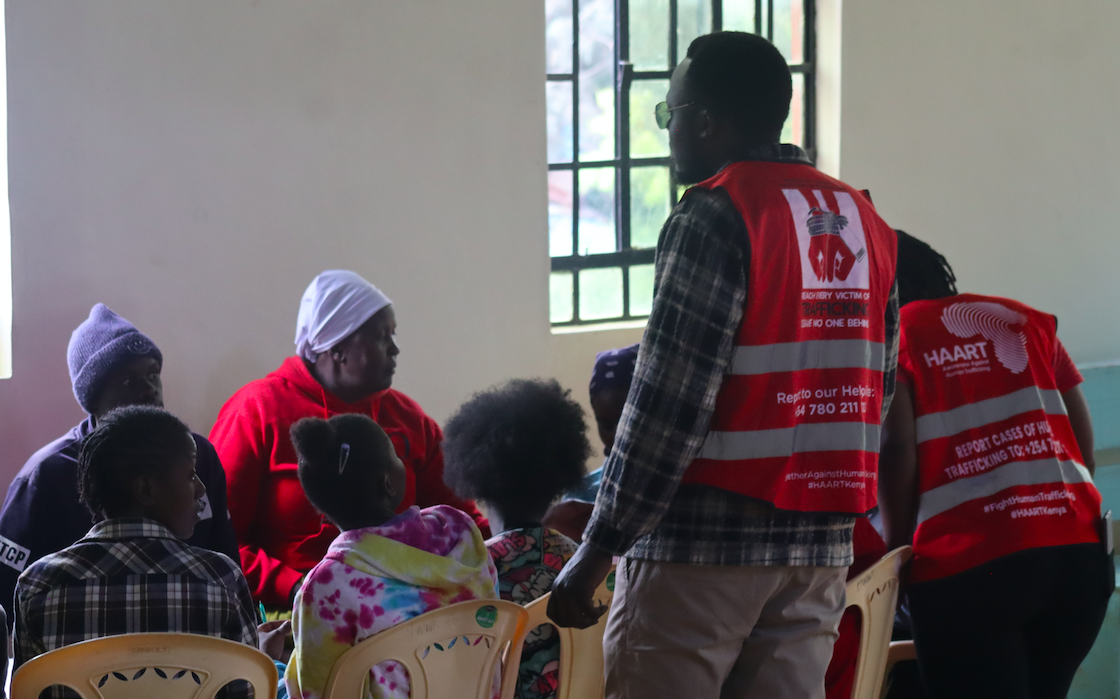
A year earlier, she had reconnected with her daughter via Facebook, who alerted her elder brother about her situation. With their help, she secured a new passport and finally returned to Kenya, where she was recruited to join the advocacy team at Awareness Against Human Trafficking (HAART) Kenya, an organization that creates awareness about human trafficking as part of its efforts to fight and eliminate the vice.
Mary’s journey—from captivity to compassion—became a mission of rescue and redemption.
Red Flags for Human Trafficking
Mary says it’s important for anyone travelling for a job opportunity to thoroughly read and understand the employment contract’s terms and conditions of service.
“Many Kenyans are forced to sign contracts at the airport before boarding the flights. The documents are often printed in Arabic, which they don’t understand, which leaves them unaware of what sort of jobs they will be doing or the conditions they will be subjected to,” she says.
She is also warning Kenyans to be wary of employers who take away their passports upon arrival in a foreign country.
“Don’t allow your boss to seize your passport and other documents because it will be very difficult for you to travel without them in case you leave the job without their approval,” she says.
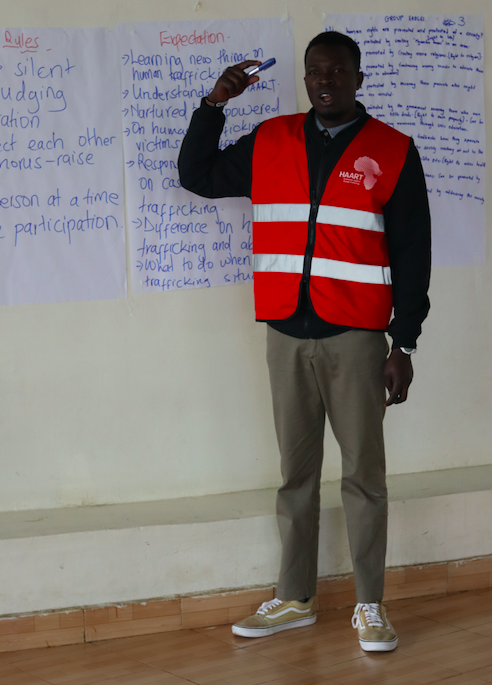
On his part, HAART Program officer Allan Sirima advises Kenyans to alert relatives and friends of their whereabouts when leaving for a foreign job assignment.
“Let your family, area chief, and friends know where you are going so that it becomes easier to trace you in case you’re in distress,” he says.
The Larger Crisis
Mary’s ordeal reflects alarming regional trends. According to the UN’s 2023 Global Slavery Index, Africa hosts 7.1 million modern slavery victims—nearly 15% of the global total. The International Organization for Migration reports that 12% of trafficking victims in East Africa are children, many forced into mining or commercial sex work.
“Let your family, area chief, and friends know where you are going so that it becomes easier to trace you in case you’re in distress,” he says.
The Larger Crisis
Mary’s ordeal reflects alarming regional trends. According to the UN’s 2023 Global Slavery Index, Africa hosts 7.1 million modern slavery victims—nearly 15% of the global total. The International Organization for Migration reports that 12% of trafficking victims in East Africa are children, many forced into mining or commercial sex work.
State Steps In to Turn the Tide
At the national commemoration of the World Day Against Trafficking on July 30, 2025, Principal Secretary Carren Ageng’o of the State Department for Children Services called on Kenyans to confront the scourge of human trafficking. “It thrives on deception and exploitation, luring victims with false promises only to trap them in modern slavery. Let us recognize trafficking as organized crime and end the exploitation,” she urged.
Ageng’o outlined key achievements under the Counter Trafficking in Persons Act, 2010: the rescue of 153 Kenyans from forced scamming in Myanmar, training of over 700 law enforcement and aviation personnel, business grants for 35 survivors, and the establishment of a shelter for 20 victims. She emphasized the importance of survivor voices in raising awareness and preventing future exploitation.
The Counter Trafficking Secretariat has spotlighted diverse trafficking forms—child labour, forced begging, organ harvesting, and child radicalization—rooted in poverty, unemployment, family breakdown, conflict, and climate displacement. Ageng’o reaffirmed the government’s commitment to early detection, reporting, and prevention, urging citizens to report suspicions to the National Crime Research Centre or the Secretariat.
Stopping the Airborne Flow
On July 25, 2025, HAART Kenya and Kenya Airways (KQ) announced a groundbreaking partnership to offer discounted flights for trafficking survivors returning from Southeast Asia. Signed at KQ’s Nairobi headquarters, the agreement is a global first in the airline industry, ensuring survivors return home safely and with dignity. “To the survivors, we see you, we stand with you,” said KQ’s Commercial Manager Jennifer Njuguna.
In 2025 alone, 153 Kenyans were rescued from Myanmar—27 repatriated in February, 48 in March, and 78 in April. Many remain trapped. The partnership builds on KQ’s 2023 Trafficking in Persons Policy and HAART’s trauma-informed approach, setting a new standard for compassionate repatriation.
HAART CEO Tabitha Njoroge called the partnership “a statement of values, affirming our shared commitment to a victim-centred, trauma-informed approach.” The collaboration exemplifies the UN’s Four P’s Strategy—Prevention, Protection, Prosecution, and Partnership—highlighting cross-sector cooperation in ending exploitation.
The Roadblocks to Justice
Despite progress, many traffickers posing as employment agents remain unpunished. HAART Kenya works with law enforcement to support survivors, but legal delays persist. “We refer cases to police and DCI, and help survivors follow up, but the process is slow,” admits HAART’s Allan Sirima.
The fight continues—with survivors, advocates, and the state pushing to turn the tide.
Path to Recovery
According to Sirima, the HAART also provides shelter, psychotherapy, and limited economic empowerment programs.
“We help survivors rebuild their lives through training and small business grants,” he adds.
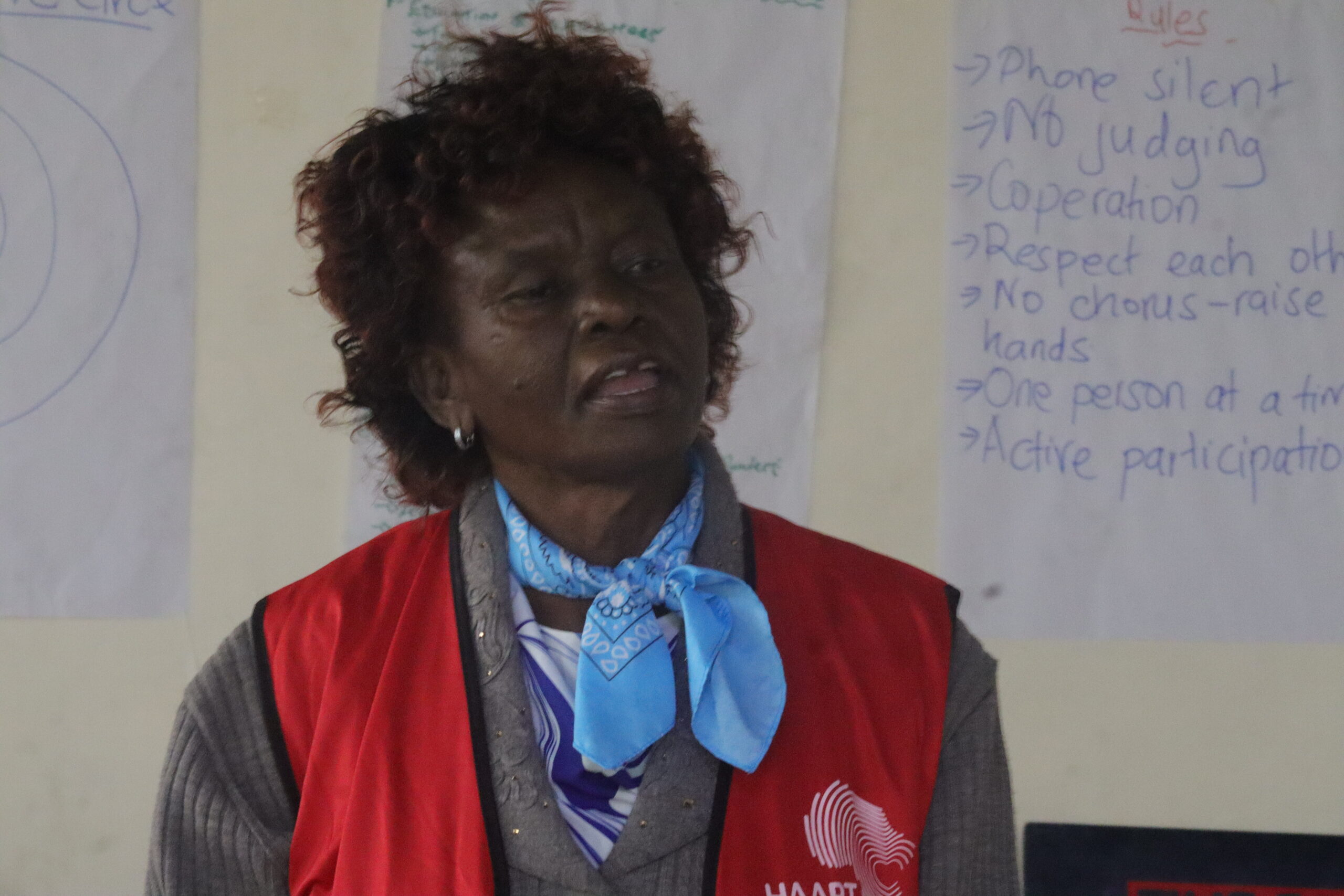
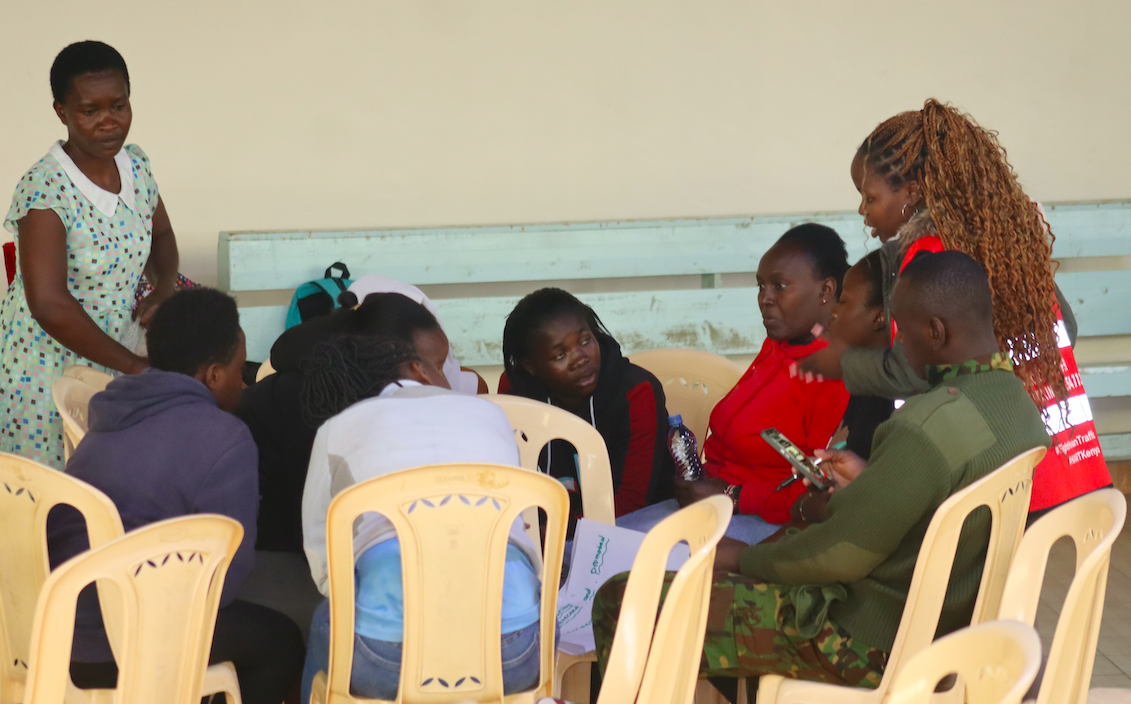
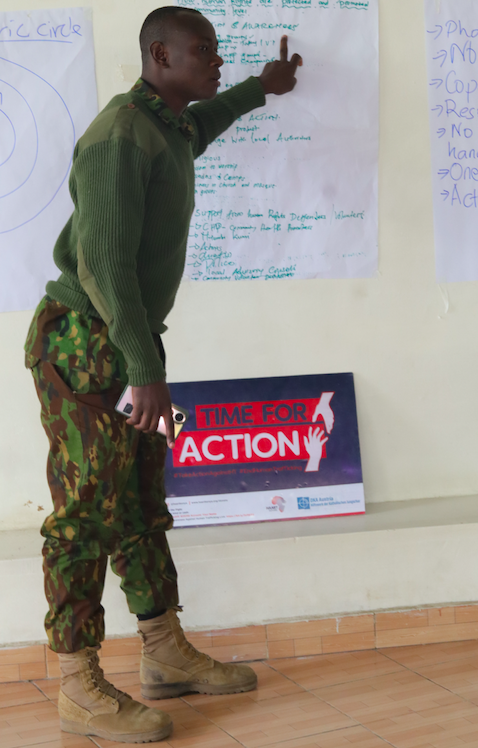
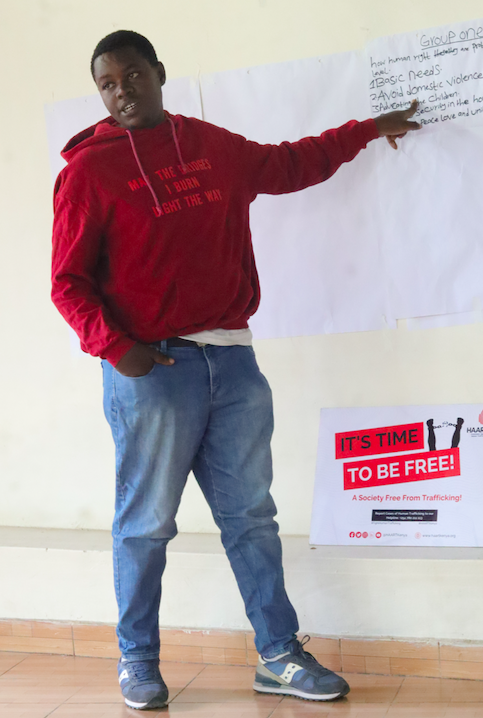
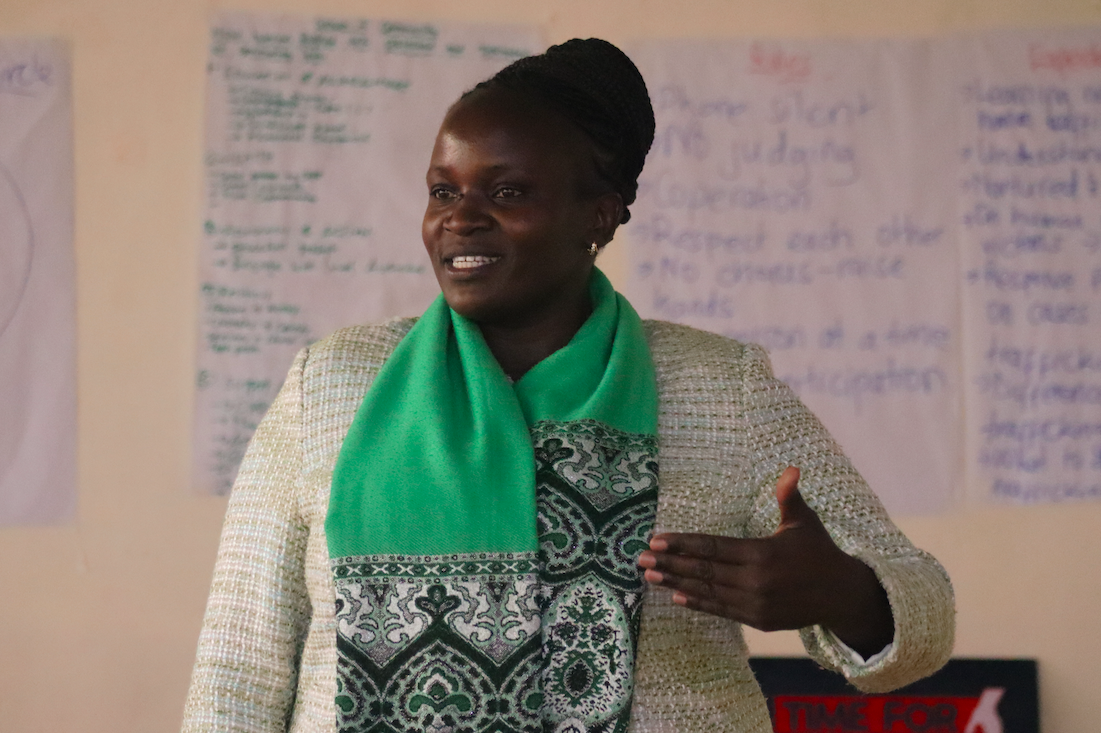
The organization also carries out community engagement forums to sensitize Kenyans on the dangers of human trafficking, and has so far reached over 100,000 Kenyans through its outreach efforts. Mary was a speaker at the Buru Buru Phase 5 Calvary Temple, where she shared her experience with the Talk Africa team.
State Steps In to Turn the Tide
At the national commemoration of the World Day Against Trafficking on July 30, 2025, Principal Secretary Carren Ageng’o of the State Department for Children Services called on Kenyans to confront the scourge of human trafficking. “It thrives on deception and exploitation, luring victims with false promises only to trap them in modern slavery. Let us recognize trafficking as organized crime and end the exploitation,” she urged.
Ageng’o outlined key achievements under the Counter Trafficking in Persons Act, 2010: the rescue of 153 Kenyans from forced scamming in Myanmar, training of over 700 law enforcement and aviation personnel, business grants for 35 survivors, and the establishment of a shelter for 20 victims. She emphasized the importance of survivor voices in raising awareness and preventing future exploitation.
The Counter Trafficking Secretariat has spotlighted diverse trafficking forms—child labor, forced begging, organ harvesting, and child radicalization—rooted in poverty, unemployment, family breakdown, conflict, and climate displacement. Ageng’o reaffirmed the government’s commitment to early detection, reporting, and prevention, urging citizens to report suspicions to the National Crime Research Centre or the Secretariat.
Stopping the Airborne Flow
On July 25, 2025, HAART Kenya and Kenya Airways (KQ) announced a groundbreaking partnership to offer discounted flights for trafficking survivors returning from Southeast Asia. Signed at KQ’s Nairobi headquarters, the agreement is a global first in the airline industry, ensuring survivors return home safely and with dignity. “To the survivors, we see you, we stand with you,” said KQ’s Commercial Manager Jennifer Njuguna.
In 2025 alone, 153 Kenyans were rescued from Myanmar—27 repatriated in February, 48 in March, and 78 in April. Many remain trapped. The partnership builds on KQ’s 2023 Trafficking in Persons Policy and HAART’s trauma-informed approach, setting a new standard for compassionate repatriation.
HAART CEO Tabitha Njoroge called the partnership “a statement of values, affirming our shared commitment to a victim-centred, trauma-informed approach.” The collaboration exemplifies the UN’s Four P’s Strategy—Prevention, Protection, Prosecution, and Partnership—highlighting cross-sector cooperation in ending exploitation.
The Roadblocks to Justice
Despite progress, many traffickers posing as employment agents remain unpunished. HAART Kenya works with law enforcement to support survivors, but legal delays persist. “We refer cases to police and DCI, and help survivors follow up, but the process is slow,” admits HAART’s Allan Sirima.
The fight continues—with survivors, advocates, and the state pushing to turn the tide.
Path to Recovery
According to Sirima, the HAART also provides shelter, psychotherapy, and limited economic empowerment programs.
“We help survivors rebuild their lives through training and small business grants,” he adds.
The organization also carries out community engagement forums to sensitize Kenyans on the dangers of human trafficking, and has so far reached over 100,000 Kenyans through its outreach efforts. Mary was a speaker at the Buru Buru Phase 5 Calvary Temple, where she shared her experience with the Talk Africa team.
Life is slowly going back to normal for Mary, who is 55. She has built a house in Juja and is busy picking up the shattered pieces of what was a relatively peaceful existence before the fateful flight to Johannesburg. As she continues to enjoy the company of her two children and four grandchildren, her desire to help others and make a positive impact in the community is unquenched.
“Thanks to my American friends, our women’s self-help group has managed to drill a borehole with a solar-powered pumping setup for the residents of Kilimambogo at a cost of Ksh 11.8 million. We are currently looking for funding to extend the piping system to at least 3.5 kilometres to serve more residents,” she says.
Mary has also spearheaded the formation of a non-governmental organization in Jordan known as Set the Captives Free to ensure that as many people as possible are rescued from human trafficking, slavery, and exploitation traps.
Her efforts have seen her travel to Jordan for the NGO’s launch, as well as Uganda, Tanzania, and Ghana to spread the anti-human trafficking awareness message.
“I am a committed anti-human trafficking advocate because I do not wish anyone else to experience the horrors I went through in South Africa and Jordan. I’m, however, grateful for the blessing of meeting and making wonderful friends, including the kind Afrikaaner couple, Melissa, and the nuns in the retirement homes,” she says.