

|
Getting your Trinity Audio player ready...
|
By Irene Sinoya
A few years ago, fifty-one-year-old James Kahiga was working as a financial auditor on Wall Street situated in New York City, United States of America.
After 14 years of hard work, he realised that the high-pressure lifestyle in the United States was taking a toll on his well-being.
In 2020, Kahiga, with his wife Beth Ann, decided to fly back to Kenya, where they ventured into sheep farming.
“Initially, I had an interest in rearing Boer goats due to their popularity. However, after much analysis, I finally chose to focus on Dorper sheep as they had a higher market demand and were easy to manage,” says Kahiga.
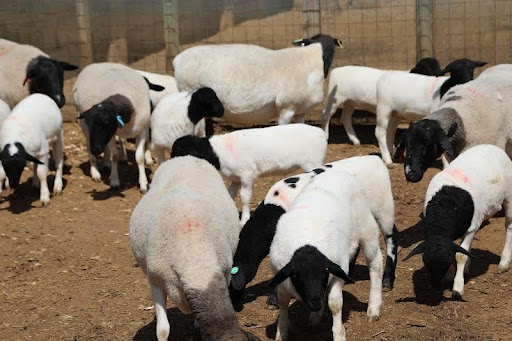
The Dorper breed was developed in South Africa in the 1940s and 1950s and is renowned for its exceptional meat quality, rapid growth, disease resistance, and low-fat content. It is a cross between Dorset Horn and Black headed Persian sheep.
In Kenya, Kahiga established his Capri Dorper farm in Ol Kalou region of Nyandarua County. His vision was to produce pure South African Dorper sheep at competitive prices, as this would help local farmers cut down on the cost of importing the breed from South Africa.
Prior to the establishment of his farm, Kahiga heavily invested in education to acquire skills and hands-on experience in sheep farming. He enrolled in academic programs at the University of Michigan and Oklahoma State University, volunteered on Dorper sheep farms, and conducted extensive research on zero-grazing practices, vaccinations, and animal husbandry.
Kahiga started his sheep farming journey by purchasing five Dorper sheep from Kenya’s Kajiado County and importing other pure Dorpers from South Africa.
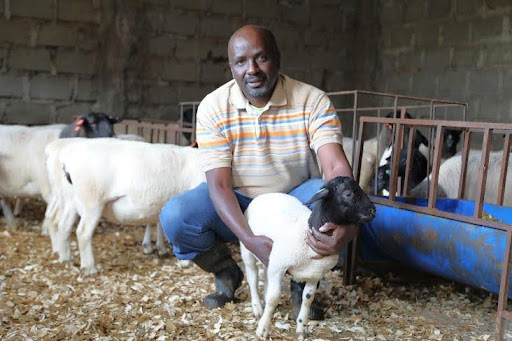
He notes, “When importing the sheep, it is important for the farmer to get the vaccination and deworming history of an animal. The imported animals should be quarantined for at least three weeks before they are integrated with the rest of the flock. This helps in maintaining their health and preventing the spread of diseases to other animals and humans.”
Kahiga houses his Dorper sheep in a comfortable structure constructed on his three-quarter-acre land. This structure protects the sheep from harsh weather like sun, cold, wind, and rain. There are also lambing sheds designed for ewes during and shortly after lambing, offering them a safe and controlled environment.
The Dorper sheep farmer works closely with vets who assist with vaccinations and medication. He also stays in touch with animal health consultants as well as county agricultural officers who provide him with crucial information, including cases of animal disease outbreaks. In case of unexplained deaths of sheep on his farm, the carcasses are taken to the Directorate of Veterinary Services (DVS) laboratory in Nakuru for examination.
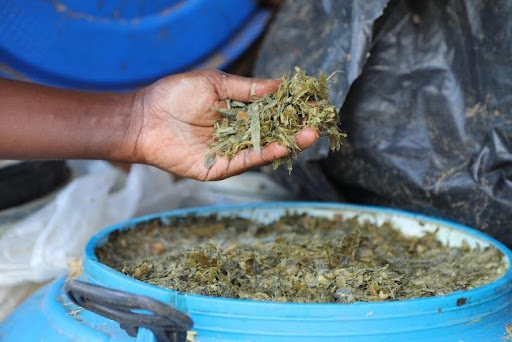
Capri Dorper sheep farm implements a zero-grazing model. The animals are fed maize silage that is produced on site, which Kahiga considers to be more economical than buying feed.
Currently, the farm has 200 sheep, with each sheep receiving between two and five kilograms of feed daily, depending on size and age. The diet is also supplemented with minerals and vitamins that ensure a balanced nutritional profile, promoting overall flock health.
Kahiga sells one pure South African Dorper ram at Ksh. 100,000 and an ewe at Ksh. 50,000. Crossbred rams are sold at Ksh. 50,000 each, while an ewe goes for Ksh 30, 000. The prices are subject to periodic fluctuations.
So far, Kahiga has sold several dorper sheep to farmers in Kenya, Uganda, Somalia, Ethiopia, and Tanzania.
Apart from doing farm visits to educate farmers on effective sheep rearing, Kahiga also conducts farm training on his farm to equip farmers with the knowledge and skills needed for successful dorper sheep farming at a fee.
“The best customer you can have is one who understands the product”, Kahiga says. “At Capri Dorper Sheep Farm, we do not just sell sheep, we sell value,” he happily adds.
Kevin Sitati, a Livestock Production Specialist at Ultragen International, highlights the growing demand for sheep meat in Kenya and the need for more farmers to adopt Dorper sheep farming. He says, “Many farmers in Kenyan communities have been relying on indigenous sheep breeds which take a long time to mature and have lower mature weights, fetching the farmer low market prices. To earn more, a farmer has to keep a large flock, which is costly and not environmentally friendly.
He encourages farmers to consider rearing the Dorper breed because they are hardy, have superior growth rates, and have low fat content. They multiply faster and have higher mature weights compared to the local sheep breeds. In addition, they have a short gestation period and can survive in many areas within the country, including the arid and semi-arid places.
“With the declining land sizes and increasing environmental concerns, dorpers are the most viable option for many farmers in the country,” Sitati adds.













Nice, informative article 👏
Thanks so much for the feedback
Great article. It is inspiring to see the growth from 5 sheep to 200!
Thanks dear
Comments are closed.