
|
Getting your Trinity Audio player ready...
|
By Melisa Mong’ina
Nairobi, Kenya: Drowning continues to be a neglected public health issue, silently claiming young lives at alarming rates for years.
In 2020, Kenya experienced approximately 1,200 drowning fatalities, representing 0.46% of all deaths. The World Health Organization’s Global Estimates indicated an age-adjusted drowning death rate of 2.27 per 100,000 individuals, positioning Kenya 103rd worldwide in drowning deaths.With these figures, it is clear that there’s an urgent need for more attention and preventive measures in the country.
Dr. Lucy Musyoka, a Senior Deputy Director of Medical Services and Consultant Public Health Specialist within the Ministry of Health’s Division of Cancer and Non-Communicable Diseases, Violence & Injuries Prevention (VIP) Unit, provides insights into the health effects, risks, and prevention strategies related to drowning. She clarifies the definition of drowning and explains its mechanisms.

Although rarely fatal, water entering the lungs can obstruct oxygen flow to the bloodstream, thereby impacting the brain and heart.
“The critical event is the lack of oxygen (hypoxia). If water does enter the lungs, it washes away a vital substance called surfactant, which keeps the tiny air sacs open. Without oxygen, the brain and heart suffer first, resulting in unconsciousness and cardiac arrest within minutes,” explains Dr. Musyoka.
Why Children and Youth Are Most at Risk
Drowning is a significant cause of death across various age groups, according to the WHO Global Report on Drowning 2024. It ranks as the fourth leading killer for children aged 1–4, the third for those aged 5–14, and the twelfth for individuals aged 15–29.
Dr. Musyoka highlights several factors that put children and youth at risk. Toddlers, for instance, are particularly vulnerable due to their inherent curiosity and inability to recognize danger, especially in the absence of adult supervision.
“Their risk is driven by natural curiosity, a top-heavy build which makes them prone to falling into water, and an inability to recognize danger. They can drown silently in as little as a few inches of water (in buckets, drains, or bathtubs). Lapses in adult supervision are the primary cause of drowning in this age group,”she says.
Adolescents and youths are usually exposed to drowning due to their risk-taking behavior, overconfidence in swimming abilities, and underestimation of open water hazards such as cold temperatures, strong currents, and unexpected depth.
“Drowning in teens, adolescents, and young adults is usually caused by their increased risk-taking behavior, overestimating their swimming ability, and underestimating the dangers of open water. Many of these drownings occur in unsupervised locations like rivers, lakes, and quarries,” adds Dr. Musyoka.
Safe Techniques and Mistakes During a Drowning Emergency
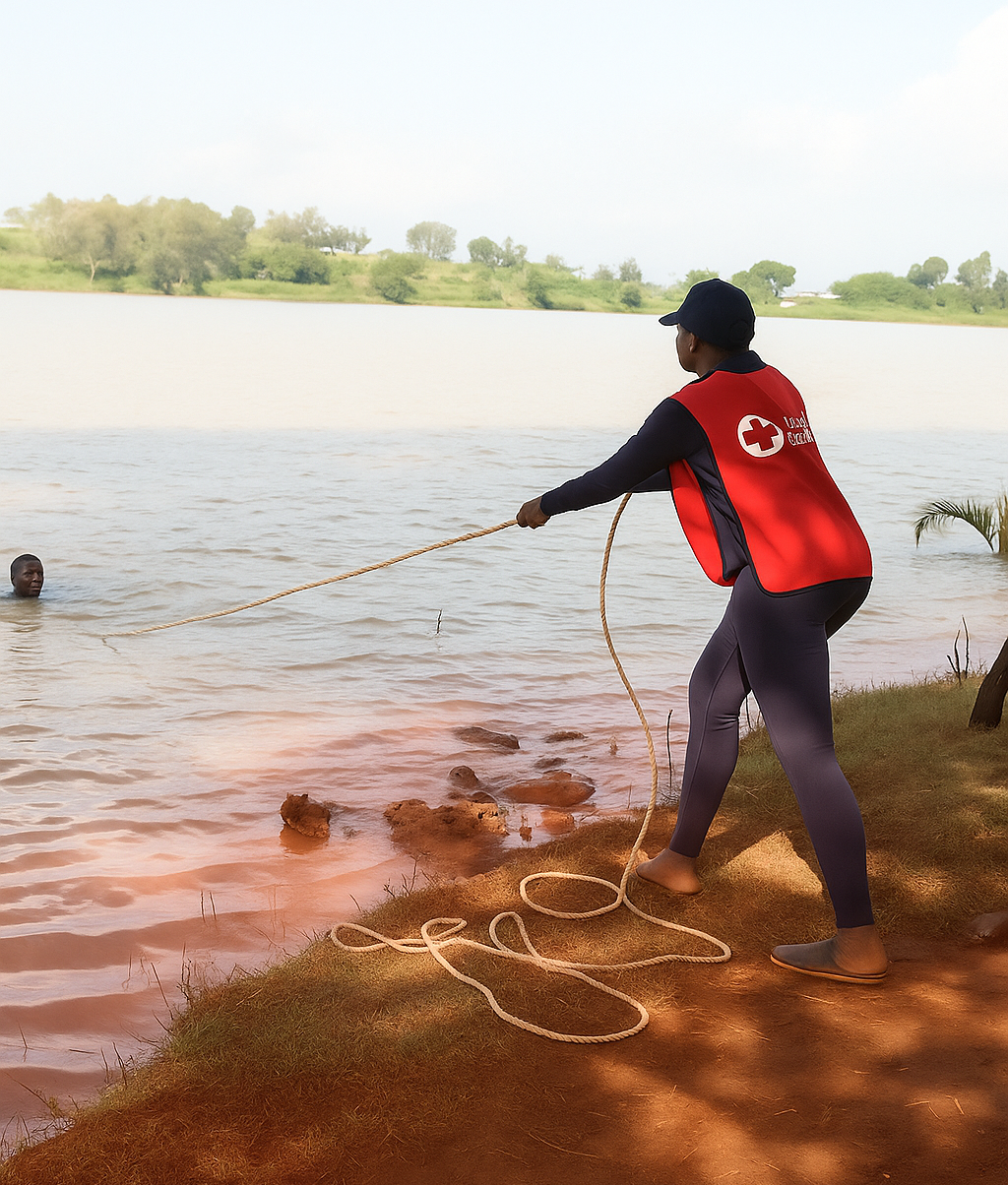
In case of a drowning emergency, the primary priority is to get the person out of the water safely while calling for help.
“If drowning occurs, follow the safe rescue techniques like ‘Pass, Extend, Throw, Don’t Go In,’ CPR, and first aid for drowning victims,” she emphasizes.
Dr. Musyoka highlights safety techniques rescuers should use when trying to save a drowning victim, stressing the principle of “Pass, Extend, Throw, and Don’t Go In.”
Many drowning deaths result from avoidable mistakes in the response. Dr. Musyoka identifies common mistakes people make during a drowning emergency.
“A panicked drowning person can pull their rescuer under, causing a double tragedy. Many attempt to complete the rescue before calling for professional help or trying to pump water from the victim’s stomach thus delaying CPR, the only proven life-saving intervention. Never assume that a rescued person is fine without a medical checkup,” she warns.
These mistakes highlight the urgent need of public education on safe rescue practices and CPR.
Long-term Health Consequences and Role of Parents/Guardians in Drowning Prevention
Although drowning does not always result in death, survivors may suffer severe, long-term health issues. Dr. Musyoka highlights three major complications, stating that the outcomes not only affect victims but also families and communities.
“The severity of long-term issues depends on how long the brain was deprived of oxygen. Major complications include brain injury, respiratory problems like pneumonia or Acute Respiratory Distress Syndrome (ARDS), and psychological trauma such as post-traumatic stress disorder, anxiety, depression, and a lifelong fear of water,” she states.

She underscores that prevention is layered and begins with constant supervision from parents or caregivers. For toddlers, this means being active and undistracted. Caregivers must stay within arm’s reach at all times.
Parents or caregivers should also install barriers, remove standing water hazards, and enrol children in age-appropriate swimming lessons. She cautions that no child is ever drown-proof; therefore, life jackets must be used near large water bodies regardless of their swimming ability.
“Proven prevention strategies include constant supervision, especially for toddlers, installing four-sided pool fencing with self-closing gates, teaching water safety skills through age-appropriate swimming lessons, using properly-fitting life jackets when on boats or near open bodies of water, removing water hazards like buckets, basins, and wading pools after use,” Dr. Musyoka stresses.
Systemic Gaps in Kenya’s Drowning Response and Role of Healthcare Workers
Dr. Musyoka points out several gaps that are currently being addressed through strengthened national coordination strategies, investments in real-time data systems to better understand drowning patterns, resource mobilization, increased public awareness, and capacity building, particularly on CPR and safe rescue techniques.
She acknowledges the crucial role of healthcare workers, stating that they act as trusted community figures, and have a powerful role in raising awareness.
Further, Dr. Musyoka explains that health workers are important in incorporating drowning prevention sessions into routine health education.
“Healthcare workers are a trusted voice and can play a crucial role, especially in incorporating drowning prevention in health education sessions during visits to health facilities and discussing anticipatory guidance with parents on age-specific drowning risks and prevention strategies,” she says.

Community health promoters are identified as health workers at community levels, and they play a crucial role in spreading information in schools, clinics, and barazas, as they push for policy changes.
“The Universal Health Coverage Policy (2020-2030) focuses on preventive and promotive health at household level through revitalized primary care and relies on a well organised and motivated community health workforce to spread water safety skills including basic CPR, in schools, clinics, and local meetings,” adds Dr. Musyoka.
She emphasizes the need for accurate reporting of drowning incidents by health facilities, as they help inform operational decisions and shape policy.
“At the facility level, health workers should ensure that accurate and detailed reporting of all fatal and non-fatal drowning incidents is recognized as a form of injury. This is vital in informing decisions at operational and policy level,” she urges.
Dr. Musyoka recognises the Ministry of Health’s efforts in collaborating with partners to advocate for better policy changes that will help prevent drowning incidents among both adults and children.
“The Ministry of Health and the County Departments of Health, through the Sector Coordination Framework, works with all state departments and non-governmental organizations like Kenya Red Cross to create an enabling environment for advocacy in policy changes, such as mandatory fencing for commercial and public pools and integrating water safety into school curricula,” she states.
For Dr. Lucy Musyoka, drowning prevention is not only about saving lives in the moment but also about changing how society views water safety.
As the world celebrates World Prevention Day, it is crucial for Kenya to treat drowning as a priority public health issue and ensure that safety techniques training is conducted in schools, hospitals, and communities.