|
Getting your Trinity Audio player ready...
|
By Liz Anyango
Rombo, Kajiado County: In a remote ranger unit in Kajiado County, where people and wild animals live side by side, water was once so scarce that the only available source was infested with snakes and bees. Still, it was all they had. On one particular night, two rangers set up their tent a few metres from the water. Their tent zipper was faulty, but they were too exhausted to care. They lay down and drifted into sleep.
In the middle of the night, one ranger felt some discomfort and told the other. “Hey stop pushing me too much sleep on your side,” he complained. But since his friend was not responding he realized that what he felt by his side was not his friend. It was heavy. Cold. And breathing heavily. It was not like a human.
He paused. Listened. And in that moment, he realized a snake; python, had sneaked into their tent. Probably drawn by the water, it had slipped in through the broken zip and settled between them. They could not move.
As trained rangers, they knew too well how snakes respond to motion, with attack. So they sat still, and froze in fear until morning. When the sun finally rose, the snake seemed to realize it was in an unfamiliar territory and slithered away.
They lived to tell the story, but many do not.
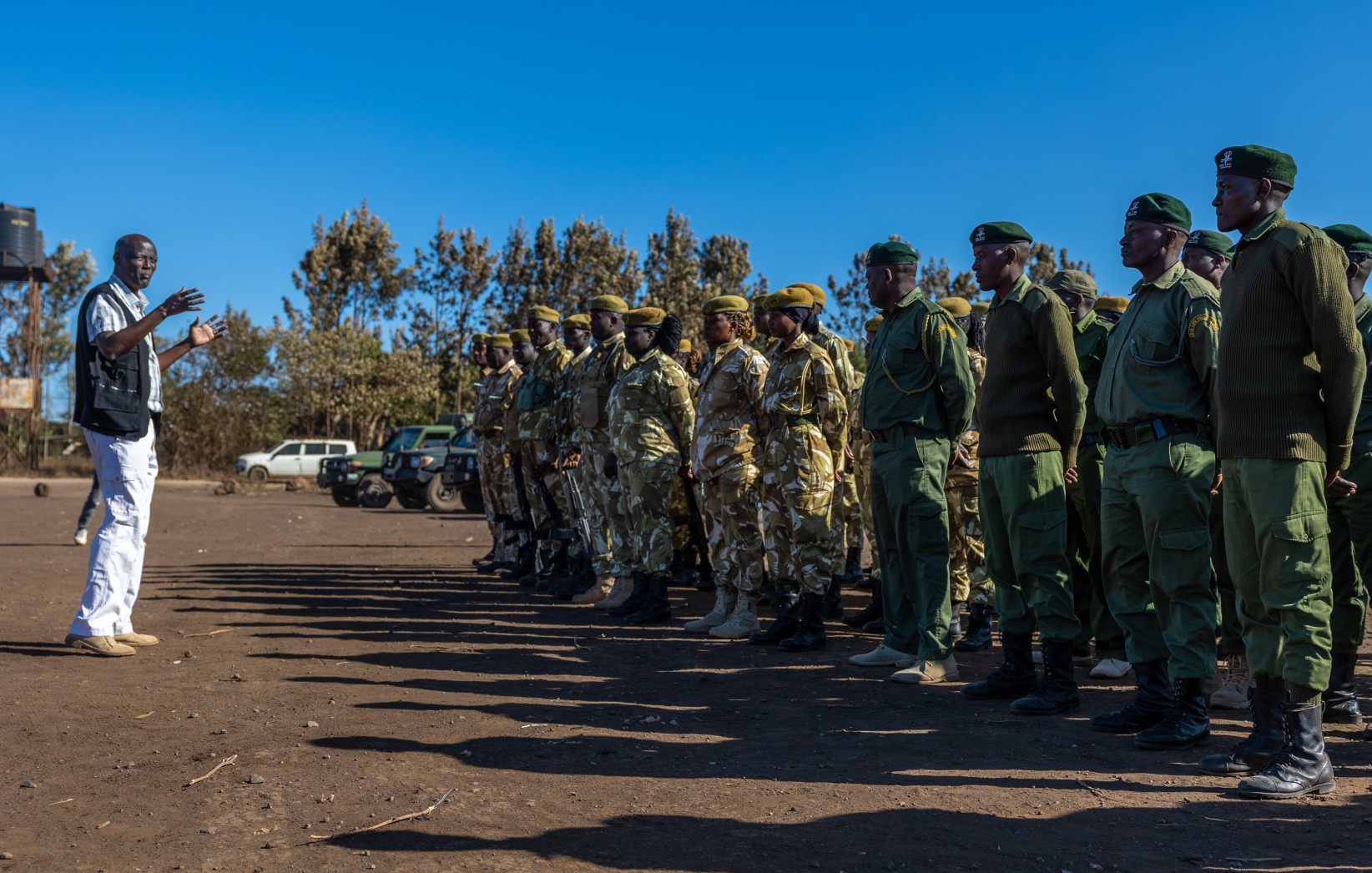
The story of the python encounter is not fiction, it is a memory. A real moment shared by Joseph Dadacha, the Senior Assistant Director at Kenya Wildlife Service (KWS), during this year’s World Rangers Day celebrations held in Rombo, Kajiado County; Kenya’s national event.
Having served in the wild for over 30 years, Dadacha stood before the crowd not just as a senior official, but as a man who had walked the very path he spoke of. His voice was calm but heavy with experience, a lived truth.
“That story reminds us of what it truly means to wear the ranger’s uniform,” he said.
The crowd stood still. For a moment, there was silence. Then came the murmurs of shock, surprise, and deep respect. Everyone seemed to feel the weight of what it means to be a ranger, and the risks that come with the job.
That is the reality of every patrol, every night shift, every long walk through the wild.
“For every ranger standing today, there are those who were injured in the line of duty and those who never came home,” said Dadacha.

His words echoed the deeper meaning of this special day. Every year on July 31st, the world marks World Rangers Day to honour those rangers who have been injured or died in the line of duty, and to celebrate the brave men and women still standing guard over nature.
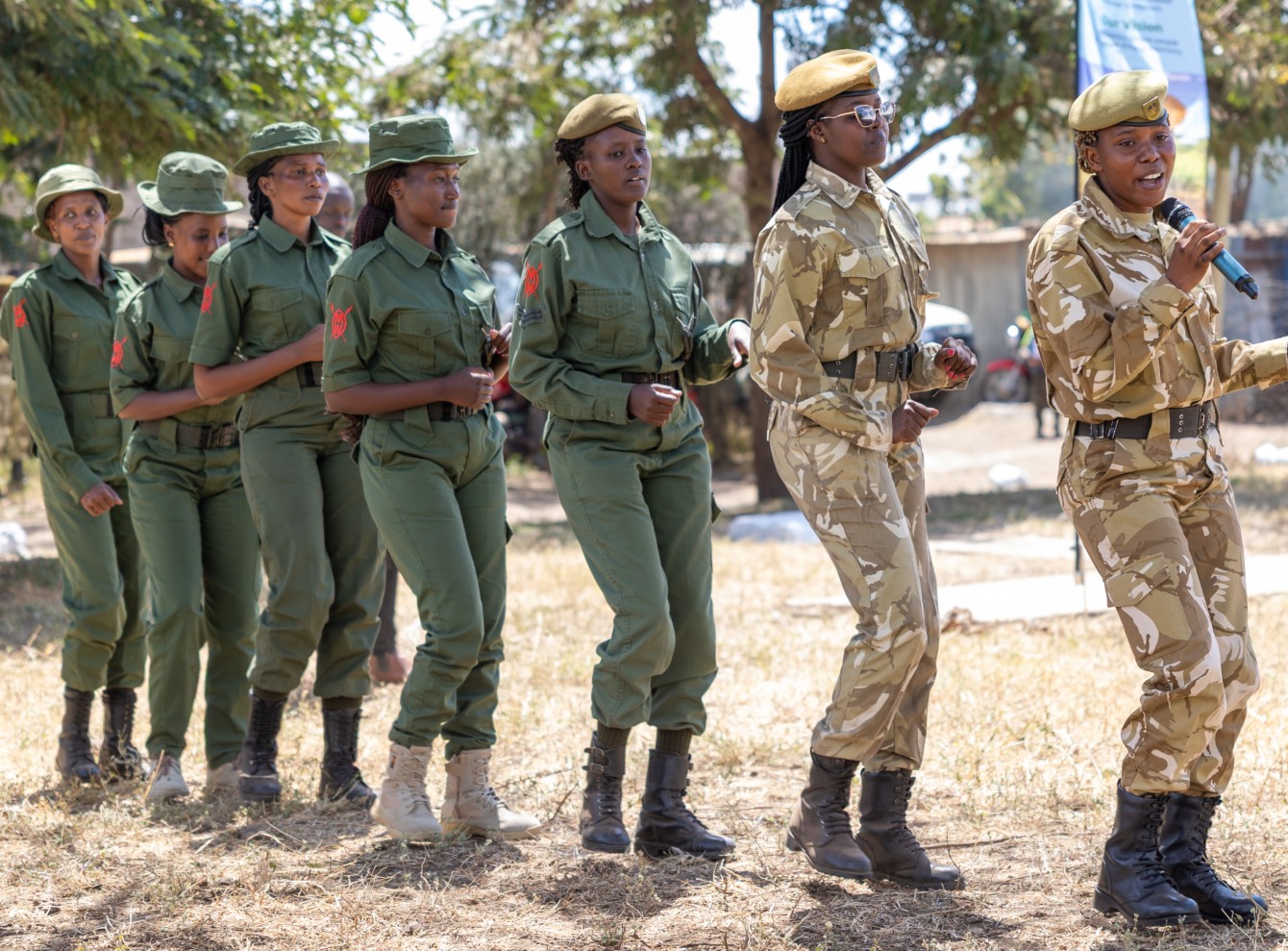
This year, Kenya joined the global tribute to rangers under the theme “Rangers Powering Transformative Conservation,”during a colorful event that brought together rangers, conservation partners, government officials, and local communities.
The day was filled with emotion and energy marked by songs, cultural dances, prayers, tree planting, clean-up activities, and moments of silence to honor those who’ve paid the ultimate price in the line of duty.
To truly understand the cost of conservation, one must look beyond the safari drives and scenic landscapes. At the heart of Kenya’s thriving tourism and rich biodiversity are these men and women in uniform the rangers.
They patrol parks, monitor wildlife, and put themselves in harm’s way to protect nature. Their work is guided by the Wildlife Conservation and Management Act (2013), which mandates the protection, conservation, and sustainable use of wildlife resources.
This event helped shine a light on the real struggle’s rangers face among them; long hours, low pay, dangerous encounters, and often, isolation from their families.
For female rangers like Lilian Atieno, the challenges are even greater. She spoke of the difficulty in navigating cultural expectations, lack of respect, and the added burden of working without access to basic hygiene products during her monthly cycle.
To support them, WWF Kenya officially handed over care kits to female rangers during the celebration as a step toward making their work conditions more bearable. WWF also plays a bigger role behind the scenes: providing basic equipment, supporting training, and advocating for stronger protection policies for rangers.
“Together with our partners, WWF Kenya is committed to empowering rangers through capacity building, access to technology, community-driven conservation, and policy support,” said Mohammed Awer, CEO of WWF-Kenya, in remarks delivered on his behalf.
“These heroes deserve more than applause ,they deserve real action.” He added.
Since it was their moment in the spotlight, Eunice Mbuwa, a 27-year-old ranger, shared some of the survival tactics rangers rely on in the wild.
“I will never forget my first day in the field. We were out on patrol, and I came face to face with a group of elephants near a shared borehole. They started screaming loud, angry sounds like they were ready to charge. I froze. I did not know what to do. But my colleague acted fast. He grabbed a handful of soil and threw it into the air. The wind blew it to one side, and he said, ‘Run that way!’
Eunice recalled the moment with a smile, explaining how she learned a powerful lesson that day: elephants have an incredibly strong sense of smell scientists say it is up to four times stronger than a bloodhound’s.
If you run against the wind, they’re less likely to pick up your scent. “We ran, hearts pounding, in the direction the soil had shown us and it saved us.”
The event also highlighted the deep bonds between rangers and communities. Lesan Lembosel, a local elder, recalled a tragic moment when an elephant killed his relative and her child. “KWS and Big Life Foundation rangers helped us through the pain” he shared.
Framing the big picture, Mr. James Ngugi, Chief Officer of Kajiado County’s Department of Environment, described rangers as “economic enablers,” highlighting their vital role in sustaining tourism, protecting biodiversity, and supporting communities during climate shocks.
The day ended on a high note with an awards ceremony to celebrate outstanding rangers and a cake cutting moment that honored both the fallen and the living.
This year’s World Rangers Day celebration was made possible through the collaborative efforts of key partners, Kenya Wildlife Service, Big Life Foundation, Maasai Wilderness Conservation Trust, the County Government of Kajiado, Born Free Foundation, Lion Guardians, Serena Lodge, and WWF-Kenya who all united in their commitment to protecting both wildlife and the people who safeguard it.
When the music faded and the crowd dispersed, one truth remained louder than the cheers: Rangers are more than protectors of wildlife they are the heartbeat of conservation, the quiet force that holds the bond between people and nature.
As Mr. Awer aptly put it, “It is no longer enough to simply thank them. We must equip them, support them, and stand with them not just for the wild, but for our shared future.
Because when all is said and done, no one should have to sleep beside a python, be charged by elephants, or lose their life just to keep our wild alive.