|
Getting your Trinity Audio player ready...
|
By Liz Anyango
“If you do not know where you are coming from, then you cannot know where you are going.”
— Marcus Garvey
Pause and reflect on that. Here in Kenya—and across Africa—these words resonate deeply.
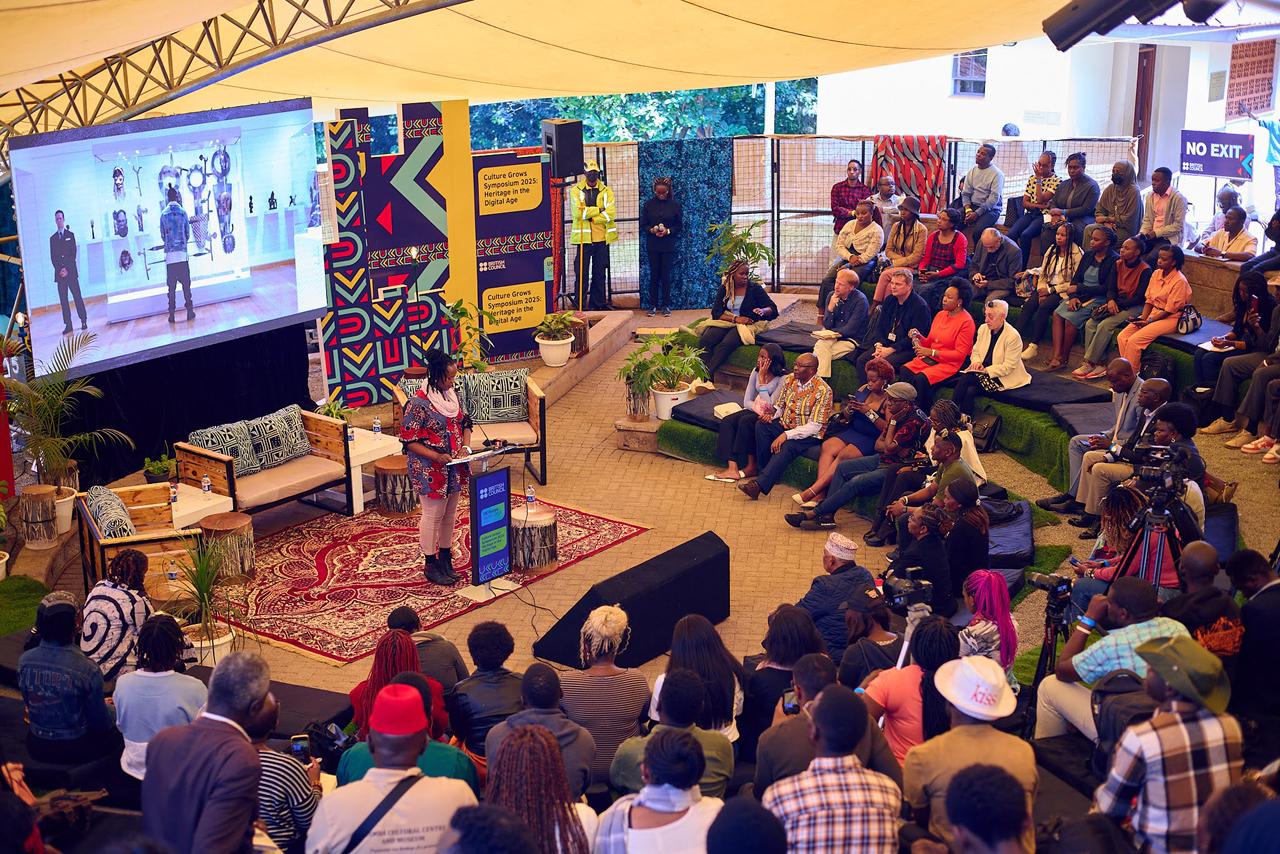
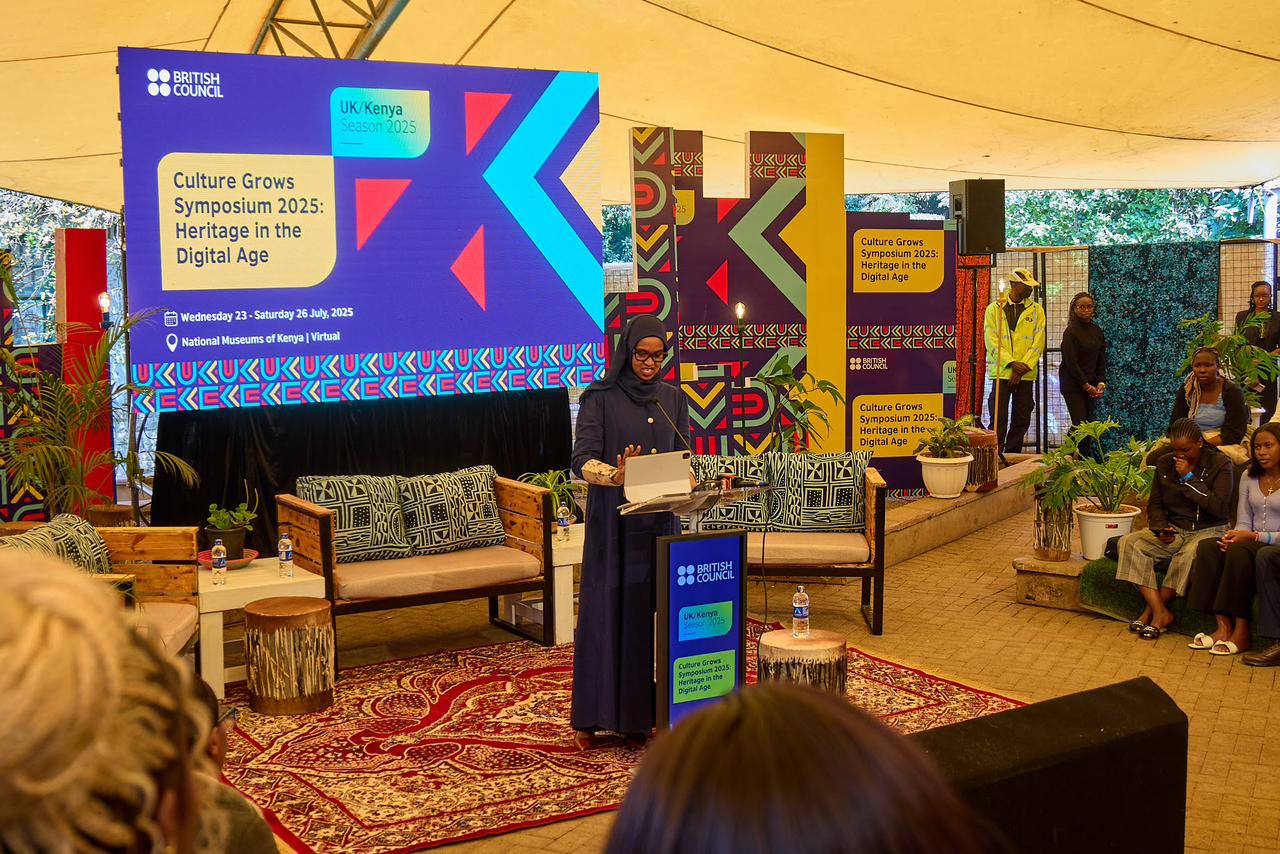
This powerful message drew creatives, thinkers, and cultural leaders from over 16 countries to Nairobi for the Culture Grows Symposium 2025, held at the National Museums of Kenya. Organized by the British Council in partnership with Twaweza Communications, the event served as a vital call to reclaim and reimagine Africa’s cultural future.
Their mission? To ask one big question; In this digital world that is moving so fast, how do we protect and pass on what makes us who we are?
Think about it. We are defined by our cultural heritage. We remember how our mothers taught us to cook traditional food. How our fathers shared stories under the stars. We follow customs when a child is born, when two people get married, and when someone passes on. We speak our mother tongues, we dance to old songs at weddings, we name children after grandmothers and grandfathers.
Culture is not something stored in a glass case. It lives with us. It is in our homes, our voices, our beliefs. It’s how we relate to one another.
But slowly, the threads are loosening.
Conflict has scattered communities. Climate change is wiping out livelihoods and displacing families. Technology is changing how we connect, speak, and even think. With each shift, we risk losing something precious, our identity.
The event’s theme this year was “Heritage in the Digital Age: An Exploration of Indigenous Knowledge and Technology.” But this was not just another event with speeches and good food. It was urgent. Real. A place where people came not only to talk but to find solutions.
Solutions to a growing problem; our cultures, once passed down through stories, songs, rituals, and hands-on learning, are slowly fading in the face of conflict, climate change, and digital disruption. The old ways of knowing are getting lost. And without action, entire generations may never know where they come from.
So, artists, researchers, tech innovators, and community leaders gathered in Nairobi with one big question: How can we use modern tools to protect ancient wisdom?
From panel discussions to live showcases and immersive exhibitions, every session at the Culture Grows Symposium felt like a call to action. This was about putting communities at the center, about using technology with respect, not to replace tradition, but to carry it forward.
Can artificial intelligence help save languages on the verge of disappearing? Can short videos teach cultural knowledge to younger generations? Can we use the same phones that distract us to reconnect us?
One of the strongest voices in the room, Ruth McKenzie, Director of Arts at the British Council, said, “Cultural heritage is a space for innovation and inclusion. We are asking how to protect what matters while using technology in ethical and creative ways.”
The message was clear: the future of culture is not only about remembering the past, it’s about how we shape tomorrow, and that means centering communities, not outsiders.
And perhaps no one captured the spirit of the symposium better than Maureen Anzaye from the British Council, who reminded us that the digital world is not just wires and Wi-Fi; it can be a lifeline.
“We’re discovering how digital tools can help communities protect, reimagine, and share their experiences in inclusive and grounded ways,” she said.It’s about local stories told by local people. Not someone flying in with a camera and flying out with a story. It is about giving power back to the people whose cultures are being documented.
Dr. Kimani Njogu of Twaweza Communications reminded the room that culture is not static.
“Indigenous knowledge is not stuck in the past. It is alive. And it can guide us in building the future if we protect it through respectful documentation and storytelling.”
And you could feel that energy more than an event; it was an experience. There were performances, exhibitions, and interactive spaces that showed just how dynamic and beautiful culture can be when it’s allowed to breathe.
The symposium also shone a light on powerful projects making waves across the continent, including the Braid Fund, which supports people in fragile communities to tell their own stories; Creative DNA, which celebrates the bold spirit of young African designers and artists; Catalyst Grants, which invest in fresh, boundary-pushing ideas; and African Digital Heritage, which is harnessing the power of technology to give voice to Africa’s untold stories.
All of them reminding us that culture is not dying it’s shifting. And we have the tools to carry it forward.
Too often, we treat culture like something you only visit during holidays or during school trips. But it’s not. It’s our way of life. It’s how we raise our children. It’s how we bury our dead. It is how we know who we are.
So the big question remains: If we lose our stories, our songs, our languages, will we pass on?
The Culture Grows Symposium did not give us all the answers. But it gave us a way forward. A reminder that protecting our heritage isn’t about locking it away.
It is about keeping it alive in our homes, in our communities, and yes, even on our phones.
Because maybe, just maybe, the same technology that felt like it would erase our stories
is the one thing that might help us hold on.