|
Getting your Trinity Audio player ready...
|
By Melisa Mong’ina
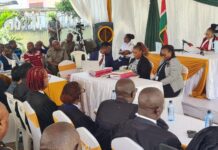
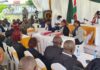
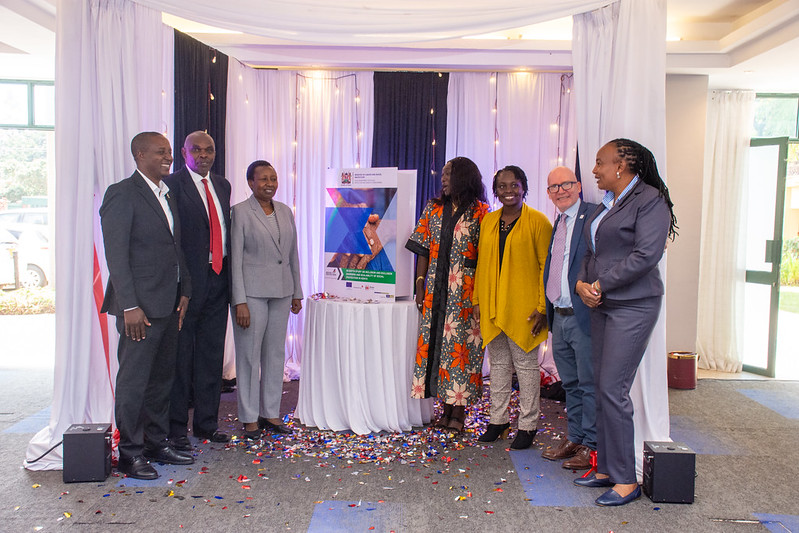
Nairobi, Kenya: The Kenya Red Cross Society in partnership with the Ministry of Labour and Social Protection, European Union in Kenya, and Finnish Red Cross launched an in-depth study on Inclusion and Exclusion Barriers and the Scalability of Social Protection in Kenya to address why vulnerable populations continue to be left out of life-saving support programs.
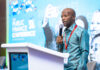
According to Peter Ombasa, Assistant Director at the National Social Protection Secretariat, the major purpose of the report was to identify and understand the key challenges the government faces in implementing social protection programs.
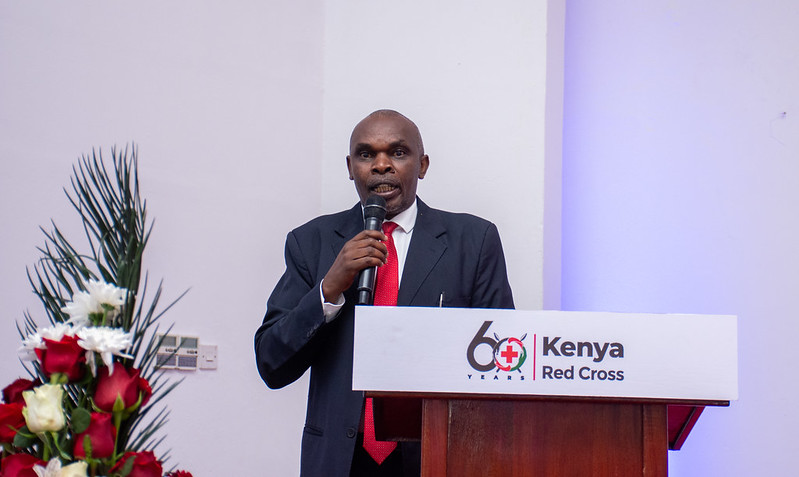
“We’ve realized that most programming within the social protection sector has a lot of inclusion and exclusion errors which are brought by either wrong targeting, poor management, or even governance challenges,” he said.
He pointed out the importance of launching the report as it helps the government to identify and understand barriers preventing accurate beneficiary coverage and provides direction to reduce such errors.
“This report has come at the right time. We want to ascertain the number of barriers that prevent the coverage of either inclusion or exclusion. It will give us a direction as a government to know what can be done to reduce all the inclusion and exclusion errors,” added Ombasa.
The research focused on three counties (Turkana, Garissa, and Tana River), all located in ASAL (Arid and Semi-Arid Lands) areas. These were selected due to their size and vulnerability.
“We chose three countries because of their vastness. They were also ASAL and a lot of humanitarian aid has been working in those counties,” said Ombasa.
 Ombasa stated that they are planning to expand their interventions and structures to ensure that workers in the informal and rural economy such as those in fishing agriculture and informal businesses who were previously left out in the social protection programs are included.
“We are expanding our interventions and structures towards making sure that those in the informal rural economy are all covered. With the strategy that we have developed, we intend to leave no one behind in social protection programs,” he said.
On the exclusion of people with disabilities, he explained that current programs prioritize individuals with severe disabilities who require 24/7 support.
Further, he acknowledged that people with less severe disabilities who are currently excluded will also be covered as more funding and partners come on board.
“In Kenya’s programming, especially for persons with disabilities, we focus on severity. While it may look as an exclusion, the design currently targets individuals with severe disabilities who require 24-hour support,” Ombasa explained.
He added, “However, there are others living with less severe disabilities who have not been covered. As we secure more funding, financing, and partners, we intend to expand our coverage to include them as well.”
John Kea, a representative from Pan-African Research Services, explained that the study focused on only three counties because they are located in Kenya’s northern frontier regions, areas that experience significantly higher levels of inclusion and exclusion challenges compared to other parts of the country.
“The decision was because they are northern frontier counties where vulnerable communities, refugees, and IDPs are mostly domiciled as compared to other counties in Kenya,” he explained.
He highlighted that one of the key findings was 51% of exclusion due to lack of awareness among the public, especially vulnerable groups who are not informed about eligibility criteria or where to register for social protection programs.
“One of the findings from this study was that 51% of exclusion was because of lack of awareness of the general public because most of the vulnerable groups that we spoke to are not aware of the eligibility criteria. There was some level of biases and lack of adequate communication leading to lack of awareness,” he added.
Kea also mentioned some of the excluded groups such as adolescents, young mothers, elderly, children, and persons with disabilities (PWDs). These groups are systematically left out due to logistical, cultural, and informational hurdles.
“The most excluded groups are mostly adolescents, young mothers, elderly, children, and persons with disabilities. They’re affected in terms of mobility and sometimes awareness,” explained Kea.