|
Getting your Trinity Audio player ready...
|
By Lenah Bosibori
Nairobi, Kenya: As African cities intensify efforts to curb air pollution, experts are warning that biomedical waste, a critical and hazardous source, continues to be dangerously overlooked.
They note that this type of waste is often mixed with general refuse and openly burned, posing not only serious air quality risks but also major public health threats, including antimicrobial resistance and toxic chemical exposure.
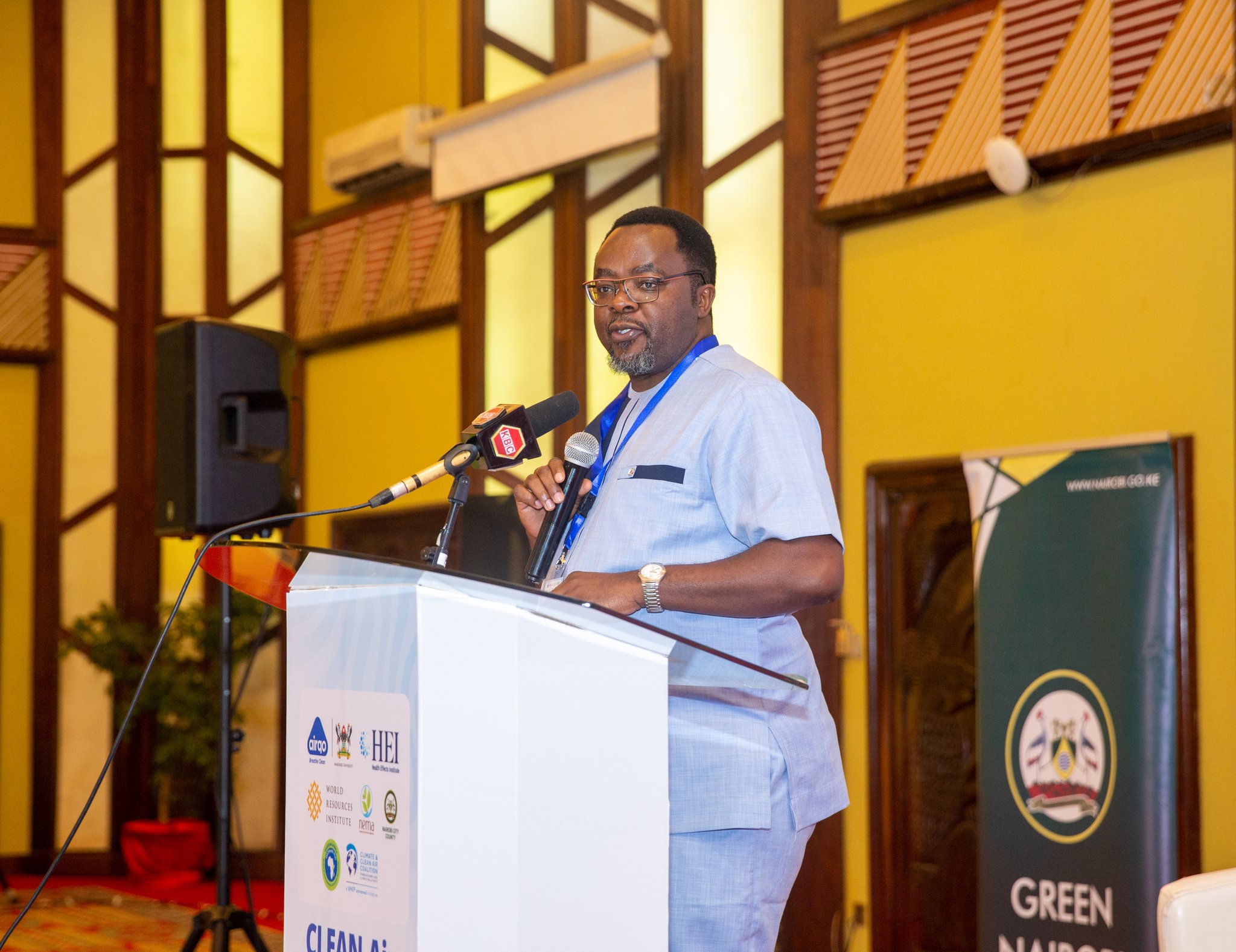
Speaking at the ongoing CLEAN-Air Forum 2025 in Nairobi, under the Theme, ‘Partnerships for Clean Air’ Dr. George Mwaniki, Country Representative for the World Resources Institute (WRI) and Head of Air Quality for WRI Africa, highlighted that while most hospitals conduct basic disinfection before disposal, a significant portion of waste—including food scraps, textiles, and general hospital refuse still ends up in landfills or open burn pits.
A WRI study conducted in Nairobi found that open burning of waste, including biomedical material, contributes significantly to air pollution in residential areas near health facilities.
“Our Nairobi study revealed that even hospital waste is being openly burned, posing health risks far beyond air pollution,” said Dr. Mwaniki. “This includes increasing concerns about antibiotic resistance and toxic chemical exposure.”
He added that international standards call for hospital waste to be managed separately, citing its infection and chemical hazards, yet this remains an under-addressed issue in many urban areas.
“When we conducted our study, we discovered that hospital waste was being burned, which has far-reaching implications,” he said. “It raises disturbing issues. Burning medicines impacts antibiotic resistance in the environment. And it’s unsettling to realize that what you’re breathing could be someone’s amputated limb.”
“We are now looking deeper into these challenges and beginning to recognize that issues previously dismissed as minor in the air pollution space are in fact urgent and require immediate attention.”
Following the recognition of hospital waste as a major source of pollution, the Nairobi City County Government, in collaboration with UNEP, has prioritized biomedical waste management as a key focus before addressing broader sources of municipal waste.
“In transport, we’re seeing promising progress e-mobility is gaining momentum across Africa,” said Mwaniki. “But in waste management, especially biomedical waste, we are still far behind.”
With support from UNEP and WRI, Nairobi is now making healthcare waste management a core part of its clean air strategy.
Deaths from Air Pollution Persist
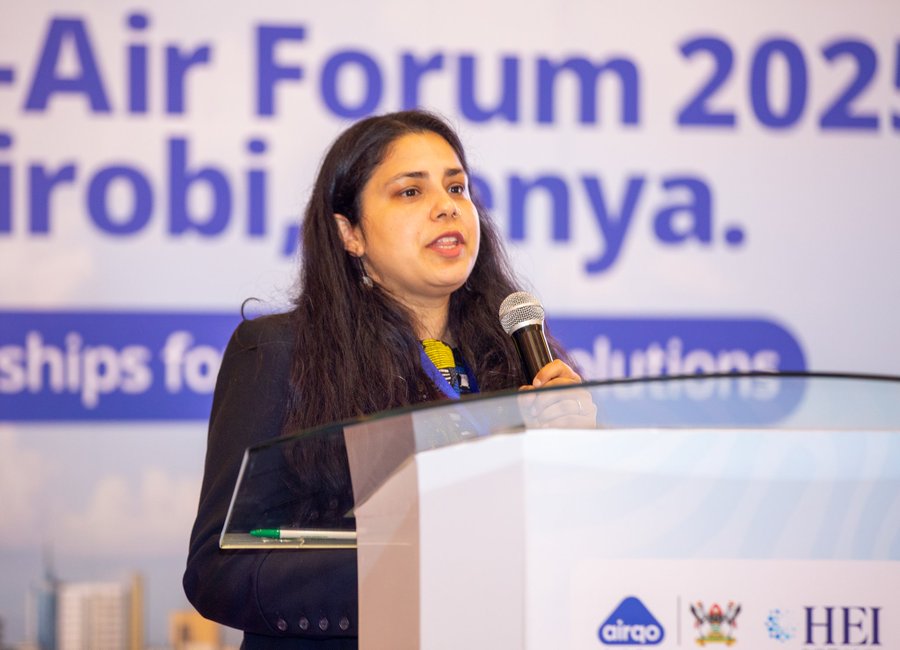
Dr. Pallavi Pant, Head of Global Initiatives at the Health Effects Institute, warns that air pollution—both outdoor and household—remains a major threat in Africa, impacting 1.2 million people, especially children and the elderly.
“Investing in air quality delivers both health and economic benefits,” said Dr. Pant.
While cities are progressing in areas like transport and cleaner fuels, experts caution that solid waste management, especially biomedical and chemical wast,e continues to lag behind.
The drive to improve biomedical waste management is part of a broader movement to enhance urban air quality across the continent. In 2019, only a few African countries had national air quality laws. Today, over 15 countries, including Kenya, have policies in place but enforcement remains a challenge.
Kenya adopted its Air Quality Act in 2019, and Nairobi has since developed city-specific regulations. However, the lack of reliable data hampers efforts to track and assess the impact of these policies.
Prof. Engineer Bainomugisha, who leads the AirQo project, pointed out that air pollution often goes unnoticed by the public simply because it’s invisible.
“Air is invisible, so people don’t feel urgency. But the data doesn’t lie,” he said. “We’ve deployed real-time air monitoring sensors across Nairobi, and the information is available via the AirQo app and the Nairobi County website.”
“We’re seeing significantly worse air quality in areas near heavy traffic and poorly managed waste zones, including around hospitals.”
A Call for Urgent Action
Now in its third edition, following earlier forums in Kampala and Lagos, the CLEAN-Air Forum brings together researchers, policymakers, and community leaders to co-create solutions for cleaner air in African cities.
“Air pollution is not just an environmental problem, it’s a health issue, an equity issue, and a governance issue,” added Dr Mwaniki.
As countries like Kenya invest in cleaner transport systems and shift to low-sulphur fuels such as the recent transition from 50 ppm to 10 ppm, experts stress the need for equal investment in waste infrastructure, particularly in the health sector.
“Breathing polluted air is like eating contaminated food,” said Prof. Bainomugisha. “Clean air isn’t something you can buy like bottled water; it must be protected.”
With the open burning of biomedical waste now identified as a direct and dangerous source of urban air pollution, African cities are being urged to act swiftly, before the healthcare system itself becomes a source of the pollution it’s meant to solve.