
|
Getting your Trinity Audio player ready...
|
By Omboki Monayo
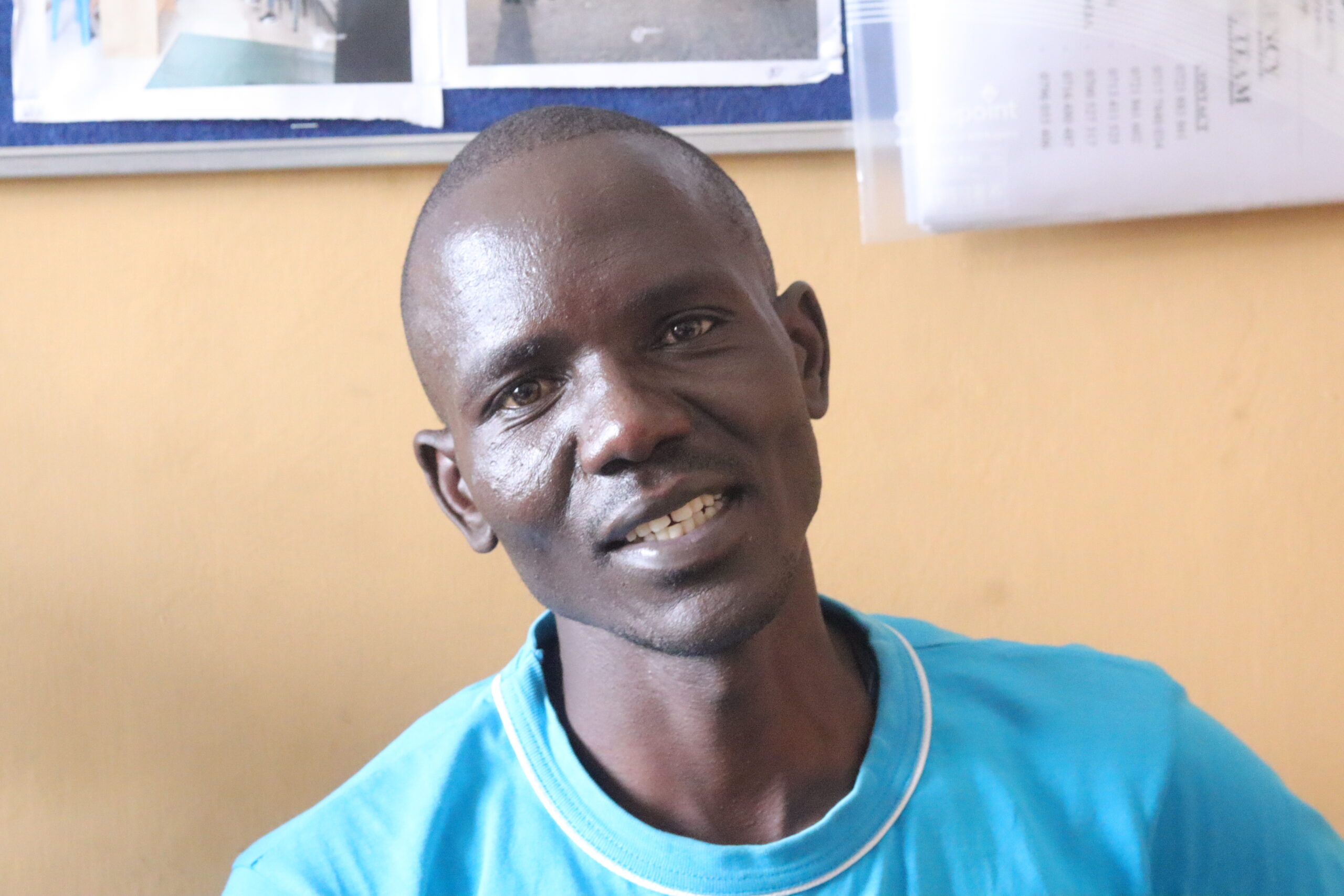
Nairobi, Kenya: When Wycliffe Ouma first heard the men’s reproductive health advert on Radio Jambo, it struck him as a lifeline. For months, the 38-year-old security officer had agonised over his family’s precarious finances. With four children—the eldest in high school—and a monthly salary of just 25,000 Kenyan shillings (about £150), the arithmetic of parenthood had become impossible to ignore.
“I had been asking myself what to do about my family’s economic situation,” Ouma told Talk Africa. “With the salary I’m earning, it was clear I couldn’t afford more children.”
His solution? A vasectomy—a procedure once stigmatised in Kenya but now gaining traction among working-class men desperate to avoid the crushing costs of unintended pregnancies.
Back in 1988, Saidi Ndamwe also found himself at the same crossroads after the birth of his fourth child.
‘My wife asked me to consider taking measures to rein in my fertility because she was getting tired of childbearing,” the 60-year-old farmer, nutritionist, fashion designer, and father of four says.
When he informed his siblings about the decision, he was met with opposition and doubt.
“My relatives wondered why I was the one to take such a drastic step since it was women who normally went for family planning methods. I, however, remained firm in my resolve not to subject my wife to any more exhaustion and discomfort due to childbirth,” Saidi recalls.
He met representatives from Marie Stopes Kenya during an outreach in Korogocho, where he was directed to a health facility in Kariobangi.
The Economic Calculus of Parenthood
Ouma and Saidi are not facing a unique dilemma. According to the latest Kenya Demographic and Health Survey (KDHS), the country’s total fertility rate stands at 3.4 children per woman, down from 4.6 in 2008.
Yet for families earning between 25,000 and 30,000 shillings a month or lower—a bracket that includes Ouma and many other Kenyans who are currently employed—each additional child can push households into dire straits.
“We both realised that more children would cause significant economic challenges,” Ouma said, recalling the candid discussion he had with his wife. “Vasectomy seemed the most effective solution.”
His concerns are echoed in a recent study by the African Population and Health Research Council (APHRC), which found that 68% of abortions in Kenya in 2024 were procured by married women—many of whom cited financial pressures as the primary reason.
In a sharp contrast to the struggling mothers who opted to terminate their pregnancies, some of the teenage mothers interviewed in Korogocho admitted to getting pregnant out of peer pressure and the need to prove their love to their partners.
“Some of the respondents told us, ‘I wanted to be like my friends. All of them have children, and I felt left out,’” said Dr Samwel Ajayi, an APHRC researcher. “Others said their boyfriends pressured them: ‘If you love me, let’s have a child.’”
This tension—between societal expectations and economic reality—has given rise to a quiet revolution in reproductive health.
Contraceptive Use: A Patchwork of Access
Despite growing awareness, access to contraceptives remains uneven. The KDHS 2023 reports that 58% of married women use modern contraception, up from 53% in 2014. However, this figure masks stark disparities.
Urban areas boast higher uptake (65%), while rural regions lag at 49%. Long-acting methods like implants and intrauterine devices (IUDs) are preferred by 26% of users, yet affordability and availability remain hurdles.
For the average Kenyan family, contraceptive access is not guaranteed. Stockouts at public health facilities can force many to turn to private pharmacies where prices are prohibitive.
A single dose of injectable contraception, for instance, can cost up to 500 shillings (more than £2.50)—a significant sum for households already stretched thin by the increasing cost of living, the burden of taxation and other statutory deductions.
Cultural and logistical barriers compound the problem: myths about side effects persist, and clinics require spousal consent, deterring some married or currently dating or engaged women from seeking care independently.
Marie Stopes Kenya works with the government to plug this gap by funding specific consultation and contraception services at selected state-run facilities. For instance, vasectomy and bilateral tubal ligation (BTL) clients are served free of charge at Embakasi Health Centre.
The Rise of the “Child-Free” Generation
At the Level 3 facility, Brenda Onyango, who is a nurse and reproductive health specialist, has observed a striking trend: a growing cohort of young adults actively rejecting parenthood.
“We’re seeing more male and female Gen Z clients who identify as ‘child-free,’” said Onyango, a reproductive health specialist. “They’re prioritising careers, education, or simply their financial stability. As a reproductive medical professional and researcher, I have taken a keen interest in this particular demographic,” she adds.
The Level 3 facility offers a range of contraceptive options, from pills and implants to permanent solutions like tubal ligation and vasectomy. But while postpartum mothers are the most receptive to contraception, men like Ouma are increasingly opting for the latter.
“Mothers who’ve just delivered are keen to avoid another pregnancy while breastfeeding,” Onyango explained. “But vasectomy is becoming a viable choice for men who want to take responsibility.”
Breaking Myths, One Procedure at a Time
The process begins with counselling. Clients are walked through the options, and couples are encouraged to make joint decisions. “We ensure both partners are involved,” Onyango said. “This isn’t a decision to be made in secret.”
Once consent is signed, the procedure itself is straightforward: a 15- to 30-minute outpatient surgery under local anaesthesia. Ouma took two weeks to recover—a small price, he said, for peace of mind.
“I was advised to abstain for a fortnight to heal properly,” he recalled. “But contrary to myths, my sexual drive hasn’t diminished. If anything, I enjoy sex more now—without the fear of pregnancy.”
Ms Onyango confirmed this: “Vasectomy doesn’t affect libido. It simply prevents sperm from entering semen.”
A National Shift
Nationally, vasectomy rates remain low but are inching upward. Data from the National Council on Population and Development (NCPD) shows a gradual uptick in procedures, particularly in urban areas where economic pressures are acute.
For Ouma, the decision was transformative. “It’s like rediscovering the carefree days of my youth,” he said with a chuckle. Ndamwe also has no complaints. “Nowadays, I really look forward to enjoying good times with my wife,” he says with a smile.
As Kenya grapples with the twin challenges of high living costs and shifting family norms, stories like that of Saidi and Ouma may soon become the norm and not the exception.