|
Getting your Trinity Audio player ready...
|
By William Abala
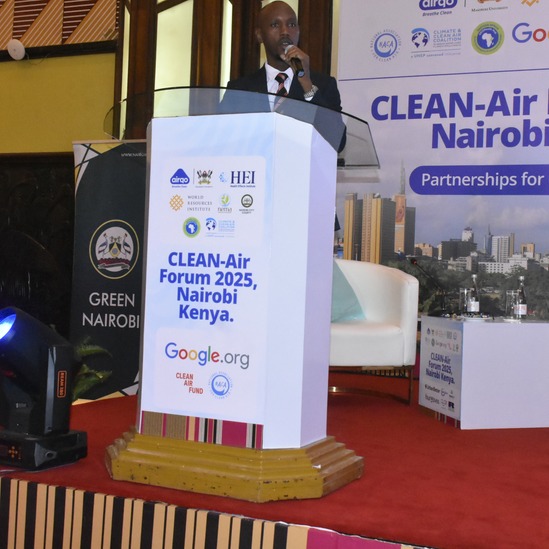
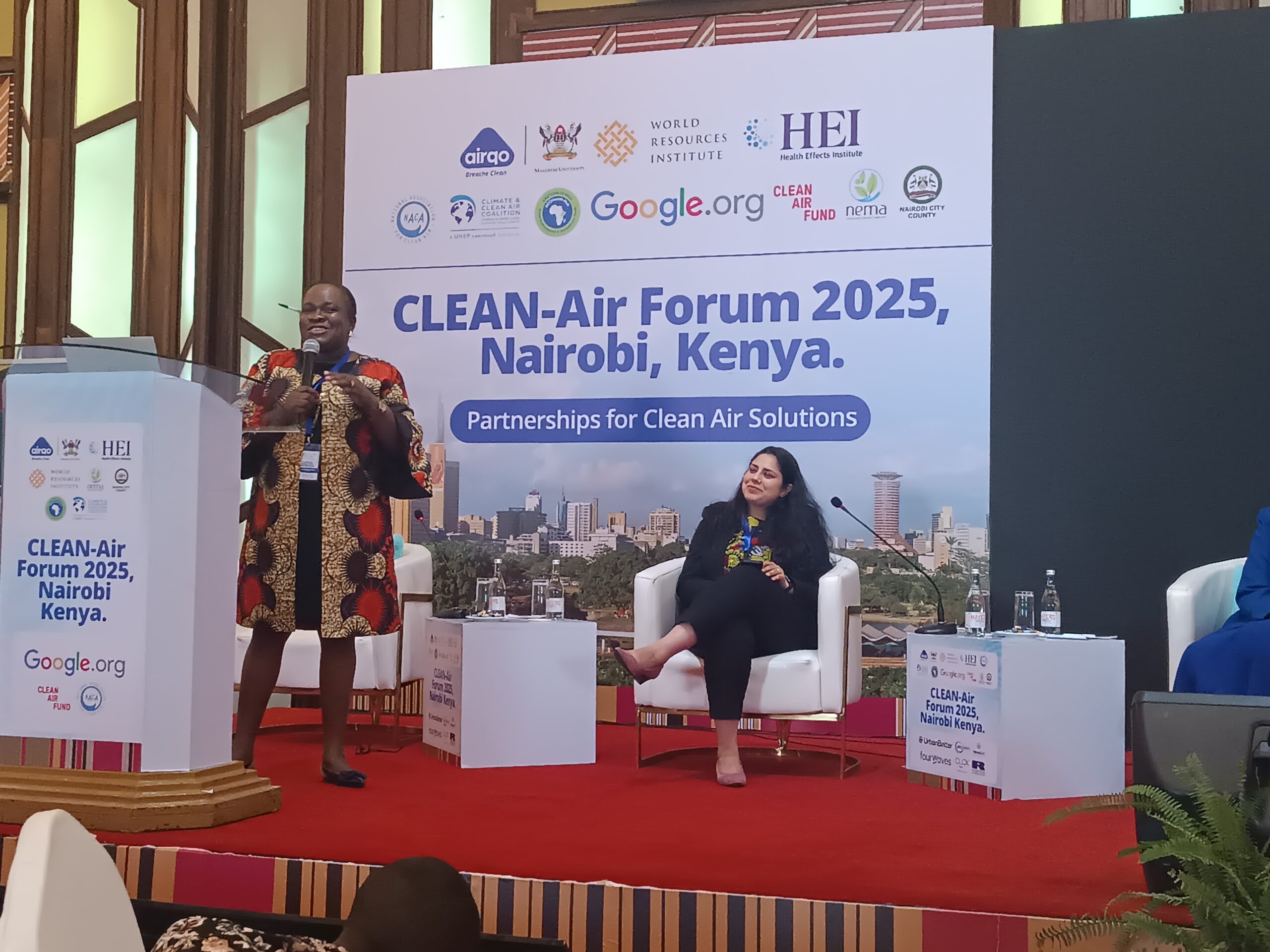
NAIROBI, Kenya — As the CLEAN-Air Forum convened in Nairobi, air quality experts, policymakers, and civil society leaders gathered to address the urgent environmental crisis of air pollution in Africa.
But for Mr. Geoffrey Mosiria, Nairobi’s Chief Environment Officer, the discussions were personal. Reflecting on the forum’s theme, “Partnerships for Clean Air Solutions,” he shared powerful insights from his years of experience confronting illegal pollution in Kenya’s capital.
In an exclusive interview, Mosiria recounted his team’s efforts to tackle one of Nairobi’s most severe environmental threats — illegal industrial activities that compromise the health of citizens. He vividly described a particular incident where his team responded to a toxic parking plant operating illegally near a school in the Kenyan neighborhood street ominously referred to as Uganda. The facility was emitting hazardous pollutants that had led to widespread respiratory problems among schoolchildren.
“When I pull my nose, people think I’m going to use Neocurse, but it’s the air that’s polluted,” Mosiria said, humorously describing how locals often misinterpret the symptoms of air pollution. He noted that many children, particularly girls, had already fled the school due to the contaminated air. “They were breathing in polluted air. We had to act,” he continued.
Learning Across Cities, Cleaning Across Borders
As Nairobi deepens its commitment to improving air quality, Dr. George Mwaniki, the Kenya Country Representative and Head of Air Quality at the World Resources Institute (WRI), emphasized the role of city-to-city learning and collaboration in addressing pollution challenges holistically.
“This forum is really looking at how governments, communities, business people, development partners, and researchers can come together to tackle the air pollution crisis,” said Dr. Mwaniki. “And more importantly, how African cities can learn from each other — what is Lagos doing better than Nairobi? What can Nairobi learn from Kampala?”
This inter-city exchange, he argued, is vital for scaling up effective solutions tailored to African realities. Mwaniki identified urban transport as the leading source of air pollution in most African cities, pointing to the visible emissions from vehicles on Nairobi’s roads.
“If you just stand next to a major road, you’ll see the kind of emissions coming from it,” he said. “That’s the number one source of pollutants.”
The second-largest contributor, he noted, is the poor handling of solid waste, particularly open burning — a widespread but harmful practice in many cities.
Dr. Mwaniki highlighted how deeper research into Nairobi’s waste systems revealed toxic materials like asbestos being dumped and burned, worsening both air and public health risks.
“Asbestos has way more implications beyond air pollution. It contributes to cancer risk and can interfere with our metabolic systems. When you learn that part of what you’re breathing or even drinking may have been affected by such waste, it’s deeply concerning,” he warned.
Mwaniki urged governments and partners to broaden their focus from visible pollution to hidden pollutants — including pharmaceutical residues, chemicals, and synthetic materials — that enter the air through poor waste practices.
“It’s some of these challenges we’re now looking deeper into — things we didn’t even think were part of the air pollution conversation,” he added.
The Cost of Legalizing Pollution
Mosiria emphasized the tragic irony that, in many parts of Africa, legalizing polluting industries often comes at the expense of public health. He painted a stark picture of how poverty-driven decisions frequently lead to environmental neglect.
“We can’t legalize an illegality in the name of economic survival,” he said, calling for stricter enforcement of environmental regulations. Despite the community’s need for jobs, he pointed out that some businesses — including illegal polluting industries — exploit the desperation of local workers. While offering minimal economic benefit, they cause immeasurable harm to public health, especially in vulnerable areas like schools and residential neighborhoods.
“People might say they employ 10 or 20 workers, but how does that justify the poisoning of the air that affects everyone, especially children?” Mosiria questioned.
A Tragic Loss: The Cost of Inaction
One of the most heartrending stories Mosiria shared during the interview was about a student who died of lung cancer, directly linked to the pollution from the illegal plant. A teacher from the affected school approached Mosiria with the news, highlighting the growing health crisis linked to toxic air.
“We lost a student to cancer. It was lung cancer. And it was because of that legal darkness,” Mosiria recounted, reflecting on the emotional toll of witnessing preventable deaths. He stressed that air quality regulations must be enforced with more urgency to prevent further loss of life.
Mosiria pointed out the tragic reality where marginalized communities, often living in informal settlements, have little choice but to work in dangerous, environmentally harmful industries because of poverty. This vicious cycle of exploitation, he argued, needs to be broken by ensuring proper job creation and enforcing environmental justice.
“A poor man just wants to earn a living. That’s why they go to these illegal industries. But we must be vigilant,” Mosiria remarked, underlining that environmental protection and economic development must go hand in hand.
The Bigger Picture: Protecting the Air We Breathe
As the discussions at the CLEAN-Air Forum delved into innovative solutions for clean air, Mosiria’s words echoed the forum’s collective sentiment: the air we breathe is too precious to ignore.
The forum focused on creating partnerships that bring together governments, businesses, and local communities. For Mosiria, the work doesn’t end with enforcing regulations; it requires fostering awareness and collaboration across all sectors.
“We cannot continue to sit in offices and watch people die from pollution just because others are trying to earn a living,” Mosiria declared. His plea was clear: the African continent must find ways to reconcile economic needs with the imperative of protecting its people from environmental harm.
Mosiria called for continued efforts in enforcement and public education. He advocated for greater accountability, urging both local and international actors to push for policies that safeguard the health of vulnerable populations.
A Global Responsibility
During the forum, various African cities, including Lagos and Kampala, shared their experiences and approaches to tackling air pollution. The idea of cross-border collaboration emerged as a critical pathway to solving the crisis. The forum was a platform for leaders like Mosiria and Mwaniki to exchange ideas and strategies, but also a venue for grassroots voices to be heard.
As both experts stressed, the problem of air pollution in Africa is not just an environmental issue — it’s a matter of public health and social justice. They urged local governments and international bodies to act decisively and urgently, recognizing that every city in Africa is at risk of falling victim to the same environmental hazards.
“The air we breathe must be protected. It is our shared responsibility,” Mosiria concluded.
A Call for Enforcement and Action
While many gathered at the forum to share scientific data, showcase technological innovations, and promote cleaner industrial practices, the message from both Mosiria and Mwaniki was unified: air pollution must be addressed with urgency, evidence, and equity.
“We need to do proper enforcement,” Mosiria said firmly.
“And we need to broaden our lens to include hidden threats like toxic waste and open burning,” Mwaniki added.