|
Getting your Trinity Audio player ready...
|
By Arasha Soila
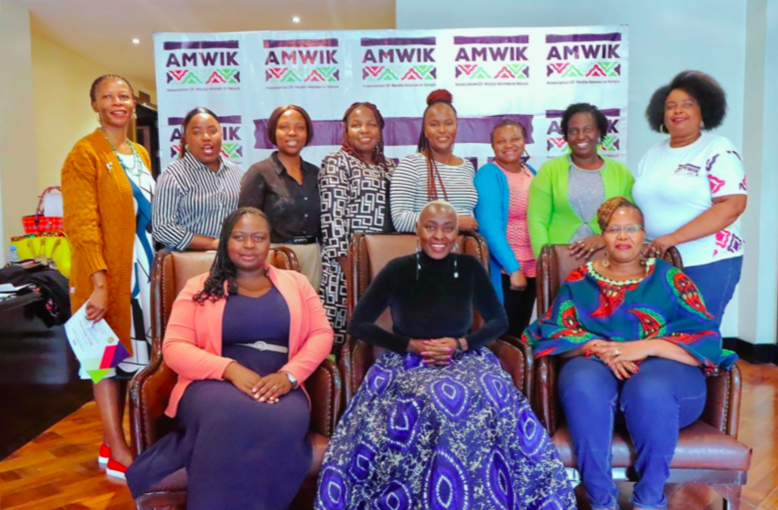
The Association of Media Women in Kenya (AMWIK) has officially elected a new leadership team following its recent Annual General Meeting at Nairobi. This leadership change ushers in fresh perspectives as AMWIK continues its longstanding mission to elevate women’s roles in the Kenyan media landscape, now entering its 43rd year.
The newly appointed Board of Directors and Trustees bring a wealth of expertise spanning media, academia, and development sectors. Robi Koki Ochieng, a highly regarded media and communications expert will serve as the Chairperson. With a strong advocacy record in gender equality and digital safety, she also chairs the Media & Communication Department at United States International University (USIU-Africa).
Vice Chair Elizabeth Limagur, a specialist in conflict journalism with governance experience will serve as deputy, and Joyce Mbataru, an expert in development communication strategies, as the Treasurer.
The board’s composition is further strengthened by investigative journalist Mary Mwendwa from Talk Africa, corporate communications professional Lynn Nzambi, and senior reporter Nancy Agutu of The Star newspaper.
In her opening remarks, Chairperson Ochieng unveiled a comprehensive agenda focused on enhancing governance frameworks, forging meaningful partnerships, and securing financial resilience. “We are committed to advancing member welfare, promoting innovative leadership, and embracing digital tools to ensure AMWIK’s relevance and impact in the years ahead,” she said.
 Ochieng emphasized a leadership philosophy rooted in service and collaboration, pledging to work closely with AMWIK’s secretariat and members to foster an inclusive environment where women media professionals can thrive.“Our goal is to empower every media woman to lead confidently and effectively,” she added.
Reflecting on her tenure, outgoing Chairperson Dr. Jane Thuo highlighted the significant strides made since 2021. “We inherited an organization facing financial challenges and reduced donor confidence,” she noted. “Thanks to focused reforms, we have not only stabilized AMWIK but increased funding by over 260%, strengthened governance, and expanded our membership.”
Dr. Thuo pointed to key achievements such as a successful constitutional review, the introduction of robust organizational policies, and strategic investments that have fortified AMWIK’s financial foundation. She encouraged the new board to prioritize securing permanent office space and continuing to innovate in delivering value to members.
Executive Director, Queenter Mbori recapped AMWIK’s 2024 accomplishments, describing the year as one marked by resilience and impactful advocacy. The organization played a pivotal role in protecting journalists’ safety amid violent protests linked to the Finance Bill, led gender equality campaigns including the G7 Women Governors Initiative, and addressed the femicide crisis through media advocacy and the launch of a gender-based violence helpline.
Financially, AMWIK ended 2024 with assets amounting to KES 27.4 million, enabling expanded programming such as the USAID-supported USAWA health reporting project that trained 139 journalists. A landmark report revealing that 60% of media workers have experienced sexual harassment sparked national conversations and calls for stronger newsroom policies.
Looking ahead, AMWIK aims to consolidate its achievements while tackling emerging challenges, with a focus on enhancing media freedom and gender equity—especially combating rising online harassment of women journalists.
Additionally, efforts will be intensified to explore and secure alternative revenue channels, including partnerships with private sector entities, grant opportunities, and innovative fundraising initiatives. At the same time, enhancing member involvement remains a key focus, with plans to introduce new programs and platforms that encourage active participation, foster professional development, and strengthen the sense of community among media women.
The Association of Media Women in Kenya (AMWIK) is a non-profit organization founded in 1982 to empower women in the media industry. It promotes gender equality, professional development, and media freedom, supporting women journalists across Kenya to amplify their voices and impact.