|
Getting your Trinity Audio player ready...
|
By Mary Mwendwa
Nairobi, Kenya: African leaders, scientists, youth activists, and faith-based organizations gathered at a landmark climate resilience conference in Nairobi have issued an urgent call for a major increase in climate finance to bolster locally-led adaptation and resilience efforts across the continent.
The appeal highlights growing concerns that frontline communities—particularly in Africa—remain marginalized by traditional financing models and global inaction, despite bearing the brunt of climate impacts.
Titled Vatican African Conference on Climate Resilience, the event was convened by the Pontifical Academy of Sciences (PAS) and the Pontifical Academy of Social Sciences (PASS), in partnership with CIFOR-ICRAF, the Network of African Science Academies (NASAC), and a coalition of African stakeholders. Building on the momentum of the 2023 African Climate Summit and the Africa Youth Climate Assembly Declaration, the conference reinforced the need for urgent, equitable climate action.
During the conference, participants stressed that direct access to finance for cities and local governments is essential, alongside the development of innovative financial instruments tailored to Africa’s unique needs.
Local authorities, they said, must be empowered—not only with funding, but also with decision-making authority and technical capacity—to design and implement tailored adaptation strategies that respond to the lived realities of their people
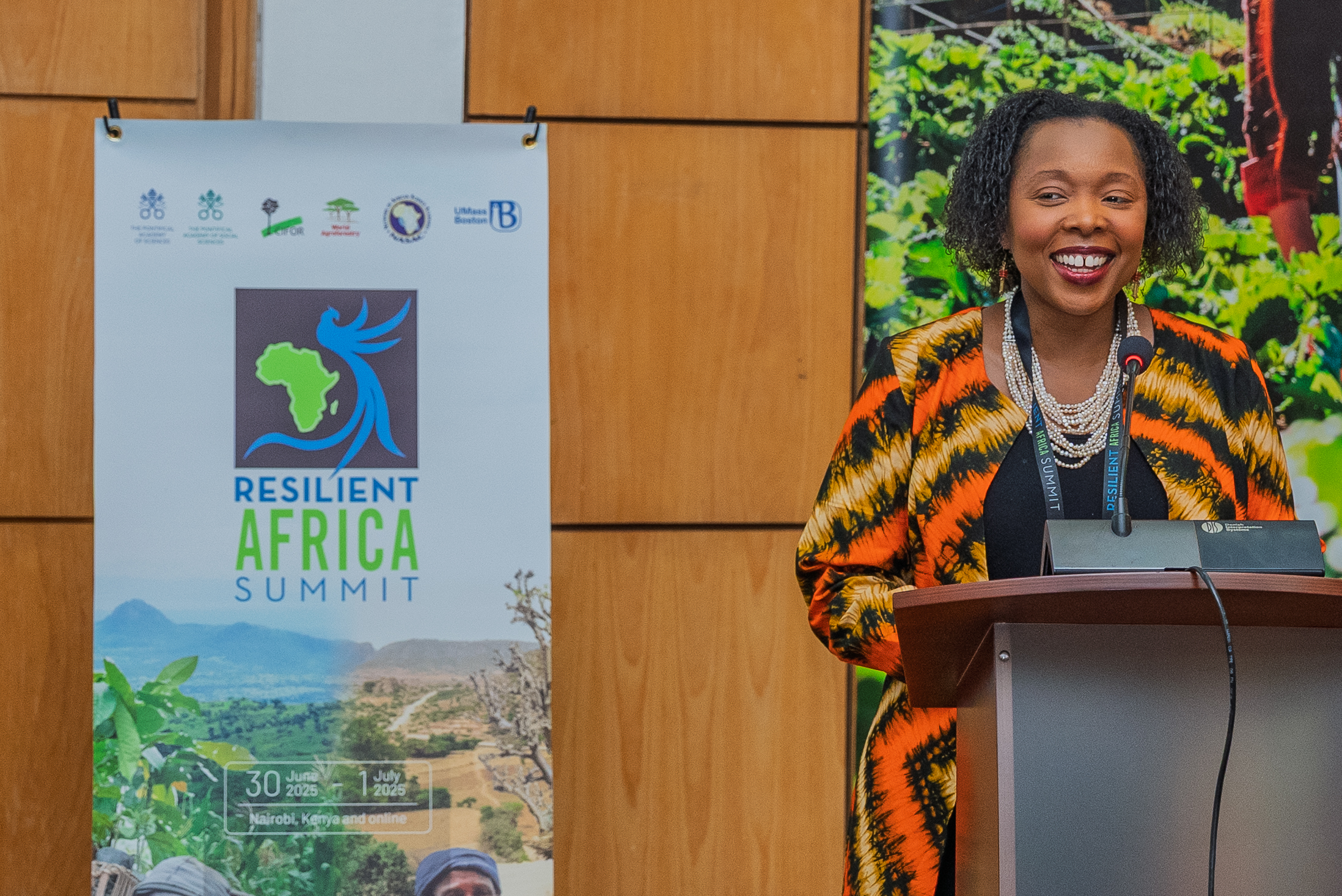
“Weak institutional coordination, limited access to financial resources, and inadequate technical capacity hinder effective climate change adaptation and resilience-building efforts. These challenges highlight the need for increased support, funding, and capacity building to help Africa adapt to climate change and build resilience,” said Dr Wilber Ottichilo, Governor of Vihiga County and Chair of the Environment, Forestry and Climate Change Committee of the Council of Governors in Kenya.
Experts also reaffirmed that climate action must be guided by strong science, inclusive policy dialogue, and meaningful community engagement. Africa’s academies of science, Indigenous knowledge holders, faith-based groups, and civil society organizations were recognized for the important roles they play in ensuring solutions are rooted in local realities.
“Africa can achieve climate resilience when action-oriented alliances of local governments, civil society, science, farming communities, and business are formed, and supported by increased volume and quality of adaptation finance,” noted Dr Joachim von Braun, President of the Pontifical Academy of Sciences.
Dr Jacqueline Kado, the Executive Director of the Network of African Science Academies (NASAC) added, “Africa’s resilience journey must be science-informed, locally led, justice-grounded, youth-driven and community-rooted.”
The urgent need to build resilience in food, land, and water systems was also a key takeaway from the conference. Speakers emphasized that integrated land use planning, climate-smart agriculture, and water harvesting are powerful drivers of change, especially when grounded in African research and local innovation.
Nature-based solutions such as forest conservation, tree planting, reforestation, and eco-friendly infrastructure were also highlighted as cost-effective approaches that align with both scientific evidence and the cultural and spiritual values of African communities.
In response, local government representatives at the conference committed to developing city- and county- or province-specific resilience blueprints, in collaboration with financial institutions. These blueprints will include clear implementation pathways. They will also prioritize nature-based solutions, agroecological transitions, climate-resilient infrastructure, and strong community ownership.
On disaster preparedness, participants called for improved early warning systems and recovery mechanisms, including insurance for vulnerable populations.
Climate-induced migration, they warned, must be addressed holistically, recognising its human rights dimensions and structural drivers.
A cornerstone of the discussions was the Mitigation, Adaptation, and Societal Transformation (MAST) framework, which the conference adopted as a foundational pillar for advancing climate resilience in Africa.
Speakers emphasized that climate change mitigation must align with justice and development rights, while adaptation must be prioritized given the continent’s acute exposure to climate risks.
In addition, they noted that societal transformation must drive institutional, behavioural, and structural shifts toward sustainability and equity.
Youth voices were central throughout the event, particularly through the Youth MAST Dialogues, which presented bold visions for change and called for genuine intergenerational collaboration.
“There is nothing about us, without us. And our time is now. We urge policymakers, development institutions, and knowledge networks to make climate knowledge products, tools, and financial resources widely accessible—particularly to vulnerable populations—to bridge inequality gaps and ensure no one is left behind in the transition to a climate-resilient future,” said Valerie Nutakor, who was among the youth representatives at the conference.
Faith-based institutions and civil society were also recognized for their moral leadership and grassroots reach. Inspired by Pope Francis’ 2024 call for a Universal Protocol of Resilience, delegates echoed the need for ethical urgency, solidarity, and planetary stewardship. They concurred that faith actors are uniquely positioned to galvanize public support, shift values, and sustain community-led action.
“Climate change is not an isolated environmental issue. It is an existential, spiritual, and geopolitical challenge that calls for moral clarity and united global action. We are interconnected-not only through markets and media, but through the air we breathe, the rivers we drink from and the planetary systems that sustain life,” said Archbishop Philip Anyolo, the Archbishop of Nairobi and head of the Catholic Church in Kenya.
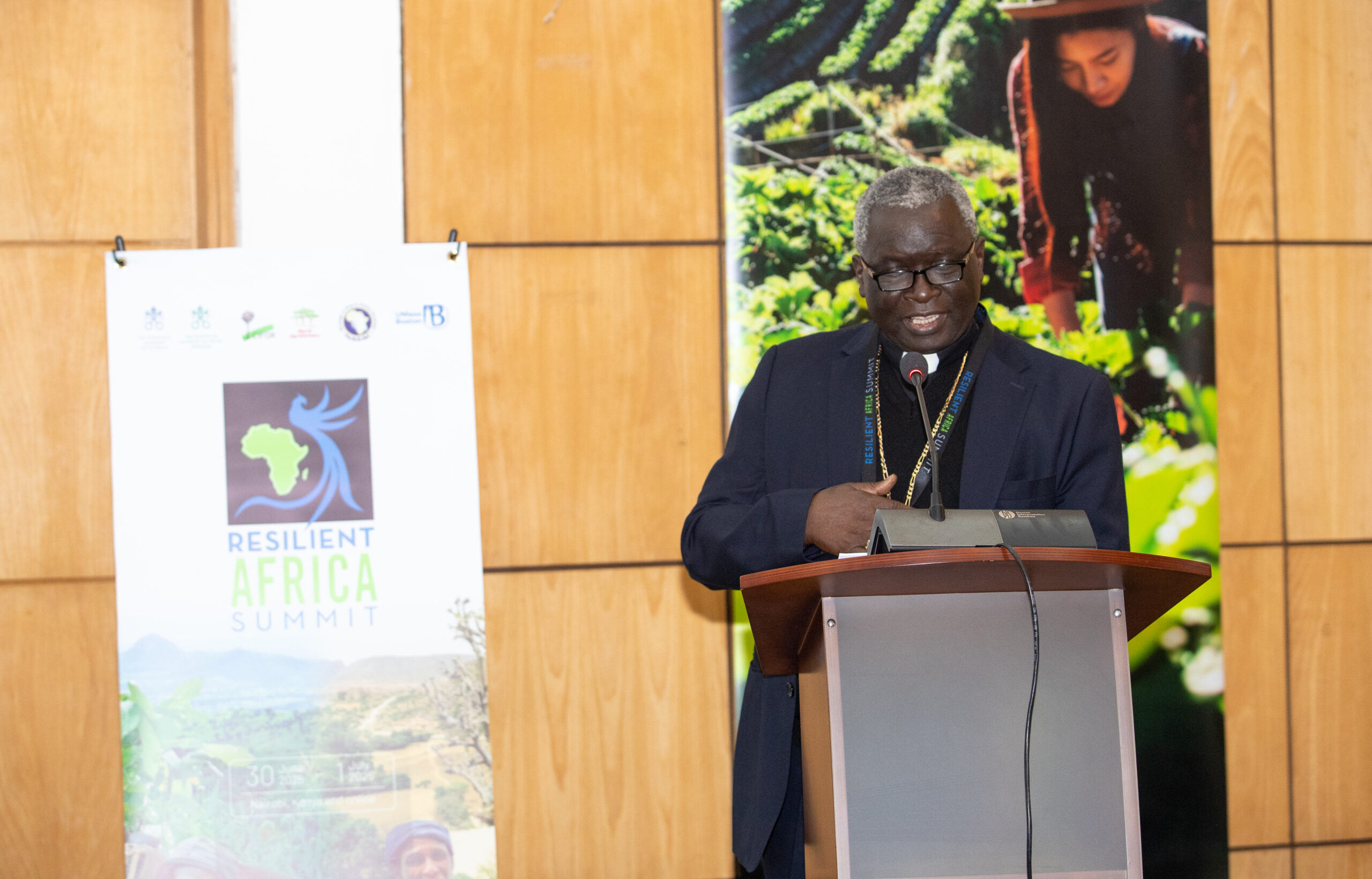
“The Earth is a garden meant to be tended with care. We must move from stewards of creation to carers of creation. What we received with beauty and life, we must not pass on as wilderness,” said His Eminence Cardinal Peter Turkson, the Chancellor of the Pontifical Academy of Social Sciences (PASS).
The Nairobi gathering also committed to launching structured, science-informed policy dialogues to track resilience progress, foster peer learning, and prepare regional contributions for COP30 in Brazil and the Final Vatican Resilience Summit in 2027.
“In California and Massachusetts earlier this year, in Kenya today, and at seven future summits in Austria, Brazil, China, Japan, India, Rome and Oceania, governors, mayors, scientists, Indigenous leaders, youths and civil society actors will convene and chart pathways forward a healed, sustainable and more humane future,” said Dr.Marcelo Suárez-Orozco, Member of the Council of the Pontifical Academy of Social Sciences and Chancellor of the University of Massachusetts, Boston.