|
Getting your Trinity Audio player ready...
|
By Victoria Musimbi
Nairobi, Kenya: As the digital age continues to reshape how news is gathered, stored, and shared, one thing remains constant: information is power, and so is privacy. For journalists navigating an era where personal data is both currency and vulnerability, understanding data protection laws is no longer optional; it’s vital.
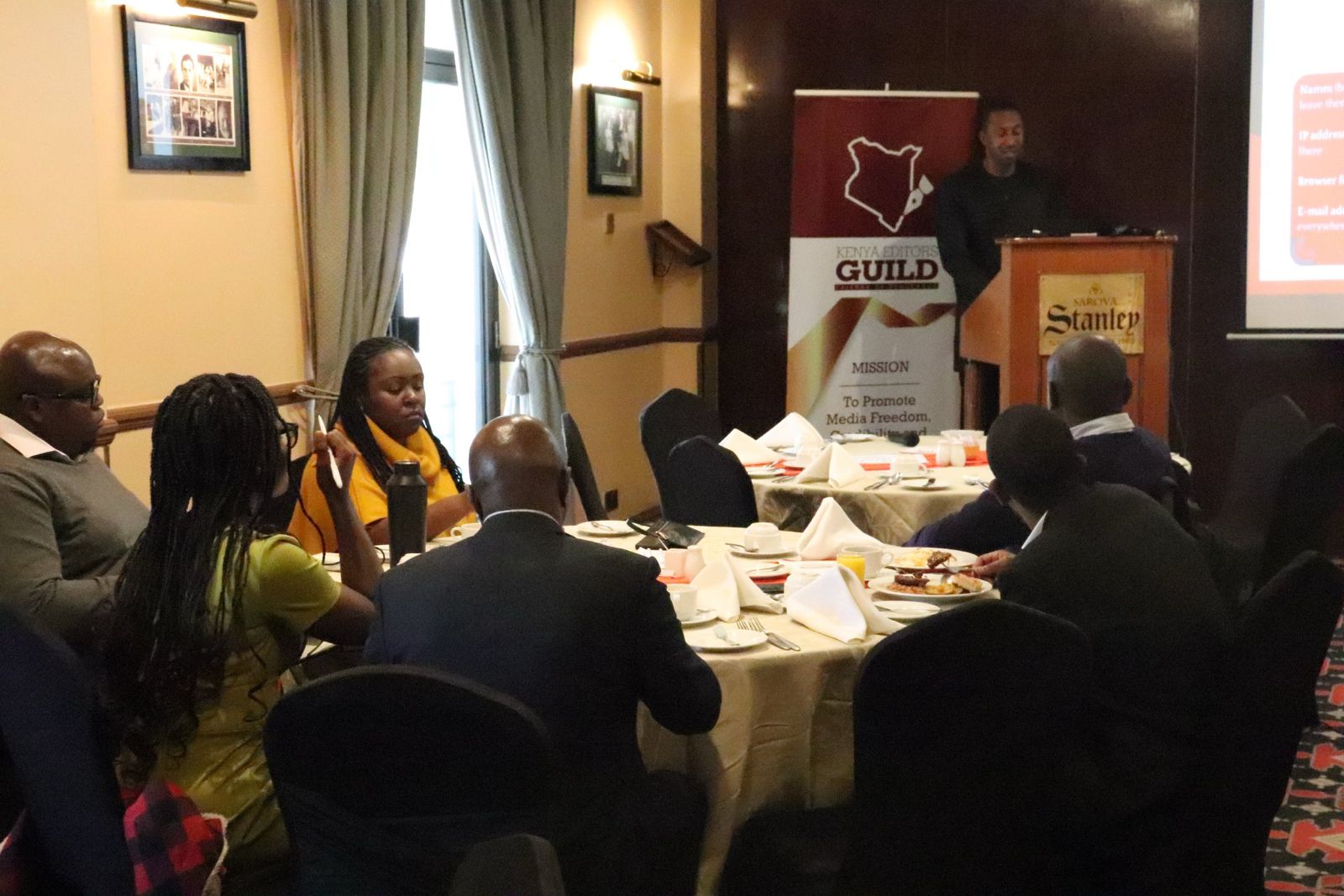
This reality took center stage on Wednesday, 18th June, during a Data Privacy Training for Journalists hosted by the Kenya Editors’ Guild, in partnership with Oxygene. Held in Nairobi, the session brought together journalists, legal minds, and digital rights advocates to examine the legal, ethical, and practical responsibilities media professionals face when handling personal data.
“Journalists Must Lead on Ethical Data Use,”
Speaking during the session, Dr. Mugambi Laibuta, Advocate of the High Court and Chairperson of the Data Privacy and Governance Society of Kenya, made a compelling case for journalists to be champions of privacy in the digital age.
“This training could not have come at a better time,” he stated. “We are living in an era where personal data is not just collected, it’s commodified. Journalists are navigating this space every day. It’s essential that they understand both their rights and responsibilities under the Data Protection Act.”
Dr. Laibuta clarified that while the Data Protection Act (2019) provides a journalistic exemption, it is not a free pass.
“There is a special carve-out for journalistic activities,” he explained, “but this exemption is limited. It only applies when data is being processed purely for public interest journalism. Even then, the principles of ethical journalism like accuracy, fairness, and respect for privacy still apply.”
He emphasized that media organizations often process personal data for other purposes like employee management, subscriptions, or marketing, which require full compliance with the Act.
“Sections 25 and 26 are particularly important for journalists,” Dr. Laibuta noted. “They outline the principles of lawful data processing and the rights of data subjects. If you’re collecting someone’s personal information, they have the right to know how it will be used, to access or correct it, and even request its deletion.”
Surveillance, Cybersecurity, and Source Protection
The conversation also touched on the accountability of state surveillance and the need for clarity in interpreting national security exemptions.
“Yes, the law allows access to data for national security or public interest,” Dr. Laibuta said. “But these terms are vague. What is clear is that state agencies, like the police, must seek court warrants before surveillance. That’s a critical safeguard not just for citizens, but for journalists too.”
He further warned that journalists themselves are increasingly targets of cyber threats and need to adopt strong cyber hygiene practices.
“Weak passwords, oversharing on social media, and clicking suspicious links make journalists vulnerable,” he cautioned. “Two-factor authentication, antivirus software, and smart digital habits aren’t just tech jargon; they are your first line of defense.”
A Journalist’s Perspective: David Indeje on Why This Training Matters
Echoing Dr. Laibuta’s sentiments was David Indeje, an independent journalist and communications person at KICTANet, who described the training as timely and necessary.
“With the Office of the Data Protection Commissioner currently holding public forums on guidance notes like those on photography and journalism, it was essential for us to understand the legal, ethical, and practical dimensions of handling personal data,” he shared.
Indeje highlighted that the responsibilities of journalists have expanded beyond reporting.
“It’s not just about gathering information for a story anymore. It’s about how we handle that information throughout its lifecycle from collection and storage to disposal. The journalistic exemptions we have under the law don’t cover everything. We must make careful and justified decisions.”
He underscored the importance of aligning journalistic practice with legal frameworks like the Data Protection Act (2019), the Media Council Act (2022), and the Journalists’ Code of Conduct.
“Whether working independently or in a newsroom, journalists are bound by law and ethics. We must uphold the public interest without compromising individuals’ right to privacy, especially when reporting on children, survivors, or people with health conditions.”
“We Must Lead from the Front”: Emily Kaiga on Data-Responsible Journalism
Adding to the conversation, Emily Kaiga, Programs Officer at the Kenya Editors’ Guild, emphasized the transformative potential of the training for newsroom practice and leadership.
“This training is not just timely, it is absolutely crucial for editors, journalists, and media practitioners navigating today’s complex information landscape,” she said. “With the rapid digitization of newsrooms and the increasing reliance on data-driven reporting, we are constantly handling sensitive information often without fully understanding the legal and ethical implications.”
Kaiga stressed the need for a shift in newsroom culture.
“As editors, we must lead from the front in shaping data-responsible journalism practices. This immersion provides a much-needed space for reflection, learning, and honest dialogue on how to uphold press freedom while embracing our obligations under Kenya’s data protection framework. It’s about building a culture of accountability and resilience in a media environment where the stakes are higher than ever.”
The Future of Journalism in the Data Era
For Indeje, one of the most valuable takeaways was the focus on data security and accountability within media organizations.
“It’s now our responsibility, and that of the media houses we work for, to implement systems that protect personal data. From limiting who has access to sensitive material to safeguarding whistleblower identities, data protection is now central to credible journalism.”
Looking ahead, he sees hope in the ongoing policy developments by the Office of the Data Protection Commissioner (ODPC).
“I’m particularly looking forward to the proposed guidance notes. If well developed, they will support compliance while empowering us to practice ethical, impactful, and rights-respecting journalism in the digital age.”
Data Protection: A Shield, Not a Barrier
The training concluded with a powerful reminder from Dr. Laibuta:
Journalists have an incredible platform. They can educate Kenyans on their privacy rights, highlight abuses, and demand accountability. But they must also walk the talk—comply with the law, understand the risks, and protect the dignity of the people they report on.”
“Data protection,” he added, “is not a barrier to journalism. It’s a shield that safeguards the truth.”
As Kenya continues to build a data-conscious society, journalists will be among the key actors in shaping how rights are respected and protected in the public domain. With the right training, they are better positioned to rise to that challenge, not just as messengers, but as stewards of trust in the digital era.